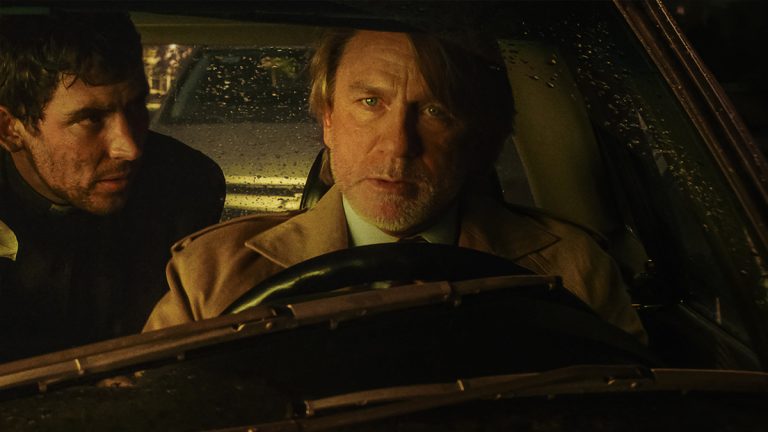
Jan Komasa’s new movie “Heel” (2025) is the worst kind of psychological thriller that appears like industrial runoff. It’s rancid, grotesque, full of denunciations that are rank and hollow and entirely an exercise in projection and posturing. There are gestures made to school a misbehaving youngster, but the way it charts to that destination is so utterly misguided, you are left startled at the sheer stupidity that got this thing off the ground in the first place. Stephen Graham tries to inject menace, but ultimately this film is lacking in any persuasive edge or ominous beats. Commonsense exits the scene very early on and never returns.
Heel (2025) Plot Summary & Movie Synopsis:
Firstly, “Heel” takes the shape of a ghastly thriller and bends it in silly, flat, nonsensical ways. There’s no reason or convincing pattern in which the film manifests its momentum or the manner in which it dispenses its slew of shocks. It wants desperately to rile the viewer, but forgets basic character development and a sense of emotional trajectory.
Consequently, it slumps into ennui, a lazed progression of extreme events that don’t accrue power or significance. By the time the unruly protagonist is schooled, you’d have already checked out of the film to even care about the consequences. For all its grotesqueness, there’s not an inch of niftiness to be located anywhere in its slovenly mess.
Overtly, this is a tale of deep emotional scars, slipping into an affective bond with your own abuser. How far does the relationship curdle until it has found a strange, persisting residue of dependency? When violence becomes enmeshed, how long before you adopt it inevitably and mistakenly as a retaliatory weapon?
The film strays through these questions without bothering to commit in a way that’s meaningful, sustained, or remotely engaging. It’s a barrage of viciousness that’s unrelenting and wholly despondent, a preponderance in bleakness that never truly lifts. What does happen is that it becomes progressively milder and meeker in subtext. The exhibitionistic menace stays superficial and gloating, swapped for a blithe rendition. The film poses tough, unyielding, uncomfortable questions, but leaves them in the cold.
It’s one thing to put on a grisly front, quite another when it is hammered as the only way of depiction. To stage violence on screen asks for an imperative of moral responsibility, a permeability to accept and enable discussions of its scope and range. When the film opens, we encounter Tom, who’s the biggest troublemaker to anyone. He is a druggie, alcoholic, and violent towards women. Nothing is redeeming about him. He’s repulsive. Everyone would rather have him be removed altogether.
He’s arrogant and awfully entitled to take up space wherever he walks. One night, after partying hard, he staggers to get back home when a stranger offers to be of help. However, the situation quickly turns south as Tommy finds himself locked up in a basement. Tom is kidnapped, confined, and certain rituals are enshrined. Tom must listen to tapes of bird sounds and pep talks on dealing with addiction. He’s not allowed to step out of the basement. For relieving himself, he is supplied with stuff.
Why Has Tommy Been Kidnapped?
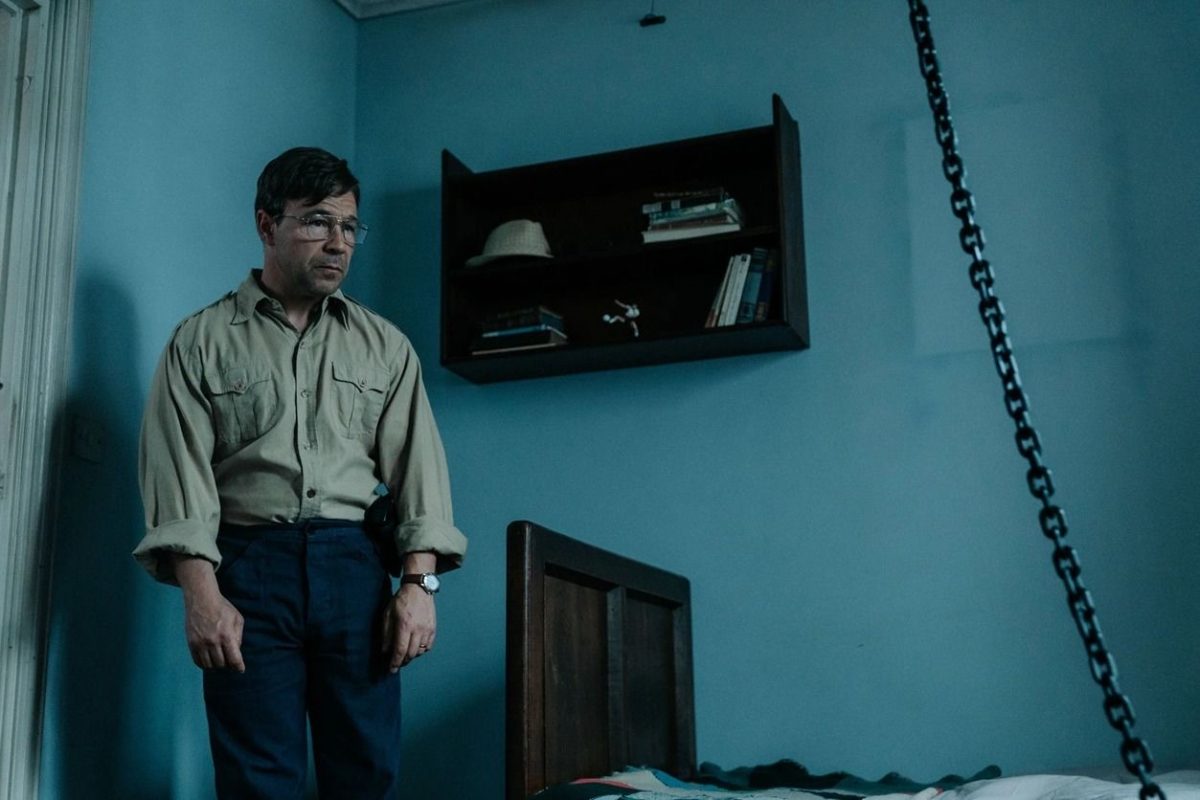
Of course, Tommy tries with all his might to stage an escape. He wants to defy and surge out. He has this anger that lashes out at the family. However, defiance isn’t the solution with the family. Chris, the man who kidnapped him, is driven to turn Tommy into a decent human being. Tommy has no desire to be one, but realises conformity might secure his way out of captivity. Chris has also done this with previous victims. Tommy isn’t the first one.
When Tommy flings his dirty clothes at Chris’s wife, Kathryn, admonishment comes quickly and definitely. Chris makes him watch a video of his bullying. The idea is to force Tommy to reappraise and question his prevailing attitudes, the horrible things he’s done to people, with the assumption that it’s perfectly fine and that he’s within full rights to do whatever and get away with it.
Slowly but gradually, Tommy begins to shift. He grows kinder, more compassionate, and understanding. Tommy becomes generous with the family. He gives company to Chris’s son, Jonathan, and gets involved in the family’s activities. He learns to treasure the family for how it has taught him what he has missed in basic decency. But the captivity still chafes at him.
Tommy is constantly drugged and brought outside whenever the family notices he’s been improving in conduct. It’s a reward for his good behaviour. At one point, the couple even gives him access to the whole house, but the chain around Tommy’s neck remains. That is non-negotiable. Trust is a long path. It cannot be doled out in a jiffy. Tommy has to earn it, prove he’s deserving of freedom. But do the couple even want him free at any point?
Also Read: 15 Great Psychological Crime Thrillers with Shocking Plot Twists
Who Aids Tommy’s Rescue Plan?
Tommy also admires the family for how tightly knit it is. They aren’t consumed by their phones, social media, and performing for the outside world. They seem peacefully ensconced in their own bubble. He sees it as worthy of striving for. Yet he cannot shake off the fact that he’s still in chains. His freedom is at stake. Tommy starts plotting his escape with more proactive agency and intelligence. He teams up with Rina, an immigrant who works for the family. Rina is deeply uncomfortable with Tommy’s captivity and takes a softness toward him.
He gets her to enable some sort of way out, without making her carry the entire burden for his release. Chris arranges for a romantic dinner with his wife, acting on Tommy’s manipulative insistence. This is how Tommy plans to eke his way out. However, one day, a few men who are Rina’s family storm in to take her away from the house. She tells the passcode on the locks so he can free himself soon. Chris applauds Tommy’s heroism when he returns home and is apprised of the incident.
How Does Tommy’s Escape Pan Out?
When Chris confides in Tommy that he plans to upgrade surveillance, the latter realizes he must act very soon. Once everyone falls asleep, Tommy gets going with his escape scheme. Thanks to Rina, he manages to unlock it. He’s about to get away when Chris comes barrelling in with a gun. Tommy attacks him. But Kathryn takes the gun.
Tommy explains why he needs to leave the place despite the benevolent care their equation had skidded into. Tommy has fathomed that the couple might have lost someone and hence kidnapped those like him to replenish the void in their lives. Tommy was their way of filling the vast hole in their lives left by the death of possibly their eldest son. Kathryn resists Tommy’s freedom for the longest time, but the couple realise they can’t kill him again, which might have happened to their previous victim in an escape attempt.
Heel (2025) Movie Ending Explained:
Does Tommy Succeed In Escaping?
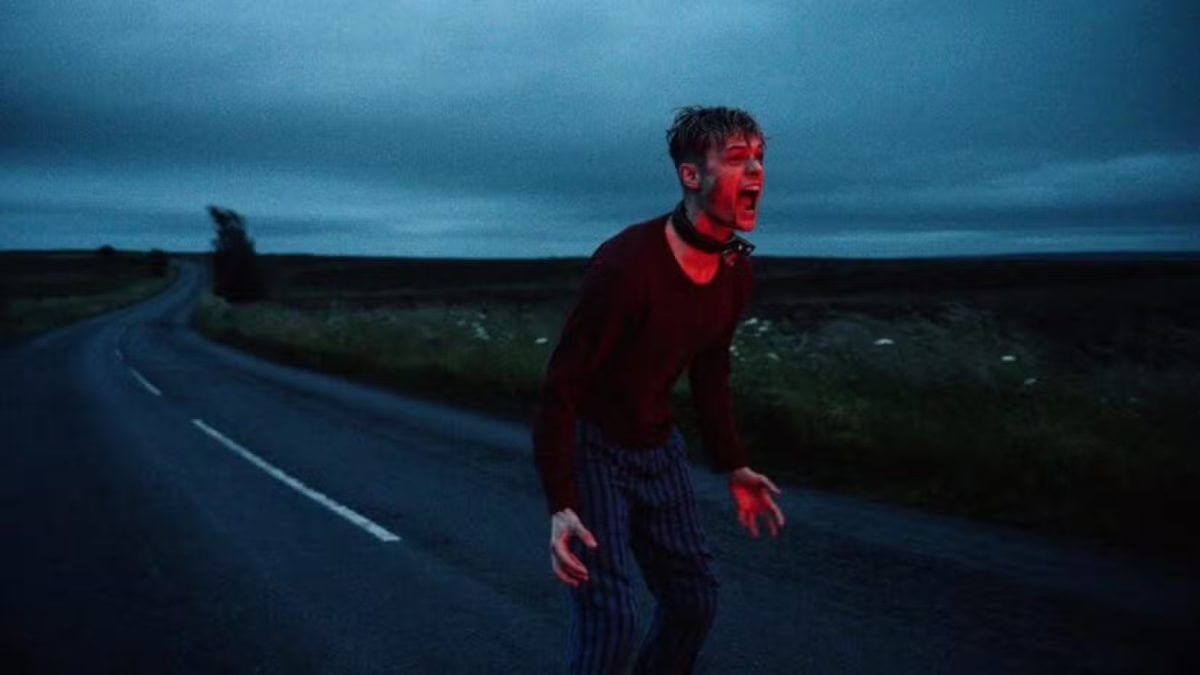
Tommy does return home, but his life has been changed irrevocably. With the couple, he’d felt reaffirmed and loved. He can no longer associate in the same old way with familiar faces. There’s an emptiness now that he’s away from Chris, Kathryn, and Jonathan. Tommy is shocked at his mother’s blitheness. She hadn’t even filed a missing person case, assuming he was drifting somewhere. Tommy doesn’t want the couple to be in trouble, so he fabricates a narrative.
The case is closed since there’s no interest in following through. Tommy drugs Gabby, the only person who he thinks cares for him. He takes her to the couple’s mansion, just as she’d implied she wanted to be taken elsewhere. Of course, Chris, Kathryn, and Jonathan are ecstatic to find Tommy keen to be taken back. He’s now a part of their family, just as they’d ideally envisaged.
Heel (2025) Movie Review:
“Heel” is a film of strange, stuttering, and insipid manipulations. It speaks in the language of violence to plant subversions. But subversions demand intelligence, wit, and a clear eye roving over the land before it can pull off the blinds and expose. No such greatness can be expected of this film that stumbles and fumbles, knowing nothing at all how to orchestrate and slant its criticism. Violence is a tricky thing. It can just come off as an exhibition in gratuitousness or have its terrain be probed for something far richer, playful, and no less excoriating.
The filmmaker ought to map out a transformation that doesn’t chip away at bare fundamentals. Komasa takes a blunt, deeply unsatisfying road of rendering thin complexities, flattening Tommy’s transformation to a silly snatch of attributes. A journey like his should have had more complex shades and earned consideration and thought on the use and limits of violence. How does a youngster like him flip? What makes him see the harm in his deeds? The film defangs him, despite starting on a promising note.
The film subjects Tommy to hell. Basically, it gives him a bite of his own poison. Violence is used to be undercut and has itself been gutted. But the film lapses in the lack of credible situations. Far more unconvincing is the cartoonish characterisation across the board. None of the characters appear remotely believable, and the performances struggle to make sense of the muddled narrative. How do you keep a film afloat amidst painfully foggy writing? The film succumbs even before making a start. It also wastes an actor of Riseborough’s formidable calibre, sidelining her. She comes up sparingly and goes away like a flicker.
The thing is, this could have been a fascinating short film. The filmmaker could have delivered it as a sharply sculpted, smaller endeavour, but what we get is inexcusably bloated. This is a study in behavioural mechanisms, gaslighting, and how much a wild lout can be tamed. Ridiculously, the film pushes Tommy towards almost pristine, pure ends.
By the time the film wraps up, he’s become unimpeachable, a shimmering example of goodness and sincerity. This makes the film a joyless, drab failure, devoid of bite, pulse, and any real dramatic enquiry. Where are the stakes, a sense that danger is about to be unleashed? Despite the corralling, escalating crises, the predicament doesn’t kick in as hard and intensely as it should. We keep looking for a twist in the gut that never arrives.
There’s a sanitizing gaze that betrays the dose of violence and edginess. Ultimately, this film is coloured by a risk-averse impulse, which detracts from any blowout of genuine, cutting horror. This needed to flesh out its characters with greater predisposition, instead of reducing them to stock traits and a mere agenda to deliver sole shock.





![Beyond The Hills [2012]](https://www.highonfilms.com/wp-content/uploads/2016/05/beyond-the-hills-movie-768x423.jpg)