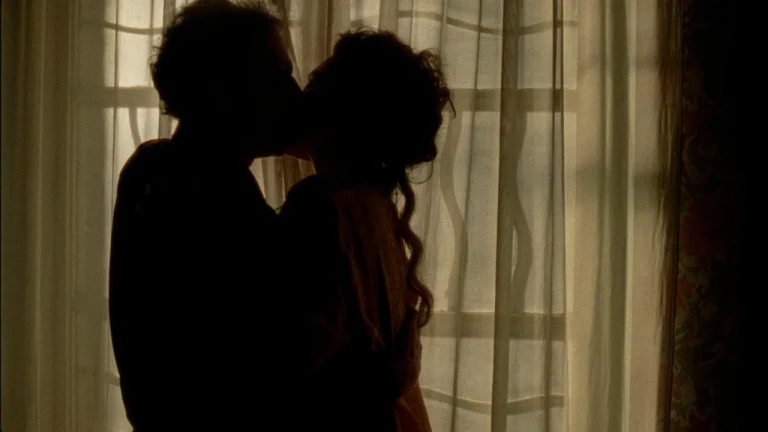
“Hamlet” is considered to be the grandest of all William Shakespeare’s tragedies, and it’s a role that’s been played by the greatest leading men of each generation. Given that it’s a role that’s been portrayed by Laurence Olivier, Richard Burton, Christopher Plummer, Kenneth Branagh, Mel Gibson, and Ethan Hawke, among others, it only felt natural that a modernized version of the text would cast an actor of color.
Riz Ahmed is suited for the interiority, bravura, and doomed ambition for the role in Aneil Karia’s stylized adaptation of the play, which utilizes the original text with the backdrop of contemporary London. While the language does not always feel naturalistic, the weight of the material is so inherently powerful that it’s never disappointing to see it delivered by great actors.
In this version of “Hamlet,” the titular Prince returns to his family’s business empire in London to find that his father (Avijit Dutt) has been murdered, an event that has seemingly rippled throughout the insular elite society. It’s feasible enough to believe that this ambiguous family infrastructure would act in the same way as the Danish courts in the original play, with Art Malik’s Claudius serving as a compelling parallel to the wealthy aristocrats who pull the strings within wealthy circles.
The castle depicted so classically in previous versions is replaced with a luxury suite, in which the family’s business affairs are discussed by Hamlet’s mother Gertrude (Sheeba Chaddha) and the duplicitous counsellor Polonius (Timothy Spall). If anything, the notion that the upper crust of contemporary London is the closest thing to nobility is a social sentiment in its own right.

What’s most striking about Karia’s interpretation is that Hamlet isn’t given the pride that other adaptations had implied. Ahmed’s disenchanted, morose persona is established from the beginning, and he flirts with madness even more as the realities of his father’s death become apparent. At first, it seems as if Ahmed is out-of-step with the gradual fall from grace that makes the story so tragic.
However, the striking encounter that Hamlet shares with his father’s ghost marks a moment of brilliance when Karia’s adaptation makes a case for itself. Hamlet feels crazed that he’s the only one who can see the shadowy conspiracies operating in plain sight, which fuels his dejected return to the London underworld.
Karia avoids the opulence found in Olivier’s 1948 Best Picture winner or Branagh’s line-for-line recitation, and instead utilizes a furious string of close-ups to escalate the pulsating tension. The breathless approach to the text does lead to some cuts, and there are certainly instances in which “Hamlet” feels a bit too stripped down.
However, the lengths needed to repurpose all aspects of the medieval conflict into a modern context may have resulted in too many modifications, so it’s understandable why Karia would want to be primarily centered on the palace intrigue. Although Hamlet does wrestle with his responsibilities as a leader, specifically in how his family could be involved in shady business, the tragedy is most effective when he’s made to feel like an outsider in his own family.
It’s here where Karia can add elements that are suited to the specificities of the South Asian experience, particularly in its examination of generational power and cultural retention. Ahmed’s Hamlet is made to feel guilty about incorporating himself into a globalized world, as his family has refused to evolve with the times. This friction is further emphasized by the presence of white powerbrokers in his family, with Spall’s Polonius making for a particularly cruel villain.
Plonius isn’t always a character who is treated as a real villain, as he’s often seen as simply a lackey for Claudius. However, the creepy, authoritative presence that Spall provides suggests a scale to Claudius’ dominion that expands beyond what is seen. The emotional depiction of Hamlet’s most fateful confrontation with Polonius, in turn, leads to a moment of brilliant manipulation from Claudius, in which Malik shows a cunning, subtle craft in villainy.
The weight provided by Spall furthers the tragedy passed on to his children, resulting in another fascinating, double-edged clash between Hamlet and both Laertes (Joe Alwyn) and Ophelia (Morfydd Clark). Alwyn gambles with an interpretation of Laertes as a failed son whose animosity towards Hamlet is primarily based upon the affection for his sister, and a doomed desire to appease his sneering father’s expectations.
While the reduced runtime does leave Alwyn with less to do, he makes the most of his scenes and has a rapport with Ahmed that makes their final confrontation heartbreaking. The same cannot be said, unfortunately, for Clark. Although she delivers Ophelia’s most piercing lines with the necessary inflection, this “Hamlet” doesn’t make the effort to incorporate the modern, feminist readings of the character.
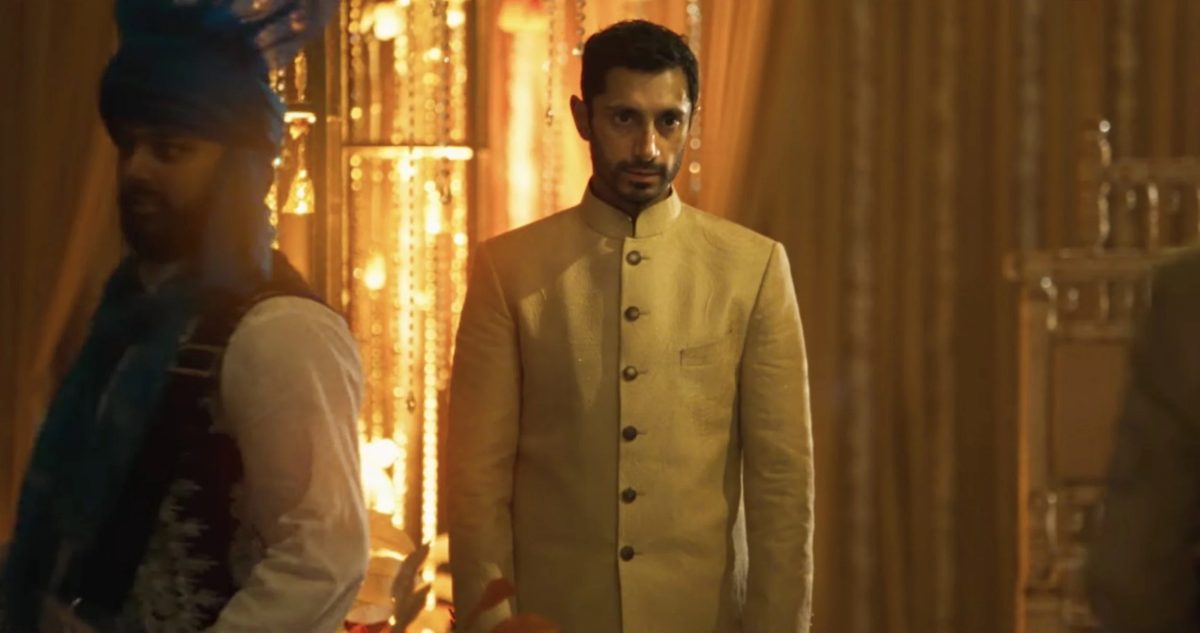
As great as Ahmed is, it’s Malik who steals the film with a performance that would place him in the Best Supporting Actor conversation had “Hamlet” not been slated for a release in the first half of the year. He’s an actor who’s been typecast as villains in everything from “True Lies” to the underrated James Bond film “The Living Daylights.”
Still, Malik sinks his teeth into a version of Claudius who underplays his most insidious qualities as a matter of formality. The way Malik’s Claudius positions his marriage to Hamlet’s mother as an act of self-sacrifice brilliantly conveys the twisted irony Shakespeare had tried to convey. The brewing tension he shares with Ahmed, which has both ethnic and generational complexity, makes any of their encounters truly enthralling.
“Hamlet” is not a definitive version of the text, nor will its alterations be enough to solidify it as one of the most clever modern Shakespeare adaptations. However, material that has been as frequently depicted as “Hamlet” means that any new spin can stand to take some chances, which Karia does with enthusiasm.
There’s been no shortage of “Hamlet” adaptations, even in recent months, but what Karia does is preferable to the unfounded melodrama of Chloe Zhao’s “Hamnet” or even the optimistic spin of “Scarlet.” The film’s confidence isn’t just in the merit of its actors, but that Shakespeare’s words will never feel out-of-date.