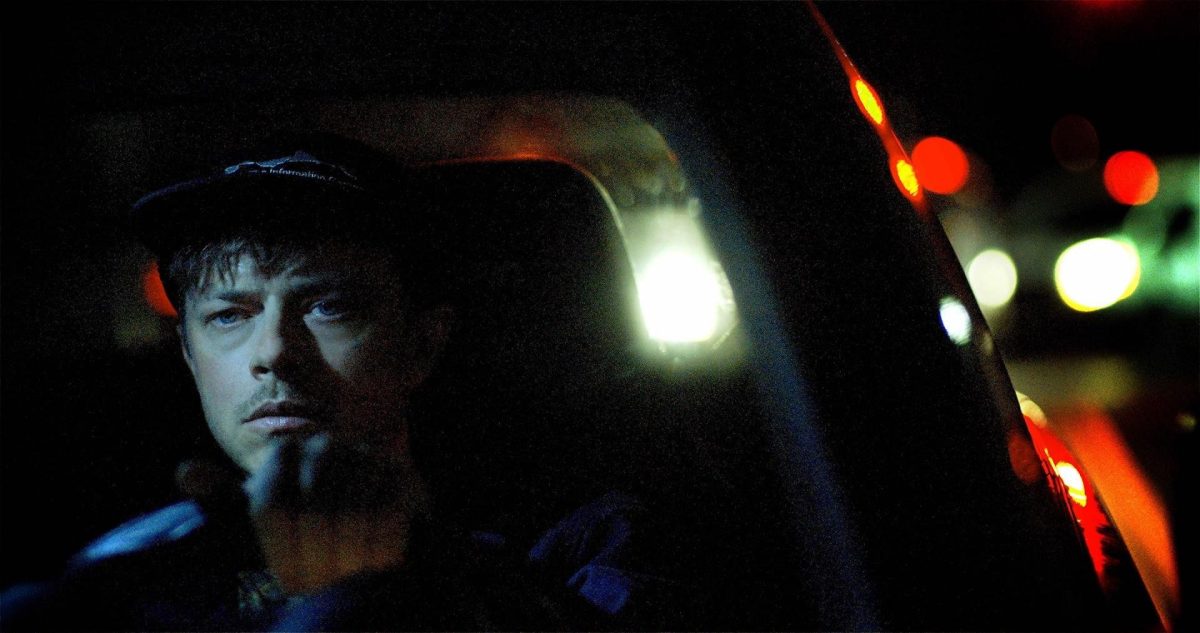
Rebecca Thomas’ “Wardriver” is a moody neo-noir that shows a series of heists through the eyes of a reclusive hacker. Hackers, by nature, are often solitary, which inevitably makes the film a brooding affair. Thomas paints it with a similar kind of gloominess as seen in Nicolas Winding Refn’s “Drive.” It helps that the majority of the story takes place at night and shows the hacker driving around while being aloof or cautiously reserved.
Yet, with its hacker-based storyline, the film also plays with an element of secrecy and mystique, similar to projects like “Mr. Robot.” The script by Daniel Casey doesn’t write his protagonist in a similar form of vigilantism, but there’s still a Robin Hood-esque undertone to how he sees the world. Instead of an action thriller, Casey places him in a neo-noir plot with its set of placeholder characters.
Sasha Calle’s character fits in the femme fatale trope, while Dane DeHaan’s character becomes a naively idealistic hero who falls into a series of traps led by two strangers. It leaves us with an oddly seductive chapter in their lives, backed by a reliable genre skeleton but without enough meat on it. That’s why the cliffhanger ending becomes a half-hearted attempt to patch things up instead of a sucker punch that would leave you thinking about these characters for days.
Spoilers Ahead
Wardriver (2026) Plot Summary & Movie Synopsis:
What happens in Wardriver?
Cole (Dane DeHaan), a young man, lives in a suburban neighbourhood that doesn’t seem like the safest place to be. It feels chillingly quiet, where everyone chooses to keep their matters to themselves. That also seems to be the case with Cole, besides one exception. One morning, he walks over to a neighbour’s house and leaves a parcel in their mailbox. He does so after a night of journey from a store far away from his house and a conversation with a stranger. Throughout this journey, he seems meticulous with every single choice, ensuring he doesn’t draw anyone’s attention while doing what he plans to do.
He walks out of the store with a soft drink and takes a photo of the ATM. After driving back home, he speaks with a hacker – supposedly Bulgarian – online through a privacy-pro platform. He pays back what he is supposed to and receives a package, in exchange, full of prepaid cards. Some of them, he leaves in his neighbour’s mailbox.
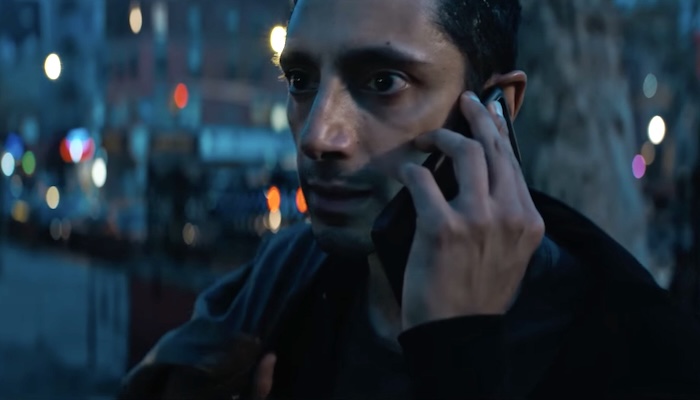
It’s meant for a woman stuck in an unhealthy relationship. At night, he drives into the city for his next heist. He does what he was set out to do, but while in his car, he catches the attention of a doorman. The next day, the same man shows up at his house, threatening to do as he is told. During a ride through the city, Oscar (Mamoudou Athie) asks him how he operates, i.e., makes money. While reluctant at first, Cole reveals his secret. He steals from businesses on their salary days by exploiting weak spots in their security systems. One such night, he stole from a corporation that employed Oscar. That leads Oscar to investigate the case and find Cole.
How does Oscar’s plan affect Cole’s life?
Oscar expects Cole to carry out another heist for him to leave the situation unscathed. This time, he would have to steal from someone who had been stealing from a wealthy man. He usually goes after businesses, not individuals. So, he reluctantly agrees. Still, before leaving, he does a background check on Oscar. Turns out, Oscar had been jailed for an aggravated assault and armed robbery.
It establishes the threat he would put himself into if he can’t do the job. Luckily, the night ends with a success. Then, Oscar throws him a curveball by forcing him to come to a rave party. While intoxicated, Cole sees a woman walking up to him, but he only vaguely remembers what happened between them.

The woman was Sarah Miller (Sasha Calle), whom he had stolen from only a few hours before. So, the rave incident almost feels like a hallucination borne out of his guilt. Later, he hacks into her computer to find a few details about her personal life, including an abusive relationship with the man she went on the date with: Mark Bilson (Jeffrey Donovan). A married man, Bilson had accused Sarah of stealing from him, and Cole’s recent heist feels like a last nail in the coffin. The next night, Bilson hurts Sarah and asks her to make things right. Cole realizes this and urges Oscar to rethink his choices and return the money.
Oscar predictably refuses that, which drives Cole to seek other ways to protect Sarah. He starts looking into Bilson’s records to discover his criminal history. Unable to take an action against Bilson, he goes on a series of solitary heists with his friend’s help. After stealing enough money, he drops by Sarah’s house to leave a parcel in her mailbox. He thinks it would save her from Bilson. Instead, she gets upset that he put her in danger in the first place. Soon enough, they make up and make out at her place. Back home, something else awaits him.
Wardriver (2026) Movie Ending Explained:
What does Cole learn about Sarah?
Cole returns home to find a man who broke into his house to hurt him. The man turns out to be Bilson’s employee, Doug (William Belleau), who was keeping a watch on Sarah’s house when Cole was there. Cole assumes Doug seeks retribution for Bilson’s loss, but Doug showed up at his house for a different reason.
He wanted to warn Cole about Sarah’s true intentions, so he won’t be collateral damage while trying to be her saviour. Soon, it’s revealed that Sarah was working with Oscar the whole time. Together, they lured Cole into their trap, knowing his righteous nature would stop him from hurting her. Instead, it would make him want to protect her in any way possible.
That’s how she makes him help her steal a huge amount from Bilson’s locker. He calculates the degree of threat in this operation and seeks a third person’s help. It’s why he ropes Oscar in, even if Oscar claims he is reluctant to join them. Eventually, on the fateful night, Sarah goes on a date with Bilson. Before walking into the restaurant, she steals Bilson’s phone and hands it over to Oscar, who’s on duty outside. The phone operates the security system of Bilson’s entire house. So, it allows Cole to break in and steal the cash as intended. He fills all the cash in a couple of duffel bags and carries them one by one to his car.
Suddenly, Bilson’s wife and son return home, which puts him in jeopardy. He still manages to get out with all the money, but accidentally leaves a door open. So, Bilson’s wife realizes that someone broke into their house and warns her husband about it. Only a few moments before, Bilson realizes he doesn’t have his phone. Somehow, Oscar shows up next to their table and hands it over, claiming it was left outside. Bilson suspects he has been conned, and his wife’s phone call affirms his hunch.
How does Sarah’s truth shape Cole’s life?
While driving back with Sarah, Bilson declares his suspicions. He expects her to get on a call with Cole and tell him to meet at a different spot than what they had planned. Cole arrives there to find Oscar alone, followed by Sarah in Bilson’s car. Bilson’s presence complicates the matter for everyone. He holds Sarah at gunpoint, forcing Cole to take a step for self-preservation.
Cole reveals that he has data on Oscar’s criminal records, which he threatens to make public if any of them gets killed. Right after, Bilson aims the gun at Cole, only to bring it back and shoot Sarah. Heartbroken by her death, Oscar chokes Bilson, presumably to death. As it happens, Sarah dies in Cole’s arms while apologizing to him.
Until then, the film doesn’t tell us about Cole’s research into Sarah’s past. So, it feels like he just lost the love of his life. Moments later, Doug kills Oscar, who was holding Cole at gunpoint. After alluding to Doug’s death at Cole’s hands in the desert, the film reveals him as Cole’s ally in a fight against their common enemies.
Then, it presents Cole’s knowledge of Sarah’s real identity, making a regular plot turn seem almost like a plot twist. It does so just a few minutes after it reveals the true nature of Sarah and Oscar’s relationship, as they share a kiss. These choices related to the placement of crucial information about characters dull the impact instead of enhancing it.
The final moments, stating Cole’s knowledge of Sarah’s alias, are followed by him and Doug parting ways with their own bags of money. We don’t learn what happens to them afterwards. It just ends with a montage that feels like it’s been pulled from a slick car commercial. The intent might be to lend it a Michael Mann-esque moodiness, leaving us with a character drastically changed over time. Yet, it also makes the ending anticlimactic. Usually, in projects that leave you on a cliffhanger note, there’s plenty to mull over with their intricate character work. However, that is precisely what pulls “Wardriver” back from profundity.
Wardriver (2026) Movie Review:
“Wardriver” feels like the kind of film that ends before it can ever take a flight. The fault isn’t in the direction, which sustains its moodiness through a string of strikingly-lit and well-performed shots. Rebecca Thomas’ directorial style is, as aforesaid, reminiscent of Michael Mann’s approach of exploring his characters’ professions.
Think of the opening scene of “Thief” that shows every aspect of the central character’s skill in painstaking detail. Thomas emphasizes similarly on small details, even in scenes with their own defined emotional arcs. Thanks to her, we notice minute details from Cole’s gradual emotional shift as he gets caught in situations beyond his control.
Dane DeHaan’s performance is also stunningly layered, which helps it stand out from a sea of lone-male-character projects. His character isn’t psychotic like Lou Bloom from “Nightcrawler,” nor is it nihilistic like Travis Bickle. Instead, Cole is a good guy who takes calculated risks so he can stay under the radar while staying righteous through a loophole. Even without a look into his past, DeHaan’s performance offers enough understanding of the immensity of his deep-seated trauma and loneliness. That makes his drive for the good believable. However, the script doesn’t back it up with enough insight into his belief system.
Some of its earliest shots feature the Idles track, Never Fight a Man With a Perm, apart from a radio broadcast with a host talking about liberty and individuality. Compare that with the layers that Kelly Reichardt brought to her stories in “Old Joy” and “The Mastermind” through similar snippets of broadcast, and you’ll see it as a lacklustre attempt to introduce a dimension in Wardriver’s script.
It also doesn’t help that Sasha Calle and Mamoudou Athie, although compelling actors (who’re believable in their roles), don’t get enough to work with. That leaves some of its crucial scenes involving either of them with little to no emotional weight. Even the dialogue writing with lazily rendered exposition gets tiring.
One of Wardriver’s crucial flaws is in how it’s structured. In the end, it introduces a plot turn as a surprise by placing it in a non-linear fashion. Instead of doing that, it could have approached it as a linear investigative thriller to offer a steady progression toward an emotionally satisfying finale. It could have been more effective to see a battle between the two sides of the equation instead of the big reveal in its clumsy finale. So, you leave feeling bad for DeHaan, whose dedicated central act can’t salvage a moderately immersive but underwhelming film.