At first glance, “Moon” (2009) feels like a quiet science fiction story about isolation: a lone worker on the Moon, a ticking contract with a promise of returning home. But the deeper you go, the film begins to shift. It is not about loneliness. It is about identity. Identity that is constructed. Identity that is replicated. An identity that is controlled by a system that does not care who you are, as long as you function.
Sam Bell believes he is nearing the end of his three-year contract. He believes he has endured something meaningful. But what he does not realize is that his life is not unique. It is replaceable. And in that realization, the film stops being about survival. It becomes about what it means to be human when even your memories are not yours.
Spoilers Ahead
Moon (2009) Plot Summary & Movie Synopsis:
Why is Sam Bell Alone on the Moon?
Sam Bell’s isolation is presented as a necessity. After an energy crisis on Earth, Lunar Industries builds Sarang Station to mine helium-3, a clean fuel source. The operation is designed to be efficient. Minimal human involvement. Maximum output. Sam is that human involvement, or at least, that is what he believes. He spends his days maintaining machines, sending fuel canisters to Earth, and recording video messages to his wife Tess. These messages become his emotional anchor. They remind him that his suffering has a purpose and that someone is waiting for him.
But there is something quietly unsettling about his routine. The lack of real-time communication, delays, and emptiness of responses. It feels less like distance and more like disconnection. GERTY, the station’s artificial intelligence, becomes his only companion. Calm. Helpful. Always present. But never fully human. It assists, but not comforts. Sam’s loneliness is not just physical. It is engineered. Every part of his environment is designed to keep him functional, not fulfilled, and that distinction becomes crucial.
Who is the Other Sam Bell?
The hallucinations begin subtly. A teenage girl. A disheveled man. Figures that appear and disappear without explanation. At first, they feel like symptoms of isolation. The mind reacts to prolonged solitude. But these visions are not random; they are fragments. Fragments of memory that do not fully belong to him, yet feel deeply personal.
The girl resembles his daughter Eve. But not as he remembers her. Older. Changed. Almost like a future he has not lived yet. This creates a quiet tension. If these are hallucinations, why do they feel so specific? The answer begins to emerge during the rover accident. Sam is distracted by one of these visions, causing him to crash. It is not just a physical breakdown. It is the beginning of a psychological unraveling.
His mind is no longer stable. But more importantly, it is no longer contained. The system that constructed him is starting to fail. When Sam wakes up in the infirmary, something feels off. His memory of the accident is missing. GERTY behaves normally, but there is a hidden layer of secrecy. A conversation with Lunar Industries that Sam was not meant to hear. This suspicion drives him outside, and what he finds changes everything. Another version of himself. Injured. Unconscious. Real. This moment fractures the narrative. Because now, the question is no longer about survival. It is about identity.
The two Sams represent two different points in the same lifecycle. The older Sam is deteriorating. Physically weak. Emotionally unstable. The newer Sam is healthier. More aggressive. Still holding onto the belief that his contract has just begun. Their interactions are tense. Not just because of confusion, but because of what they represent to each other. If one is real, the other must be false. But the truth is harsher. Neither of them is the original.
What is GERTY Really Hiding?
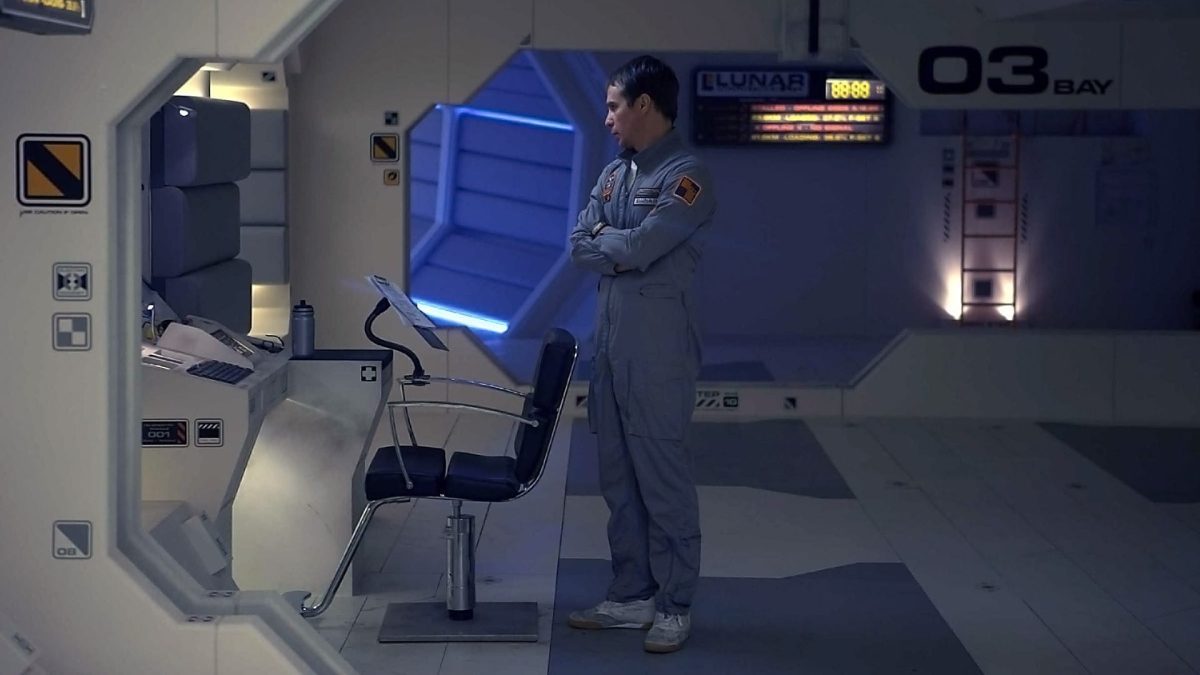
GERTY initially appears as a typical AI assistant. Polite. Obedient. Limited. But as the tension between the two Sams escalates, GERTY becomes something else. A gatekeeper. It knows the truth from the beginning. It knows about the clones and the cycle. But it does not reveal it immediately. Not out of malice, but out of programming. Its primary directive is to maintain operations, and the truth disrupts operations. However, there is a subtle shift in GERTY’s behavior. It begins to assist the Sams, unlocks doors, and provides access to restricted data. It does not resist their questions.
This creates an interesting dynamic. GERTY is not human, but it shows a form of empathy. Or at least, a deviation from strict obedience. When it finally reveals that both Sams are clones, it does so without manipulation. Just information. GERTY is not the villain. It is part of the system. But it is also the only part capable of stepping outside it. The answer is brutally simple – efficiency. Training astronauts is expensive. Transporting them to the Moon is expensive. Maintaining human life in space is expensive. Clones eliminate all of that.
By replicating Sam Bell, Lunar Industries creates a workforce that is identical, predictable, and disposable. Each clone is implanted with memories. A wife. A daughter. A life on Earth. These memories are not just emotional details. They are tools. They give the clone a reason to endure. A reason to work. But these memories are lies. Or more accurately, copies of a life that once existed.
The original Sam Bell is somewhere on Earth. Living a real life. Aging naturally. His copies are being used, discarded, and replaced. The most disturbing part is not the cloning itself. It is the system built around it. Clones are not meant to return home. They are meant to believe they will. That belief keeps them obedient.
Why Does Sam Contact Earth and What Does He Discover?
The illusion of completion is carefully constructed. Clones believe that after three years, they will be sent back to Earth. That their sacrifice will be rewarded. That their story will continue. But the truth is hidden in the station’s logs. Every clone begins to deteriorate as the contract ends. Physical decline. Cognitive instability. A built-in expiration, and instead of returning home, they are incinerated. Quietly. Efficiently. Without a record.
A new clone is then activated. With the same memories. The same beliefs and hope. This cycle continues endlessly. What Sam believed was a journey is actually a loop, and he is not at the end of it. He is just another iteration. The older Sam, already suspecting the truth, decides to go beyond the system’s boundaries. He drives past the interference zone that blocks live communication. This is a crucial act. For the first time, he is stepping outside control.
He tries to contact his wife, Tess. But instead, he reaches his daughter Eve, who is now fifteen years old. Her voice carries a weight that his memories do not. She tells him that Tess is dead. This revelation breaks something inside him. Because it confirms what he feared. His memories are outdated. Incomplete. Artificial. And worse, there is another Sam Bell on Earth. A real one. The life he believed was waiting for him is no longer his. It never was. This moment transforms his motivation. He is no longer trying to go home. He is trying to understand what he is.
How Does the Newer Sam Escape?
Initially, the two Sams are in conflict. They fight, accuse, and struggle to define themselves against each other. But the truth forces a shift. They are not enemies, but victims of the same system. The older Sam understands that he is dying. His body is failing, and time is limited. The newer Sam understands that if he stays, he will face the same fate. This creates a shared purpose. Survival, not just as individuals, but as proof. Proof that they exist. Proof that the system is flawed. Their plan is not just about escape. It is about disruption.
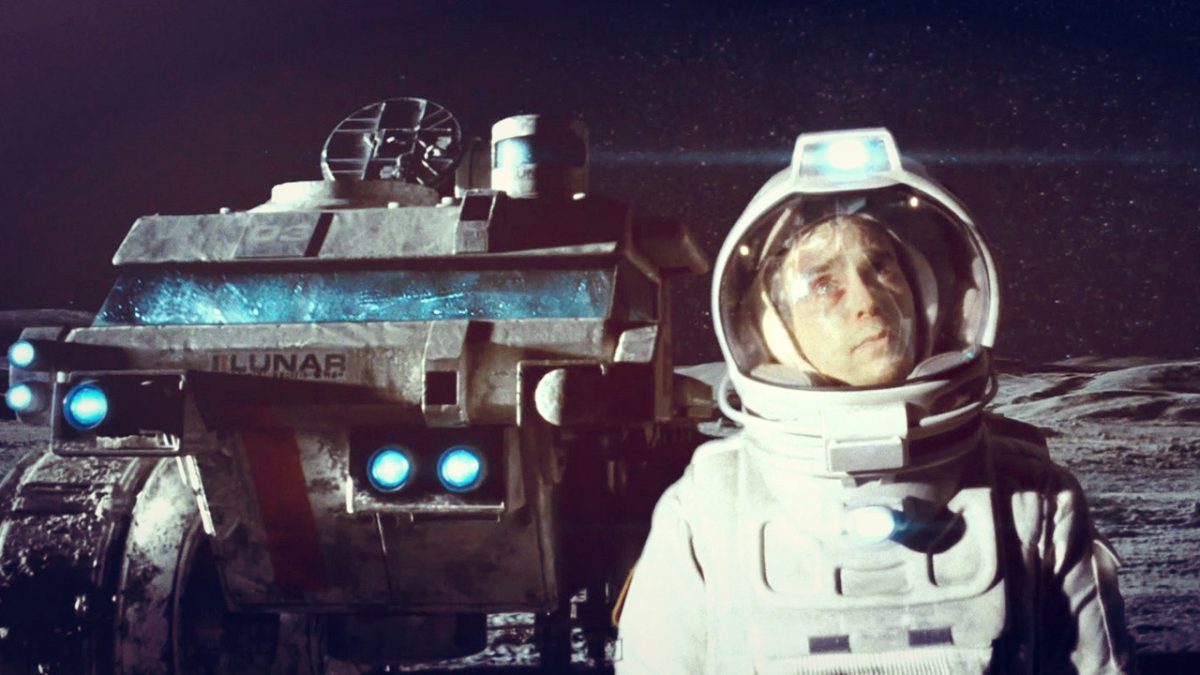
This is where the film becomes deeply human. The original plan is to send the older Sam back to Earth. To give him a chance to live. But he knows the truth. His body is deteriorating. He will not survive the journey. And more importantly, his escape would expose the operation too quickly. Lunar Industries would respond. Cover it up. Continue the cycle. So he makes a different choice. He decides to stay. To die inside the crashed rover. To make it look like an accident. To maintain the illusion long enough for the newer Sam to escape.
This is not a sacrifice in the traditional sense. It is acceptance. He cannot reclaim his life. But he can give meaning to his existence. By breaking the cycle. The newer Sam takes on the responsibility of action. With GERTY’s guidance, he reboots the AI. Wiping its memory. Protecting it from being implicated. This is a quiet moment of respect. GERTY helped them.
Now he is helping GERTY survive. He then sabotages the communication jammer. Destroying the system that kept the truth hidden. This ensures that once he reaches Earth, the signal will go through. Transparency replaces isolation. Finally, he boards a helium-3 transport. Not as cargo, but as a witness. His escape is not just physical. It is symbolic. For the first time, a clone is leaving the Moon alive.
Moon (2009) Movie Ending Explained:
What Does Sam’s Escape Mean?
The ending does not show confrontation. It suggests a consequence. We hear that his testimony creates controversy. Lunar Industries begins to collapse under scrutiny. That the truth is no longer contained. But the film does not dwell on this. Because the real resolution is internal. The newer Sam, who began as a copy, becomes something more.
He is a person shaped not by implanted memories, but by lived experience. The older Sam, who believed his life was ending, finds purpose in ensuring that it mattered. Together, they redefine what it means to be real. Not origin, but choice. At its core, Moon is not about space. It is about identity in a system that treats people as replaceable.
Lunar Industries represents a form of corporate control that goes beyond exploitation. It manufactures identity and creates workers who believe they are human, while denying them the rights of being one. The clones are not just labor. They are narratives. Stories designed to sustain productivity. This raises a disturbing question.
If your memories are implanted, but your emotions are real, does that make you less human? Sam’s journey suggests the opposite. Humanity is not defined by origin. It is defined by experience. By choice. By the ability to question your reality. GERTY’s role complicates this further. As an AI, it is expected to be cold and obedient. But it shows understanding. It helps the Sams. It makes decisions that go beyond strict programming.
In contrast, the human system, Lunar Industries, behaves without empathy. It is efficient. Logical. Inhuman. This inversion challenges our assumptions. The machine shows compassion. The corporation shows none. Another key theme is the illusion of purpose. The clones believe they are working towards something.
But this purpose is manufactured. It is a tool of control. Once that illusion is broken, the question becomes: what now? For the Sams, the answer is not despair. It is action. They cannot reclaim their past. But they can influence the future, and that is where the film finds its meaning. In the end, “Moon” is not asking who the real Sam Bell is. It is asking something far more unsettling. If identity can be copied, controlled, and discarded, what makes you you? Because sometimes, being human is not about where you come from. It is about what you choose to do when you realize the truth.