What does it take to make your dreams come true? How does one break out from difficult conditions where there are no real opportunities? What does it take to be a pioneer of women’s boxing in India? Borun Thokchom’s intimate portrait of Laisharam Sarita Devi reflects on all these questions and some more. The documentary picks its narrative thread from the 2014 Asian Games, where Devi lost her semi-final bout. The decision, considered controversial by many to this day, saw Devi refusing her bronze medal at the podium and getting suspended for a year from the sport. “I Rise” uses the incident that drew sharp reactions from both the boxing community and combat enthusiasts alike to bring forth Devi’s resilience and zeal to always fight against the current.
There has been no dearth of biopics, especially those from the sports genre. Many directors and film auteurs have been intrigued by combat sports. Perhaps most are drawn to the chance to capture a fighter’s spirit as their sweat-soaked body trades blows with an opponent. It can merely be the curiosity to understand what, after all, separates these extraordinary athletes from society?
What drives a man or a woman to risk his or her life in a boxing ring, in an MMA cage, or even on the grappling mats? Alas, many visual projects are lost in the drama that a biopic can forget the everyday moments of a fighter’s life. But “I Rise” is one of those rare projects that is inspirational yet so grounded that the audience even gets a look at everyday drills. No hyper-emotional drama or inspirational speeches, but the everyday meat and potatoes that an elite boxer must have.
“I Rise” also benefits from the fact that Devi’s life indeed has been a rollercoaster. Born and raised in a small village in Manipur, she got nearly embroiled in the state’s radical politics at a very young age. Interactions with militants who used to come to her village nearly drove her to join the militancy, a path she may not have been able to return from if it were not for her family. A stern word from her brother made Devi rethink her life and nudged her toward the path of a martial artist. ‘I returned home during my first boxing class… I was so scared,’ she admits, in a disarmingly human moment.
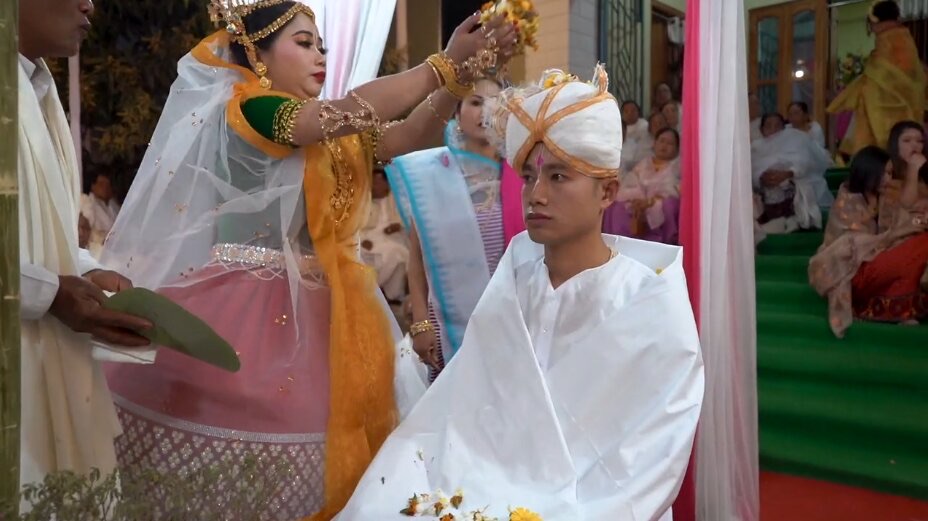
The documentary follows Devi as she is just about to debut in her first professional boxing bout. Although Devi might be in her 30’s, age is not a factor working against the boxer. It is also the many days and months she has to be away from her son. “I Rise” has many such heartfelt moments, be it her son asking deep questions about one’s path in life, or Devi and her husband attending a marriage and discussing their own battles in their love life. “I just put my boxing gear in a bag and told my family I was visiting a relative…soon we got married,” Devi reminisces on how she had to elope to marry her husband.
“I Rise” also takes an important look at the politics and culture of Manipur. Borun, who also served as the cinematographer for the project, does a mighty fine job of capturing the colourful rituals, the diverse cuisine, and the lifestyle of its people. While drone shots may feel a little overused now, the bird’s-eye view of Manipur’s lush green landscape, with Devi methodically jogging through it, still creates striking cinematic moments. The handheld camerawork further adds to the film’s grit and raw texture.
The decision to chronicle Devi’s preparation at a stage when most fighters are past their prime becomes a compelling source of suspense in the documentary. Would Devi be able to prove her detractors wrong? Would Devi be able to break the norm of combat and defeat younger players? After all, the boxing ring is infamous for pairing aging champions with ambitious younger contenders to boost the next generation of stars.
“I Rise” shines a light on the harsh realities of combat sports in India. Until a medal at the world stage brings recognition—and, often, a government job under the current system—even a stellar record in the ring counts for little. When Devi speaks about the hardships of boxing full-time, likening it to being effectively jobless, the film cuts through any romanticism and forces a hard look at the cost of the sport.
For those who follow boxing, the familiar thud of gloves meeting mitts carries its own rhythm, and the documentary captures this with striking precision. Its sound design places you right inside Sarita’s boxing academy, where the viewer is gradually absorbed into the dense, unrelenting soundscape of a training floor.
The project contains detailed research as it interviews many people important to Devi’s life, including her own family members and childhood coaches. Through a series of conversations, we understand what drove the young girl from Manipur towards success. The viewer is left with the impression that perhaps fighting is indeed in Devi’s blood. “I Rise” also does a great job of depicting boxing talent at the grassroots level, the successive struggle and hard work needed to turn raw talent into a diamond. Combat sports for women are yet to be explored extensively, with all their perils in literature and cinema.
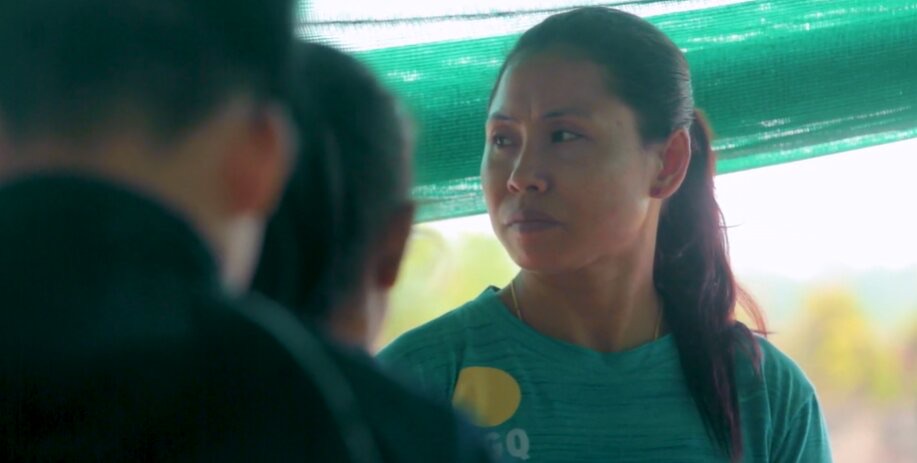
While Mary Kom, who appears in the documentary, is indeed a superstar, many unknown women never get that limelight. “I Rise” does a great job in documenting even amateur fights between girls, and this is where it leaves the audience impressed, as young girls display their granite chins and throw long hooks, straight jabs, and powerful crosses towards their opponents.
Borun’s film stands as a sincere document of the sweet science, observing the everyday rhythms of boxing institutions with a patient eye. It also, quite unexpectedly, turns its attention to children. Footage of underprivileged kids—many from rural backgrounds—training at an academy founded by Devi becomes a vital narrative thread, bringing warmth and lived texture to the film. In doing so, it deepens our understanding of Devi herself, not just as a fighter but as someone committed to opening doors for those without access to formal coaching
Borun and his team also follow Devi through all her trials and tribulations. Boxing is known to throw unforeseen curves at its practitioners. One day you may feel at the top of the world, and the next day you might get injured in a casual sparring session. The documentary also captures this reality while documenting the toll taken by boxing on one’s body as Devi recounts going through an entire tournament with an injured hand. The documentary’s final sequences of Devi performing in her pro debut are also a moment of great catharsis.
After watching her prepare and go through all the sacrifices, her final bout in the documentary against a Hungarian boxer with an impressive professional record will leave the audience on the edge of their seats. Borun does a great job of translating the energy of the ring and the spectators to the screen. With well-designed shots and energetic camera angles and movements, you might just start cheering for Devi from your living room. “I Rise” lives up to its name, powered by the indomitable and charismatic spirit of Laishram Sarita Devi, which holds your gaze through every frame.


![Trenque Lauquen [2022] ‘Venice’ Review: A Curious Mystery That Paints A Fragmented Portrait of a Woman](https://www.highonfilms.com/wp-content/uploads/2022/09/Trenque-Lauquen-2022-Venice-Review-768x432.jpeg)