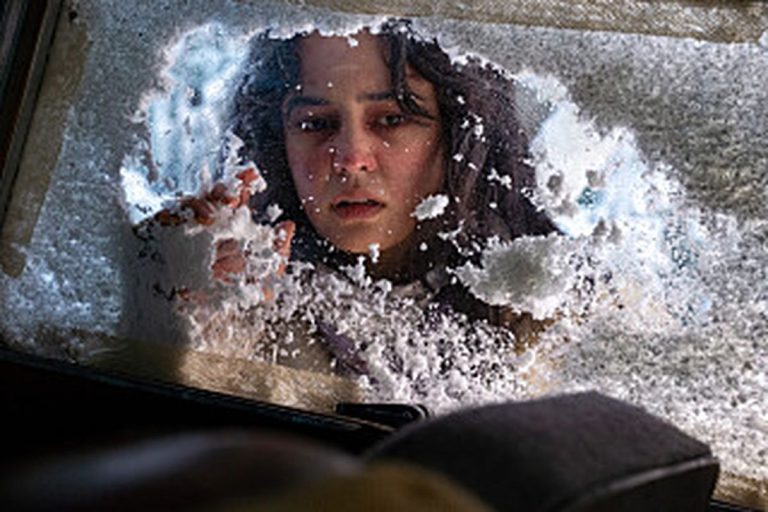
“Jaws” is credited as being the film that kicked off Hollywood’s obsession with summer movies, and it created a formula that has been used for over five decades. Unfortunately, the brilliance that Steven Spielberg showed with “Jaws” ensured that he had set expectations sky high for anyone who tried to make a subsequent shark film.
Spielberg had created something monumental, moving, and thematically dense, and the shark films that followed offered little more than B-movie thrills. It’s not the type of “animal attack” film that can be explained using a straightforward premise, given that some situations require characters to be isolated without assistance in the middle of the water.
“Thrash” admittedly has a decent rough excuse for why its characters would be exposed to the open water. Set during a Category 5 hurricane, the film follows a group of characters who are trapped in a coastal town as the water levels rise, allowing sharks to go further into the land than before. However, “Thrash” is oddly muted when it comes to its shark action, as the film mostly follows the structure of a disaster film, up until the point that something seismic should happen. It’s a film that begs to be either more grounded and serious or completely silly. Tommy Wirkola’s film isn’t fun enough to offset its grating characters and heavy-handed script, nor is it committed to doing anything unique within the subgenre.
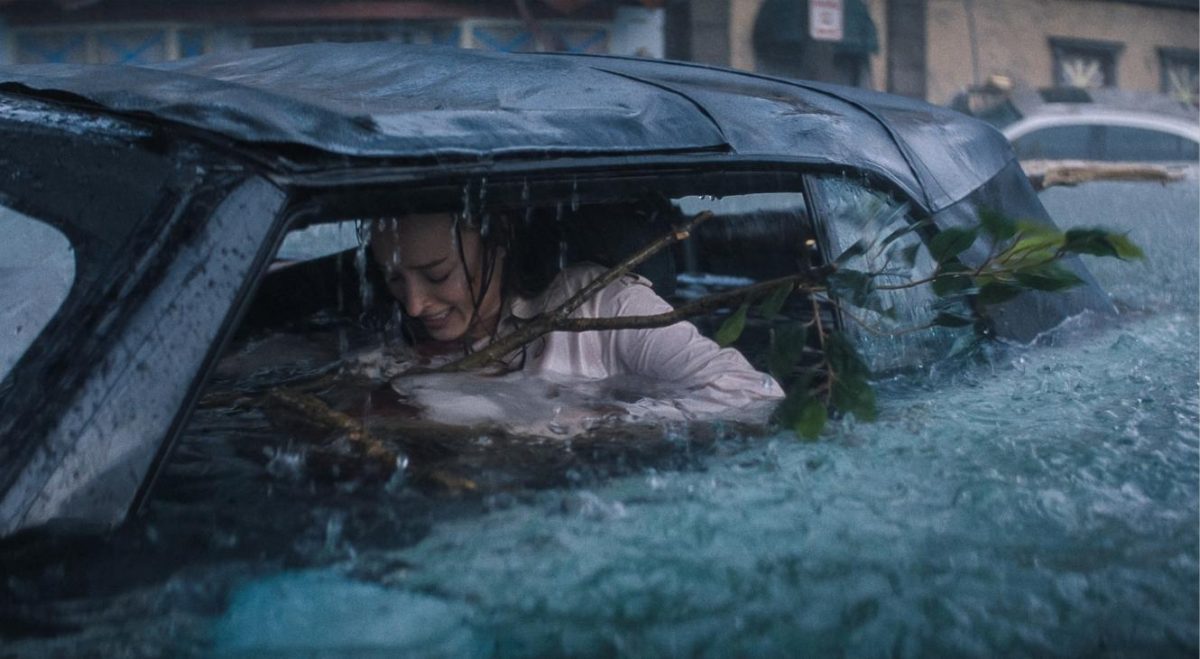
What’s most disappointing is that “Thrash” has a fairly loaded cast, at least when compared to the other, more cheaply made shark-splatter films of the past few decades. Phoebe Dynever stars as Lisa Fields, a pregnant woman who is about to give birth when she becomes trapped in her car in the middle of a hurricane. Those familiar with her work in “Fair Play” and “Inheritance” know that Dynevor can show physical challenges and psychological terror that her characters experience, and has been able to make intimate moments out of otherwise familiar set-ups.
To Dynevor’s credit, she is convincing as an expecting mother who is just barely holding it together during the worst possible time to give birth. What is absent is anything deeper about the character, and the blame for that falls entirely on the script. While it’s initially suggested that Lisa’s failed marriage will come into play within her character’s evolution, it seems to be simply used as a means to generate sympathy for her.
Also wasted in the film is the great Djimon Hounsou, a two-time Academy Award-nominated actor who has been sadly given more roles like this than the type of prestigious, complex work that he has proven himself capable of. Honsou has the most compelling character arc in the film because he is playing Dale Edwards, a marine researcher with expertise in sharks. Edwards is interesting because he makes compelling points about the patterns of shark behavior that most other entries in the subgenre would ignore.
Sharks rarely attack people unless they are provoked, and the scenario in “Thrash” is an extreme example of the creatures being taken out of their natural environment. Yet, that isn’t a theme supported by the rest of the film, as Honsou is mostly used to deliver exposition. The only moments when “Thrash” actually picks up momentum are when Edwards comes to play a more critical role in the story, which occurs far too late.
Every B-movie of this kind is bound to have some sort of obnoxious child character in one of its subplots, and “Thrash” goes out of its way by featuring three. The siblings Dee (Alyla Browne), Ron (Stacy Clausen), and Will (Dante Ubaldi) are more-or-less forced to fend for themselves due to the incompetent nature of their foster parents.
It’s a storyline that feels lifted out of an ‘80s kidventure film, but seeing these young characters in peril is rarely exciting, as they spend the majority of the film constrained to a single set piece. The characters essentially exist as a plurality. They’re all given fairly similar traits, and there’s no significant tension between them that would result in a nuanced conflict.
The only compelling character among the younger protagonists is the teenager Dakota (Whitney Peak), Edwards’ niece, who is grieving the death of her mother. Dakota’s friendship with Lisa has the most ample emotion because they find themselves on opposite sides of parental responsibilities. Lisa is trying to become an adult without a mother to guide her, while evaluating if she will be capable of being a single parent. Peak and Dynevor have strong enough chemistry that it’s actually disappointing when “Thrash” switches back to a less involving subplot.
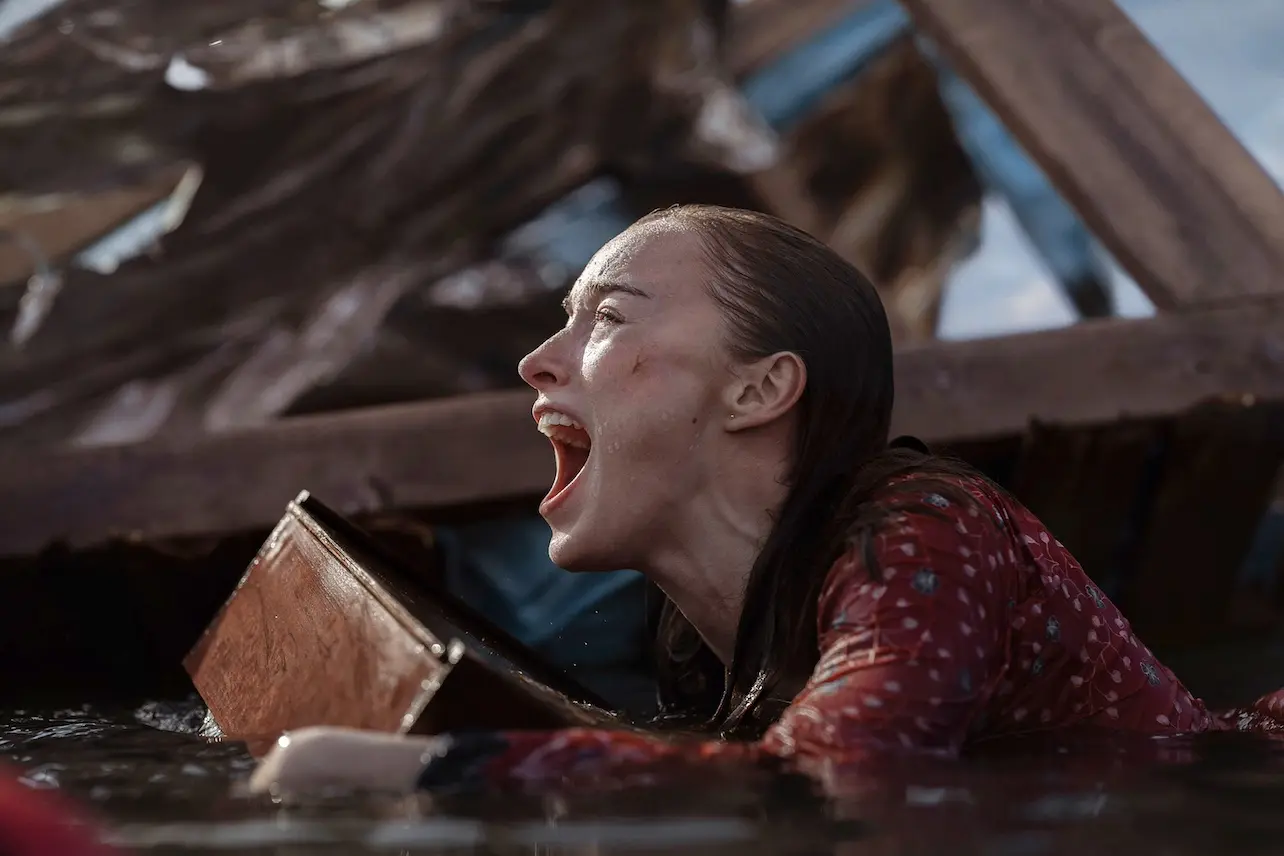
“Thrash” was originally set for a theatrical release before it was shunted off to Netflix, and it’s not entirely hard to see why. Despite the promise of a grizzly shark thriller, there aren’t many memorable kills in “Thrash”. “Jaws” is renowned because the fact that the shark wasn’t visible for almost the entire running time made it more suspenseful, and “Thrash” seems to have taken the wrong takeaways.
The time it spends before the shark attack isn’t useful in creating an environment, as there are no efforts to realize what the fictional South Carolina town is like prior to the hurricane. While the fact that it was shot in Australia isn’t necessarily a bad thing, considering that films rarely shoot in the cities they are set in, it’s one more slight against any semblance of authenticity.
“Thrash” is the definition of a Netflix programmer. It’s entertaining in a few brief moments, but a theatrical release would have only called attention to its glaring flaws. Even those seeking a guilty pleasure might be disappointed to find a shockingly low amount of gore, which is surprising considering Wirkola’s reputation as a member of the “Splat Pack.” Why a shark thriller would be released a month before the summer movie season begins is particularly odd, especially since it should take only a few days for “Thrash” to evaporate from public consciousness altogether.