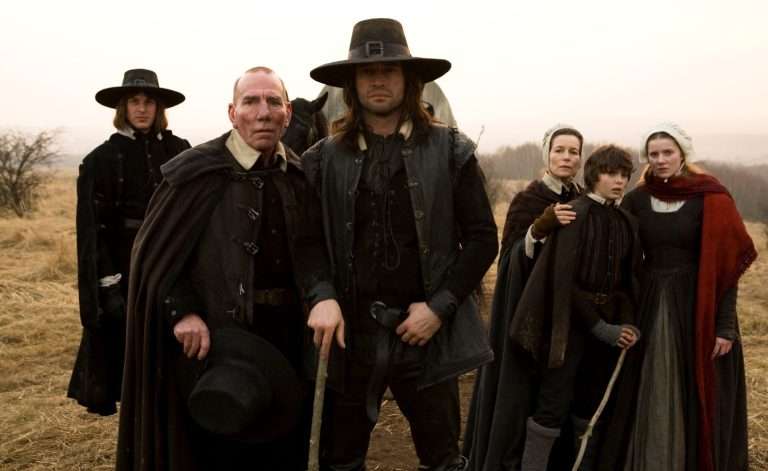
There is a quiet tension running through Suite Française that never really explodes, but it keeps tightening as the story moves forward. It is not just about war or occupation. It is about how people adjust to those conditions, how they carry on with routines, emotions, even relationships, while everything around them feels uncertain. Lucile’s story can be seen as one of the examples for this idea as her gradual change is presented as a process. Lucile cannot be considered a character whose personality or attitude is shaped immediately – she just lives within the framework set up for her by her husband and especially his mother and finally the occupiers. But her change takes place gradually. At least, the author does not present it as a conscious decision. However, by the end of the story one can understand how much has happened inside Lucile as her decisions seem to be determined by her reflections.
Spoilers Ahead
Suite Française (2015) Plot Summary & Movie Synopsis:
What Does the Arrival of the German Soldiers Change in the Village?
Once the Germans arrive, the change is sudden, though not in the sense that most would assume. Unlike the common scenario of wholesale damage and mayhem, the invasion settles into a routine of uneasy familiarity. German leaders settle down in the houses of the locals, occupying not only physical but also psychological space. This causes the locals to adapt to a state of affairs, sharing everything from their living space to their dignity. It becomes possible for resistance to take a more subtle form, sometimes even remaining hidden from sight.
For Lucile and Madame Angellier, this change is especially complicated. They are already living in a household defined by control and unspoken tensions. Madame Angellier maintains a strict hold over everything, including how Lucile is expected to behave. The arrival of Bruno von Falk adds another layer to that environment. Bruno does not behave like the other officers. He is polite, restrained, and carries himself with a kind of quiet distance. This makes him easier to accept on the surface, but it also creates confusion. He does not fit neatly into the image of an enemy. That ambiguity becomes important as Lucile begins to interact with him.
Why Does Lucile Begin to Feel Drawn to Bruno?
Lucile initially attempts to avoid contact with Bruno as much as possible, knowing his significance but keeping her distance as much as possible from him. However, despite trying to stay far away from him, Bruno is quite gentle and subtle when entering Lucile’s space, doing so slowly but surely through their small encounters. Playing the piano becomes a significant event in the film as well, because it allows a brief reprieve from reality, even though it does not make it disappear; in other words, there was no escape from the war but playing allowed Bruno to become more noticeable to Lucile.
What makes this particular scene important is when he gives her a musical note. Giving something so personal in a situation where nothing feels like one’s own anymore makes this scene highly significant for Lucile since it brings back some of the sense of intimacy to her. The discovery she made later on that her husband had been cheating on her and fathered a child makes Lucile question her marriage and herself significantly. Her connection with Bruno grows in that space of emotional confusion. It is not built on certainty or clarity. It feels tentative, almost like something she is not fully allowing herself to name.
How Does Benoit’s Story Reflect a Different Kind of Resistance?
While Lucile’s story unfolds in a quiet, internal way, Benoit represents a more direct response to the occupation. His frustration is visible from the beginning. He had wanted to fight in the war but was unable to because of his injury, and that sense of being denied purpose stays with him. Kurt Bonnet’s behavior toward Madeleine intensifies that frustration. The harassment is not subtle, and it places Benoit in a position where inaction becomes harder to justify. His acts of resistance begin small, like stealing the soldiers’ clothes, but they carry a symbolic weight.
They are a way of pushing back, even if only slightly, against the control imposed on them. The situation escalates when Benoit is discovered stealing a chicken. His reaction, pointing a gun at the Viscountess, shifts the tone of his actions. It is no longer just about resistance. It becomes something more dangerous, more immediate. When he later kills Kurt while hiding, it sets off a chain of events that affects the entire village. The consequences of his actions do not remain contained. They spread outward, forcing others to respond.
Why Does Lucile Decide to Hide Benoit?
When the Germans demand that Benoit be surrendered, the threat becomes collective. The villagers are given a deadline, and the stakes are made clear through the hostage situation involving the Viscount. Madeleine turns to Lucile for help, and this is where Lucile’s internal conflict begins to translate into action. Hiding Benoit is not a simple decision. It carries risk, not just for her, but for Madame Angellier and the household. Madame Angellier’s reluctance reflects a different kind of survival instinct. She believes in maintaining order, in avoiding unnecessary danger.
For her, protecting what remains of their stability feels more important than taking a moral stand. Lucile moves in the opposite direction. Her choice to hide Benoit is not presented as a dramatic act of rebellion. It feels quieter, more personal, almost like something she cannot avoid doing once the situation is in front of her. As Benoit hides in the attic, the house itself becomes a space of tension. Bruno’s presence in the same building adds another layer to that tension. Lucile is caught between two realities that are increasingly difficult to separate.
What Does Bruno’s Behavior Reveal About His Character?
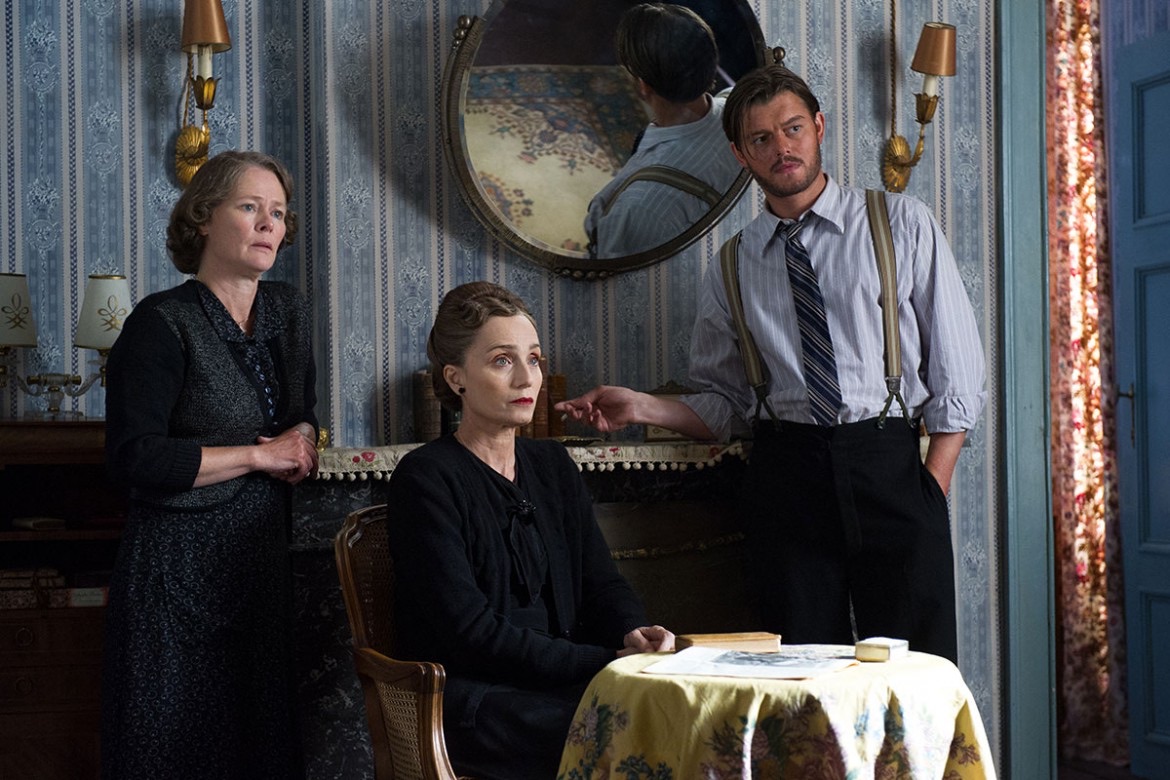
However, Bruno’s role becomes much more ambiguous with the progression of the story. As a member of the occupation forces, Bruno never denies that fact. Still, his actions tend to contradict the most brutal manifestations of such a role. For instance, when Lucile asks Bruno to help correct Kurt’s behavior, he agrees instantly. This implies that Bruno has his personal principles or codes that dictate his conduct regardless of the organization to which he belongs. However, at the same time, Bruno appears to be very well integrated into the occupation forces.
For example, he does not disobey any order, nor does he protest against the existing system. Thus, it seems that Bruno tries to find some equilibrium between the two roles – soldier and protector of women. In turn, this ambiguity leads to Bruno being rather ambiguous in Lucile’s eyes. He cannot be regarded as an ally or a foe since Lucile is unable to categorize him. In addition, this ambiguity makes itself felt more strongly as Lucile falls for Bruno. Moreover, Bruno seems to be aware of Lucile’s position. There are instances when it feels like Bruno knows more about Lucile’s affairs than he lets on.
Why Does Lucile Decide to Help Benoit Escape?
It should be noted that the execution of the Viscount is a critical element of the narrative. Indeed, this episode reveals the full extent of the consequences of resistance, as well as the willingness of the Germans to fulfill their threats. On the one hand, the event makes the villagers understand that there will be collective retribution in case of disobedience, which implies additional challenges. On the other hand, it makes Lucile think about her actions more seriously because the man she is hiding is more dangerous than ever before. In general, one can say that the atmosphere in the village changes considerably. In particular, there is less space for speculation because everyone clearly understands what happens when people choose the wrong course of action.
As soon as the Germans decided to leave the village, Lucile found an opportunity to move Benoit out of the place he had been hiding for a long time. Namely, the girl offered to send him to Paris, where the resistance movement began to emerge. It would seem that Lucile’s decision to cooperate is quite strange since, at first glance, it differs from her previous actions. Nevertheless, one can argue that this option looks logical, just like the other choices she has been making. Convincing Bruno to give her a travel pass becomes a crucial step. This interaction carries a quiet tension, because it relies on the trust that has developed between them. Bruno agrees, but there is a sense that he is aware of more than he lets on. At the same time, suspicion grows among the German soldiers. Bruno’s orderly begins to question Lucile’s actions, setting the stage for the confrontation that follows.
What Happens at the Checkpoint and Why Does Lucile Hesitate?
It is in the checkpoint sequence that all seems to come to a climax, yet in such a way as if everything had been predetermined while nothing had been set yet. At first, Benoit starts to shoot the two guards who try to examine Lucile’s vehicle according to the order received from Bruno’s orderly. He gets himself injured in the attempt and prepares for the coming confrontation. The confrontation occurs when Bruno finally appears. Lucile takes her gun and aims it at him. This creates another turning point of the whole plot and puts the reader under a strong pressure that makes one want things to go differently. The girl’s inability to kill Bruno is clearly seen in the fact that she hesitates for a few moments while holding the gun towards him. She is not fighting against an opponent anymore; rather, she is dealing with the man she started to know better than before. Shooting him would solve many problems, but Lucile cannot afford it.
Suite Française (2014) Movie Ending Explained:
Why Does Bruno Let Lucile and Benoit Go?
Bruno’s attempt to save Lucile and Benoit from being arrested cannot be seen as a grandiose act of rebellion. On the contrary, his actions appear to be rather localized and private, like they are taking place beyond the system he belongs to. Bruno’s behavior is driven by clarity of mind. He knows about Lucile’s activities and understands the consequences of ignoring his duty as an officer. However, in his actions, Bruno behaves like an ordinary person, rather than like a policeman who must do everything according to the book.
Although helping Lucile and Benoit get into the car is just a simple gesture, it is full of symbolism and carries much deeper meaning. In the context of this film, it is a statement showing that Bruno is willing to deviate from his duties and take a stand for something higher. His act does not require any verbal explanations – it was enough for him just to do it. Bruno’s actions elicit Lucile’s reaction, a brief smile when they drive away together. While such a smile may not be considered a solution to their problems, it still shows that Lucile understands them better than before.
After reaching Paris, Lucile and Benoit join the resistance, becoming part of a larger effort to push back against the occupation. This shift places Lucile in a role that would have seemed unlikely at the beginning of the story. Her journey does not feel like a complete transformation into someone entirely different. Instead, it feels like a gradual uncovering of something that was already there, shaped by the circumstances she found herself in. Bruno’s fate, learning that he dies later in the war, adds a quiet layer of reflection to the ending. His presence in Lucile’s life does not continue, but it does not disappear either.
It remains in the form of the music he gave her, something that carries the memory of what they shared. What the film leaves behind is not a clear answer about right and wrong. Instead, it sits in the space between those ideas, showing how people navigate situations where those lines are difficult to define. Lucile’s choices do not erase the reality of the occupation, just as Bruno’s actions do not remove his role within it. Yet within that complexity, there are moments where individuals act in ways that feel separate from the systems around them. That is where the film seems to settle, not in resolution, but in recognition of how complicated those moments can be, and how they continue to exist even in the middle of something as overwhelming as war.