There is an undercurrent of quiet tension that runs throughout “180” but does not announce itself in any big way. It is the underlying factor that exists under the events, under the violence, and even under the grief. While this movie starts like many others dealing with grief, it quickly becomes clear that it is about much more than just getting revenge. Zak is not a new person because of his son’s death. What the film shows, more uncomfortably, is that the conflict was already there. The tragedy simply exposes it.
Spoilers Ahead
180 (2026) Plot Summary & Movie Synopsis:
Why Does Zak Struggle with the Idea of Standing Up to Power?
The incident on the road sets the emotional foundation for everything that follows. When Zak is stopped at gunpoint, his reaction is immediate and instinctive. He pleads, lowers himself in front of men who clearly hold power over him in that moment. There is nothing unnatural about this response. Survival often demands surrender. What unsettles Zak is not what he did, but what it represents in contrast to what he has always told his son. Mandla has grown up hearing that courage means standing your ground. That belief sounds clear in theory, but the moment it collides with real danger, it becomes far more complicated.
Zak recognizes that contradiction almost instantly. Even though Mandla is spared, the moment lingers. It reshapes how Zak sees himself in his son’s eyes. The discomfort does not come from fear alone. It comes from the awareness that he may not be the example he thought he was. That quiet fracture becomes important. It does not explode immediately, but it begins to influence every decision he makes afterward.
Why Does Zak React So Strongly at the Cricket Academy?
When Mandla calls him about being bullied, Zak’s response carries a sense of urgency that feels disproportionate to the situation itself. He arrives not just as a concerned father, but as someone who is trying to correct something unresolved inside him. The confrontation is measured on the surface. Zak does not resort to violence. He uses authority, threat, and presence to establish control. However, the purpose of this moment extends beyond protecting his son. It becomes a way for him to reclaim the version of himself that felt compromised earlier in the day.
Mandla’s reaction reinforces that effort. The pride he shows is subtle but unmistakable. Zak notices it, and it brings a temporary sense of relief. For a brief moment, he feels aligned with the image he wants to project. What complicates this moment is Zak’s admission afterward. He reveals that he would not have actually followed through with calling the police. The threat was enough. The outcome mattered more than the truth behind it. That detail introduces a gap between perception and reality. Mandla sees strength. Zak knows it is more fragile than that.
What Turns the Roadside Argument Into Something Irreversible?
The accident itself begins as something ordinary. A traffic violation leads to a collision, and the situation could have remained contained within the boundaries of argument and blame. Zak’s emotional state prevents him from staying there. He carries the residue of the morning with him. The earlier humiliation has not settled, and the pride he regained at the academy still feels recent. When the men from the van challenge him and question his courage, the words strike deeper than the situation alone would justify. Walking away would resolve the immediate conflict.
However, it would also reopen the internal doubt that Zak has been trying to suppress. His decision to stay is shaped less by the accident itself and more by the need to maintain a sense of identity in front of his son. The subsequent escalation seems to be more random than planned. As soon as it comes to blows, any semblance of control vanishes immediately.
When the gun comes into play, the game is completely changed. Although the shot that takes Mandla’s life is not meant for him, it holds the full weight of all events that led to it. What makes this tragedy even worse is the lack of a definitive point where a course correction might have been possible. It begins with decisions that initially seem easy to handle but eventually become impossible to undo.
Why Does Zak Turn Toward Revenge Instead of Processing His Loss?
After Mandla’s death, Zak does not move inward. He moves outward. Grieving involves an aspect of stillness that Zak cannot embrace. To grieve properly would mean confronting not only the occurrence of the event, but also his own involvement in its occurrence. This is more challenging than turning his attention elsewhere. Pursuing the perpetrators helps to give structure to the experience. Without the ability to find meaning in his suffering, he must look for some way to channel it.
In addition, the task of finding fault lies outside of himself. As an inexplicable occurrence, it seems impossible to come to terms with. Finding fault, even without complete information, gives him some sort of direction. Even in searching for clues, his actions are motivated by a sense of urgency, not patience. Every new piece of information keeps him busy, and every new clue enables him to avoid the real problem.
How Does Zak’s Past Influence His Present Choices?
With the history of Zuko, it can be observed that Zak’s association with his rage was formed well before the murder of Mandla. The events related to the character in the past show how he used to react first and think next. These trends are consistent throughout the movie. When Zuko was ready to take the blame, the viewer gets an idea of how Zak had always been insulated from facing his own choices. At this time, he does not have anyone who could protect him.
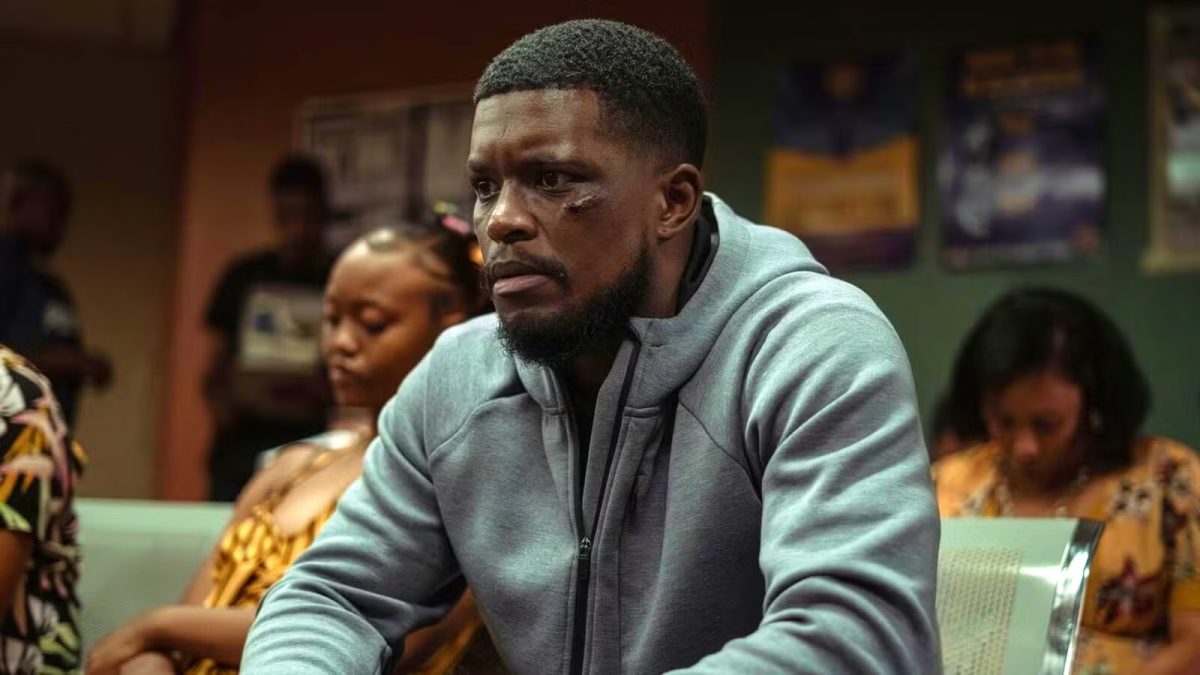
When investigating Mandla’s murder, Zak’s traits start appearing again. He is quick and unthoughtful with respect to the consequences of what he is doing. The lack of justice only increases Zak’s rage and forces him to act. His surroundings seem to reinforce that notion because authority is considered to be corrupt and weak. It creates a vacuum filled with the idea that taking things into one’s hands is the only course of action left to someone. However, the way Zak operates suggests that he may not completely control his actions and emotions. His revenge is more emotional than anything else.
Why Does Zak’s Search for Justice Begin to Harm the People Around Him?
Once Zak fully commits to his path, the consequences expand beyond his original goal. His encounter with Shoes marks a significant shift. The act of killing emerges from a combination of fear and anger rather than intention. That moment changes the nature of his journey. The line between seeking justice and participating in violence becomes increasingly blurred.
His relationship with Zuko deteriorates soon after. What begins as a request for help turns into a confrontation. The resulting injury to Zuko reflects how far Zak has moved from any sense of control. The situation escalates further when Ezekiel’s men target Zak’s family. Zuko’s death transforms the story from a singular loss into a chain of consequences.
Each action now leads to another, pulling more people into the conflict. Zak’s inability to pause or reconsider allows this chain to continue. The original purpose of his actions becomes harder to separate from the damage they create. Zak’s confrontation with Lerumo carries the expectation of resolution. He believes he has identified the person responsible for his son’s death. That belief has guided his actions up to this point. The moment unfolds differently than expected. Even when Zak manages to overpower Lerumo, the encounter does not provide the sense of closure he has been seeking.
Lerumo’s final words introduce a crucial shift. The responsibility Zak has been assigned turns out to be misplaced. The man he has been pursuing is not the one who fired the shot. This revelation disrupts the narrative Zak has constructed for himself. The clarity he relied on begins to dissolve. The target of his anger changes, but more importantly, the certainty behind that anger weakens. What remains is a more complicated truth. The incident was not driven by a single, clear intention. It emerged from confusion, fear, and escalation.
180 (2026) Movie Ending Explained:
Why Does Zak Finally Step Away from Revenge?
The encounter with Karwas unfolds with a different emotional tone. The confrontation is more contained, less chaotic, and it allows space for something absent until now: reflection. Karwas does not attempt to justify what happened. He acknowledges it as a mistake. That acknowledgment carries weight because it removes the sense of deliberate harm that Zak has been holding onto. The presence of Karwas’s son introduces another layer to the moment.
The dynamic between father and child mirrors what Zak has lost. The fear in the boy’s reaction reflects the same vulnerability that Mandla experienced. This is when Zak’s perception changes. The rage that has been his guide loses focus. The events do not easily fit into the way he sees them. Instead, he discovers the idea that there is more vulnerability than he expected.
There is no clear distinction between the one being harmed and the one harming. Zak’s choice to stop is not based on any one insight. His choice comes from a sum of experiences. The acknowledgment that the shooting was not intentional changes how he interprets the event. The presence of Karwas’ child forces him to confront the possibility of repeating the same cycle.
Continuing on his current path would extend the chain of violence further. It would create new losses without addressing the original ones. Zak does not find peace in this moment. What he finds is a limit. A point where continuing no longer offers anything that resembles resolution. Stepping away becomes less about forgiveness and more about refusing to carry the cycle forward.
Is Zak Dead at the End of 180?
The final sequence leaves Zak’s fate unresolved in explicit terms, but the context suggests a direction. The appearance of the vehicle associated with Ezekiel’s network implies that the threat has not disappeared. Zak’s earlier actions have created consequences that continue to follow him. What stands out in this moment is his demeanor. There is a noticeable absence of urgency in him. He does not attempt to escape or confront what may be coming. His posture reflects a form of acceptance.
Whether he survives or not becomes secondary to the state he has reached. The internal conflict that defined his journey has settled in a way that it had not before. “180” ultimately examines the tension between perception and reality, particularly in the way individuals define strength. Zak spends much of the film trying to align himself with an idea of courage that leaves little room for hesitation or restraint.
That idea influences his decisions in ways that lead to irreversible consequences. The story gradually reveals that strength cannot be reduced to a single behavior. Standing one’s ground carries value in certain situations, but it becomes dangerous when applied without context. Zak’s journey reflects the cost of holding onto a rigid understanding of what it means to be strong.
By the end, he reaches a point where that understanding begins to shift. The loss he experiences remains unchanged. What changes is how he interprets the path that led there. The film does not offer a sense of resolution in the traditional sense. It leaves Zak in a space where clarity exists alongside uncertainty. That balance reflects the reality of his situation more accurately than a definitive conclusion would.