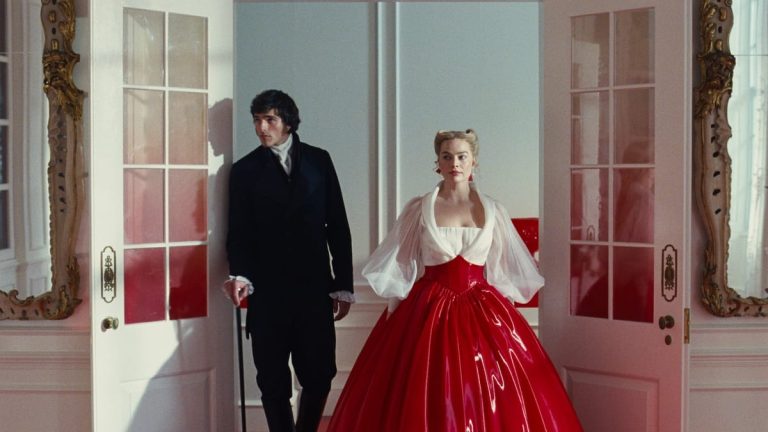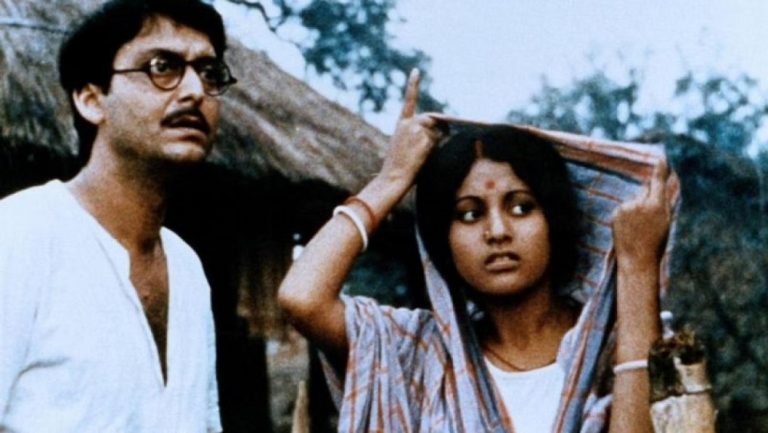
Excuse my audacity, but I will go a little out of the way and claim that you haven’t watched the entire painting unless you watched “Dead Poets’ Society” alongside “Cracks.” Because that’s exactly what it felt like watching them together – like a diptych. Two separate puzzle pieces make sense only when they come together.
“O Captain! My Captain”
There are very few dialogues that actually call out to me and settle in my brain for years. I watched “Dead Poets Society” last year – in 2025 – and I still think about it every now and then. And the dialogue coming from Todd Anderson (Ethan Hawke) at the end of the film, it hit me harder than expected. I think it was not because Todd Anderson decided to defy the system, but I think it was hard-hitting because it was Todd Anderson specifically. I watched him fumble, unable to write his own poetry, which connects with me on a personal level. He exists almost entirely in the shadow of an accomplished older brother.
At the end, I watched him grow. He finally found his voice, even though it was shaky. The other students around him hesitated, thinking about the what-ifs. But one by one, they stood up. It only takes one person to change the flow. And that is the clear representation of what John Keating taught them throughout the film – not rebelling just for the sake of it but to find themselves in a system that is against ‘individual freedom’.
I watched Jordan Scott’s “Cracks” (2009) a little later, and it felt familiar but also so very different. If we look at the settings of both films, they kind of share overlapping themes. It almost seems like watching the same story all over again. However, the emotional effect that both these films left on me could not be more different. “Dead Poets Society” (1989) treats rebellion as a path towards individuality. “Cracks” (2009) treats it as something romantic, alluring, almost like seduction. Miss. G from “Cracks” and John Keating from “Dead Poets Society” push their respective students towards freedom, but the underlying intent makes all the difference.
When Keating tells the boys to tear out the introductory pages from their poetry books, the scene was utter chaos, but also liberating. I felt it through the scene. Truth be told, in educational institutions, we are told that our interpretation matters, but they rarely do. We are expected to abide by the interpretations fed to us. Keating is precisely asking his students not to treat authority as a sacred text. He is asking them to make their own interpretations.
The Dead Poets’ Society’s club meetings in the cave make this explicit. Keating was initially a part of the original Dead Poets Society club, but the boys revived it themselves. They go to these caves and read poetry with feelings of their own. To them, this is how they step out of the institution to access freedom. John Keating knows that, and that’s why he doesn’t come back and join the club. He lets them be. See how he is once again pulling the focus outwards.
Miss. G takes out the girls for a late-night swim under the moonlight. Cinematically, the scene felt like a painting, and in hindsight, it was just not in my head. Now I might sound ambitious, but John William Waterhouse’s “Hylas and the Nymphs” (1896) could perhaps be seen as an inspiration for this scene, intentional or not. Warehouse painted the moment water nymphs lure in Hylas, a young companion of Hercules, to his death. The swim scene in “Cracks” has exactly that quality, but metaphorically.
It looked like freedom because they were away from the institution, unclothed and free in the darkness. It was the only space in the film where the rules did not reach the girls. But there was still a leash on them. Miss. G’s leash. Unlike Keating, she has not dismantled a structure. She created one where she is the centre. The girls did not notice this because the entire atmosphere is very different from the school. That is the sleight of hand the film keeps pulling. Every act of apparent rebellion filters through Miss. G. The girls can access the freedom, but only through Miss. G.
This becomes more visible through one particular exchange between Fiamma and Miss. G. Fiamma asks Miss. G why she never leaves. She is free to leave whenever she wants. So, why does she stay? Miss. G answers, “I stay for my girls. I will leave when they leave.”
What makes it have depth is the way Eva Green (Miss. G) delivers these lines. There is a slight detachment in her voice, almost like a cockiness. It was followed by silence. Miss. G is dancing around a truth that she cannot speak out loud. The freedom that she was selling these girls is a freedom she, herself, has not possessed.

Also Read: 20 Great Movies That Students Should Watch
Fiamma, who was a newcomer, saw through these cracks. She is a Spanish aristocrat who is well read and well traveled. She is exactly the way, Miss. G had presented herself to the girls. There were scenes where the audience sees Miss. G is talking about her travels to exotic countries like India and Africa, places that some of them will never visit. Her idea of rebellion is always inwards, towards herself. She is always the centre of these stories. She is giving access to these exotic adventures only through herself. The camera notices too. It slowly moves across the girls’ faces as they listen to her, almost in a trance. As if it were devotional.
I realised there is a term for what Miss. G is doing. Max Weber, a German Sociologist, calls it ‘charismatic authority.’ He described charismatic authority as a form of power that rests not on rules or institutions but rather on the perceived exceptional qualities of a leader. A leader who has seen the unseen, who has touched something the others cannot. It also depends on the followers who continue to believe. Miss. G understands this instinctively. Everything she does is in service of keeping that belief intact.
This is where Di Radcliffe becomes the most interesting character for me in the film. Her whole life revolves around Miss. G. She is ambitious, yes, but her individuality is hollowed out by Miss. G. Di wants the position beside Miss. G believes the world will be provided to her only in this way. So when Miss G favours Fiamma, Di feels existentially threatened. Because in Di’s mind, losing that place means losing access to everything beyond the geographical boundaries of St. Mathilda’s. She had started equating Miss. G as the outside world.
I also started seeing traces of “The Secret History” by Donna Tartt. Tartt’s novel is also set in an academic world where an ‘elite’ group of students is closely taught and favoured by a charismatic teacher named Julian. What Tartt is writing about, I think, is how intellectual seduction works. Julian never instructs his students to do anything violent. He simply creates a world that is so sealed that the students slowly forget about the outside world. They almost become devotees of Julian. By the time Bunny is killed (sorry for the abrupt spoilers, but hey, I had to prove my point), the group doesn’t feel remorse or see it as monstrous. Julian knew what was about to happen, yet he stayed silent.
Miss. G runs the same operation. She never explicitly states to harm Fiamma. But the jealousy and hierarchy that is created because of her does it anyway. What followed was absolutely Di’s violence, and that’s exactly what Miss G wanted. Miss. G stays untouchable while Di becomes the tool. The hunting scene of Fiamma in “Cracks” is probably the one that I think about the most even now. It was disturbing, but also needed.
The girls chase Fiamma into the woods. They corner her and physically assault her, leading to her death. Watching it, I could closely relate it to “Lord of the Flies” by William Golding. Golding’s point was that savagery can happen when the right conditions are built around people. The girls were not the monsters here. Fiamma saw through Miss. G’s performance when she realised that Miss. G’s exotic travel stories are actually taken from the writings of a Victorian book by Mary Kingsley. The woman who sold herself to the girls as a window to the outside world has never stepped outside. In fact, Miss. G has severe agoraphobia. It becomes clear during Miss. G’s brief trip to the town sends her spiraling down.
When Fiamma names what she sees, Miss. G does not crumble. She escalates her dominance. Desire, she had told her girls, is the most important thing in the world. What she hadn’t told the girls is that her own desire has been shaped into something much darker. Miss. G wants to become Fiamma. Both Neil Perry of “Dead Poets’ Society” and Fiamma of “Cracks” both attempt an escape. There was a scene backstage after the play “A Midsummer Night’s Dream” where Keating finds him and asks him what his father thinks about this. Neil tells him that he feels trapped. Keating instructs him to have an honest conversation with his father. Keating believes in the power of words – as we have already seen.
It is a bittersweet scene because you can already feel the ending approaching. Keating had a blind spot. He underestimated the system Neil was living inside. Neil performs the play anyway. He comes home still wearing the costume and eventually takes his own life. Fiamma’s rebellion moves outward. She runs away from the grounds of the institution. She finds a payphone and calls her father. One point worth calling out is that she had no resources, yet she was not panicking as Miss. G was. She is, in many ways, the freest character in the film. Yet, she is the one who was unable to get out.
By the end of “Cracks,” Di’s character graph changes drastically. She watches Miss. G cradling Fiamma after her death. She sees that Miss. G could have saved Fiamma. Di finally realised what Miss. G actually is. And Di does what Miss. G could never. She steps out of the institution. She takes the leap of faith. We see the student becoming what the teacher couldn’t. Di became the authentic Miss. G.
Both films end with a tragedy. Both ask the same question – when does the pursuit of freedom become so consuming that it destroys the very person seeking it? Keating’s ‘carpe diem’ always belonged to his students. Miss. G’s version was always tethered to herself. Stand up on the desk, by all means. But it matters who asked you to stand up there.