A self-described piece of vérité non-fiction filmmaking, “American Doctor” opens with the first and only sighting of its debuting director, Poh Si Teng, in the presence of one of her primary subjects. Dr. Mark Perlmutter shows on his tablet a gruesome image of Palestinian children lined up on a mat, their dead bodies brutally mangled by the Israeli occupation forces—just a handful of the hundreds of thousands to have faced such atrocity in the past two years.
As an out-of-focus Teng expresses a desire to pixelate the image, hoping not to alienate the viewers who need to be exposed to the greater horror, Perlmutter instantly shuts down that inclination; “You have a responsibility, as I do, to tell the truth. You pixelate this, that’s journalistic malpractice.”
It’s a disarming opening not only because “American Doctor” immediately and directly subjects its own filmmaker to a moment of humbling, but also because it establishes, within mere minutes, the fury and fervor for justice that drives its titular physicians to risk their lives in the quest to dull the pain of a dehumanizing massacre that sees no end in sight, and no refuge for those whose sole motivation is to protect the wounded. Perlmutter’s anger is one borne out of years of frontline experience, not just towards the atrocities facing the Palestinian people, but also the unbothered refusal of governmental suppliers back home to heed any of the desperate calls for peace.
Perlmutter, a Jewish-American doctor, is in actuality just one corner of a trifecta of physicians that make up the focus of Teng’s documentary. Perlmutter’s blunt, open-hearted attitude is met by the level-headed and media-savvy Dr. Feroze Sidhwa, a Zoroastrian-American doctor with just as much experience attending to the wounded and dying in the Gaza Strip. Dr. Thaer Ahmad, a Palestinian-American, has the most personal stakes in witnessing the destruction of his ancestral homeland, made all the more heartbreaking by the fact that he’s the only member of the trio who never spends any time during filming in Gaza at all.
Also Related: Everybody To Kenmure Street (2026) ‘Sundance’ Documentary Review
This is primarily a factor of the Israeli government refusing to grant the authority for Ahmad and other physicians and journalists of Palestinian origin the right to enter the country even for humanitarian purposes—oftentimes, this final refusal comes the night before intended travel as Ahmad and his cohorts are waiting at the Jordanian border—which immediately sets the tone for the frustrating hurdles that come about not only in terms of bureaucracy, but also the systemic approval of these duplicitous tactics across the West.
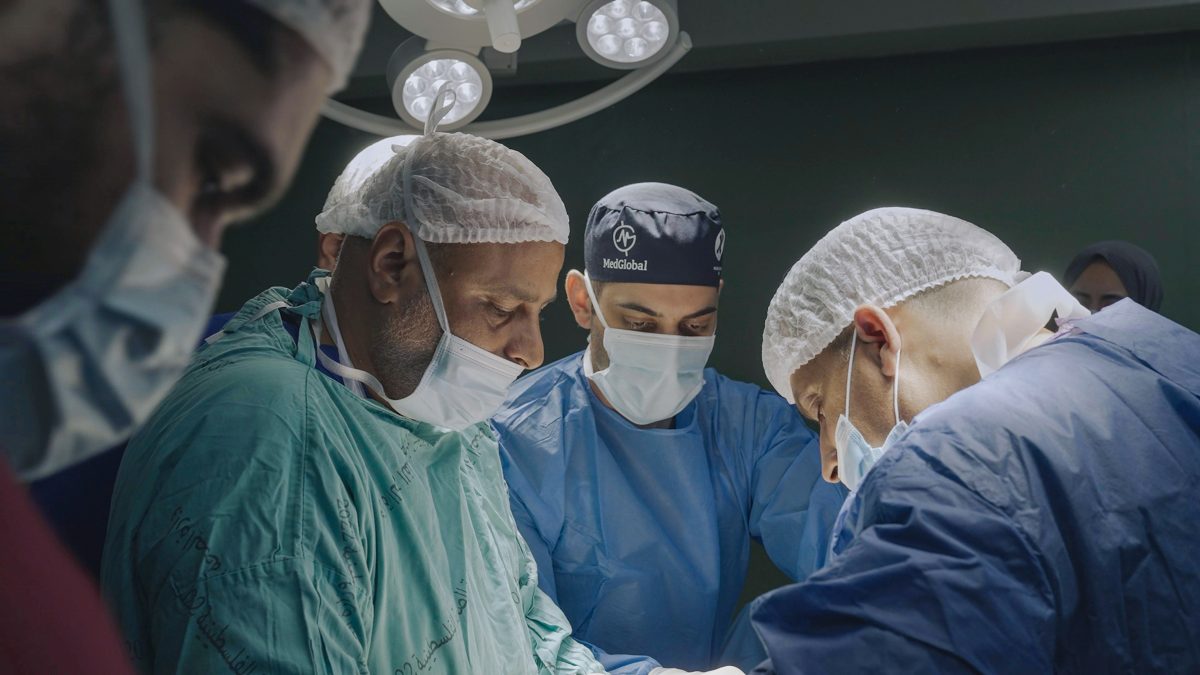
“American Doctor” spends no small portion of its screentime in the heart of Gaza as Perlmutter, Sidhwa, and local Palestinian doctors work around the clock at Nasser Hospital stitching together children’s broken tendons and removing shrapnel from victims of bombings. One horrific anecdote comes as a meaningless tease from Perlmutter to “tell your girlfriends you’ll call them later” strikes a chord with a local doctor whose 10-month-old daughter died when he was too backed up with the injured in his ward to properly check in on his family.
As the film evolves, however, and the aggravations move towards the systemic powers that allow these terrors to go on unimpeded, Teng gradually shifts her focus to the doctors’ efforts to publicize the injustices they’ve seen, and fight continuously as they see their pleas falling on deaf ears.
More Related: TheyDream (2026) ‘Sundance’ Documentary Review
Perlmutter, and the film surrounding him, make no pretenses about the fact that his position as a white, Jewish-American gives him a preferable position compared to his colleagues to speak on this issue without typical accusations of antisemitism, and as Teng replays the doctor’s more-than-willing use of his platform to brusquely put CNN anchors in their place, so too does she center the perspectives of her other subjects, as their own positions are less solidified in the media.
Even with Sidhwa’s “neutral” ancestral background with regards to the horrors he views daily, Teng affords him the space to express trepidation at the ultimate value of his colleague’s willingness to go on unfiltered through channels that have no intention of listening in good faith, fearing that it often leads to a form of “guilt by association” for those like him and Ahmad accused of “sympathy with terrorists” without the shield of privilege.
The chips are, by design, stacked against them, but “American Doctor” never relents on the doctors’ continued efforts to spend every moment they aren’t on the hospital floor in Gaza fighting to penetrate the walls that legacy media puts up in front of them. Ahmad’s activism remains firm on the streets. Sidhwa goes on podcast after podcast relaying the call for humanitarian mercy, and Perlmutter refuses to let up on the reality that Judaism and Zionism are not synonymous in the slightest. The trilateral division of focus isn’t seamless, but Teng never loses the core of the issue, which is the necessity to truly, as her subjects put it, diagnose the malady.
It’s only after an hour that Teng even manages to get all three doctors in the same room, as a trip to the US capital leads to a series of futile meetings with senators and their representatives who, like all those previously on the doctors’ paths, have nothing to offer but prepackaged platitudes about sympathy and false ceasefires.
“American Doctor” never builds to any bombshell sound bytes of one of these senators covertly revealing their callous disregard for Palestinian life on tape, and the film certainly doesn’t need any such exposé to tell us as much. Their disinterest is clear enough from their absence, and their refusal to say anything, on- or off-camera, speaks volumes.