There is a thin line between the uncanny and the merely overworked. “Amoosed (Amoosed: A Moose Odyssey, 2026)” spends much of its runtime on the wrong side of it. Hana Nováková’s debut has the outline of an intriguing oddity. It moves between environmental concern and a persistent effort to treat the moose as something half-sacred. The film wants the moose to carry more than its physical presence, as if the animal were always being made to stand for something else. The premise has real potential. A film attentive to the moose as both creature and invention could have become strange in a genuinely illuminating way. Instead, “Amoosed” keeps pushing for strangeness without finding a form that can hold it.
The film also returns to the stars, tying the moose to an older myth in which it appears to humans in a time of need and offers itself almost divinely as salvation. In that story, the animal is never fully possessed. It comes and goes on its own terms. This is one of the film’s stronger ideas, because it treats the moose not as raw material for human meaning but as a figure that exceeds human control.
Nearly every formal choice is designed to unsettle. The editing is so aggressively disjointed that it starts to resemble a horror trailer stretched past its natural limit. Shots arrive in constant agitation, as though the film were afraid to let an image rest long enough to reveal what it contains. The handheld camera shakes and lunges.
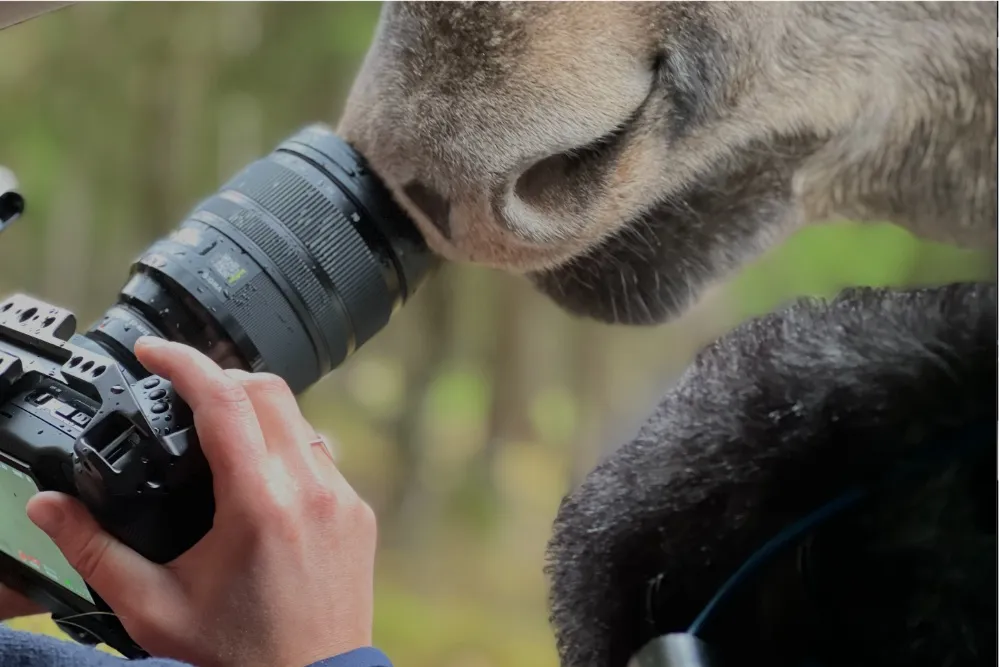
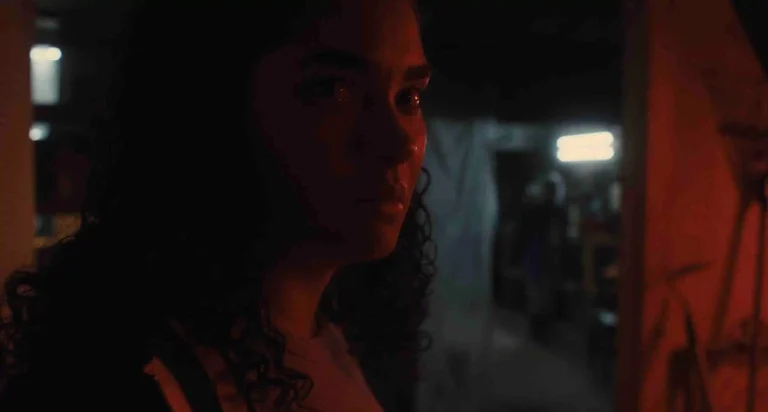
Nováková keeps returning to close-ups of taxidermied moose eyes and silhouettes caught in dim light at the edges of the frame, as though proximity alone were enough to make the image uncanny. Over all this hangs a soundtrack borrowed from the more self-serious end of prestige horror. It keeps signaling dread before the film has found a reason for it. The effect is not mystery so much as fatigue.
That fatigue matters because the film is not simply trying to be eccentric. It wants the moose to feel unstable, never just an animal, and never fully free of what people want to see in it. That idea has force, especially at a moment when talk about nature so often carries nostalgia, grief, and a desire to preserve what is already slipping away. But Nováková never finds a form that can carry that material with enough control. The result is frustration once it becomes clear that the filmmakers are pursuing strangeness for its own sake.
That is the central problem. A strange film is not enough just because it is obscure. It has to change the way the viewer looks at what is there. “Amoosed” never really gives the viewer room to enter the material on their own, because the film keeps forcing the mood so aggressively. Instead, it insists on its own atmosphere. It trusts its own oddness so completely that it stops asking what that oddness is actually adding.
This is especially clear in the relation between sound and image. The score tells us how portentous the images are supposed to feel. The close-ups of taxidermy and the nervous camera movement might have worked in another context, or at a shorter length. Here, they contribute to a film that seems not to trust its own subject. If the moose and the people who obsess over it were really as uncanny as the film wants us to believe, a quieter approach might have allowed that uncanniness to emerge on its own.
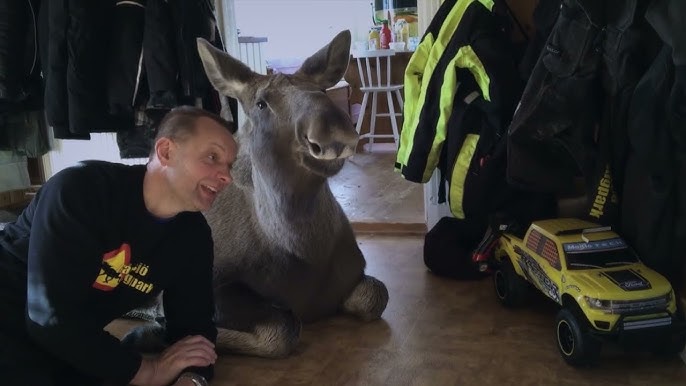
The film is at its most unsettling when it briefly stops trying so hard. A sequence on a Russian farm devoted to domesticating moose is bizarre enough without any help from the soundtrack. Here, the animals are milked, bred for meat, and even treated as mounts. People comment on the milk’s awful taste while repeating the belief that it has curative value in some regions. Nováková also includes images of moose dying in captivity and being dragged away. These moments are uglier and more revealing than anything the film’s manufactured dread can produce.
The same is true when the film follows a Canadian Indigenous community leader as she responds to the appearance of an albino moose. In these scenes, the animal is framed as a living presence bound to ancestry, as if it carried the return of those who came before. That belief gives the film a spiritual gravity far more compelling than its manufactured atmosphere elsewhere.
What follows is even more charged: the anger and grief that spread after local hunters kill the animal. For a moment, “Amoosed” stops gesturing vaguely toward the sacred and encounters a community for whom the sacred is inseparable from historical continuity. These passages suggest a better film hidden inside Nováková’s, one more attentive to what people actually invest in the animal and what is destroyed when that investment is treated as disposable.
There is a real film trying to emerge here. Nováková is drawn to the strange ways people treat the natural world as if it carried some hidden force. None of that is misguided. The trouble is that the film keeps pushing harder without building much from that pressure. It keeps forcing intensity where patience might have revealed something stranger and more durable. By the end, “Amoosed” feels static. It is so committed to keeping the viewer off balance that it loses any real sense of movement. No amount of nervous cutting or borrowed dread can save a film that still has not decided what to do with its own strangeness.


![The Batman [2022] Review: A Delightfully Relentless Crime-Noir Saga Like No Other](https://www.highonfilms.com/wp-content/uploads/2022/03/The-Batman-2022-1-768x543.jpg)