As is generally the case, the French film industry has proven influential and virtually omnipresent in the landscape of cinema in 2025, stretching across a wide array of genres and modes to find its way into discussions of the year’s best and most noteworthy projects year-round. Though perhaps not as unequivocally ubiquitous on the film scene as they were the year prior, this year’s output of French filmmaking brought together names and faces from vast swaths of the moviegoing sphere, uniting to explore a distinctly European essence of life, love, mystery, and everything in between.
In picking out the 10 best French films of 2025, our choices reflect these varied vantage-points as, like all of cinema’s most dominant national voices, the input of neighbouring voices can’t help but whisper their way in. (On that note, while it pains us to omit a film that would so obviously top this list, we have decided that Jafar Panahi’s masterful “It Was Just an Accident,” while “French” enough to satisfy the nation’s Oscar submission body, would be far too reliant on a funding technicality to qualify for our own ranking.) Fear not, though, for in keeping with the spirit of its cultural ubiquity, no fewer than eight of the following entries have premiered at this year’s Cannes Film Festival (with one more holding a particularly unique connection to its infrastructure). So, as we sit back with a croissant in one hand and a cigarette in the other, it’s time to let the best French films of 2025 wash over us like a fine Bordeaux wine.
10. Promised Sky

Europe is so often depicted as the final destination of the migrant’s struggle for a more prosperous life that one would be forgiven for assuming that “Promised Sky,” with its naked depiction of the struggle against dehumanization in both legal and public spheres, was set in France or Belgium. As it turns out, French-Tunisian filmmaker Erige Sehiri keeps her production within the borders of Tunis, as the trickle of colonial influence on Northern Africa becomes its own prison of broken promises before a life-threatening journey overseas ever even comes to pass.
Whether or not Tunisia is actually the destination of choice for the women of “Promised Sky,” or whether it’s merely a forced pit-stop that keeps them shackled at the feet of the journey towards a haven that will in all likelihood prove just as (if not more) brutalizing is besides the point, as the horrors of degradation spread across oceans regardless. Sehiri’s decision to tackle a variety of perspectives in this struggle may prove somewhat unwieldy for her clear aim of layered solidarity. Still, the solidarity comes through nonetheless, as everything from the status of an unknown child to the forced dissipation of communal praying spaces is treated with the same gravity.
9. A Private Life

Featuring multitalented American actor Jodie Foster in her first-ever leading role in French cinema, there’s no reason, in theory, why she should be playing an American who speaks French in “A Private Life” rather than simply a Frenchwoman. Her grasp of the language, honed since childhood, is so fluent that she could easily have been taken as a local. In the end, though, it’s just a fun detail that adds colour to Rebecca Zlotowski’s playful mystery thriller, as the sound of Foster cursing under her breath in English while attempting to solve a suicide she’s convinced was a murder illustrates just how foreign she feels in such unorthodox circumstances.
Foster’s amusing attunement to Zlotowski’s oftentimes ridiculous depiction of responsibility as a driving force of delusion—manifested, in part, through a spiritual vision of a concert in 1940s occupied France—ensures that “A Private Life” never goes completely off the rails, instead luxuriating in the sort of shamelessness required of a film that sees fit to open its French-based mystery with a needle drop of the Talking Heads’s “Psycho Killer” (and then have the temerity to drop that needle a SECOND time.) It may not take a lifetime of therapy to uncover the lesson that Zlotowski traffics here, but the sincerity of its communication plays to the film’s genuine desire to entertain and provoke fascination in Foster’s frantic antics.
8. Nouvelle Vague

Quite possibly the most famous French filmmaker to touch a camera in the second half of the 20th century, it only makes sense that Jean-Luc Godard’s legacy would be cemented in fictionalized recreation by… an American. Richard Linklater being the one to tackle the making of Godard’s seminal “Breathless” may have been a decision that would have sent the man himself in a fuming rage (his legion of worshippers have picked up the slack and done so on his behalf), but that may well be the very reason why Linklater was in fact the right choice for “Nouvelle Vague.”
Sure, the film’s refusal to be much more than “Hangout Linklater” rather than “Subtly Revolutionary Linklater” can prove frustrating given the particular subject he’s chosen to undertake. Still, the Texan director in laidback mode is never anything less than attuned to the subjects’ onscreen attitude, even in his own hesitance to replicate it in his storytelling.
So while “Nouvelle Vague” clearly doesn’t harbour as much (*looks directly into camera*) contempt for Godard as I do, Linklater certainly strikes a balance between reverence for the titular movement Godard helped birth and the unfailing arrogance required of any such artist who thinks themselves a genius because they decided to do away entirely with the onscreen continuity of a mug’s placement on the table.
Read: Nouvelle Vague (2025) ‘NYFF’ Movie Review: A Playful, Irreverent Hangout Film Aimed At Cinephiles
7. A Magnificent Life

Sylvain Chomet’s first film to combine dialogue alongside his now-signature hand-drawn animation, “A Magnificent Life,” may not achieve the perfect synergy between these two different storytelling speeds. Still, they constitute a warm tribute to a seminal artist whose ethos was about preserving the culture of the South of France. Envisioning the wonder of Marcel Pagnol’s journey from theatre to the early days of talking cinema with a flurry of detailed pencil strokes—and a few borrowed segments from Pagnol’s own rarer surviving films—Chomet makes every effort to bring meaning to a life spent searching for its own.
Guided by the vision of his younger self, Pagnol’s journey is one of classic reminiscence that seeks its own unique wavelength in Chomet’s desire to preserve the unhurried energy of the artist’s work, which comes to serve “A Magnificent Life” rather well even when it doesn’t prove to be a biopic of particularly earth-shattering magnitude. At the end of the day, Pagnol’s seismic shift has its impact beneath our noses, and its true impact is only felt when, like Pagnol himself and Chomet after him, we take a step back to quietly breathe in the pastoral landscape around us.
6. Reflection in a Dead Diamond

From one depiction of Southern France to another, Hélène Cattet and Bruno Forzani’s “Reflection in a Dead Diamond” undoubtedly takes on a different register altogether than “A Magnificent Life” in its vision of the Côte d’Azur. Maybe that’s because Cattet and Forzani’s influences lie less in the Marseillais distinction of Marcel Pagnol and more in the textured trashiness of ‘60s Eurospy cinema and the head-spinning structure of Satoshi Kon. Regardless, the Brussels-based French duo brings genuine verve to their stylistic remix, a homage to poshness in its sleaziest forms.
Blending recollections of a bygone beachside era with resplendent visual homages to the seedy films that populated it, “Reflection in a Dead Diamond” never lets the superficiality of its content fully detract from the utterly hypnotic allure of its imagery. Cattet and Forzani do not concern themselves too much with such frivolities as “plot cohesion” and “logical follow-through,” which, in turn, allows the duo’s homage to fully luxuriate in the sensorial drive that shines through every broken shard of mirror and threatens to blind you with its unapologetic and ceaseless shimmer. Diamonds may be forever, but that’s only because their glimmer follows them, like those who covet them, into death.
5. The Little Sister
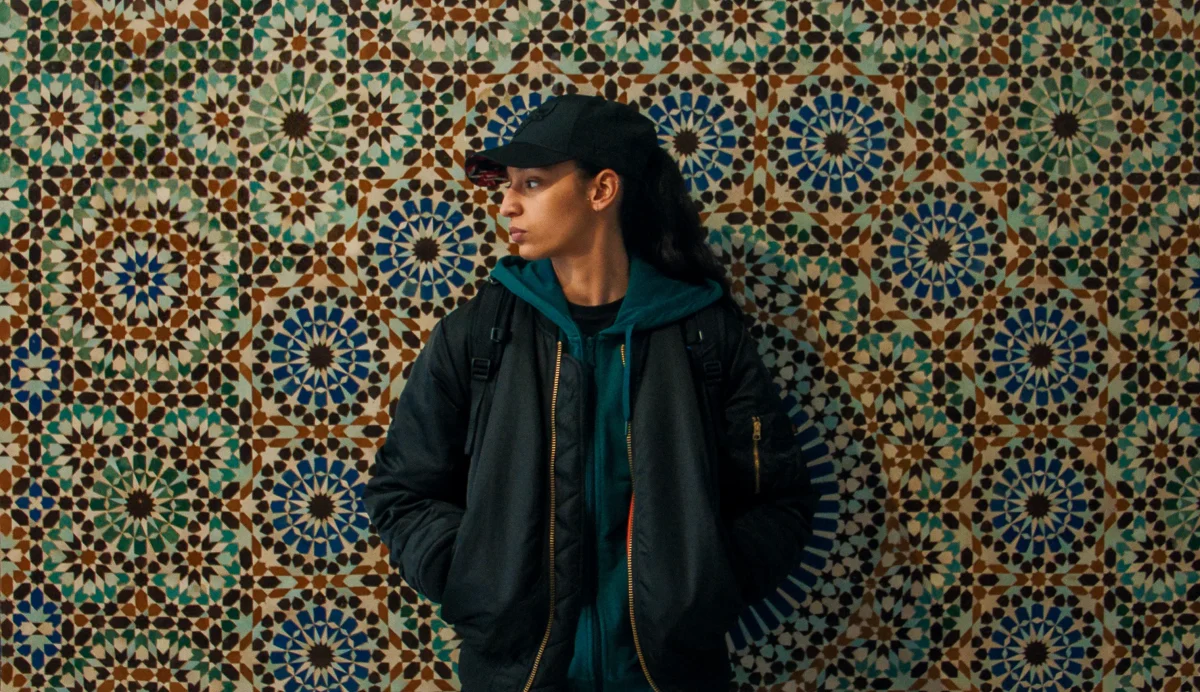
Having begun her own career under the tutelage of Adbellatif Kechiche in “The Secret of the Grain” (for which she won no shortage of awards for her debut performance), Hafsia Herzi seems to have found in her first director’s fly-on-the-wall style of coming-of-age dramas a satisfactory blueprint to develop her own directorial voice. With her third feature, “The Little Sister,” Herzi takes that observational tenderness and retains the intimacy so often foregone by her more sprawling (and often unfocused) influence to explore same-sex attraction under the thumb of religious devotion with a tangible sense of unadorned anguish.
“The Little Sister” only works as well as it does due to the revelatory performance of Nadia Melliti (whose own debuting work here netted her a well-deserved Best Actress Award in Cannes), who suffuses Fatima’s journey of self-discovery with a genuine sense of inquisitiveness that makes her so easy to root for in her quest to make sense of her own desires and discover her place in a world whose fragile sense of support feels on the constant verge of complete collapse. Melliti’s trust in Herzi’s free directorial approach demonstrates a bravery befitting the incremental battles that define Fatima’s entire life, and the young actor commands every second of her screen time with the empathy and restraint to rival even the most seasoned veterans of the craft.
Must Check Out: The 35 Best Movies of 2025 (So Far)
4. Lumiere! The Adventure Continues

“Lumière! The Adventure Continues” may not have premiered at the Cannes Film Festival like seven(!) of its cohorts on this list, but for all intents and purposes, this documentary may very well be the most Cannes-adjacent film of all, thanks to the man behind the camera. Well, “man behind the edit” may be a more appropriate designation, as longtime Cannes general delegate Thierry Frémaux heads what essentially amounts to a compilation of various shorts from among the first filmmakers to ever point a camera. Frémaux’s second examination of the Lumière brothers and their indelible legacy in cinema proves as infectious as any of the film scholar’s loving, meandering declarations of the power of film as a medium to change lives.
It’s so easy for us to take the oeuvre that the Lumière brothers assembled for granted as little more than a trial run for the more sophisticated stylistic and storytelling ventures that would soon follow. But Frémaux’s endless commentary—perhaps not a selling point for those who think the man already talks too much, but a delight for those of us who find his unending enthusiasm rather endearing—never allows us to forget the blueprints laid by Auguste and Louis. Is a simple scuffle captured onscreen the foundation for the rough-and-tumble combat of “King Kong vs Godzilla”? In Frémaux’s eyes, there’s no other way to see it, and by the film’s end, you’ll be liable to see these early vignettes with that same tinge of magic.
3. Summer Beats
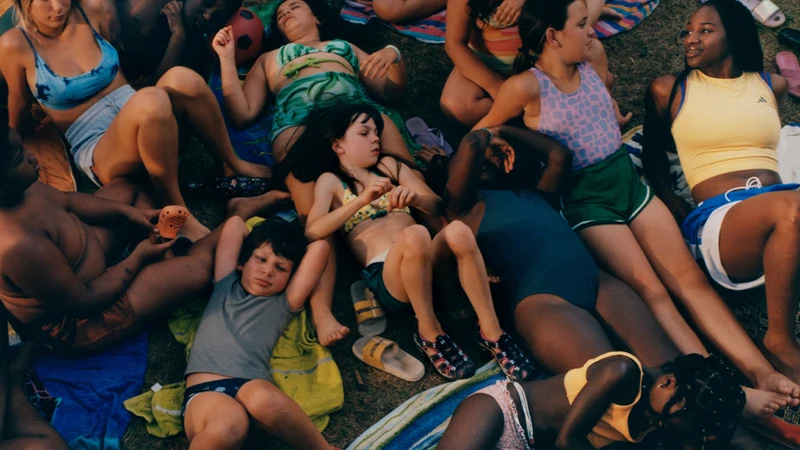
A general rule of thumb for Cannes is that if your film wins the top prize in the Un Certain Regard sidebar, your next feature is more or less locked in for a prime competition slot when the festival rolls around again. Such was, sadly, not the case for Lise Akoka and Romane Gueret, whose “Summer Beats” stands as an equal follow-up to their breakthrough “The Worst Ones.” Regardless, the directing duo’s grasp of the French youth in periods of internal strife and confusion has never been sharper, as “Summer Beats” moves from a film shoot in the projects to a camping getaway that proves to be anything but an escape from the hardships and neglect back home.
Once more assembling a revelatory group of young actors, Akoka and Gueret find in their equally entertaining and endearing rapport the increasingly evident delineation between freedom and responsibility at a time when youth is just beginning to realize how much of one truly comes with the other. “Summer Beats” sees charisma and projection as two sides of the same coin, and a few days in the mountains prove far too little to forget about the mounting costs that come with that ever-sought transition into adulthood.
2. Love Me Tender
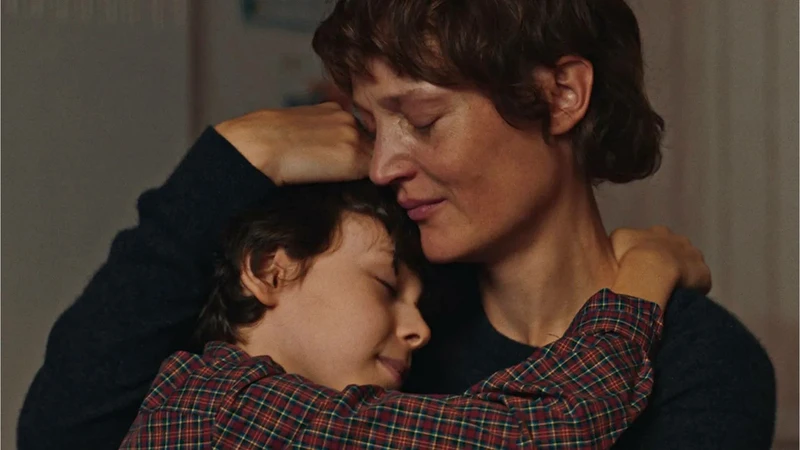
With “Love Me Tender,” Anna Cazenave Cambet poses a startlingly empathetic question about the endless job of parenthood: if a parent’s capacity to sacrifice for their child goes unquestioned, at what point must we question the true necessity for such sacrifice? This comes to be the driving force of a film that explores the casual horrors or systemic abuse in the face of a mother whose sexual preferences prove not only to be a motivating factor for her ex to sever all ties between mother and child, but also a tool used in court to solidify that break in the relationship just when its need for nurturing proves most crucial.
Most critical in this regard is how Cambet makes the point that this subject’s sexuality, regardless of how much it’s used against her, is something whose sacrifice would be just as great a personal defeat as the severance of her ties to the child she loves more than anything. Thanks to Vicky Krieps’s shattering performance—her most nuanced and dynamic in years, bringing fragility and fortitude in similar measure—“Love Me Tender” finds whatever victories it can in the power of perseverance.
1. Little Amélie or the Character of Rain
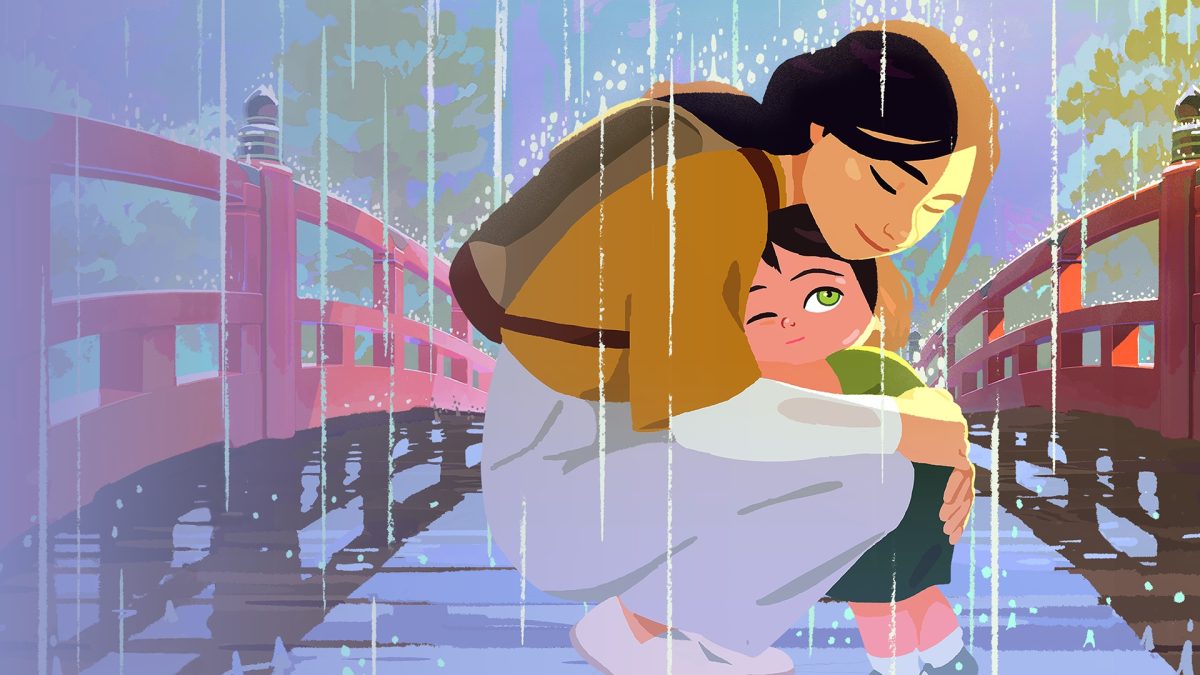
When we were young children, the world around us was inviting, terrifying, and awe-inspiring all at once. Before we understood anything, we were masters of everything. This is precisely the sentiment that “Little Amélie or the Character of Rain” manages to illustrate so tangibly across its short runtime, as Maïlys Vallade and Liang-Cho Han harness the fear and fervour of the world through a two-year-old’s eyes, refracted through the prism of its comforting, elastic style of pastel-tinged animation.
Breathing life into every detail—from the sensation of tasting Belgian chocolate (the best chocolate) for the first time to the stunning crackle of cooking rice—with an egalitarian sense of scope, Vallade and Han’s visual palette so perfectly crystallizes its subject’s curious nature that every realization hits like one of the life-changing formative moments we all experienced for ourselves at this age, when arrogance can so suddenly become wisdom while the entire world still lies ahead of us.
“Little Amélie or the Character of Rain” distills its malleable power within the scope of one child’s postwar upbringing in Japan, and through this milieu, brings difficult life lessons far earlier than many of us may encounter them. At every moment, though, not one of these splendidly animated sequences ever loses an ounce of its grounded accessibility; fewer films for children (or, more accurately, about children) have wielded such persistent insight.