Jake Szymanski’s latest show, “Company Retreat,” uses a formula he introduced in 2023 in the first season of “Jury Duty.” It was a show within a show, an interesting and sufficiently novel concept for American television. The first episode opened with a disclaimer: every person we meet is an actor, except one. Back then, Ronald Gladden played himself without knowing he was part of a show. That lack of awareness set him apart from his castmate, James Marsden, who also played himself — rather a version of himself — knowing all well that it’s fake. Marsden stepped into the frame as a self-centered Hollywood star, worried that the jury duty would spoil his chances at being cast in a new project.
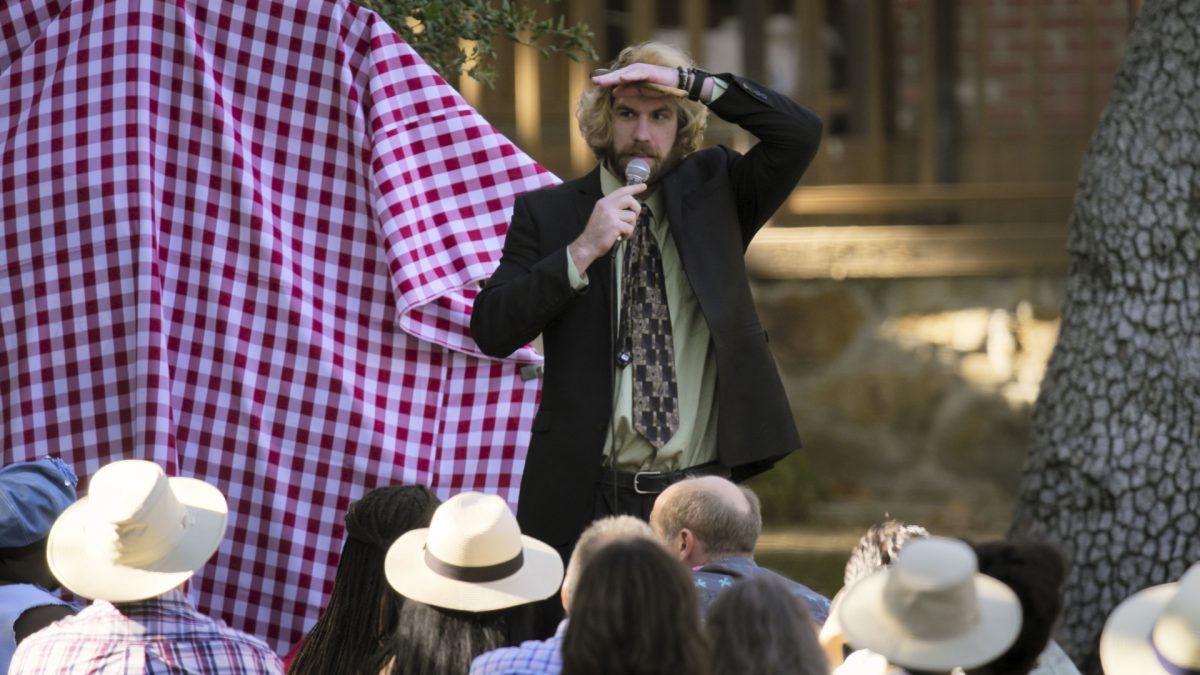
Back when I watched it, the illusion of fake reality didn’t matter to me as much as the comedic timing. Drawn in partly by its online buzz, I found myself responding to its organic humor. I was aware it fictionalized American jury duty, yet the characters felt inviting, the kind you simply want to spend time with. It played less like reality TV and more like a loose, affectionate riff on the traditional sitcom. Every character made sense in that peculiar reality, as characters do in sitcoms. Their quips felt natural, which was partially the point, because Ronald should also believe that all of it is real.
Yet, unlike the usual stories that demand we suspend our disbelief, “Jury Duty” expected it with another layer. It needed to make Ronald’s belief in this reality feel just as real. It’s a dilemma strikingly similar to Truman’s in “The Truman Show.” Everyone else knows that they are in a show and living an alternate version of reality, except him. Yet, unlike the Jim Carrey film, “Jury Duty” didn’t care about the layers of subtext related to free will, the evils of consumerism, god complex, or even the ‘main character syndrome.’ It was structured like a feel-good American sitcom.
Yet, comparing it with shows like “Cheers” or “Friends” couldn’t help me understand ‘why the show works,’ let alone comparing it with other workplace comedies like “30 Rock” and “Scrubs.” Unlike them, “Jury Duty” introduced a push-and-pull between artificiality and truth through a mockumentary format. It’s something that “The Office” popularized in the early 2000s.
A lot of people, I imagine, would think of the US version that centered around the shockingly incompetent boss, Michael Scott. But Ricky Gervais popularized this format before him with a far more outrageous, cynical version of the show. Gervais’s original UK version relied on the cringe element, while the US version bounced between cringe and charm. So, along with moments of discomfort, where Michael made a fool of himself, there were plenty of moments where we felt genuinely bad for him. That never happens in Gervais’s pointed, almost ruthless version.
Years later, both shows have their separate cult following. So, it’s difficult to imagine anyone but Carell or Gervais as the respective leads. Fans may already know that Bob Odenkirk also auditioned to play Michael, but lost out in a close race with Carell. Yet, in a recent interview, Carell admitted he felt apprehensive about auditioning for the role, a feeling sparked by his “Anchorman” co-star Paul Rudd. He worried that people might hate their version, given the popularity of Gervais’s show. Though a gamble at the time, it paid off handsomely and spawned similar shows such as Amy Poehler’s “Parks and Recreation,” which partially inspired Quinta Brunson’s “Abbott Elementary.”
The reason every show feels fresh in its own way has to do with how it developed existing tropes and methods. Instead of the cringe-inducing awkwardness of Carell’s show, “Parks” relied more on the likability of its characters (since its second season). There were occasional antagonists, but none of them seemed like forces of evil. The same lightheartedness is evident in “Abbott,” which makes even its pesky characters seem charmingly human. That’s why Janelle James’s recent award win for playing Ava Coleman feels personal. It feels like we’ve watched her grow across each season, revealing new facets of her hustler-influencer persona. That emotional connection remains paramount, just as much as the clarity in how she’s written.
Janine and Gregory’s romance arc bloomed like Leslie and Ben’s, but it blossomed into its own thing. Part of this can be traced to cultural differences, with one show centered on predominantly Black characters and the other on predominantly white ones. Yet a lot of its credit goes to the performances and the writing. Despite their similarities, we get a deeper understanding of these characters to the point where we can talk about them for hours. There’s a sense of escapism in monotony, as well, especially in “The Office” and “Parks,” which feel far different from the hectic jobs in the cities. That sense of comfort in the mundane is also a part of its appeal.
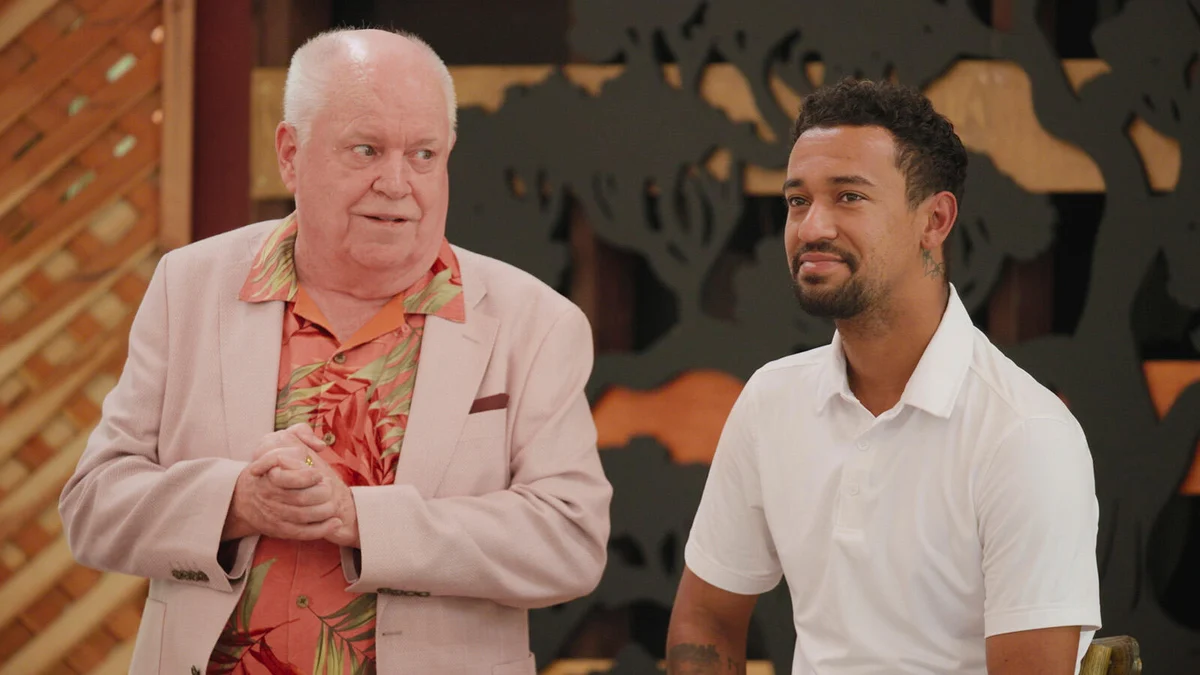
“Company Retreat” operates in a similar lane, following a group of employees at a small company with a workplace dynamic reminiscent of Dunder Mifflin. Given these familiar overlaps, I began to wonder how the new hire—Anthony Norman, the season’s central figure—fails to realize that it isn’t real. The issue seems rooted more in the premise than in the show’s structure.
Ronald (in the first season) was part of jury duty, while Anthony was part of a small company on the verge of being overtaken by a big corporation. The first was a responsibility as a citizen, while the second was a frustrating reality for a lot of small businesses. It also streamed on a platform that is complicit in a similar model of business encroachment. So, Anthony’s commitment to his job as a temporary assistant felt relatable in a different context. His niceness felt like an obligation partially driven by fear. Every choice felt like a calibrated act to sustain himself amid a volatile job market and corporate politics.
Not to imply the real person isn’t remotely nice or charming, or that his persona was merely a pretense. Yet, “Company Retreat” never quite delivers the kind of escapism found in Carell’s or Poehler’s shows, even as it draws from their familiar tropes. “Jury Duty” didn’t face these issues despite featuring a string of heightened moments that would make you question its artificiality. I remember, at one point, the defense attorney showed shockingly bad animated footage narrating a scenario that would crack anyone up. Yet, no one laughed, at least in the reaction shots added in that scene.
Still, those odd moments didn’t feel as off as the romance or the complicated father-son dynamic in the second season. Part of it might be the lack of focus on characters beyond their relevance to Anthony. We barely get to see them or hear from them when Anthony is not around, unlike “Jury Duty,” which establishes their interpersonal dynamic without Ronald. They also share their views on the case in interview bytes, which rarely happens in “Company Retreat.” Moreover, the first season features Marsden as himself, who paradoxically becomes a secret sauce in its believability. So, the weight of making it all seem convincing doesn’t fall on Ronald’s shoulders.
Don’t get me wrong. “Company Retreat” isn’t bad. It is as addictive as any decent sitcom. Yet, it also rehashes a formula instead of developing it further. In terms of reinvention, Nathan Fielder has done plenty in “The Rehearsal,” a show that deconstructs reality through artifice with a Charlie Kaufman-esque investment in his subject. It also falls in between the realms of reality TV and comedy-drama, while keeping us hooked through the sheer power of reinvention. Every episode feels fresh and stimulating because, besides novelty, it retains an absurdist sensibility.
With less novelty, the appeal of “Company Retreat” leans more on its wholesomeness. So, despite competent actors and a charismatic lead, the charm wears off somewhere along the way. That is always tricky with similar iterations of pre-existing formulas, evident through shows led by Brunson, Poehler, and Carell.
“Jury Duty” combines the mockumentary style of their shows with a ‘big reveal’ moment (in the penultimate episodes of both seasons) that feels like a prank being exposed. Technically, those moments are what we witness toward the end of “The Truman Show.” In the movie, Christof tells Truman that his life was a facade, compelling him to take a leap of faith without knowing what lies on the other side, whether the reality would be the escape he was looking for.
In both seasons of “Jury Duty,” there’s little impulse to pander on that front. Instead, what lingers are the memories of time spent with these characters, filtered through Ronald’s or Anthony’s perspective. Their compassion holds everything together. Much of the first season’s strength comes from its sense of novelty and characters who extend beyond their tropes. It also delivers a kind of escapist pleasure that the second season struggles to match, perhaps because an office setting rarely feels inviting, no matter how often it insists you’re part of a ‘family.’