“Cutting Through Rocks” is the rare documentary that is both deeply personal and indicative of a broader moment in a culture’s evolution. A truly great work of non-fiction filmmaking is one where the subject feels like a star, and that is certainly the case with Sara Shahverdi, whose optimism and perseverance make “Cutting Through Rocks” an empowering story.
The film is an examination of the backlash and persecution that Shaverdi faces, which is enough to provoke anger out of any viewer with a sense of common decency. However, this personal story, told beautifully by directors Mohammadreza Eyni and Sara Khaki, is interesting because the conspiracy to undercut Shaverdi’s authority is part of a larger anti-feminist movement within staunchly religious communities in the Middle East.
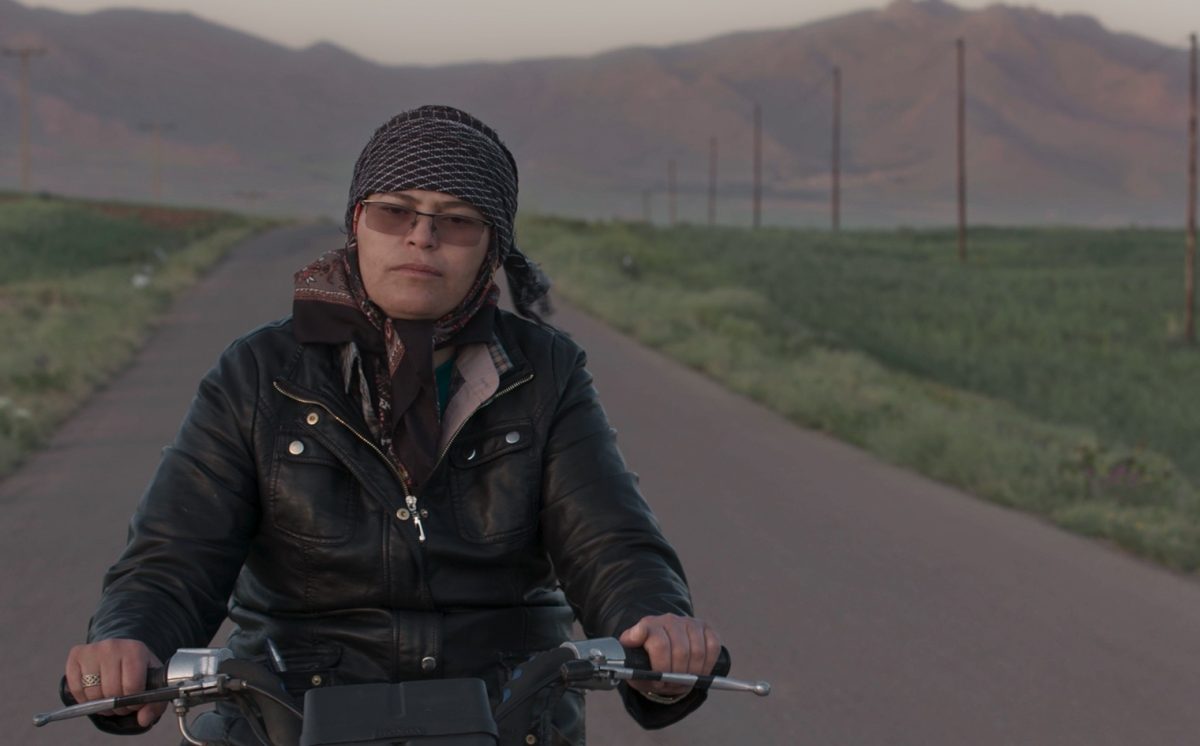
Shaverdi is a respected member of a small Iranian village who has been noted for her willingness to take in young women and give them care, especially when their needs aren’t being met by some of the more conservative community elders. In addition to standing staunchly against child marriage and protecting young girls from potentially abusive situations, Shaverdi has helped to break patriarchal traditions by teaching her new guests to ride motorcycles, even though it was a typically male activity. Shaverdi has already ruffled the feathers of many, but she’s subjected to more serious confrontations when she is elected as her village’s first female councilwoman.
What makes “Cutting Through Rocks” a story that benefits from its form is that the filmmakers were clearly able to unpack a much richer text than they had anticipated. While the intention of the married couple Eyni and Khaki was to explore the way that these grassroots campaigns were initiated, they couldn’t have anticipated the years of tradition that Shaverdi was attempting to defy.
It’s shortly into the introduction of her extended family members that Shaverdi is confronted by a male relative who accuses her of starting a coup. Given that the very idea of a woman in power terrifies them, the situation becomes far more intensified once Shaverdi begins to reveal her actual platform.
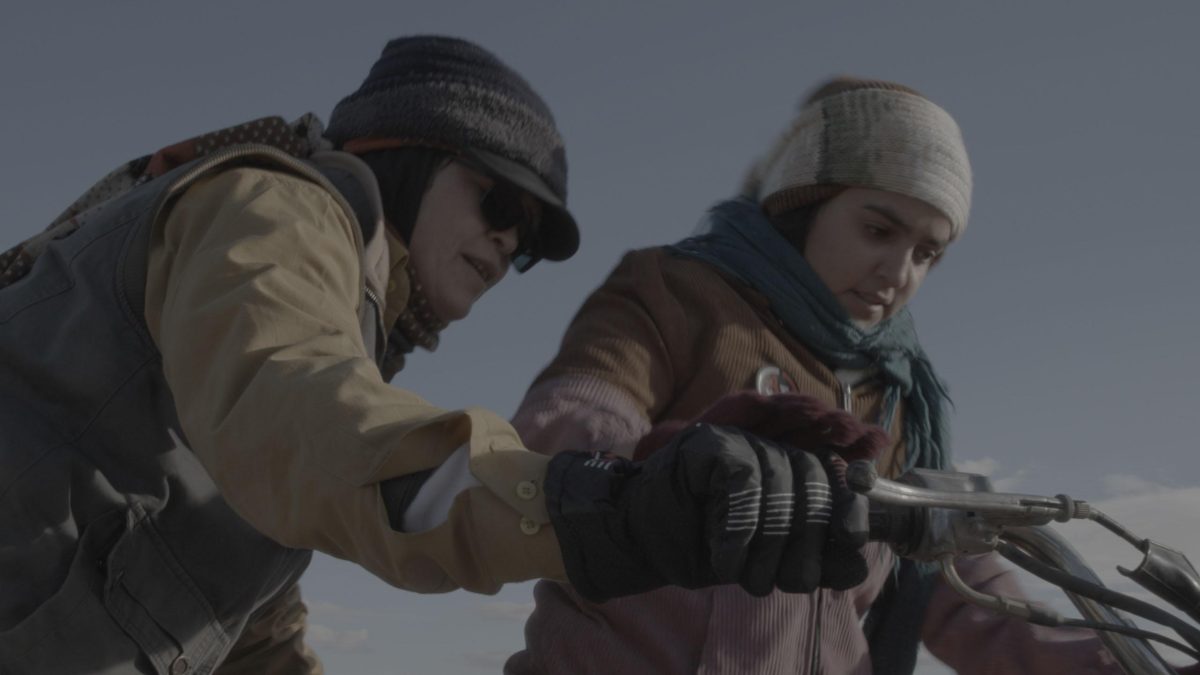
“Cutting Through Rocks” examines the ways in which misogyny is both blatant and subtle, as not all of Shaverdi’s detractors will literally yell in her face (although some do). She’s told that it’s not a woman’s place to be in certain positions or to speak on particular issues, as to do so would be to defy years of tradition.
The collision at the heart of “Cutting Through Rocks” encapsulates the discourse that dominated nearly every controversy in contemporary times. Fealty to established rules comes into conflict with the desire to bend them for the betterment of an equalized society. Although Shaverdi’s motivations are purely well-intentioned, she’s fighting against a status quo that would deem her beliefs to be disrespectful to years of tradition and history.
Shaverdi happens to be an engaging protagonist with a sharp sense-of-humor and outstanding confidence, which helps, given that “Cutting Through Rocks” doesn’t quite have the abundance of interviews that might have helped make for a more engaging watch. Although the film never fails to show the significant impact that Shaverdi has on the women who have come into her care, the film may have benefited from giving them a chance to put into words what her mentorship means to them.
The fact that so much of the film is spent giving time to those who would demean and insult Shaverdi might be irritating, but it would certainly seem to be an intentional choice on the part of the filmmakers. It’s impossible to consider what the consequences are for Shaverdi’s bravery if there is no time to show how personal, cruel, and invasive her opponents are.
The depiction of this backlash, whilst disturbing, is the most eye-opening aspect of the film. Secretly recorded videos with other communal leaders and members of the medical staff incorporate the type of blatantly offensive, degrading language that would seem like an exaggeration had it appeared in a fictional context.
It’s important to include because of how isolated Shaverdi is, given that her supporters are few and far between. While sometimes it’s upsetting to see how Shaverdi is left to be demolished by the tools of propaganda, it’s understandable why those opposed to her wanted to make her into an example that would dissuade other women from following the same path.
As electrifying as it is to see a culture on the verge of change, “Cutting Through Rocks” does often become derivative in between its jaw-dropping moments. Although Shaverdi has an inherent charisma that makes most of her interviews worthwhile, the parameters the filmmakers were under regarding what they had access to made the second half of the film less involving than its predecessor. While the idea that change is slow is well-taken, “Cutting Through Rocks” doesn’t provide quite enough context regarding other communities within the same vicinity that would indicate why Shaverdi’s story is a particularly unique one.
Budgetary and locational limitations may have made “Cutting Through Rocks” feel rather traditional, but there are occasional stylistic flourishes that hint at a more existential, meditative approach. The inclusion of a vaguely European score and Western stylization techniques, such as the quick assimilation of shots, emphasizes the challenge of bringing progressive views into a culture stoked in conservatism, and how the two might co-exist. Any footage captured of Shaverdi and the other motorcycle riders on the road feels elemental and spiritual in its lionization of technological leaps forward, which represent the sort of freedom that Shaverdi is desperate to make available to everyone.
The convergence of an interpersonal family story, a backroom look at a minor political revolution, a work of cultural observation, and an artistic text of primal imagery doesn’t always congeal, but “Cutting Through Rocks” is a relatively watchable film when considering how dark the material could have been. “Uplifting” would be the wrong word to describe something so unsentimental about the stark realities of changing centuries of setbacks, but “Cutting Through Rocks” is just propulsive enough to have the slightest tinge of optimism.



![Casino [1995] Review – A Crime Saga with Epic Scope and Memorable Characters](https://www.highonfilms.com/wp-content/uploads/2020/07/Casino-1995-768x432.jpg)
![Climax [2018]: ‘MAMI’ Review – The Greatest Cinematic Experience of the Year](https://www.highonfilms.com/wp-content/uploads/2018/11/climax_still_01-768x384.jpg)
![Forty Winks [2022] Review – A visually distinctive but inert debut feature that has nothing to say](https://www.highonfilms.com/wp-content/uploads/2022/09/Forty-Winks-2022-Movie-Review-768x429.jpg)