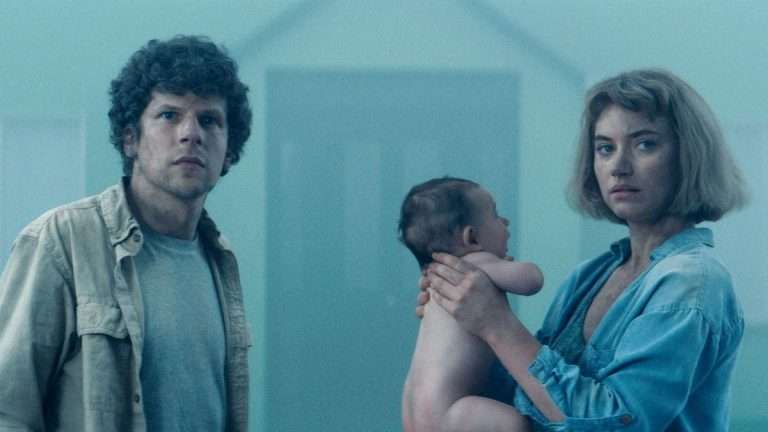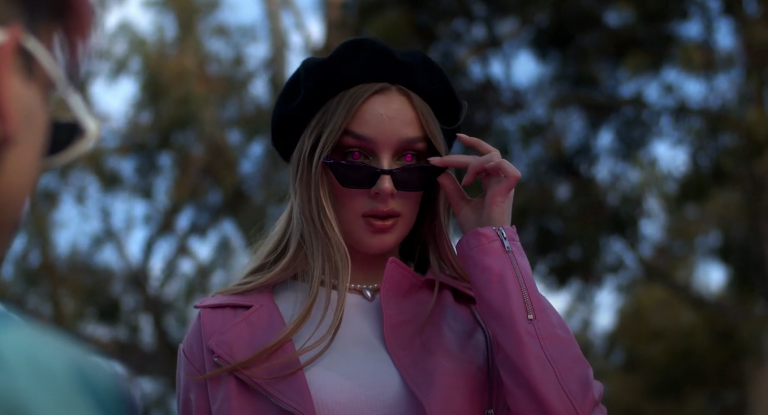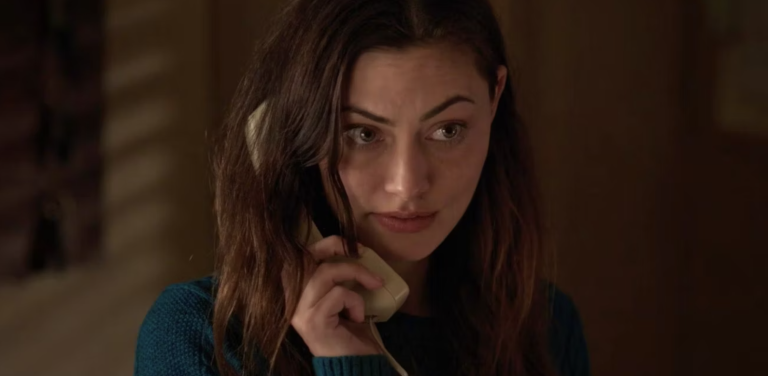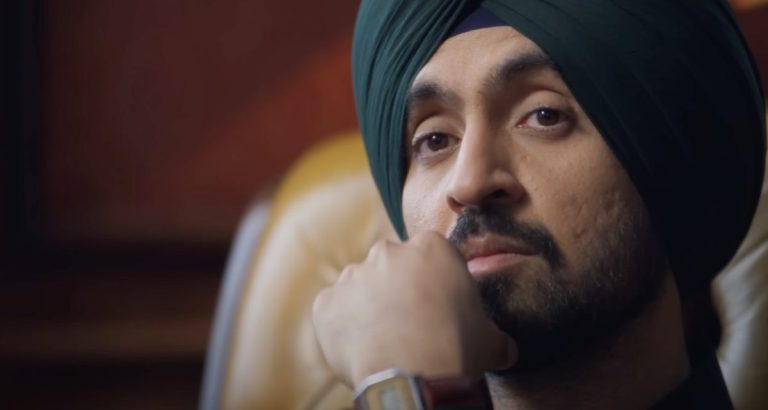
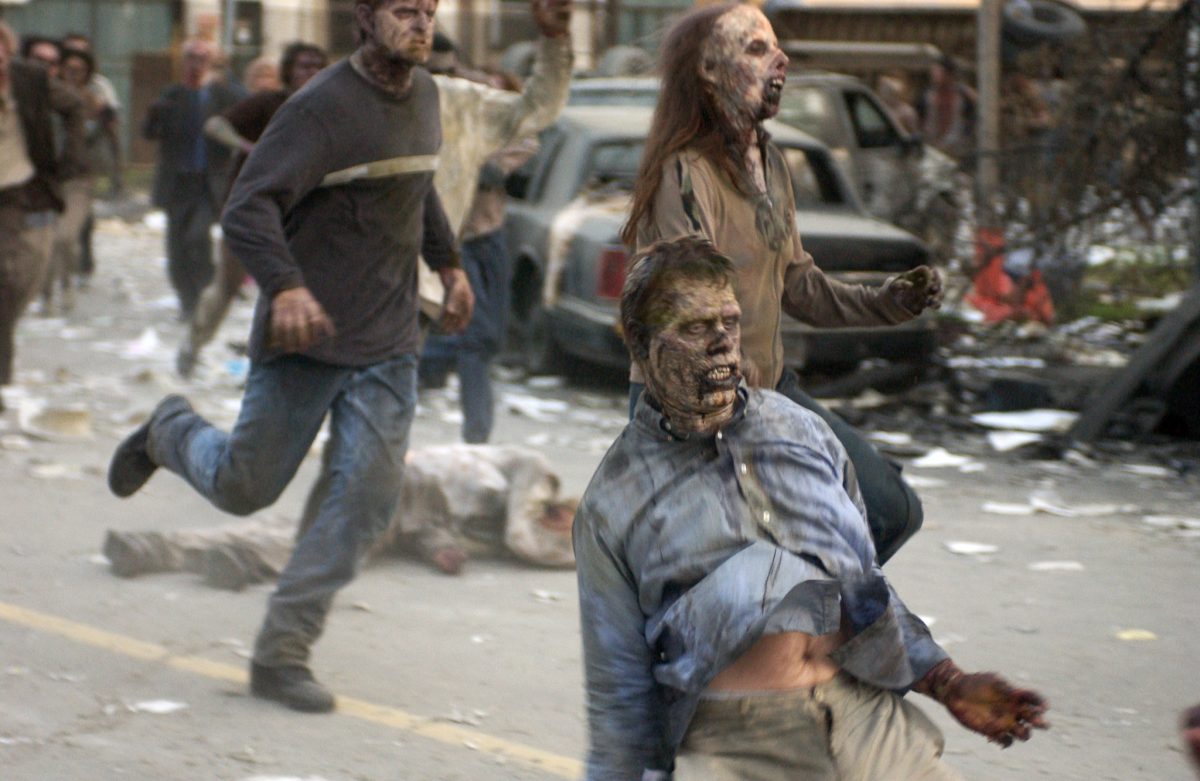
Zack Snyder’s “Dawn of the Dead” (2004) is often remembered for its speed. The running zombies and the relentless noise. The sense that the world ends not slowly, but all at once. Beneath the kinetic violence is a quieter question: when society collapses overnight, what parts of humanity survive with it? The film begins in comfort and ends in exhaustion. Between those two states is a shopping mall, a symbol of safety, excess, distraction, and denial. The undead outside are not the only threat. Time, fear, selfishness, and moral compromise infect the living long before the dead break in.
Spoilers Ahead
Dawn of the Dead (2004) Plot Summary & Movie Synopsis
How Does the Apocalypse Begin for Ana?
Ana Clark’s world ends in the most mundane way possible. She comes home after a long hospital shift, tired but safe, cocooned in suburban normalcy with her husband, Luis. The television murmurs in the background, emergency alerts ignored, because life has trained them to treat crises as noise. The next morning, death walks in through a child’s face. Vivian, the neighbor’s daughter, stands in their bedroom, her innocence stripped away. She kills Luis with sudden, brutal force. Luis reanimates almost immediately, attacking Ana with the familiarity of someone who once loved her. There is no explanation, no pause, no moment to grieve. Ana escapes on instinct alone.
Her flight through the neighborhood reveals the scale of collapse. People attacking people. Authority gone. The order dissolved before anyone could process what was happening. When Ana crashes her car and blacks out, it feels less like an accident and more like the mind shutting down to survive what it cannot yet understand. Ana begins the film as a caretaker. She ends it as a survivor. Everything in between reshapes her. Ana wakes to a man pointing a gun at her. Kenneth Hall, a police sergeant, is not cruel, but he is cautious. The uniform no longer guarantees safety or trust. He has already learned that hesitation kills.
They join Michael, a quiet electronics salesman who thinks before he speaks, and Andre and Luda, a young couple clinging to each other as the world unravels. Andre carries anger and suspicion. Luda carries life inside her, already threatened. The mall is not chosen because it is ideal. It is chosen because it is familiar: glass walls, locked gates, food, light, space. In chaos, people gravitate toward symbols of order they recognize.
The mall offers structure without meaning. It feels safe because it once was. Inside, they encounter CJ, Bart, and Terry, security guards who have already adapted to the new hierarchy. Guns mean authority. Control means survival. CJ is abrasive, suspicious, and openly hostile, but his fear is practical. Letting strangers in could mean death for everyone. The mall becomes a truce zone. Not a home. A holding pattern.
Why is the Mall Both a Sanctuary and a Trap?
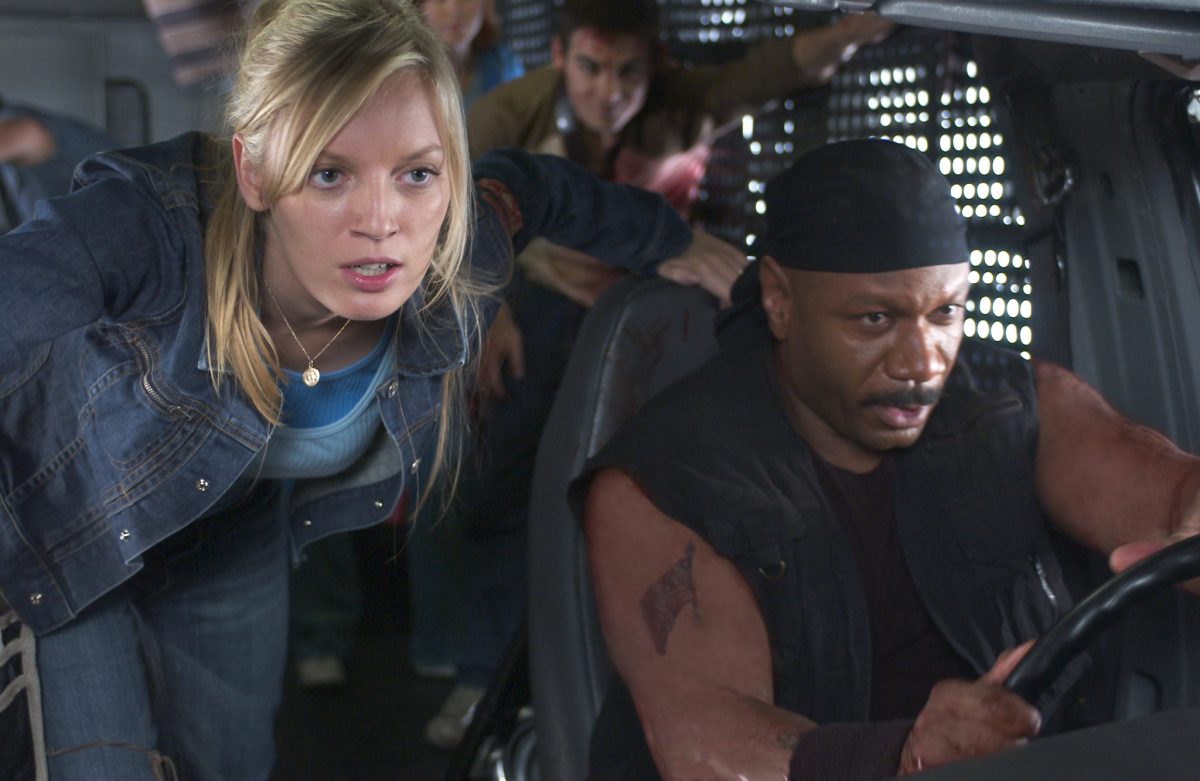
Once secured, the mall offers temporary comfort: Food courts, beds, clean water, and lights. For a moment, the apocalypse feels paused. Zombies press against the glass like background noise. The living begin to play house. But this safety is an illusion. The mall works only because it isolates them from reality. It encourages stasis. The survivors stop thinking about escape. They start thinking about comfort. Time loses urgency. This is where danger creeps in.
CJ represents control without empathy. He wants rules, not relationships. Michael represents planning without emotion. He sees systems, routes, and exits. Ana begins to move between the two, grounding strategy with humanity. Kenneth becomes the moral anchor, still trying to protect people rather than territory.
On the roof, Andy appears. Alone in his gun store, separated by a sea of undead. He is a mirror of what isolation looks like long-term. Survival without connection becomes slow decay. The mall keeps the group alive. It also keeps them stagnant. And stagnation, in a world that keeps changing, is a death sentence.
What Does the Arrival of the Other Survivors Change?
When the delivery truck crashes into the mall, chaos returns. Norma, Steve, Tucker, Monica, Glen, Frank, and Nicole bring new personalities, new fears, and new fractures. CJ and Bart want them gone. Resources are finite. Trust is expensive. But democracy briefly wins. Guns are lowered. Doors are open. Almost immediately, death follows them in. The sick woman who reanimates confirms what the group feared but did not want to say aloud. The infection spreads through bites. There is no cure. No waiting it out. Frank’s bite seals his fate the moment it happens.
Frank’s choice to isolate himself is one of the film’s quietest acts of courage. He accepts the truth. Kenneth honors it by killing him when he turns. There is no ceremony. Just responsibility. Andre cannot accept this reality. He hides Luda’s wound. He chooses hope over truth. That choice kills them both. When Luda dies giving birth and reanimates, Andre’s denial explodes into violence. Norma kills Luda. Andre kills Norma. The group kills Andre. The zombie infant is killed immediately, without debate.
This sequence strips the film of sentimentality. Love does not protect you. Hope does not save you. Refusal to accept reality is lethal. As days pass, bonds form not out of optimism, but necessity. Ana and Michael grow close through shared silence rather than grand declarations. Their intimacy feels fragile, aware that it could end at any moment. Kenneth and Andy communicate through whiteboards across the parking lot.
Their friendship is distant but sincere. It proves that connection still matters, even when touch is impossible. Nicole and Terry’s relationship feels youthful and impulsive, driven by the need to feel alive while they still can. It is also reckless, a reminder that emotional needs do not disappear just because the world ends. CJ slowly changes. Bart’s death forces him to confront the cost of his rigidity. Leadership without compassion leaves you alone. By the time the group plans their escape, CJ has shifted from obstacle to ally. His redemption is not loud. It is earned through action.
What Goes Wrong During Andy’s Rescue?
The power outage breaks the illusion. Darkness returns fear. The generator run reveals that the perimeter has been breached. Chips, the dog, moves freely where humans cannot. Zombies ignore him, exposing the randomness of survival. Fire becomes the only solution in the garage. Bart dies. The smell of burning flesh reminds everyone that the dead are not going away.
The mall is no longer safe. It was never meant to be permanent. Steve’s boat offers an idea rather than a plan: an island, distance, and isolation from infection. It is a gamble born of exhaustion, not certainty. But staying is no longer an option. The armored buses represent one last attempt at control. A final structure built from desperation. Andy’s isolation has weakened him. Hunger, loneliness, and time have done what zombies could not.
The dog delivery works until human emotion interferes. Nicole’s affection for Chips overrides caution. She crashes the truck into Andy’s store. The rescue becomes a trap. Andy has already turned. The friend Kenneth spoke to for days is gone. The sewer mission that follows is brutal and efficient. Tucker breaks his legs. CJ kills him mercifully, completing his transformation into someone who understands responsibility over rules. The rescue succeeds, but at a cost. It always does. Back at the mall, the doors will not close. The illusion shatters completely.
Dawn of the Dead (2004) Movie Ending Explained:
How Does the Escape Collapse?
The convoy is chaos in motion. Glen’s chainsaw accident kills Monica. Shock kills Glen moments later. Steve’s selfishness finally consumes him. He tries to flee alone and dies for it. Each death is caused not by zombies alone, but by panic, fear, and poor decisions under pressure. The apocalypse does not create monsters. It exposes them.
CJ, Kenneth, and Terry leave the bus to look for survivors, choosing morality over efficiency. Ana kills the zombified Steve and retrieves the keys. Leadership shifts naturally. Action replaces authority. At the marina, CJ sacrifices himself to buy time. His arc does not complete with redemption speeches, but with acceptance. He becomes what he once resisted: someone who puts others first.
Michael reveals his bite. He chooses suicide rather than risk harming the group. Ana watches, unable to save him. This loss is quieter than the others, but heavier. Ana, Kenneth, Nicole, Terry, and Chips escape on the yacht. Water replaces concrete. Silence replaces screams. For a moment, it feels like victory. The found footage destroys that illusion.
They reach an island. Zombies are already there. Supplies run out. The ending refuses closure. There is no safe place. No clean ending. Survival is temporary. Hope is conditional. “Dawn of the Dead” does not argue that humanity is doomed. It argues that humanity is fragile. Compassion survives in moments, not systems. Sacrifice matters, even when it changes nothing. The characters do not save the world. They save each other, briefly. And in a world that ends overnight, that may be the only victory left.