Making a life as an artist is hard, even if the artists make it look easy. They are often caught in an endless internal battle, trying to meet their own creative standards. Yet, they have to face real life and its own set of expectations, just like anyone else. That includes the predictable conflict of being able to pay the bills and afford your creative pursuits. It also includes restlessness and ennui that come as inevitable baggage you are almost ashamed to acknowledge. You may bottle that pain while being justifiably concerned about people fighting actual existential battles, but that doesn’t get rid of your anguish.
Something similar affects Dianne, one of the protagonists in Matthew Shear’s directorial debut. Shear, who also wrote the script, cleverly names it “Fantasy Life,” a title as deceptively simple as Jesse Eisenberg’s “A Real Pain.” It also shares a thematic connection with Eisenberg’s film, as it interrogates the nature of pain of its two fairly privileged characters, while placing it against the suffering to a greater extent. Shear, who plays Sam, the other protagonist, portrays him as a man well into his adulthood, still riddled with his boyish anxieties. He looks at the world through his thick glasses with the kind of naivety that would either seem adorable or like a sign of arrested development.
Initially, the latter seems to be the case, as he steps into his therapist’s office after getting laid off from work. Shear doesn’t paint that loss through heated confrontations or arguments. So, it feels like a sign of Sam’s silent recognition. “There is nothing inherently wrong with his malaise. What feels comical is his attempt to find a psychoanalytical root for it on his own, instead of leaving that to his therapist. It’s like he wants the world to root for him because he is in a rut. Yet, his disarming clumsiness and oddly refreshing aimlessness make him a complicated enough character to feel sympathy for.
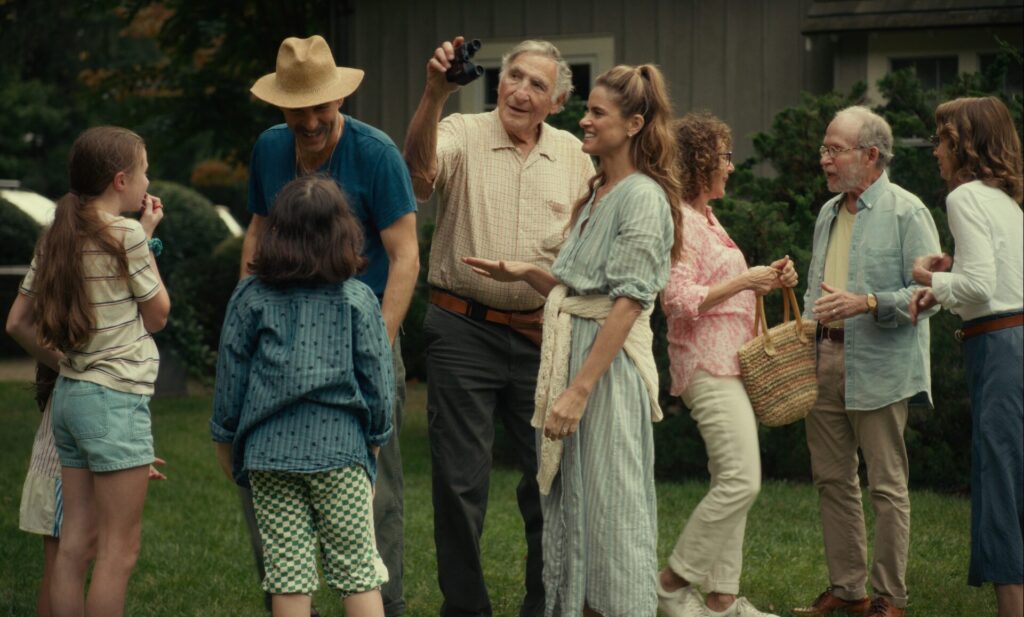
His pain pales compared to Dianne’s (played by Amanda Peet), a once-revered actress who has been on an unplanned hiatus for about a decade. She lives with her musician-husband David (Alessandro Nivola), who has a flourishing career as an artist on tour at an age when musicians are often reduced to their value in behind-the-scenes music production gigs.
In short, he still receives opportunities that see value in him and his creative ambitions, but hers don’t get a chance to breathe. It brings to mind recent characters played by Rachel McAdams in “Send Help” and Halle Berry in “Crime 101,” as their contributions are similarly undervalued as opposed to their past for at least partially similar reasons.
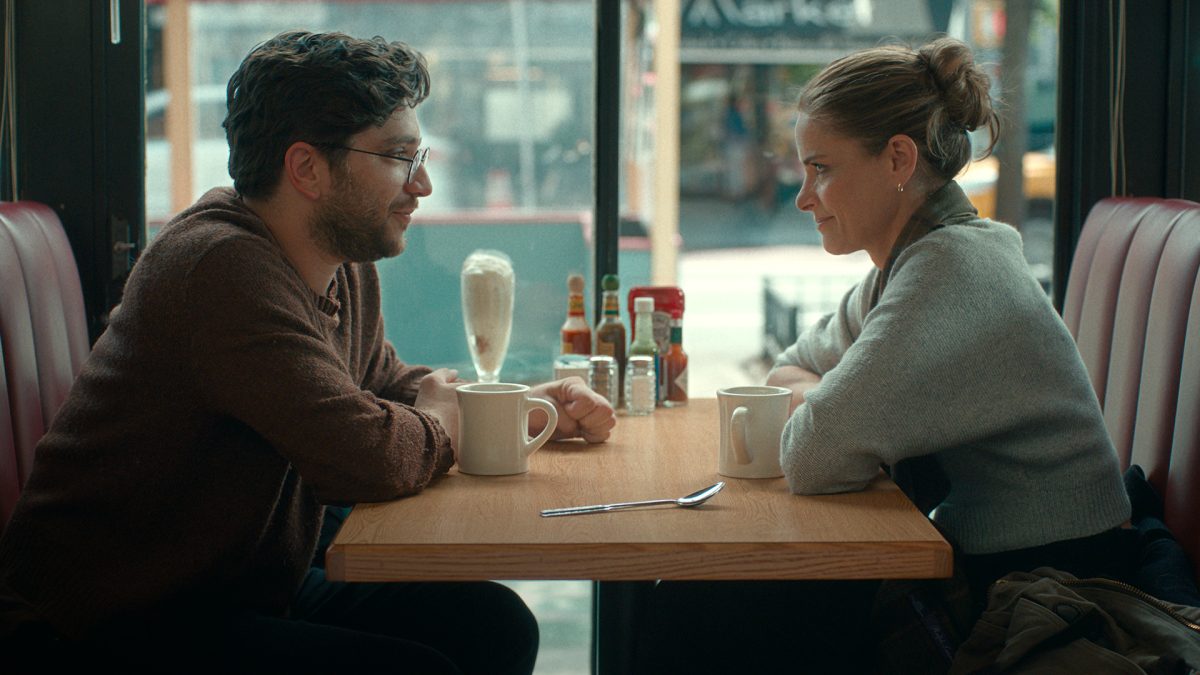
Shear shows Dianne and Sam crossing paths at particularly low points in their respective lives, making their platonic friendship momentarily veer into a trajectory of conventional rom-com. Yet, the directorial tone is so respectably subdued that it never falls into the usual traps of will-they-won’t-they infidelity-centered dramas and their voyeuristic thrills.
Instead, it stays focused on painting their desperation to be seen and recognized by someone, letting that feeling guide us through their psychological complications and their mutual emotional investment. It conveys their profound isolation in spaces that ought to offer them comfort and a lack of recognition in spaces that ought to feel freeing.
Also Read: The 10 Best Comedy Movies of 2025
Peet embodies those contradictions through almost every movement, even a slight choice in her delivery, to convey what lies beneath her words. In one of Dianne’s initial interactions with Sam, she casually offers a favor as a courtesy to avoid something riskier. Eventually, in one of its final scenes, her mind goes in myriad directions within a matter of seconds as he gushes over her work, shares his gratitude, and by the end, unwittingly brings her back to reality.
Thanks to Peet, you can almost pluck every little thought from Dianne’s reaction as she recognizes the blissful escapist fantasy wearing off, while realizing everything it leaves her (and him) with. Her tightrope act, whether in the film’s acting-intensive scenes when Dianne lays bare her soul or in casual scenes with breezy, lighthearted humor, leaves you constantly digging for what’s beneath her response, quiver, or silence.
There’s guilt in acknowledging one’s pain in a privileged position, there’s a fear of being left behind, and then there’s a constant struggle between seeking thrill and comfort after a certain point in your life. Shear’s script addresses the intricacies of the latter two, but leaves you wanting far more in the former. For a film that occasionally addresses different kinds of pain through the political opinions of its characters, it never analyzes their relevance to their internal or external lives in depth, as the characters either shrug them off or consider them merely as footnotes in their cosy lives.
Perhaps seeking accountability may have disturbed an otherwise sustained narrative tone, but it could have yielded a more layered exploration of its own central themes. Besides that, Sam’s character could have been explored beyond the lens of his nervousness and passivity, lending his late-coming-of-age journey an edge besides its undeniable relatability.
Yet, what the film lacks in script, it captures through its direction that marries humor with naturalism in a maturely charming comedy-drama that never becomes cloying, which has become increasingly rare these days. It also features sincere and instantly effective performances all across the board from Alessandro Nivola, Andrea Martin, Judd Hirsch, and Shear himself.
Although underwhelming in some aspects, Shear’s script is impressive in introducing ellipses across its different chapters, leaving the characters with enough personhood to grow in our minds during those spaces in between, while never making those chapters seem disjointed. Ultimately, every actor fits in their part of the puzzle, yet Peet’s thoughtful performance remains the one that lingers through its melancholic undertones.




![The Whale [2022] Review – A stagey but intimate character-drama that carefully treads the fine line between honesty and cynicism](https://www.highonfilms.com/wp-content/uploads/2022/12/The-Whale-768x432.jpg)
![Wander [2020] Review – The paranoia of Conspiracy Theories](https://www.highonfilms.com/wp-content/uploads/2021/01/Wander-Tommy-Aaron-1-768x384.jpg)