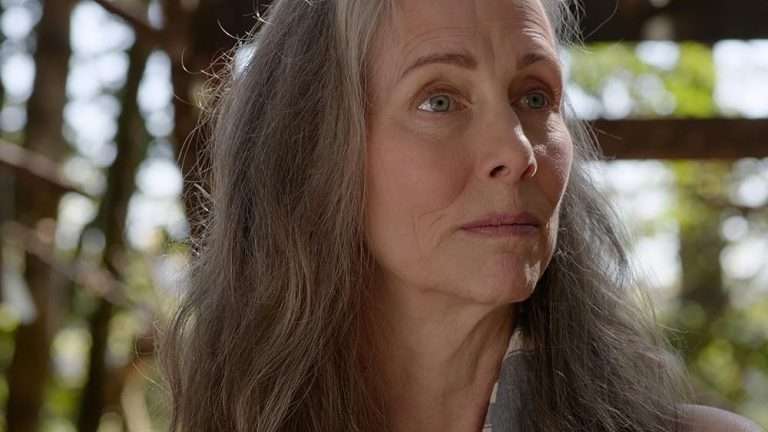
Valentina Maurel’s “Forever Your Maternal Animal” dives into the confusion, vulnerability, heartbreak, and repressed fury of womanhood. There’s an entire gamut that peeks into view, but Maurel isn’t one for hectoring messages. What she does is create contradictions, erect statements that bristle and sentiments that may be thorny but undeniably insistent. So much of our youth is frittered away in adhering to our own narrow conceptions. Anything interrupting feels rude, a stab. The sisters, Elsa (Daniela Marín Navarro) and Amalia (Mariangel Villegas), may have had different formative years.
The former’s return to her home in Costa Rica, after years of study in Europe, sets off the film. A lot has changed. The bustling, chaotic city leaps forth every now and then, as much of a sharp, focalising presence as the women whose secrets and unresolved emotions fill the frame. Premiering in Un Certain Regard at the Cannes Film Festival, Forever Your Maternal Animal is fired by familial ties that wean away, enervate, but also replenish. It’s also tough not to cheer for a film that so sharply admits and values a woman may have cast aside in enterprising motherhood.
Amalia keeps to herself in the family house. She doesn’t let the new domestic help in, desperately missing the previous, familiar one. Amalia is palpably stuck in memories of the time the family was together. Elsa is more practical, immediate, and the one who gets things done. Amalia appears to be on unsteady ground, doubting reality.
Her relationship with everyday life is fraught, spun with ambiguity and chafing. She cannot quite find herself settled in its folds. Elsa, on the other hand, is as efficient in dealing with the nuts and bolts of daily life, getting housing needs fixed, as tenuous in her sex life. Her romantic loyalties are a clear mess, even as she is determinedly oblivious to their ramifications. For a long time, it doesn’t even strike her that the recurring ‘whore’ graffiti outside the family house could be directed at her too.
As eponymously suggested, Forever Your Maternal Animal reckons with womanhood caught at the altar of motherhood. Its weight looms over the film, driven particularly by the choices and anxieties of the girls’ mother, Isabel (a fiercely arresting Marina de Tavira). Her abandoned poetry career hovers with a reprint. An old poetry collection has been freshly reprinted.
It’s been years since she has confronted that former self. Isabel retreated into research and teaching work. Her poetry is charged with naked, unapologetic sensuality. There’s a carnal edge to it, which manages to leave even the Europe-educated Elsa nonplussed. She can barely listen to her mother recite a verse before shutting it. Now, Isabel contends with the spurt of old ambition welling up.
Maurel’s screenplay unobtrusively jabs at certain projections, like what Elsa pushes. There’s no trace of judgment, but Elsa’s carefully cultivated persona, as someone who’s escaped Costa Rica and built a life in Europe with all its attendant freedom, receives rupturing interjections. Her education cannot quite erase her conservatism when it comes to her mother’s transgressive appeal.
The scorching firebrand eroticism in the latter’s work distinctly puts Elsa at unease. Even her father concedes the poetry was among the best work of her mother, from whom he has long been estranged. But this father is the classic showboating type. He is posturing in his interest in his children, but also remains as blasé as to chuck the most basic things he’s promised to chip in. He’s one of those people who make a great fuss about their worry, but ultimately, it’s the mother swooping in and doing all the requisite duties.

The film abstains from detailing what Amalia thinks of her mother’s work. She’s too absorbed in her mystical theories and speculation, wilfully untethered from reality. She’s unable to process change, relying on a ragtag group to prop herself up. Amalia swats away the concern of her sister, who pushes for her to resume her studies.
She has dropped out of college with no desire to re-enroll anytime soon. She’s drifting through, unbothered and nursing unspoken trauma. The mother, too, has kept a distance, though she helps out with finances after Elsa underlines Amalia’s dire circumstances. The latter refuses recourse to the family that could help her out. The return of Elsa makes the need for aid.
Suddenly, it seems the trio must face their pressing reality. Villegas brings a loose, elusive energy that frustrates and unnerves the more sober-minded Elsa. The actress effectively drives an understanding that Amalia is inhabiting a different plane. What may seem fanciful to others forms her holistic schema. There’s a particularly piercing scene in which Amalia shares dreams of spirits arriving at night to unleash themselves upon her. Amalia needs therapy, but she staves off anyone from stepping in and interceding for her sanity. Navarro is equally terrific, full of charismatic self-possession. Even as the narrative dips, sags, and seems a tad clueless at times, Navarro keeps it clipping along.
Thankfully, Forever Your Maternal Animal winds up in a place where there’s no usual reclining on pity and misery, but a committed, uncompromising, simple embrace of Isabel’s daring poetry. Her words may have been written years back, but they ring out just as loud and persuasively today. This is a remarkably thorny, respectfully complex celebration of the choices womanhood is burdened with and dreams of disrupting.





![Paulie Go! [2022] Review – An Incredibly Entertaining Coming-of-Age Comedy](https://www.highonfilms.com/wp-content/uploads/2022/05/Paulie-Go-2022-768x431.jpg)