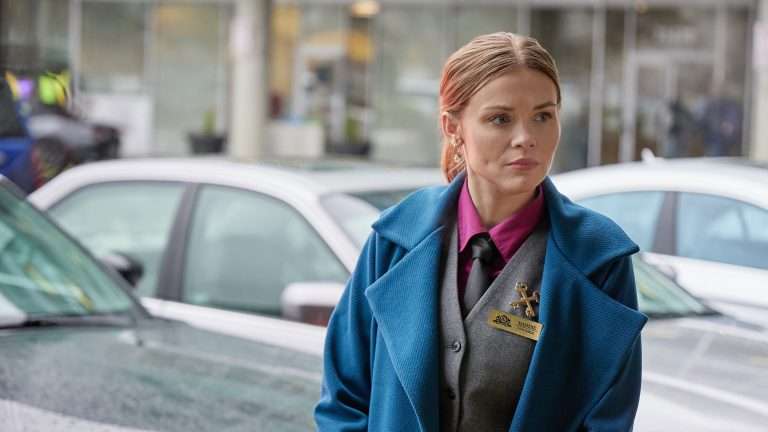
Directed by Jeremy Saulnier, “Green Room” (2015) presents itself as a siege thriller about a punk band trapped inside a neo-Nazi club. But beneath the gore and sudden violence, the film is really about how ordinary people are forced to make irreversible decisions when power, ideology, and silence collide. There are no heroes here. Only people reacting one second too late or too early. Every action triggers another, and survival demands moral compromise at every step.
Spoilers Ahead
Green Room (2015) Plot Summary & Movie Synopsis:
Why Does the Band Accept a Show at a Neo-Nazi Bar?
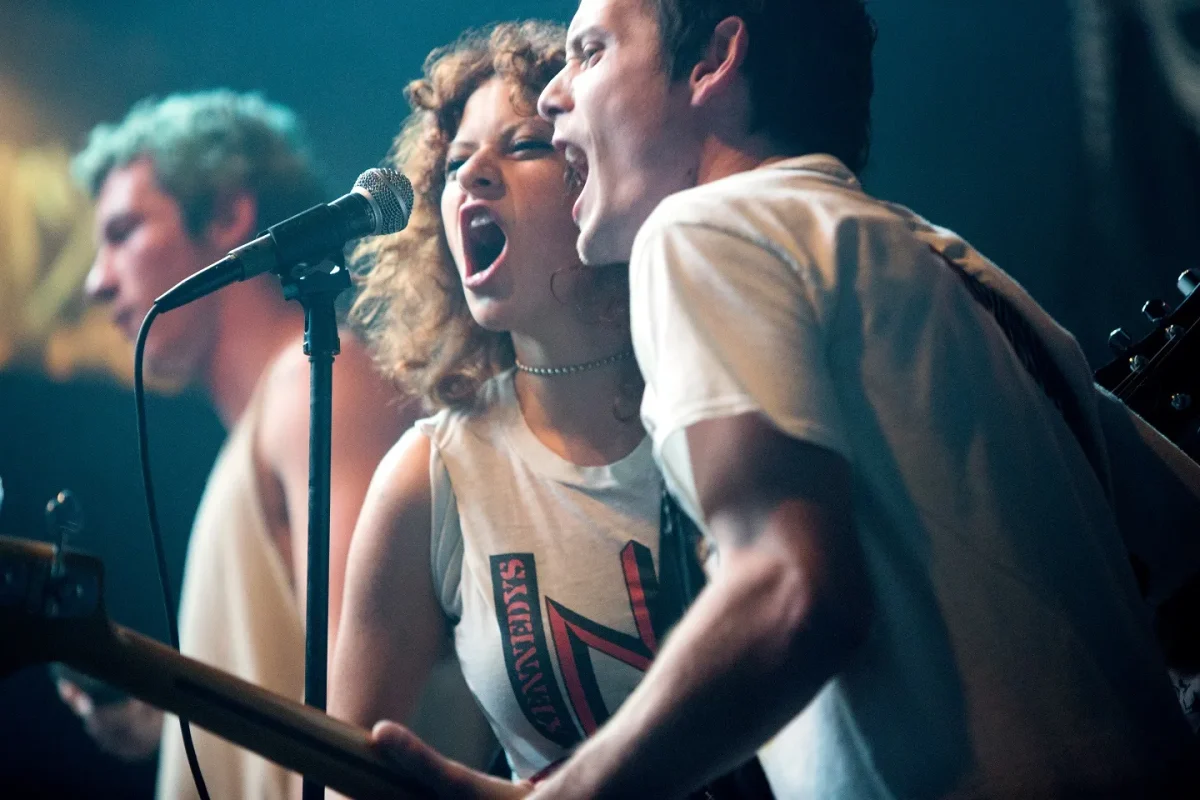
Pat, Sam, Reece, and Tiger are not activists or rebels with a cause. They are broke musicians trying to survive tour life. When their original gig falls through, Tad’s offer feels like a lifeline. A stage, some cash, and a chance to keep moving. The band knows the venue is a skinhead bar. They even choose to antagonize the crowd by playing “Nazi Punks Fuck Off.” But that defiance is performative, not strategic. They believe art can insult ideology without consequence. That illusion shatters the moment they step off stage. This decision matters because it frames the tragedy. The band doesn’t walk into danger knowingly. They underestimate how violently ideology protects itself when exposed.
Why is Emily’s Death the Point of No Return?
Pat goes back to the green room for a phone. Instead, he finds Emily’s body. She’s been stabbed by Werm, one of the skinheads, after a private dispute turns fatal. Emily’s death isn’t collateral damage. It’s exposure. The crime happens inside a space meant to be private, controlled, and invisible. Once Pat sees the body, he becomes a liability.
Calling the police is Pat’s most logical choice. It’s also the worst possible one inside a closed ecosystem built on secrecy. The bar staff doesn’t panic because of the murder. They panic because a witness has stepped outside the rules. From this moment onward, everyone’s role changes. The band stops being performers. They become evidence.
Why Does Darcy Decide the Band Must Die?
Darcy never raises his voice. He never rushes. That calm is what makes him terrifying. As the owner and ideological leader, Darcy understands something crucial: the murder itself is manageable. Witnesses are not. Letting the band live would mean surrendering control to law enforcement and outside scrutiny. His solution is procedural: kill the witnesses, create a cover story, and maintain order. Darcy’s authority isn’t rooted in rage but in logistics. He treats murder like damage control.
That’s why negotiation never truly exists. From the moment Darcy enters the situation, the band’s fate is already being organized. The band captures Big Justin and gains a gun. For the first time, they believe leverage exists. Pat agrees to hand over the weapon, trusting that cooperation might end the standoff. Amber sees through it instantly. She understands that power doesn’t negotiate once it has decided on erasure. When Pat opens the door, machetes slash through the gap. His arm is nearly severed. The gun drops, and the door closes. This moment defines the film’s philosophy. Trust is punished. Civility is read as weakness. From here on, survival requires brutality without hesitation.
Why is Tiger’s Death So Important?
Big Justin isn’t killed in a clean act of self-defense. He’s strangled, revived, strangled again, and then cut to ensure death. Amber insists on certainty. No ambiguity or mercy. This is the moment the band crosses a psychological line. They are no longer hoping to escape untouched. They accept that survival now includes killing. Amber’s presence accelerates this shift.
Unlike the band, she understands the environment. She doesn’t moralize violence. Amber measures it. Tiger’s death is sudden, vicious, and unavoidable. The attack dog isn’t unleashed out of necessity. It’s released as a message. The skinheads weaponize animals because it removes responsibility. No trigger pulled. No hands are dirty. Tiger’s death proves that no rule limits the attackers. It also destroys any remaining illusion that escape without loss is possible. From this point, the film stops asking who deserves to live and starts asking who can.
Why Does Daniel Try to Help Them Escape?
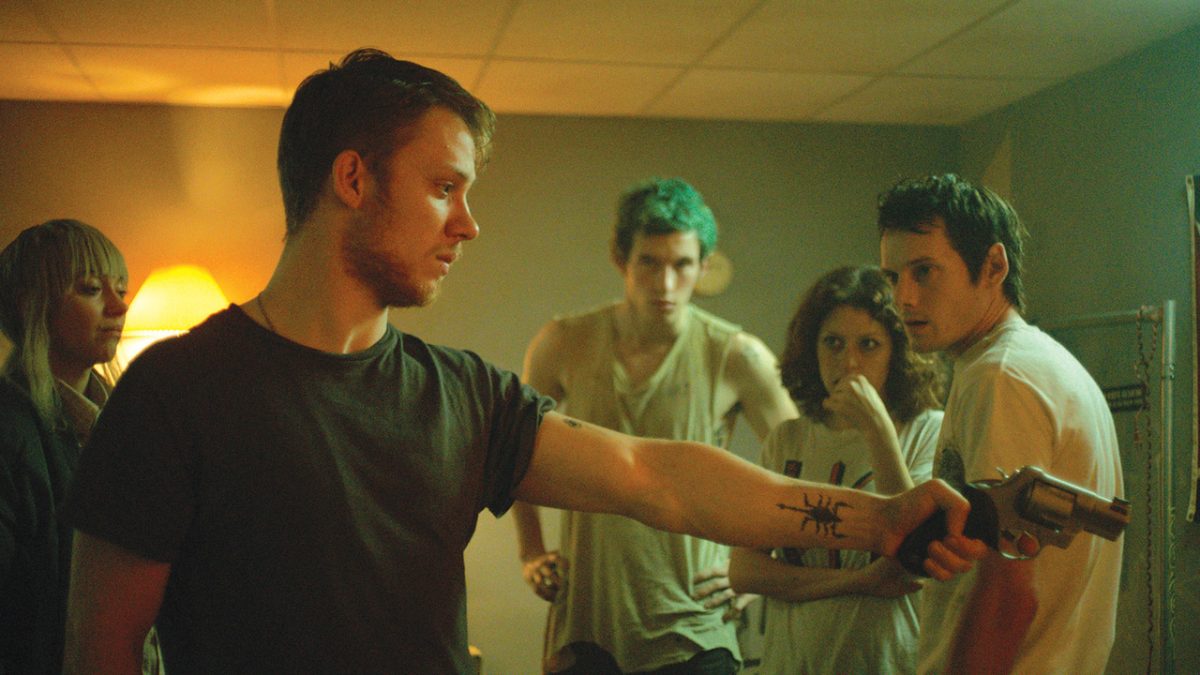
Daniel is weak within the hierarchy. He’s conflicted, isolated, and emotionally tied to Emily. When Amber reveals the truth, that Emily was killed for trying to leave, Daniel realizes he’s expendable. Helping the band is his attempt at redemption, or escape, or both. But ideology doesn’t allow forgiveness. Daniel is killed instantly for stepping out of line.
His death reinforces the system’s cruelty. Even loyalty offers no safety once doubt appears. As the band’s numbers shrink, the green room transforms from shelter to trap. Every exit is controlled, and every attempt costs blood. Reece is butchered while trying to escape. Sam is killed by the dog. Each death isn’t dramatic. It’s mechanical. Violence in “Green Room” isn’t emotional. It’s efficient. Pat and Amber survive because they adapt. They stop reacting emotionally and start thinking tactically. They use space, darkness, and surprise. Improvised weapons replace ideals.
Green Room (2015) Movie Ending Explained:
Why Does Darcy Leave Before Finishing the Job?
Darcy believes in process. Once Jonathan and Kyle are sent in, he assumes the outcome is inevitable. That’s his mistake. By delegating the final act, Darcy underestimates how chaos disrupts structure. He treats murder as paperwork. But inside the green room, improvisation beats hierarchy. Amber kills Kyle without hesitation. Pat and Amber kill Jonathan together. The system collapses because it relies on obedience, not resilience. There’s no speech. No final philosophy. Darcy reaches for his revolver. Pat and Amber shoot him first. His death mirrors his leadership style: controlled, unspectacular, and final.
The film denies him a symbolic ending because ideology doesn’t deserve myth. It ends the same way it operates; abruptly. They don’t win freedom or reclaim innocence. They survive. Sitting on the roadside, waiting for the police, Pat and Amber are empty. The trauma hasn’t settled yet. There’s no relief, only quiet.
“Green Room” isn’t about defeating evil. It’s about enduring it. It shows how systems of hate don’t require passion to function. Only silence, order, and people willing to look away. Pat and Amber live because they stop pretending the world will protect them. And that knowledge is the real scar they carry out of the woods.
Also Check: Green Room (2015) Movie Review: There Will Be Blood, and Plenty of Punk
Green Room (2015) Movie Themes Analysed:
Violence, Power, and the Cost of Witnessing
At its core, “Green Room,” directed by Jeremy Saulnier, is not just a survival thriller. It is a film about what happens when ordinary people accidentally trespass into a system that survives by erasing witnesses. The violence is graphic, but the real horror lies in how calmly and methodically that violence is justified. Every theme in the film grows out of this central idea: power does not need rage to destroy you. It only needs structure.
One of the film’s most striking themes is the danger of being seen. The Ain’t Rights do not seek confrontation. They play a show, take a stand symbolically, and expect to leave. Emily’s murder changes everything because it turns Pat into a witness. In “Green Room,” witnessing is treated as a crime greater than murder itself. Darcy’s response makes this clear.
The murder is an internal issue. A witness invites outside scrutiny, which threatens the closed ecosystem the skinheads depend on. The band is targeted not because they are enemies, but because they know too much. The film argues that systems built on secrecy will always prioritize silencing over justice.
Another central theme is how ideology disguises itself as order. The skinheads are not portrayed as impulsive or chaotic. Their violence is procedural. Darcy speaks softly, plans carefully, and delegates efficiently. This bureaucratic calm is what makes the ideology frightening. Hatred doesn’t scream in “Green Room”; it organizes. By showing neo-Nazis as methodical rather than reckless, the film suggests that extremism is most dangerous when it feels normal, routine, and managerial. Evil here is not explosive. It’s administrative.
Closely tied to this is the theme of power through control, not dominance. Darcy rarely exerts physical force himself. He controls people who do. His authority lies in his ability to decide who is expendable and when. Even his own men are disposable. Daniel’s execution proves that loyalty offers no protection once it threatens stability. The hierarchy survives by sacrificing its weakest members first. The band, unfamiliar with this logic, initially believes negotiation is possible. “Green Room” punishes that belief immediately, as power does not negotiate with those it plans to erase.
The film also explores the collapse of moral certainty under survival pressure. Early on, the band hesitates. They debate and hope for fairness. But survival strips morality down to function. Big Justin’s death is the turning point. Amber’s insistence on confirming his death marks the moment when ethical hesitation gives way to grim necessity. The film does not celebrate this shift, but it refuses to condemn it. Violence becomes a tool, not a choice. “Green Room” argues that morality is a luxury that systems of violence deliberately remove from their victims.
Amber embodies another crucial theme: adaptation over idealism. Unlike the band, she understands the environment immediately. She does not believe in appeals to reason or authority. Her survival instincts are not heroic; they are pragmatic. The film contrasts her clarity with Pat’s early faith in process and civility. Pat survives only after he abandons the belief that fairness applies here. The film suggests that idealism without situational awareness becomes a liability.
Animal violence, particularly through the attack dog, reinforces the theme of outsourced brutality. By using dogs, the skinheads distance themselves from responsibility. Violence becomes indirect, deniable, and emotionally removed. This mirrors how systems often operate, delegating cruelty to mechanisms so individuals can avoid accountability. The dog is not just a weapon. It is a symbol of how violence is normalized when filtered through tools.
Finally, “Green Room” confronts the cost of survival. Pat and Amber live, but there is no triumph. The ending offers no catharsis, no moral victory. They sit by the road, empty and silent. Survival comes with trauma, disillusionment, and loss. The film refuses to frame endurance as success. Living is not winning. It is simply continuing. In the end, “Green Room” is about what happens when ordinary people collide with systems that function on erasure. It strips violence of spectacle and replaces it with process. The film’s most unsettling message is not that evil exists, but that it works best when it is calm, organized, and convinced it is simply maintaining order.