
Critically acclaimed filmmaker Jahnu Barua’s “Herowa Chanda” (“Lost Rhythm,” 2026) was released on January 2, 2026, along with Ashok Kumar Bishaya’s “Joubone Amoni Kore 2” (2026). Returning to the big screen after a gap of more than a decade, Barua presents us with a contemporary story of changing relationship dynamics in modern society, as well as the fading significance of popularity. In a gist, the film is about how love and jealousy turn into a clash of egos with suppressed anger that leads to heartbreak.
The story is about a young couple in Guwahati, Kuhee (Amrita Gogoi) and Anup (Joy Kashyap), whose love for each other crashes right in front of their self-absorbed eyes. They are now braving their inner turmoil as they navigate through a mutual decision of separation. And caught in between the divorce is their daughter, over whom the parents continue to squabble for issues such as whose surname she will carry, how much time she will spend with her father, etc. Replacing their coffee dates, arguing, and gaslighting each other is now their hobby.
Jahnu Barua, known for presenting the issues and perspectives in his films from a female point of view (“Aparoopa,” “Firingoti,” “Bhoga Khidikee,” etc), predictably follows the perspective of Kuhee in “Herowa Chanda” (2026). She is a model cum actress who is now away from her prime. Riddled with anxiety and anger issues, her dedication to her profession is never in doubt, but the film relates the instabilities in her personal life to her decisions of distancing herself from her family when they needed her most.
While not very original in its conceptualization or spirit, “Herowa Chanda” (2026) will remind viewers of the many films on fading stars and modern relationships that we have already seen years before. A bit of “Heroine” (2012) here and a bit of “Shaadi Ke Side Effects” (2014) there, a bit of “We Are Family” (2010) here then a bit of “Jiya” (2024) there and not to mention, Amrita Gogoi, who plays Kuhee, has herself played a similar character that goes through a broken marriage in “Gomon: The Last Journey” (2025).
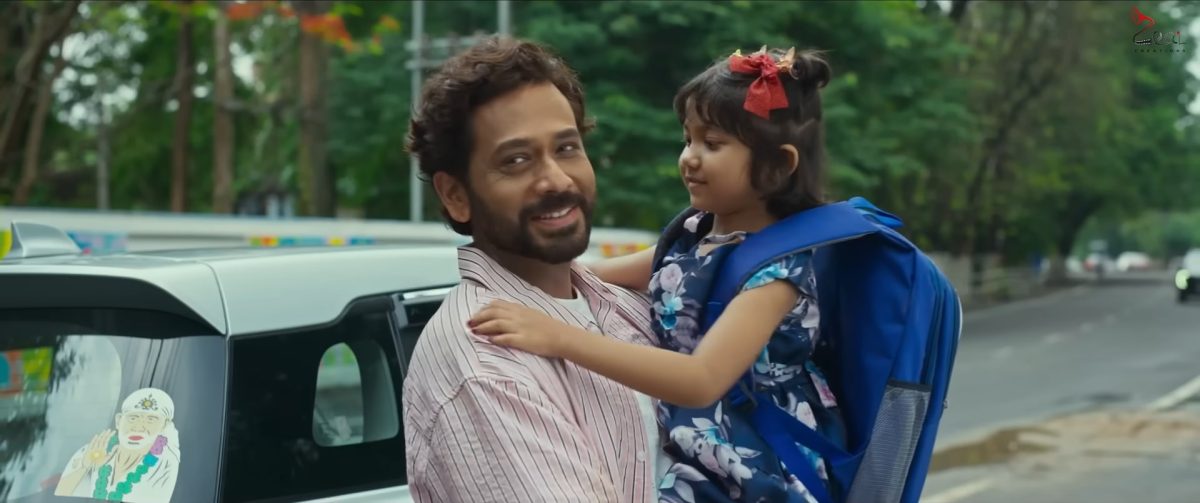
The film also employs a narrative device in which Kuhee occasionally stumbles upon old photographs that transport her back to the sweetest and darkest moments of her past. Through these sequences, the audience is shown her life at home, her relationship with her parents, how she met Anup, their marriage, and the reasons behind their conflict. And this travelling to the past happens so frequently that it will also remind one of the film, “8 x 10 Tasveer” (2009), where Akshay Kumar had the special ability to visit the past by looking at old photographs, although the purpose and effect were different in the latter.
However, the problem of “Herowa Chanda” (2026) is not its unoriginality but the amount of moral commentary it resorts to after it successfully and convincingly establishes its premise. Lectures and opinions fly in from all directions about how we should reconsider past decisions, and how there is always the scope for a second chance. It also talks about how the bitter experiences of our past are framed not only by external circumstances but also by our collective approach to life.
There are even specific roles written for such moral sermonizing. The role of Kuhee’s father, her friend, and even her army captain brother all come to her with different versions of the same philosophy. The point made in a particular scene by Kuhee’s friend, Anjali, will be the exact point made in a subsequent scene by her brother, Akan. Not to mention the forced addition of a short episode in which the character played by Audrey Hatibarua consumes some special minutes of the narrative in the name of comic relief. For the record, “Herowa Chanda” (2026) has a runtime of 138 minutes.
To put it in a different way, “Herowa Chanda” (2026) is absolutely about different people trying to convince Kuhee that she was the toxic one in her relationship. But the moral talk doesn’t end there. The film, through the character of Akan (Ozu Barua), also over-explains our dependence on technology and smartphones. In fact, the film gets so involved against the usage of smartphones that, in one scene, when a young fan meets Kuhee, she asks for an autograph in a diary rather than a selfie.
The lead actors in the film, Amrita Gogoi and Joy Kashyap, have already proven their talent in films like “Ahetuk” (2015), “Dur” (2017) and “Roi Roi Binale” (2025) and they both deliver intense performances in “Herowa Chanda” (2026) as well but unfortunately they cannot distract the audiences from the weaknesses of the script, also written by Jahnu Barua (as Hue-en Barua). After a point, we also go on an outing where the maternal uncle (Akan) bonds with his niece, and they sing a song while the plot drifts around cluelessly until before the third act kicks in.
It’s a good thing that Barua avoids the ultimate sentimentality and melodrama of commercial storytelling and tries to keep things as real as possible but it doesn’t change the fact that the film functions like an anger management class for the character of Kuhee and also as a cautionary tale of what can happen if our mobile phone gets lost or our GPS doesn’t work in today’s world.
In the end, nothing in “Herowa Chanda” (2026) seems to matter. It doesn’t matter that Amrita Gogoi is chronically losing her cool and hyperventilating throughout the film. It doesn’t matter that Joy Kashyap and Amrita Gogoi are sharing the screen together for the second time after “Joy Hanu Man” (2024), which is why their compatibility shines. It also doesn’t matter that Joy Kashyap has two of his movies currently playing side by side in many cinema halls of Assam. And finally, it doesn’t matter that the film is directed by a 12-time National Award-winning filmmaker from India.
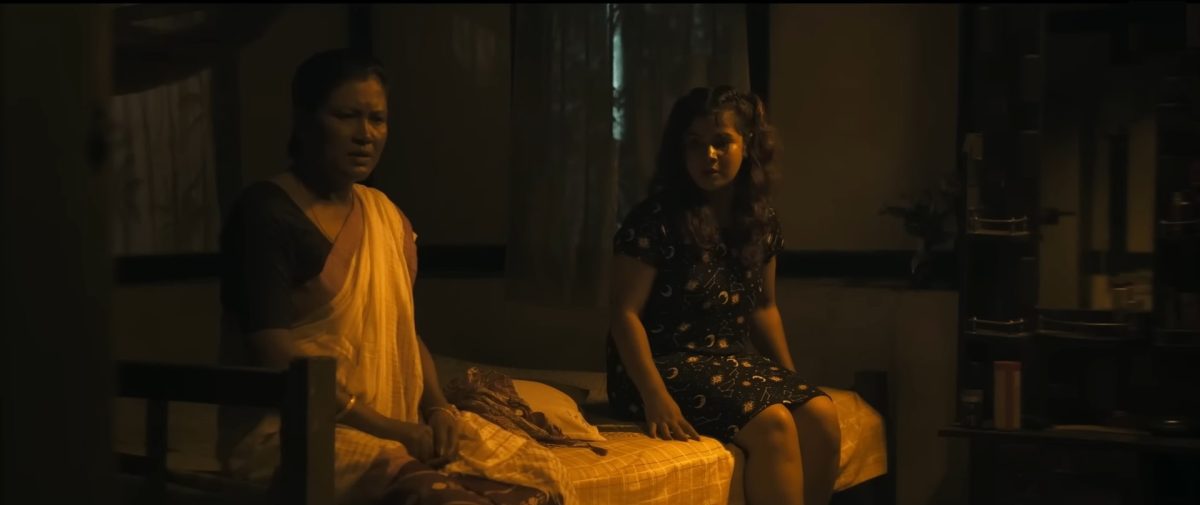
To note, “Herowa Chanda” (2026) is the most commercially oriented film of Jahnu Barua’s career. Therefore, it’s no surprise that the film was not aimed at the festival circuit, and yet the film failed to bring people into the theatres. In fact, many cinema halls in Assam have cancelled the screenings of the film due to low audience turnout. Released on 27 screens across Assam, “Herowa Chanda” (2026) failed to reach audiences due to a lack of promotions and competition from the more popular sequel “Joubone Amoni Kore 2” (2026).
Interestingly, “Joubone Amoni Kore 2” (2026), which was released alongside “Herowa Chanda” (2026), also features the story of a couple in love who are now separated and living away from each other while the child remains in the custody of the mother. Quite a coincidence! Again, like “Gomon: The Last Journey” (2025), which was also about a broken marriage featuring Amrita Gogoi, “Herowa Chanda” (2026) also promotes Assam Jatiya Bidyalay. “Herowa Chanda” (2026) even features Dr. Narayan Sharma in a quick role. Again, a coincidence (Kakotaliyo)?
“Herowa Chanda” (2026) is produced by Dr Sarbeswar Sahariah and shot by Sumon Dowerah with sound design and mixing by Amrit Pritam and Debajit Changmai and music by Ibson Lal Baruah and Nilotpal Bora. It is Barua’s first theatrical release after “Ajeyo” (2014) as his “Bhoga Khidikee” (2018), produced by Priyanka Chopra Jonas, which, after its premiere at the 2nd Guwahati International Film Festival (GIFF), remains unreleased to date.

![Wheel of Fortune and Fantasy [2021]: ‘Berlinale’ Review – A Gorgeous Trifecta About the Conversations that Bind Us](https://www.highonfilms.com/wp-content/uploads/2021/03/Wheel-of-Fortune-and-Fantasy-4-highonfilms-768x415.jpg)


![The Man Who Stole the Sun [1979] Review – A Singular & Highly Ambitious Black Comedy](https://www.highonfilms.com/wp-content/uploads/2021/07/The-Man-Who-Stole-the-Sun-1979-768x432.jpg)