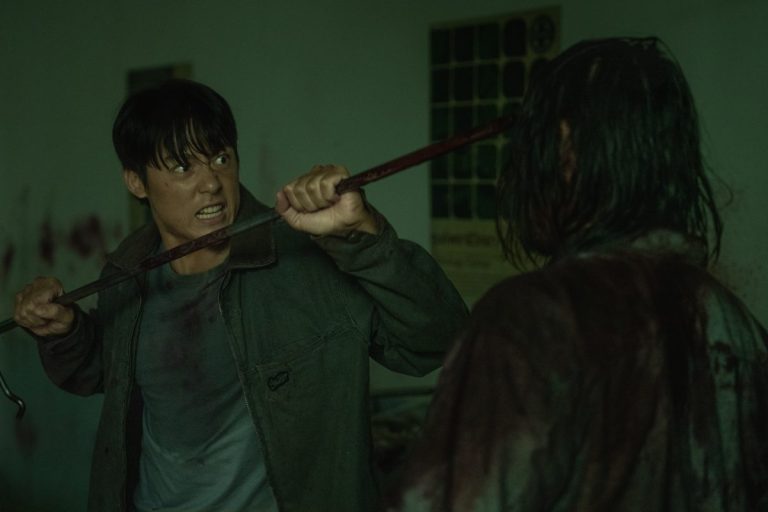
Ham Tran’s “Hijacked” (Original Title: Tử chiến trên không, 2025) is built like a thriller, but it does not behave like one. The film uses a hijacking not merely as a danger in the air, but as a collision of desperation and duty. Nobody aboard the aircraft thinks of themselves as evil. The hijackers call it survival. The crew calls it responsibility, and the soldiers call it protection. And in between them sit civilians who never chose to be part of history. The film quietly argues that violence rarely begins with hatred.
Sometimes it begins with fear. A country recovering from war, a generation unsure of its future, families divided by ideology. The airplane becomes more than transportation. It becomes a moving border. Whoever controls it decides not only a destination, but a political statement. What makes “Hijacked” unsettling is that every character believes they are justified. And, the film suggests, justification is often more dangerous than cruelty.
Spoilers Ahead
Hijacked (2025) Plot Summary & Movie Synopsis:
Why does the Film Begin with the 1977 Hijacking?
The opening is not about spectacle. It is about precedent. After the Fall of Saigon, Vietnam is no longer just a place but a condition. People live physically in the country but mentally in uncertainty. News spreads about foreign nations accepting refugees. For many, airplanes become the only path to another life. The 1977 hijacking shows four desperate men, Co, Ro, Chuon, and Bich, taking over a small aircraft. They are not professional criminals. Their movements are clumsy, impulsive, and almost panicked. That makes them more frightening. Violence arrives not from calculation but from urgency.
A mechanic is killed during the struggle. Air Marshal Minh dies trying to stop them. The crew is overpowered. The co-pilot is injured. Their demand is simple: fly them out of Vietnam. But the scene matters less for the event and more for its aftermath. Binh, an air marshal, studies the incident carefully. He does not see a random crime. He sees a pattern.
A new form of conflict where the battlefield is no longer land or sea but civilian airspace. He begins training harder. Not because he wants heroism, but because he understands something terrifying: the next hijacking will be worse. The film establishes its core idea here. The sky has become political.
Why is Binh on Flight HVN-602?
Binh does not board the plane as a protector. He boards it as a husband. He has been granted leave to see his wife, who is about to give birth. For once, his uniform matters less than his family. The aircraft feels safe to him because it represents the opposite of his work. A journey home instead of a mission.
Inside the plane, he meets the crew. Flight attendant Tu Trinh is warm but observant. She notices people, especially nervous ones. Nhan is gentler and empathetic toward passengers. Guard Son is disciplined but relaxed around Binh. Their conversations feel ordinary. That ordinariness is important.
Because the film wants the audience to trust the plane before it breaks down. Long and his young son Suu sit among the passengers. They appear quiet, almost vulnerable. A father traveling with a child invites sympathy. No one questions them. Not Trinh, Son, and Binh. The danger in “Hijacked” never looks dangerous.
The moment the plane stabilizes mid-flight, everything changes. Long suddenly attacks. Suu follows him without hesitation. Their speed shocks everyone because the plane is psychologically unprepared for violence. They overpower the attendants and force entry into the cockpit. The aircraft does not immediately become chaotic. It becomes silent. Fear replaces movement.
How Do the Hijackers Gain Control of the Aircraft?
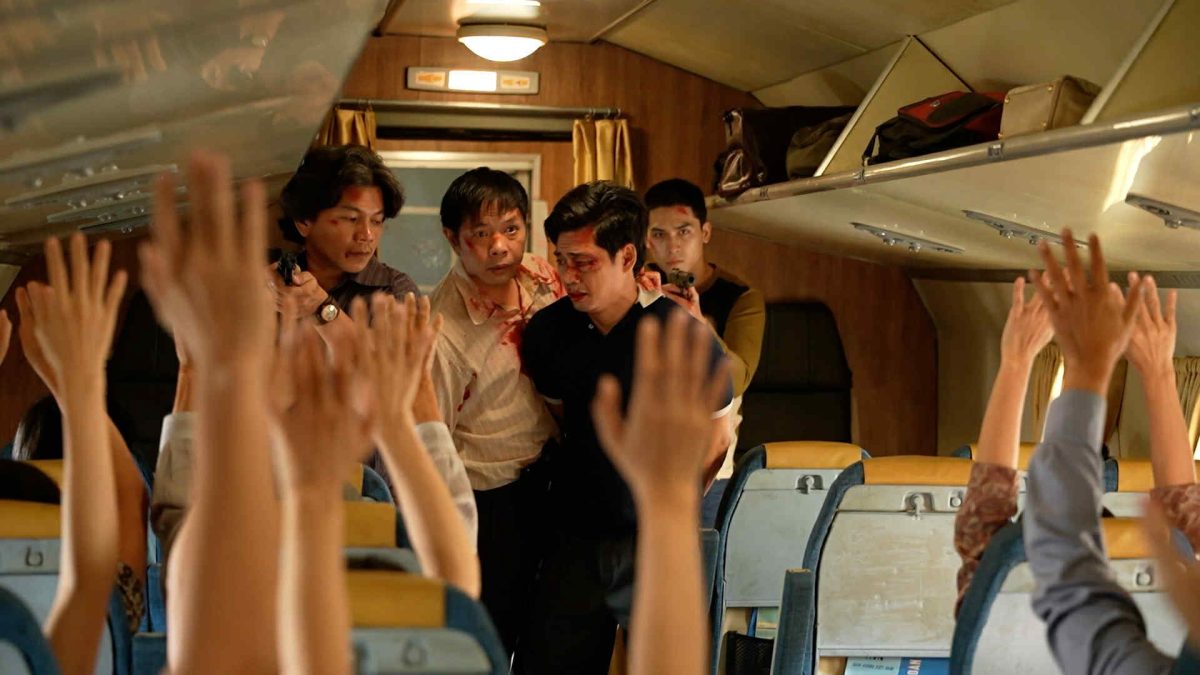
The takeover happens in layers. Long is the visible leader. He uses brutality openly, injuring the mechanic and navigator to demonstrate seriousness. Son tries to intervene and is beaten and restrained by accomplices Ti and Dan. The crew loses authority in seconds. Long announces his threat through the loudspeaker: cooperate or everyone dies. This announcement is less about pilots and more about passengers. Terror works best when witnessed. Panic spreads faster than gunfire. People stop thinking about resistance and start thinking about survival.
Meanwhile, Dan manipulates the navigation systems to push the aircraft out of Vietnamese airspace. He is the technical mind. Ti is the enforcer. Suu is Long’s emotional anchor. The hijacking is not random. It is organized desperation. On the ground, the military launches a MiG-21 fighter to intercept. Suddenly, the plane is trapped not just internally but externally. Inside, guns. Outside, missiles. The passengers realize something horrifying: both sides claim to protect them, yet either side could kill them.
Why Does Binh Decide to Fight Back?
Binh initially watches. He studies movements, timing, and fear patterns. His training tells him that rushing will cause a massacre. The hijackers are nervous. Nervous men shoot faster than angry ones. He waits for a moment when chaos works in his favor. That moment arrives through a civilian. Hai pretends to let his son go to the restroom.
The request appears harmless. The hijackers relax briefly. It is a tiny fracture in their control. Binh and Son seize it. Passengers join them. The film deliberately shows civilians fighting because survival erases hierarchy. Teachers, fathers, workers, everyone becomes part of the resistance. They attempt to physically overwhelm the hijackers. For a second, it works. But Long retaliates brutally.
He tortures Binh and Hai. He breaks Trinh’s finger to force co-pilot Khanh to open the cockpit door. Violence becomes communication. The message is clear: resistance equals suffering. Yet something changes. The passengers stop seeing the hijackers as men trying to escape. They see them as a threat to children, families, and strangers. The moral balance shifts.
Why is Co-Pilot Khanh Suspected?
While the plane is still in danger, suspicion begins on the ground. Investigators noticed that Khanh had replaced another co-pilot on that day. He also lacks a weapon he was supposed to carry. To authorities, coincidence looks like a conspiracy. The government fears insider assistance. In a political environment, trust is fragile.
The security agency orders that communications be limited in case Khanh is cooperating. But the film shows the opposite. Khanh hesitates to open the cockpit because he understands that doing so may doom everyone. His decisions are cautious, not traitorous. Yet wartime paranoia interprets hesitation as guilt. The tension here is subtle. Sometimes institutions fear betrayal more than they trust sacrifice.
Hai appears to be a frightened passenger and a protective father. He is neither. Gradually, the film reveals that he is the real architect behind the hijacking. He tried bribing a pilot earlier. When that failed, he orchestrated the armed takeover. Long is the only operational leader. Hai is the planner. His motivation is not ideology but escape.
He wants to flee Vietnam with his family. To him, the passengers are collateral to a personal salvation. He even frees the captured hijackers later and asks them to fake torturing him so he appears innocent after landing. The film’s most chilling idea emerges here: the most dangerous person aboard is the calmest one.
How Does Binh Turn the Plane Back Under Control?
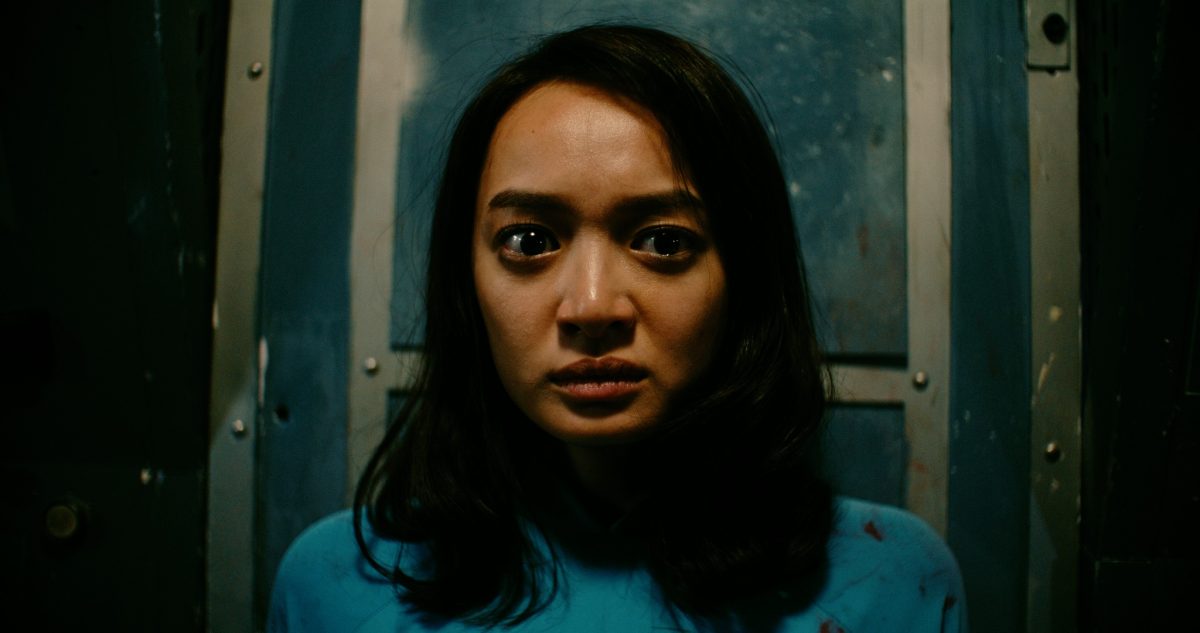
After being shot, Binh is still conscious. He realizes brute force will not work. So he uses physics. Through internal communication, he instructs the pilot to sharply tilt the aircraft. The sudden angle throws the hijackers off balance, trapping them toward the cargo area. It is not heroism. It’s a calculation. For the first time, intelligence defeats violence.
The hijackers are contained. The aircraft turns back toward Da Nang, and the passengers feel relieved. But relief in “Hijacked” never lasts. Hai secretly releases them again. A shootout follows. Suu is mortally wounded. Long breaks emotionally. His son mattered more than escape. Suu asks him to surrender. Instead, Long chooses death. He detonates a grenade, killing himself and his child. It is not victory or martyrdom. It is despair. The explosion damages the cockpit, the captain loses consciousness, and the aircraft begins falling. Now the hijacking is no longer a threat. Gravity is.
Hijacked (2025) Movie Ending Explained:
How Is the Plane Saved?
The pilots struggle to control the aircraft. The rudder fails. Landing gear jams. Binh makes the most dangerous choice in the film. He climbs out of the aircraft onto the landing gear mid-flight to manually assist with deployment. The act is not portrayed as a heroic music-driven spectacle. It is silent and terrifying. He is not trying to defeat someone now. He is trying to defeat physics. Hai unexpectedly helps him back inside. Not redemption, but instinct. Even criminals fear death. Together with Khanh, Binh manages an emergency landing. The plane survives. So do most passengers. For the first time, the sky releases them.
Safety does not end conflict. During evacuation, Binh discovers Hai’s disguise: an urn containing a grenade. Hai intended to restart the aircraft and escape again. Even after destruction and death, he refuses surrender. Binh confronts him. He condemns Hai not for political betrayal but for risking his own family’s life. Hai fires at Binh, attempting one final escape. Binh shoots him. The conflict finally ends, not in the air but on the runway. The hijacking ends with a simple truth: escape built on violence always collapses.
The ending is intentionally quiet. Binh reaches home and meets his newborn child. Life continues, but he is changed. He has seen how fear transforms ordinary people into killers and protectors into targets. Nhan visits Son, revealing affection that only surfaced through crisis. Trinh survives but loses her unborn child due to injuries. The cost of survival is invisible scars. The crew and air marshals receive national honors. And the medals acknowledge bravery, yet the film questions whether recognition can heal trauma.
The final idea of “Hijacked” is not about national victory or criminal defeat. It is about responsibility. A plane contains strangers, yet their lives become interconnected in crisis. Some tried to save everyone. Others tried to save only themselves. Ham Tran closes the story without triumph. The sky returns to being just sky. But the audience understands it differently now. Because once a plane becomes a battlefield, every journey carries a memory: freedom and fear often travel together.