In our grief, we sometimes stop being grateful for the things we have. We become bitter – as if something that was suddenly taken away from us was somehow our fault, and so we punish everyone around us for it. Brian (Elijah Tamati), a young boy and the central character of the film “Holy Days,” is going through a similar kind of conundrum.
After losing his mother, he has been unable to place what he is feeling in any way. He gets mad at basic things, and living with his father, Craig (Joe Collins), and stepmother Liz (debutant director Nat Boltt) has become extremely difficult to the point where he is constantly swearing at inconvenience and sent to the almost abandoned nearby convent that is run by three elderldy sisters namely Sister Agnes (Judy Davis), Sister Mary (Jackie Weaver) and Sister Luke (Miriam Margolyes) for repentance.
Based on Joy Cowley’s book of the same name and set in 70s New Zealand, the film is essentially about the young Maori Boy finding some form of solace with the three elderly women whose unconventional ways to life beyond faith and repentance really make him feel alive. Until the ground that these women live on is shaken — quite literally.
Sister Agnes, who seems to be the sanest of the three old women, learns that the convent that they have helped build into the community it is now, is eyed by a land developer. The only way to possibly save it is to journey to a remote part of the South Island, where Patricia (Tanea Heke) – a former sister of the convent who also happens to be Brian’s great aunt- lives, and retrieve a deed that can help the convent from slipping away from their hands.
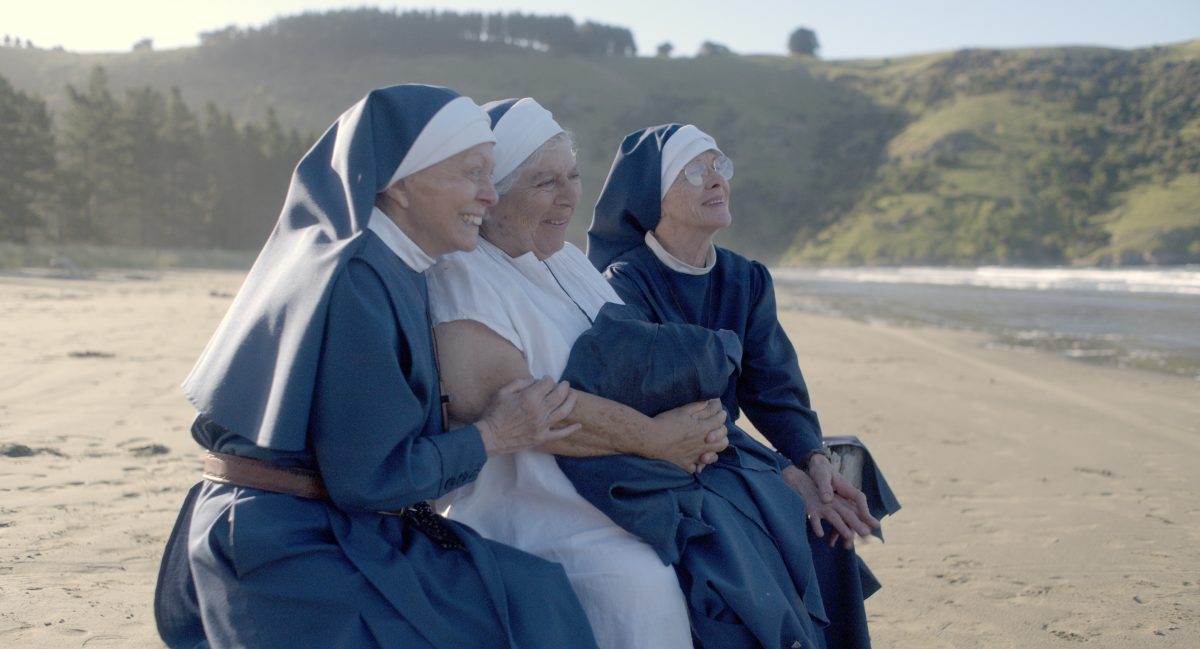
Most of “Holy Days” follows a pretty by-the-numbers road-trip format. The sisters set out on a whim, stealing Father Findlay’s (John Brugh) car as Brian decides to tag along to the land that her mother belonged to. He is the one who has a good set of eyes, ears, and possibly better worldviews. The sisters, on the other hand, have nothing much to lose except each other and the place that feels like home to them now.
The journey is rigged with some conflicts, but Nat Boltt’s gentle, bittersweet tone often resolves those in a matter of seconds. While this goes well with the low-brow, family-friendly entertainment that the film is going for, it also leaves a more engaged audience feeling like they do not have much to latch onto. The emotional wallops often feel forced and out of place, and Brian’s journey of realizing that he needs to move on does not feel well-earned.
For a debut, Boltt does fairly well. Her narrative and tone feel well thought out, and so does her casting choice. Veterans Davis, Weaver, and Margolyes are a treat to watch, even though their characters could have used a better ground to stand on. The young Elijah Tamati is alright, but his act feels like it borrows heavily from Taika Waititi’s “Boy,” including that cute haircut. The problem starts with how conventional everything feels and how the journey of self-actualisation and a crisis of faith feels stamped on, rather than organically developed. If you are looking for a feel-good journey through the vistas of remote New Zealand, you will find some redeeming quality here, but for others, beyond the miniature stop-motion fillers, this might feel like a stretch with no payoff.