
As a genre, romance feels limited by certain narrative constraints. It usually involves two people falling insatiably in love with each other. If they don’t, the story typically revolves around their efforts to move on with their lives despite lingering memories of their time together. No matter what, countless stories have navigated the messiness of both experiences, but that’s not the only reason people keep coming back to the genre. Instead, it’s those little moments in between the lives of those lovers, brimming with charm, tenderness, or spark, that bring them back. They keep these stories refreshing, making it seem like it’s the first time you’ve seen someone fall in or out of love.
Ian de la Rosa’s “Iván & Hadoum” manages to capture the same spark between its two lovers, even if the script falls short in addressing certain aspects of their relationship. De La Rosa, who wrote and directed this film, sets it in a small town in Southern Spain, the kind of town where secrecy may as well be considered a myth.
It feels so quaint and close-knit that everyone may know everyone else, leaving very little room to keep things to oneself. That’s where Iván (Silver Chicón) crosses paths with Hadoum (Herminia Loh Moreno), many years after they had met the first time. He assumes she may not remember him, but she recognizes his presence without him trying to take an extra step in that direction.
It doesn’t take much convincing for either to realize what they mean to each other, but that is only one part of their story. They have their own struggles to overcome, but it’s admirable how the script subtly subverts our expectations about the root of their struggles. Iván is a trans Spanish man, and Hadoum is a brown cisgender woman, but their gender or ethnic identities do not ruffle the feathers of small-town people as one might assume. The script gracefully navigates the initial phase of their romance, where they go through the usual, cutesy motions of this phase. It feels quietly liberating in their case, despite its familiar genre beats.
The central conflict has more to do with their class differences, as Iván belongs to a family in charge of a greenhouse where Hadoum is a newly hired employee, working for a low-salaried job. That distinction becomes clear within the film’s initial moments when she gets injured while on her duty, around the time he is planning to ask his uncle, the managing director, for his long-awaited promotion. It instantly gives us a sense of what separates or connects the two lovers. Their differences seem to melt when they are alone, but remain at least subliminally present when they are in someone else’s presence.
Chicón and Loh Moreno are great at making those details register effortlessly, which is crucial for a film that may have felt heavy-handed if not for their understated performances. The script doesn’t lean into dramatically heightened scenes, leaving the direction to attain a certain amount of floatiness to keep us drawn to the ebb and flow of their lives.
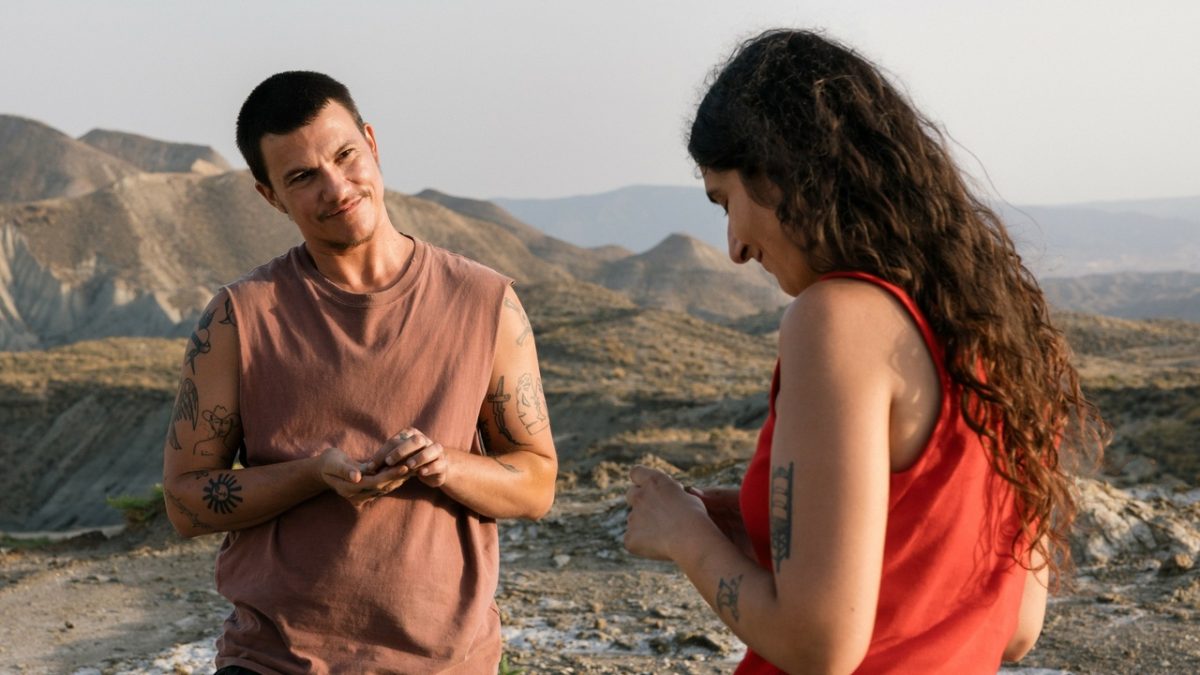
De La Rosa manages it by carefully capturing the beauty from Iván & Hadoum’s mutual interactions, especially when they are playfully hovering around each other, almost trying to solve each other like a brooding mystery. Those wordless moments between them, when they are simply realizing how deeply they have fallen for each other, or the ones when they are trying to express the depth of their growing desire, are probably the most memorable parts of the film.
While exploring the beauty of their coexistence, the script also addresses contemporary issues related to job security, labor exploitation, and the miserable state of small businesses. After all, the place that lights the first spark of romance between them also becomes the one leading to a rift. De La Rosa delicately handles the effect of capitalistic encroachment on their relationship, leaving them to make some difficult choices. He deftly captures the gradual push-and-pull between their dynamic, heavily impacted by the collision of Iván’s ambitions and Hadoum’s unapologetic assertiveness.
Chicón and Loh Moreno’s sincere performances, paired with their infectious chemistry, remain the key to making this gently moving film work. However, the film does falter when it comes to addressing the nuances in Hadoum’s family dynamics, where the script remains underdeveloped, especially when compared to Iván.
We get a fuller sense of his qualms and underlying anxieties through insights into his family and his relationship with every individual member. However, we learn very little about Hadoum’s presumably Arab roots, besides a deeply unpleasant scenario, leaving you wanting more from a film that otherwise manages to break stereotypical assumptions. Moreover, the film transitions awkwardly between its intense and lighthearted scenes, where the bluntness of one scene doesn’t gel seamlessly with the understated nature of the next, which occasionally affects the momentum.
What still works in the film’s favor are the lively performances and sensible direction that deal with the character’s interiority, making it stick the landing despite reaching there on an occasionally bumpy ride.





![Leave No Trace [2018] Review – A Subtly Powerful Tale of Life on the Fringes](https://www.highonfilms.com/wp-content/uploads/2018/09/Leave-No-Trace-2018-768x512.jpg)
![The Last Letter from Your Lover [2021]: ‘Netflix’ Review – Beautifully Shot, Yet Leaves Little to Desire](https://www.highonfilms.com/wp-content/uploads/2021/07/The-Last-Letter-From-Your-Lover-768x453.jpg)
![Dare to Stop Us [2019] : ‘NYAFF’ Review – A Captivating Perspective Elevates the Lookout Into a Fascinating Character](https://www.highonfilms.com/wp-content/uploads/2019/07/Dare-to-Stop-Us-highonfilms-768x432.jpg)