Lip sync animation is one of those skills that separates a believable character from a puppet flapping its mouth.
The audience may not consciously notice good mouth movement, but they will absolutely feel it when something is off.
A character can have the best facial rig, the most expressive eyes, and a killer voice performance, and still feel dead if the mouth shapes do not match the audio.
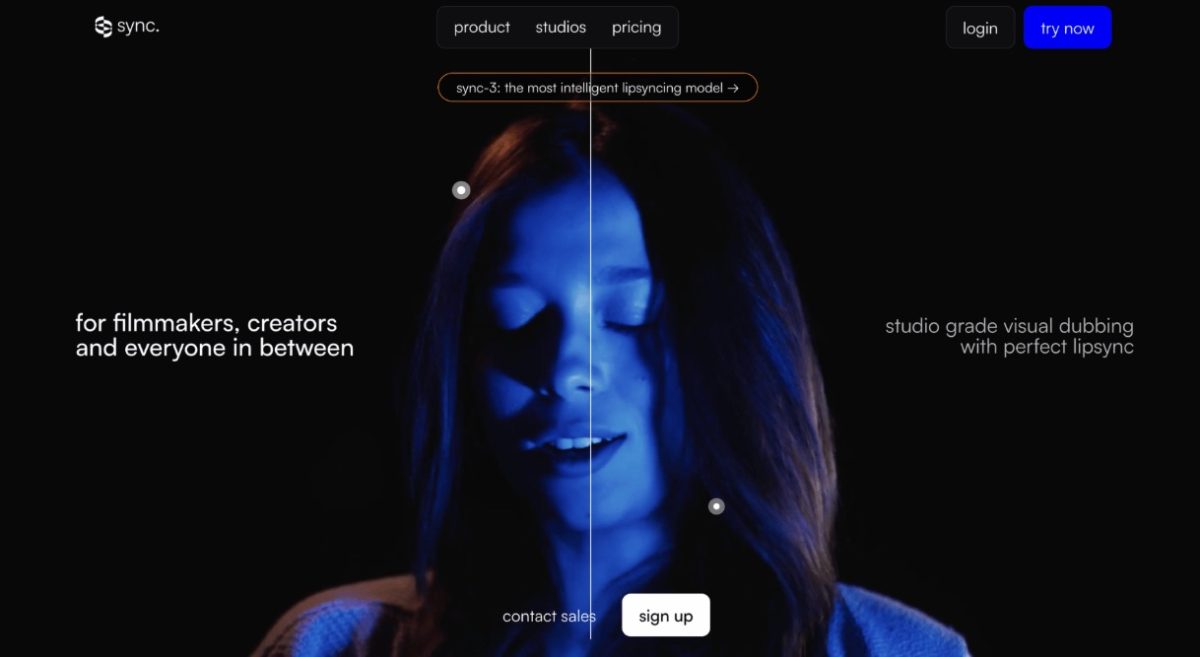
Getting this right is part technical, part observational, and a lot of trial and error, which is why tools built around realistic AI lip-sync motion have become part of so many studio pipelines alongside traditional hand-keyed methods.
The Phoneme to Viseme Foundation
The foundation most animators still rely on is the phoneme-to-viseme approach.
Phonemes are the sound units in speech, and visemes are the visual mouth shapes that correspond to them.
Classic Preston Blair charts break English down into around 8 to 12 core shapes, things like the closed M-B-P, the rounded O, the wide E, and the F-V where the top teeth touch the bottom lip.
You do not animate every single phoneme.
Instead, you pick out the strong consonants and the vowels that the mouth has to physically hit, and let the in-betweens flow between them.
This selective approach is what makes hand-keyed lip sync feel alive rather than mechanical.
Timing Beats Shape Accuracy
Timing matters more than shape accuracy.
A common mistake is placing mouth shapes exactly on the audio waveform peaks, which actually reads as late on screen.
Most experienced animators offset the key shapes one or two frames ahead of the sound, because the mouth physically moves before the sound emerges.
Watch yourself talk in a mirror, and you will see it: the lips form the shape, then the air comes out.
This small anticipation offset is one of those tricks nobody really explains in tutorials, but it is the difference between sync that reads clean and sync that feels muddy.
Jaw Motion as Its Own Layer
Jaw motion deserves its own attention, separate from lip shapes.
The jaw drops on open vowels and stressed syllables, but it does not just bounce up and down with every sound.
Real jaw movement has weight and follow-through.
If you key your jaw on every phoneme, you get that chattery, typewriter mouth look that screams amateur animation.
Better practice is to animate the jaw on a slower, more musical curve that hits the emphasised beats of the dialogue, and let the lips and tongue handle the finer articulation on top.
The Tongue and Inner Mouth
The tongue and the inside of the mouth tend to get forgotten, which is a shame because they sell consonants that the lips cannot handle alone.
Sounds like L, D, T, and N all require the tongue to touch the roof of the mouth or the back of the teeth.
Without that visible flick of the tongue, those consonants just look like soft mush.
A simple tongue control with a few key poses, tip-up, tip-forward, neutral, gives you enough range to add that detail where it counts, typically on close-up shots where the camera is inside the mouth zone.
Emotion Layered Over Mechanics
Emotion has to layer over the mechanical sync, not get replaced by it.
A character delivering an angry line should have tension in the lips, flared nostrils, maybe a snarl pulling on one side.
A whispered line needs softer, lazier shapes with less jaw drop.
The mistake here is treating lip sync as a separate pass that gets bolted onto facial animation.
It works far better when you block out the emotional facial poses first, then carve the mouth shapes into that performance.
The dialogue rides on top of the emotion, not the other way around.
Blending Hand Animation With Automated Tools
A lot of studios now blend traditional hand animation with automated tools to speed up production.
Software like JALI, Faceware, and various neural-network-based plugins can generate a first-pass sync from an audio file in minutes.
The output is not perfect, and on its own, it tends to feel a bit flat or generic, but it gives you a starting layer to refine.
Some teams use this baseline strictly for background characters or rapid prototyping, while others build their entire pipeline around it.
These tools have improved dramatically in the past couple of years, particularly for game cinematics and dubbed content, where manually keying thousands of lines would be impossible.
The smart approach is to treat the AI output as a starting block, then polish the hero shots by hand.
Animating Dialogue in Other Languages
For dialogue in other languages, the technique shifts.
Languages have different phoneme inventories, so a viseme set built for English will not cover Japanese, Mandarin, or German cleanly.
French has nasal vowels that English does not, Mandarin has tonal shifts that affect mouth tension, and Arabic uses throat sounds that barely register on the lips at all.
If you are working on a dub or a multi-language release, build a viseme library specific to that language rather than forcing English shapes onto foreign audio.
The audience will catch it instantly.
Reference Footage as the Cheapest Tool
Reference footage is the cheapest tool in the lip sync toolkit.
Film yourself or a colleague reading the line, then study the footage frame by frame.
Where does the jaw actually drop?
When do the lips press together?
How asymmetrical is the mouth when smiling mid-word?
You will notice things like one side of the mouth pulling more than the other, or the corners staying tense even on open vowels.
Translating those small observations into your animation pulls it out of the uncanny zone faster than any technical trick.
Polish Passes That Sell the Performance
Polish passes are where good lip sync becomes great.
Look at your animation with the audio muted and ask if the mouth shapes still read as speech.
Then watch it with the audio at half speed to catch sync drift.
Mix in subtle asymmetry on the lip corners, add a small breath intake before long lines, and let the mouth settle into a relaxed shape during pauses rather than snapping shut.
Those finishing touches are invisible individually, but together they are what make the character feel like they are actually thinking the words rather than reciting them.