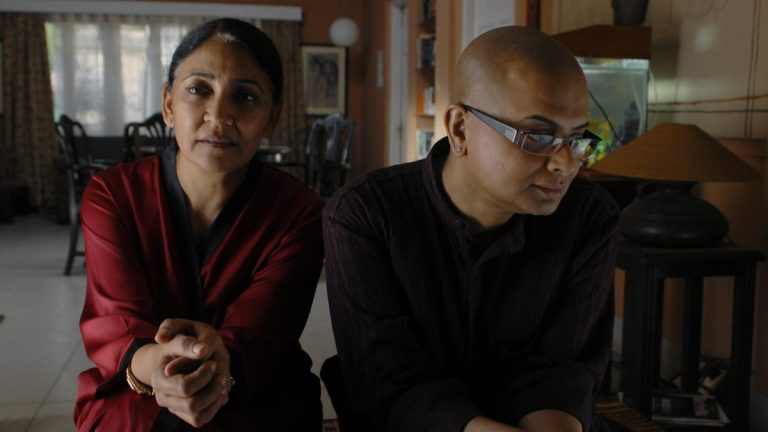
Arati Kadav’s “Mrs” (2023) became widely discussed on social media last year. As my newsfeed filled with posts and glowing reviews about the film, I decided to give it a try. It turned out to be a compelling watch, though I am not sure whether the word “pleasant” truly fits. Its raw portrayal of the reality faced by many women in brown households left me angry, anxious, and deeply uneasy throughout. Some reviews even described it as a “horror” film for women.
After watching it, I scrolled through the comment section of a post about the film and noticed many people mentioning another title: Neeraj Ghaywan’s “Juice” (2017). Several comments claimed that “Juice” had explored a similarly stark portrayal of women’s struggles years before “Mrs.” Curious, I looked it up and was surprised to learn that it was only 14 minutes long. I doubted whether such a short film could portray the reality of women’s lives with the same emotional depth and complexity. For me, spending time with a character’s arc is essential to feeling the full weight of a story, so I assumed the runtime would limit its impact. Thankfully, I was wrong.
“Juice” (2017) stayed with me not because it showed me something out of the box. Rather, the true-to-life depiction kept me glued to the screen for every single minute. The whole 14 minutes felt like a gathering happening in my own home. It felt captivating from the beginning. The constant conversation going on among people, the steam coming from the kitchen, the pseudo-intellectual and sexist comments by men about world politics and office environment, gave me a Déjà vu. It felt like I had experienced this thousands of times in my life. It did not feel forceful and dramatic at all. I saw my mother, my aunt, my neighbor, and my grandmother in Manju, played by Shefali Shah.
The ignorant behavior of every man in the film not only boiled my blood but also left me questioning the things I had always accepted as “normal” in my own surroundings. I began to wonder whether those everyday dynamics were ever truly normal at all. At countless family gatherings, I watched my mother and aunts cook, clean, prepare the table, and serve everyone, while the men sat comfortably on the sofa, drinking juice and debating a cricket match from the previous week. I witnessed this pattern repeatedly, yet I never questioned it. I never asked a man to get up and help clear the table.
Patriarchy does not merely oppress women; it also shapes the way we think. It quietly teaches us how we are expected to behave, what roles we should accept, and which inequalities we should treat as ordinary. “Juice” (2017) handles this subject with remarkable sensitivity, delivering a powerful message without ever feeling overly forceful or didactic.
Two Rooms: Two Different Realities
The kitchen has played a significant role in storytelling for a long time. Pedro Almodóvar is one of the directors who has used the kitchen as a powerful tool to narrate his story. Many crucial incidents take place in the kitchen in his films. For example, the turning point in his film “Volver” (2006) happened in the kitchen. The vibrant, technicolor kitchen became one of the defining visual signatures of Pedro Almodóvar’s cinema. Yet these kitchen spaces often serve a deeper purpose beyond their striking appearance. In one of his earlier films, “What Have I Done to Deserve This?”, he uses the domestic setting to add another emotional and thematic layer to the story.
Unlike the vivid, energetic interiors commonly associated with his films, Almodóvar presents a cramped and lifeless environment here. Through tight framing and an uncomfortably small, congested kitchen, he reflects the emotional reality of the protagonist, Gloria. The space becomes an extension of her existence: suffocating, restrictive, and drained of vitality. Gloria’s life feels trapped within the same narrow confines as the kitchen itself.
Also Read: Emancipation and Labour: An Existentialist Analysis of ‘Mrs.’ (2023) as a Tale of Labour Exploitation
I noticed a similar pattern in “Juice.” Neeraj Ghaywan uses two rooms and the corridor connecting them to construct the film’s emotional and social divide. The kitchen is neither excessively small nor spacious. It is designed only to fulfill its function as a workspace for the women. Nothing more. Yet the environment feels deeply uncomfortable. The constant sweating, the absence of proper ventilation, the blazing stove flame, the broken fan, and the relentless rush to prepare the meal on time collectively make the audience feel the exhaustion and distress weighing on the women.
The living room, where the men gather, stands in sharp contrast. It is spacious, clean, and comfortable. The men sit back casually, sipping juice, smoking cigarettes, and engaging in leisurely conversation. An air cooler placed directly in front of them shields them from the oppressive heat outside. Through these contrasting spaces, the film conveys more than the reality of a single evening. It reflects the broader divide between the worlds occupied by men and women. One space is defined by heat, labor, and discomfort, while the other offers ease, relaxation, and freedom.
Separating these rooms is a dark, narrow corridor that carries symbolic weight of its own. The women repeatedly pass through this confined space only to return to the suffocating kitchen, gradually accepting it as an unavoidable part of their existence. Over time, the discomfort becomes normalized, and life continues within the same exhausting cycle.
The Subtle and Underlined Misogyny
In the opening scene, we see the men talking about office politics. Gradually, it becomes clear that they were “joking” about a female colleague. They are teasing by saying, “Do you have a problem with email? Or female?”. The whole room bursts out with laughter after hearing that. Demeaning female colleagues is funny to them. In another scene, they are making fun of a woman politician. It carefully shows how most of the men discuss politics and see it as a man’s field.
The men speak as though they are solving half the world’s problems simply by making dismissive remarks about women politicians. In another scene, a husband casually jokes that his pregnant wife does nothing all day at home. The film captures, with remarkable subtlety, the everyday ways women’s labor and abilities are undermined. “Juice” does not rely on loud or extreme displays of misogyny. Instead, it reveals how deeply misogyny is woven into ordinary conversations and casual behavior, making it feel disturbingly routine.
The film also avoids presenting misogyny as something sustained only by men. It shows how women, too, can become participants in preserving these long-standing social structures. Many of them simply follow the roles they were taught to accept, rarely encouraged to consider what they themselves truly want. They are conditioned to believe that their primary responsibility is to maintain their husbands’ happiness and preserve marital stability.
In one particular scene, a woman advises another to have a child in order to keep her marriage happy. When the latter resists the idea, a debate emerges between them. One woman explains how her husband asked her to quit her job after childbirth, while the other insists that such sacrifices are necessary for every woman to sustain married life.
The scene becomes especially powerful because it shows how patriarchal expectations are often reinforced from within the community of women themselves. Women are denied agency and opportunities, yet they can also end up imposing the same restrictions on others because society has convinced them that this is simply how life is meant to be.
How Misogyny Shapes Our Future
Patriarchy not only shapes the past; it continues to define the present and influence future generations. Juice illustrates how young girls are taught their “roles” from childhood itself. In one scene, a mother calls her daughter and tells her to serve food to her brothers first before eating herself. The moment quietly exposes how gender-based discrimination begins within the family at an early age. Girls are taught to serve first and consume later, to prioritize others before themselves, and to accept this behavior as natural.
Related Read: Screaming into the Void: The Role of Women in Horror
Misogyny functions like a poisonous chain passed down through generations. The older generation absorbs these values and unconsciously transmits them to the younger one. That little girl may eventually teach the same lessons to her own daughter because she grows up believing that this is simply how life works. The film leaves us wondering whether this cycle will ever truly end, or whether society will continue carrying these inherited patterns forward indefinitely.
The Silent Ending: The Power It Holds
Shefali Shah is an extraordinary actress with the rare ability to communicate through her eyes alone. Her expressions and body language often convey more than words ever could. Neeraj Ghaywan uses this strength brilliantly in the ending of “Juice.” From the very beginning, the film presents scattered moments from a single evening. As an audience member, I remain uncertain about where the story is heading or when it will reach its emotional peak. The ending answers all of those questions. It shook me deeply without relying on a single line of dialogue.
Throughout the film, Manju remains mostly silent, yet her expressions constantly suggest that something inside her is deeply unsettled. Her frustration is never openly explosive, but it lingers uncomfortably in every scene she inhabits. We first see her pouring water into the cooler. Then we see her cooking, searching for an old fan to make the women in the kitchen feel more comfortable, and constantly moving from one task to another. She barely speaks. At one point, she approaches her husband and asks for help fixing the fan. He hears her, but he does not truly listen. Eventually, Manju returns and fixes it herself.
As she cooks, she is also forced to listen to the women debating whether women should continue working after having children. She tries to remain quiet, but eventually responds with restrained anger. Little by little, we sense that she is approaching her breaking point, though the film never reveals exactly when that moment will arrive.
Despite doing nothing to help her, Manju’s husband casually calls her to remove the children from the living room. Once again, she complies silently. She does not complain. She does not raise her voice. In fact, she barely speaks at all. Her hand gets burned while cooking, and she quietly takes some ice and presses it against the wound. Finally, near the end, her husband loudly demands that the food be served quickly.
Even after all of this, Manju says nothing. Instead, she takes a glass from the cabinet and pours herself some chilled juice. She drags a chair into the corridor and walks into the living room — into the “men’s world.” Then she sits directly in front of them. Rage burns in her eyes, yet her lips never move. She simply stares at them in silence before finally taking a sip of the cold juice she has poured for herself.
Ghaywan never attempts to spoon-feed the audience. Instead, he uses silence as his sharpest cinematic weapon. No character explicitly explains what is right or wrong. The ending is built entirely on an unsettling calmness charged with immense anger. Manju sits steadily in front of the cooler, and that simple act — drinking a glass of juice while enjoying the cold air — becomes an act of protest. Every woman deserves a glass of juice, yet many are never even allowed a moment to sit down and enjoy it. In the end, Manju finally does.
When I first started watching “Juice,” I never imagined that a 14-minute film would move me so deeply that I would want to write endlessly about it afterward. “Juice” is the story of countless women. It reflects realities we witness every day yet often ignore as we continue with our lives. But the film reminds us to pause, to acknowledge these invisible struggles, and to reclaim moments of rest and dignity for ourselves. We all deserve to sit down, feel the cold breeze of the cooler, and drink our own glass of juice.