What do you do when your movie has a shoestring budget? You work on the script a little more to compel the audience. But what if your script is also beyond saving? You just make a movie and pray to god for it to click somehow. That is exactly what Patrick Garcia seems to have done with “Lost Horizon.” There is so little effort visible on the screen that it almost becomes a case study in how randomness can be stretched into a feature-length runtime. Everything feels stitched together without purpose, leaving you scratching your head throughout.
The film claims to be set during the aftermath of a civil war, dealing with covert criminal activities that simmer beneath the chaos. On paper, this sounds like fertile territory for a gritty drama or even a tight, small-scale thriller. However, the movie barely commits to any of that. Instead, it wanders from one scene to another without conviction.
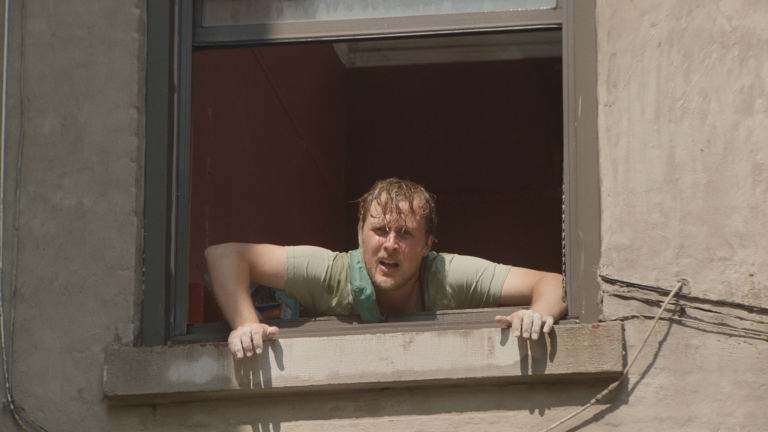
Right from the opening sequence, it feels like the filmmakers decided that coherence was optional. We see Michael Foster (Tom Fairfoot) and his two teammates moving toward a site when they stumble upon Amelia Turner (Aimee Botes), who introduces herself as a journalist. Before there is any time to build tension or curiosity, rebels attack them. A few shots are fired, chaos briefly erupts, and then everything is resolved almost instantly. The group reaches a soldiers’ campsite soon after, and the film seems eager to abandon the entire opening setup without absorbing what the audience might have expected from such a premise.
From here on, the movie collapses into a pile of narrative noise. Whatever themes were hinted at in the beginning evaporate, making the first scene feel like a misplaced trailer for a different film. If the film wanted to explore the civil war, the rebels, or even the covert operations teased in the logline, it had opportunities. It could have chosen a focused mission to anchor the screenplay. It could have dug deeper into the moral ambiguity of war. It could have shown the psychological toll on those involved. Instead, it drifts through its first forty minutes like someone flipping channels and hoping a story emerges if they stare long enough.
During this drift, we meet a cluster of characters who look like they were created solely to extend the runtime. One of them is a perverted doctor who kidnaps Amelia and keeps her captive. This subplot appears out of nowhere, drags on for a while, and then abruptly ends when Michael rescues her. Before the audience can even process the reason behind this detour, Amelia is shot by rebels in the very next scene after an apparent six-month time jump.
So the entire doctor storyline serves no purpose whatsoever except to fill screen time. It neither adds emotional weight nor contributes to the themes nor gives the characters any depth. The movie simply treats it like an errand it had to run before getting back to nothingness.
And because one female character meets her end, the movie immediately replaces her with another woman, Leia (Kayla Osburn), who becomes the next captive of the rebels. This pattern makes it painfully clear that the film is using its female characters as placeholders rather than people. They exist only to scream for help or get rescued, so the plot continues to pretend it is moving.
Meanwhile, the film’s actual villain is almost a ghost. He barely appears, and even when he does, the movie struggles to demonstrate why he matters. He is introduced as a businessman who supposedly hires rebels to carry out poaching operations. This entire thread is covered in about five minutes, so all the supposed stakes collapse instantly. Viewers are left wondering whether the film forgot to develop its own antagonist or simply didn’t have the budget to include him for more than a few scenes. Either way, the outcome feels unfinished.
The technical aspects don’t cushion any of these flaws. The acting is wooden across the board, as if the cast received their lines the same morning and decided to read them back at half-energy. The editing feels slapdash, jumping from scene to scene without rhythm or intention. The dialogue is painfully on-the-nose, with every character speaking like they were instructed to explain the plot rather than embody it. Conversations feel less like interactions and more like exposition dumps held at gunpoint.
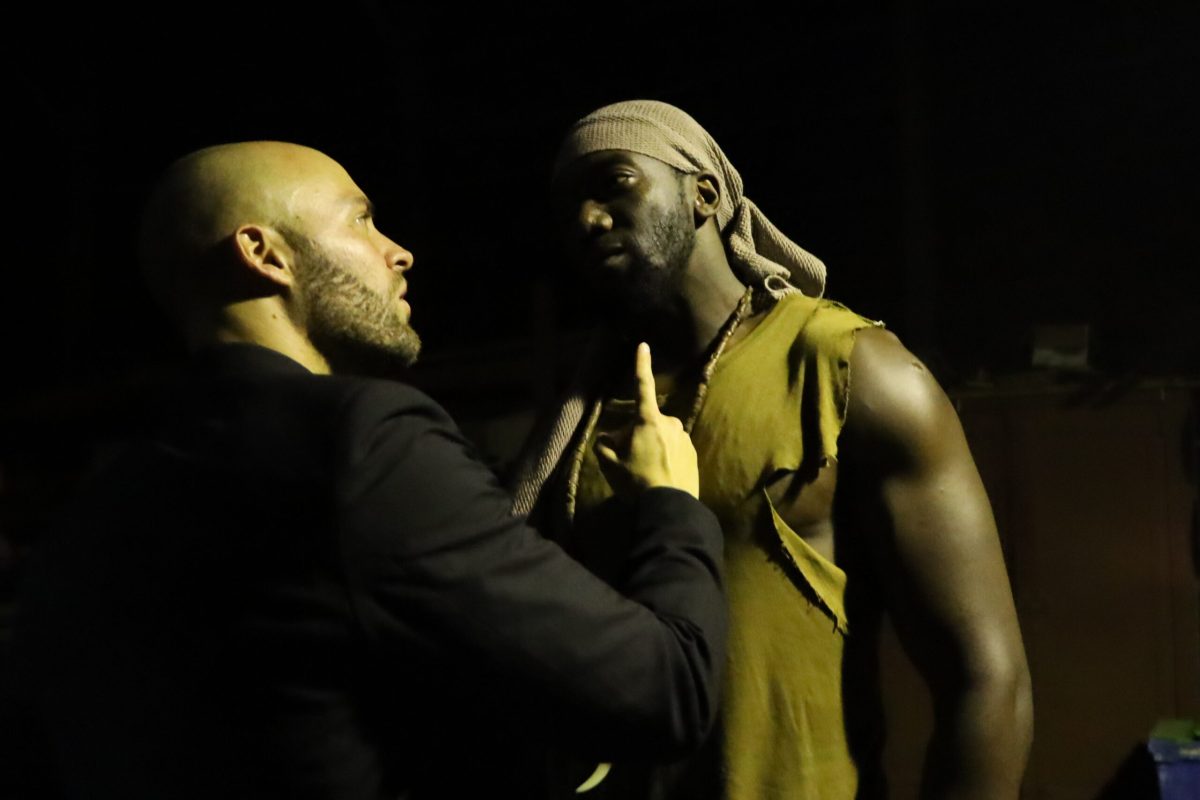
The treatment of characters also raises uncomfortable questions. All the Black characters except one are rebels or violent antagonists. The only Black character who stands on the “good” side ends up stabbed, conveniently waiting for Michael, the white protagonist, to save him. This dynamic reinforces a tired trope where white characters are positioned as saviors against faceless, one-dimensional “rebels” who have no personality or perspective.
The film seems uninterested in exploring any nuance in its portrayal of conflict or culture. Instead, it reduces an entire group to a monolithic villainy that the white hero must navigate through, making the movie feel like an unintentional rebuttal to something like “One Battle After Another.” “Lost Horizon” prefers to put white characters on a pedestal and treat everyone else as disposable.
And yet, the film does have two small redeeming qualities. The grainy aesthetic gives it a retro charm that, in a better movie, could have enhanced the atmosphere. There is also a faint attempt to make something feel human in an era dominated by algorithm-driven filmmaking. You can sense that someone wanted to make an emotional, grounded story about survival and morality. Unfortunately, the execution buries these good intentions beneath layers of incoherence.
Nothing in the film connects, pays off, or feels earned. Every time the story starts to build momentum, it squanders it with another pointless subplot or abrupt transition. Scenes arrive without setup and depart without consequence. Watching “Lost Horizon” becomes a test of patience, where you keep waiting for the film to reveal what it wants to be, only to discover that it never had an answer in the first place.