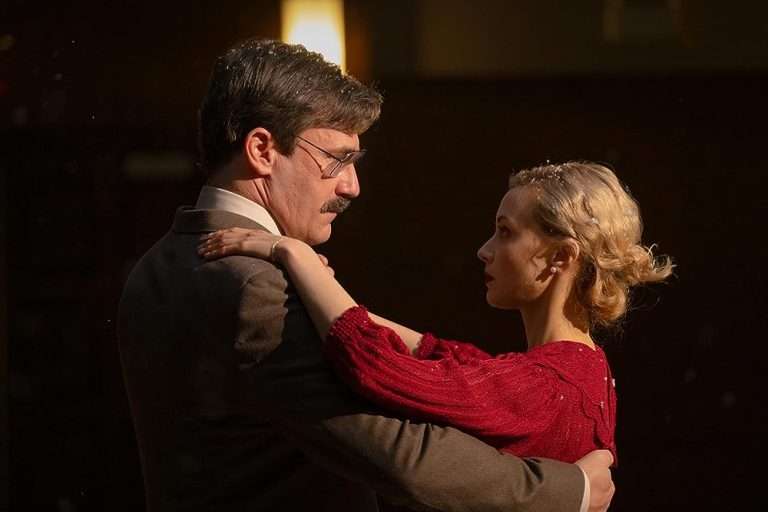
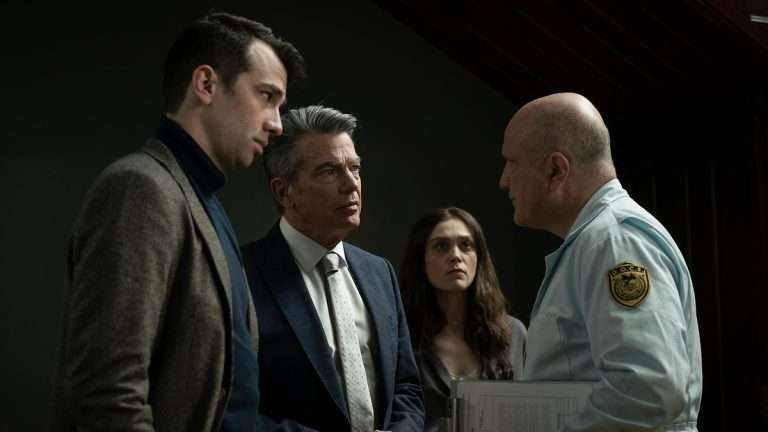
“Isn’t it amazing being needed?” one of the characters says something similar on those lines in Georgia Bernstein’s “Night Nurse.” The idea that you can be of use to someone and also have a certain power over them can make even the best and most empathetic among us feel like we have the cards in our hands. As toxic as that might sound, Bernstein uses that as a structure for her wildly uneven but inadvertently seductive thriller that cuts through broad metaphors of power dynamics, co-dependency, and caregiving.
Set in an upscale retirement community where wealthy elderly residents are cared for by designated nurses in individual bungalows clustered around a central care facility, the film follows Eleni (Cemre Paksoy), a mysterious young woman urgently recruited to look after a difficult client. Douglas (Bruce McKenzie), the client in question, works with Mona (Eleonore Hendricks) – the day nurse whom Eleni eventually doubles up with in order to tend to Douglous’ needs.
The needs in question, you ask? The man needs to have fun. When he isn’t bossing around the very women who help his day become easier, he is just either lazing around the house, smoking cigarettes, or emitting such carefree confidence that even the most savvy young men would put their heads down in shame. You would initially feel that Doglous’ actions are sick, weird, and problematic, and trust me, they are, but Bernstein’s interest lies in examining the ultimate dynamics that build between him and Eleni.
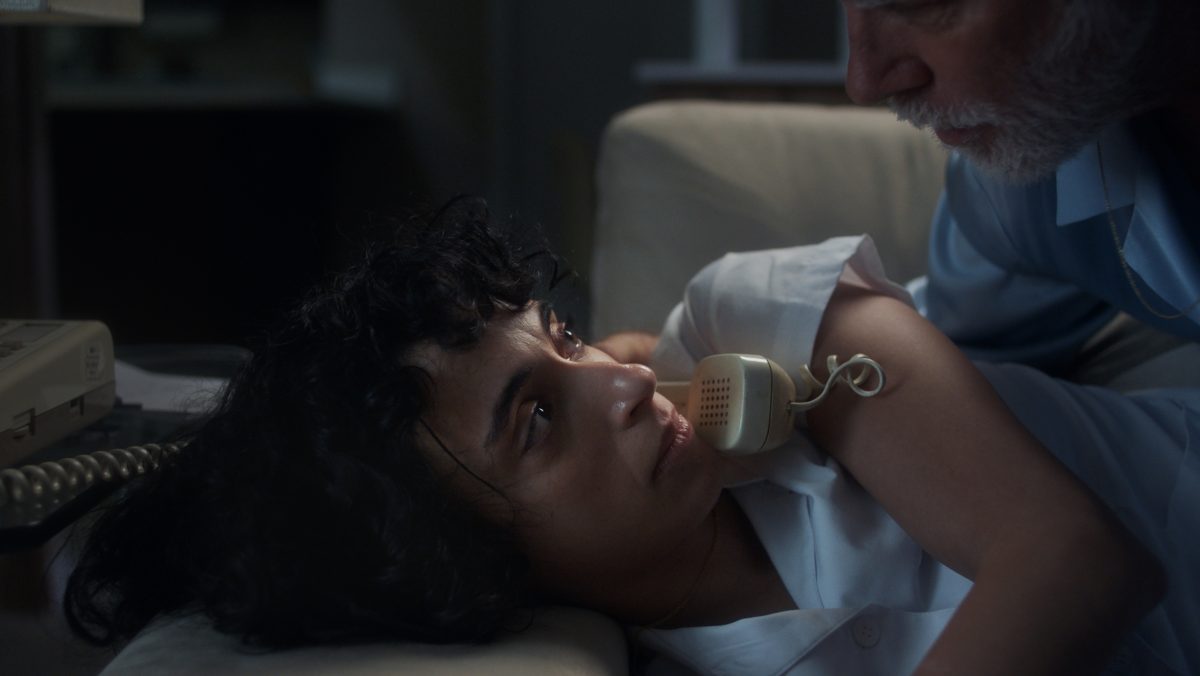
Eleni, who is meek and obedient at first (I mean that’s what her job entails), eventually exhibits more complex emotions that make you sit up and notice. The confidence with which the debutant filmmaker pulls off the sheer erotic tension that builds within is commendable. Since the story emerged from the prank calls the filmmaker had heard, the best and most intense scenes in this confident debut also come from the sexy, perverse calls that Douglous makes Eleni (and sometimes Mona) take to scam the elderly who live nearby.
Although I have to confess that most of the film feels quietly uneven, and much of the tension fizzes out way before the third act kicks in. It’s hard to ignore that “Night Nurse” eventually feels like a short film idea that was stretched out to feature length by throwing in broad metaphors that do not comes full-circle in a way that was initially intended.
The mysteries in the story also never allow you to form a complete opinion about these characters. For instance, what was Eleni like before she was suddenly called in to join the community? Who is Douglous, and what was his dynamics like with his wife, who pays him a visit at least twice throughout the storyy and what did he do before he joined the care facility and decided to retire for good.
That said, the film is greatly uplifted by Cemre Paksoy’s central turn as the mysterious young woman who gets roped into a cult-like scheme of constant manipulation. The way she is able to mend her innocence with carefully calibrated jealousy she feels when someone else is the centre of Doglous’ attention is hard to completely nail down.
It also helps that Bruce McKenzie is both madly menacing and appropriately gentlemanly for the viewer to decide whether they need to like him, loathe him, or feel pity for him. His turn also provides the film a thin line of psychosexual urgency that doesn’t let you settle on what you think of him, or the film in general, and I think that is a feat on its own.