When a contemporary filmmaker like Anurag Kashyap—arguably one of the notable architects of modern Hindi cinematic grammar—finds his film opening to a meager ₹2 crore, it only deepens the crisis facing mid-budget Indian cinema. Yet the more troubling signal arrives when the very platform that financed the project chooses to release its second part without trailers, posters, marketing, or even a formal announcement. Such a stealth drop reflects not just poor strategy, but a broader, more systemic erosion of artistic value in an industry now governed less by curation and more by algorithms.
Even a modest, underperforming theatrical run like that of “Nishaanchi” builds cultural memory. It generates anticipation, debate, and a momentary imprint on the public imagination. Skipping that process entirely—without posters, without clarity, without a communicated shift to OTT—robs a film of its eventhood. It diminishes the director’s cultural capital and signals indifference towards the audience that has followed his body of work for decades. Marketing is more than a financial transaction. It is a statement of confidence. Withholding it pre-emptively devalues the film before a frame has been watched.
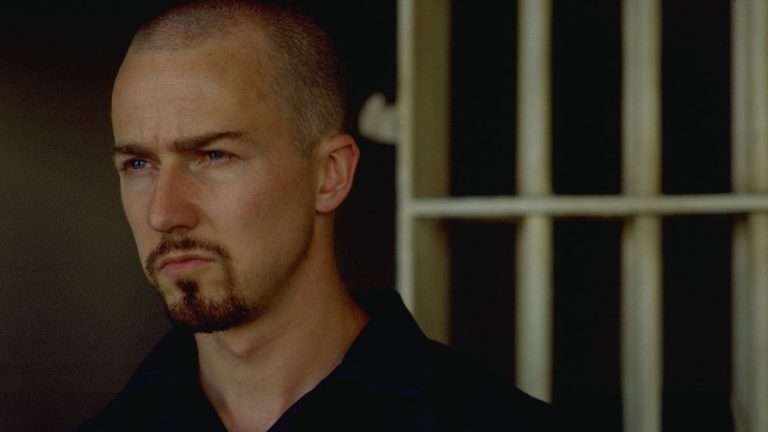
“Nishaanchi 2” resumes exactly where its predecessor concluded, tracing the fates of identical twins Babloo and Dabloo (Aaishvary Thackeray), both entangled in their complicated love for Rinku (Vedika Pinto), and ensnared by a duplicitous political machine. As established earlier, Babloo carries a volatile swagger that contrasts with Dabloo’s timid gentleness – a classic Kashyap duality that frames masculinity as both burden and performative shield.
The first film laid out the internal machinery of Babloo’s world: his allegiance to strongman Ambika Prasad (Kumud Mishra), his role as a loyal enforcer, and his eventual downfall after a personal rupture that lands him behind bars. Dabloo’s subsequent romance with Rinku—previously Babloo’s partner—adds a taboo, faintly transgressive twist in true Kashyap fashion, softened only by the revelation of a secret Babloo had withheld from her even while incarcerated.

Read More: How Anurag Kashyap’s Gangs of Wasseypur Portrays the Clumsiness of People
As a result, the first chapter of this family-rooted crime chronicle felt more like a time capsule—a deliberately unhurried drift through the modest rhythms of a country on the brink of liberalization, where entire communities living together on society’s fringes were about to be reshaped, displaced, and redefined.
Its tonal palette often echoed Varun Grover’s debut, “All India Rank,” unsurprising given Grover’s long-standing creative rapport with Kashyap as both lyricist (even on these films) and collaborator. From its opening frames—where mosque prayers blend with temple bells—to its first action sequence mocking the reality of India’s clogged public and bureaucratic systems, the film anchored itself in a specific socio-historical texture.
“Nishaanchi 2,” by contrast, leaps forward a decade. The air has changed. The once-secular syncretism has now hardened into saffron overtones. A metaphor involving a ‘washing machine” from the first film—once a tongue-in-cheek nod to corruption—now finds a more sinister institutional counterpart based on recent headlines. Thus, Babloo emerges from prison into a world he no longer recognises, hoping to reclaim the family he abandoned: his weary mother Manjiri (Monika Panwar), his twin brother, and Rinku. But life has moved on. Their interpersonal dynamics have shifted in the same way the nation’s moral and political compass has.
Trying to rebuild himself, Babloo embarks on a muted coming-of-age arc, attempting to detach from the grime of his past. He drifts toward Anjana (Erika Jason), a radical social-media provocateur whose presence gestures toward India’s new digital-first political culture—reactionary, performative, and wired into the country’s shifting ideological pulse. But Ambika’s grip has only grown stronger.
Now entrenched closer to the corridors of power in the capital, he unleashes his long-time lieutenant, the corrupt cop Kamal Ajeeb (a cheeky name for someone played with extraordinary nonchalance by Mohammed Zeeshan Ayyub), whose mission is to corner and dismantle Babloo, embroiling him in a string of high-stakes political assassinations engineered to make him the perfect scapegoat.
The trope of twins—or dual protagonists navigating a fractured moral landscape—has been a foundational pillar of Bollywood storytelling for decades. Kashyap has repeatedly said he envisioned “Nishaanchi” as operating in a full-on Salim–Javed zone, hoping to channel the emotional sweep, raw intensity, and pulpy heart of the masala films he grew up watching in small-town India. Here, he repurposes that nostalgic grammar to interrogate collective anxieties: the insecurities of India’s economically vulnerable, the violent churn of political machinery, and the yearning for liberation embedded in his female characters.

Also Read: The 10 Best Indian Movies of 2025 (So Far)
Babloo and Dabloo’s psychological shaping—their childhood absence of a father, their fractured social conditioning, their diverging paths across the moral divide—feels like Kashyap’s attempt to map personal trauma onto broader sociopolitical decay. Their lives are defined as much by affection as by circumstance, with each brother becoming a mirror of what the other could have been.
By the time the sprawling five-hour-plus narrative reaches its final movement, Babloo’s reckoning emerges not through theatrics but through a quieter, more intimate confrontation—especially through his mother’s quite yet unvarnished reflection of his failures.
Yet the film’s deeper commentary lingers elsewhere: in how systems built to protect the vulnerable repeatedly sacrifice them, manufacturing scapegoats while nurturing cycles of institutional violence. It is violence rendered more subdued here than Kashyap’s stylistic norm, one that’s even defined him, but no less unsettling. It’s a choice that speaks not necessarily of a filmmaker becoming better at his craft, but certainly more poised.
Still, “Nishaanchi” is far from flawless. The midsection drifts noticeably, weighed down by pacing issues that sap urgency from the narrative. Several late-stage character introductions feel abruptly inserted, their motivations underexplored, and a few key revelations land with an inorganic thud—more contrivance than narrative inevitability. Tonally, the shift from gritty realism to heightened masala homage doesn’t always cohere, and the film occasionally struggles to balance its pulp sensibilities with its political ambitions.
Yet beneath these blemishes lies a central ethos unmistakably tied to the very DNA of Hindi cinema—a fusion of mythic emotionality and social observation that once defined mainstream Bollywood. The tragedy is that this very lineage now feels alien to the contemporary viewer. The muted, almost apologetic release of “Nishaanchi 2” seems to mirror this cultural estrangement: a signal that mid-budget masala dramas, once the backbone of the industry, perhaps no longer command space in the theatrical imagination.
Perhaps we have drifted so far from the values, textures, and contradictions that shaped earlier generations of filmmaking that anything attempting to resurrect that sensibility now feels out of place, echoing a nostalgia we are no longer culturally wired to receive.
In that sense, the film’s subdued release isn’t merely a marketing misstep. It simply is a symptom of a widening disconnect. When stories rooted in our cinematic and sociopolitical past struggle to find relevance—or even visibility—it reflects a deeper shift in what mainstream Bollywood chooses to value, and what it is increasingly leaving behind.


![Once Upon A Time in Hollywood [2019] Review: A Black And White Tinseltown Fantasy](https://www.highonfilms.com/wp-content/uploads/2019/07/One-upon-a-time-in-hollywood-768x427.png)