Predator Badlands takes the franchise into a new setting, far removed from the historical backdrop of Prey. Since the story unfolds on a distant alien planet, the filmmakers needed landscapes that felt vast, raw, and unfamiliar. Instead of relying only on studio effects, the production chose real world terrain that could naturally create that atmosphere.
Most of the film was shot in New Zealand during production that ran from August to October 2024. The country’s mix of volcanic ground, dense forests, lakes, and mountains helped shape the visual identity of the movie. Below are the confirmed filming locations used in Predator Badlands.
Auckland

Auckland functioned as the main production base. Several interior scenes were filmed on sound stages here, including the sleek corporate spaces connected to Weyland Yutani and the interior of Dek’s crashed ship.
Just outside the city, the South Head Peninsula near Helensville appears early in the film during the crash landing on Genna. The exposed cliffs, dunes, and wide coastal stretch help establish the planet as harsh and empty right from the start.
Rotorua
Rotorua provides much of the film’s alien atmosphere. Its geothermal terrain appears in the sections where Dek first moves through the planet’s toxic surface, with steam vents and mineral stained ground giving the landscape a strange, unstable look.
The towering trees of Whakarewarewa Forest are used for the early hunt sequences, allowing the Predator movement through the canopy to feel physical rather than digital. The dense mossy forest floor in the same region also appears in the moment where Dek discovers Thia, surrounded by vegetation that suggests the planet has long reclaimed its own ruins.
Tongariro National Park
Tongariro National Park supplies the film’s most dramatic highland visuals. The volcanic ridges and open slopes appear during the tense pursuit where Dek and Thia are chased across mountain terrain.
These wide shots help define Genna as a brutal survival world. The landscape is steep, exposed, and unforgiving, which adds real tension to the chase. Viewers who know fantasy films may find the terrain familiar since the area has been used in other major productions.
Te Kūiti and Mangaotaki
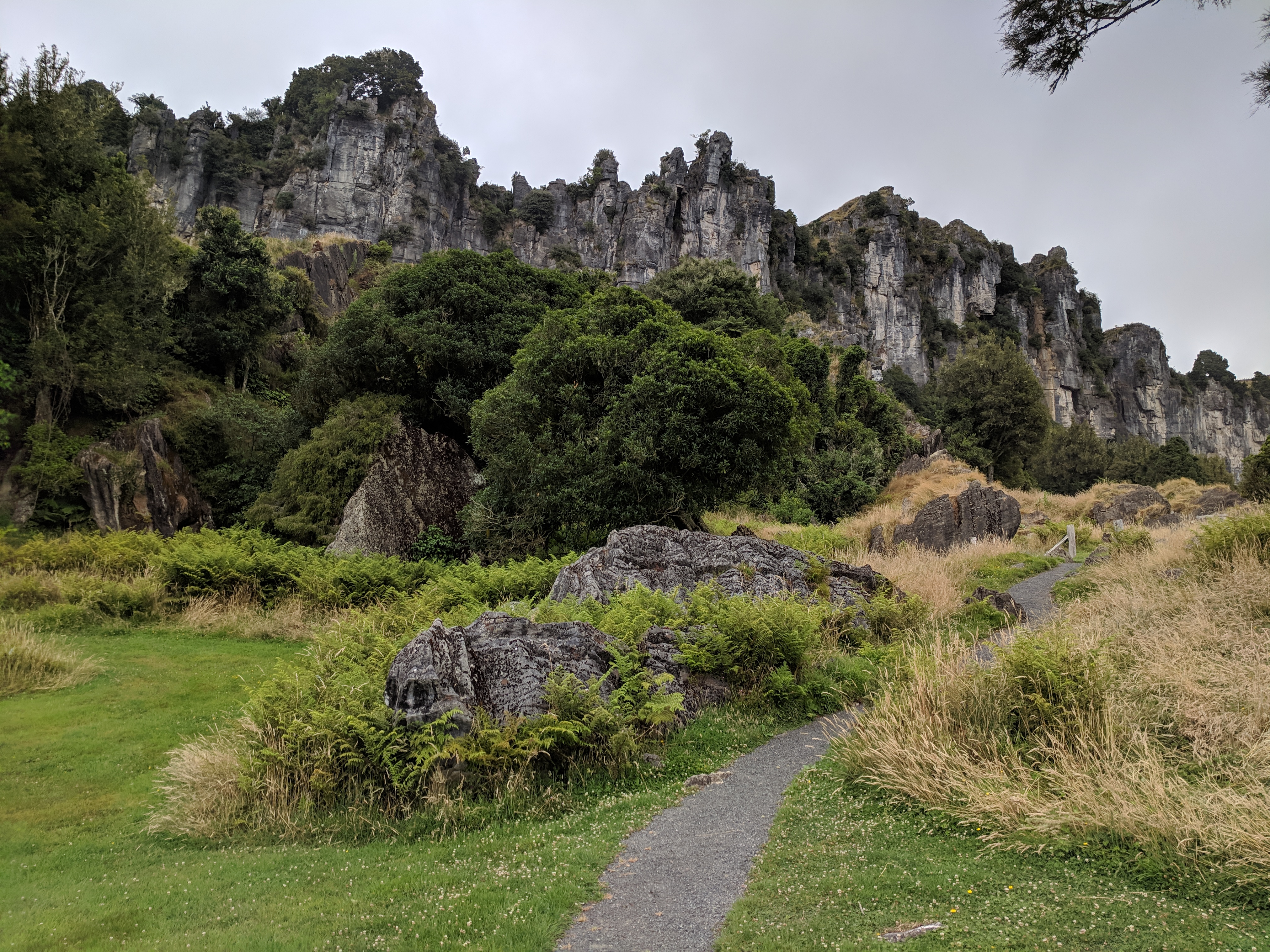
The limestone formations around Mangaotaki appear during the quieter middle stretch of the story when Dek and Thia stop to regroup. The unusual rock shapes and sheltered terrain make the place feel like a temporary refuge in an otherwise dangerous world.
Nearby valleys in the Te Kūiti region appear throughout the travel portions of the film. These shots help show how far the characters must move across Genna, reinforcing the sense that survival here depends on constant motion.
Okahune Area
The Okahune region helps link the film’s environments together. Several transition sequences showing the changing landscape were filmed here, bridging the geothermal terrain and the volcanic mountains.
These scenes give the planet a more believable geography, making the journey feel continuous rather than a series of disconnected set pieces.
Why New Zealand Fits Predator Badlands
New Zealand offers multiple ecosystems within a relatively small filming radius. That made it possible for the production to create a full alien world without constantly relocating or building everything digitally. The mix of forests, volcanic slopes, valleys, and geothermal land gives Genna a grounded visual identity, even though the story takes place far from Earth.
FAQ
-
Q: Is Predator: Badlands set on Earth? A: No, the film takes place on a distant alien planet called Genna (and briefly features Yautja Prime), making it the first Predator film set entirely in the future.
-
Q: Where was the Predator ship wreckage filmed? A: The interior of the Predator ship was filmed on sound stages in Auckland, New Zealand.
-
Q: Did they use real locations or CGI for the alien planet? A: Director Dan Trachtenberg used a “location-first” approach, filming extensively in New Zealand’s volcanic and geothermal regions to minimize the need for green screens.
Courtesy: MovieWeb