“Pusher III” (2005) closes the trilogy by turning its gaze toward time. This is no longer about climbing or inheriting power. It is about holding onto it when the body, the mind, and the world are quietly moving on. Nicolas Winding Refn frames crime as routine, age as erosion, and authority as demanding constant performance to survive. Milo is not fighting rivals. He is fighting irrelevance.
Spoilers Ahead
Pusher III (2005) Plot Summary & Movie Synopsis:
Who is Milo when He Tries to Be Clean?
Milo introduces himself not as a kingpin, but as a recovering addict. Sitting in a Narcotics Anonymous meeting, he speaks like a man trying to believe his own words. Five days clean sounds fragile, almost ceremonial. The birthday dinner for his daughter becomes the excuse he uses to explain his anxiety, but the real fear is deeper. Cooking is control. Sobriety is vulnerability. The moment he leaves the meeting, the old world rushes back in. Branko waits.
The drug pickup waits. Milo may want to be clean, but his empire does not pause for recovery. When the shipment turns out to be ecstasy instead of heroin, it is more than a logistical problem. It is a sign that the structures he once controlled now move without him. Meeting Luan confirms it. The Albanians are polite, calm, and firm. They do not fear Milo. They negotiate with him like a liability, not a superior. Allowing him to sell the pills feels generous, but it is also a test. Milo accepts because refusal would expose weakness. From the beginning, sobriety is framed as a luxury Milo cannot afford.
Why Does Milo Obsess Over the Birthday Dinner?
The dinner is not about food. It is about legitimacy. Milo wants to be seen as a father before he is seen as a criminal. Cooking becomes his attempt at normalcy, a way to rehearse a life untouched by violence. He forces his henchmen to taste his dishes, demanding praise like proof that he can still provide something good. Instead, he poisons them. The food poisoning is darkly comic, but it also undercuts Milo’s self-image. Even his attempts at care cause harm.
With his crew incapacitated, Milo loses his buffer against the outside world. He is forced to rely on people he does not respect, and that dependency gnaws at him. Milena’s presence sharpens this anxiety. She is demanding, entitled, and emotionally distant. Milena expects everything and notices nothing. Milo bends over backward to satisfy her, negotiating prices with her the same way he negotiates drug deals. Fatherhood and criminality collapse into the same transactional language. The dinner keeps moving closer, and Milo keeps falling further behind the version of himself he wants to present.
Why Does Little Muhammed Threaten Milo’s Authority?
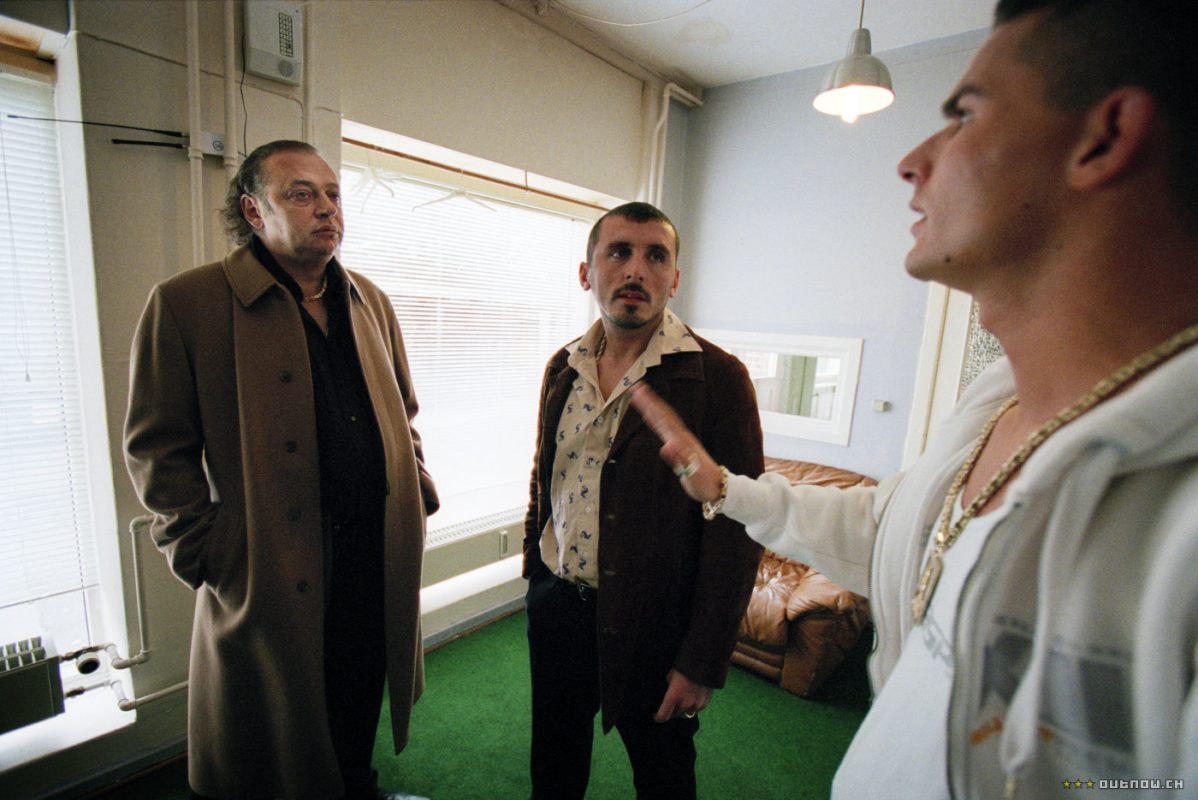
Little Muhammed represents the future Milo does not understand. He is loud, aggressive, and impatient with hierarchy. Calling himself the “King of Copenhagen” is not bravado. It is a declaration. When Milo mocks him as “King Kong,” it is an attempt to reassert dominance through humor, but the insult lands hollowly. Milo needs Muhammed because he knows nothing about ecstasy.
That ignorance is crucial. Power in this world depends on fluency, and Milo is out of date. Sending Muhammed alone to sell the pills is a gamble born of necessity, not trust. When Muhammed doesn’t return, the absence becomes louder than any insult. Every unanswered call chips away at Milo’s authority. He cannot discipline what he cannot locate. Waiting becomes humiliation. As the hours pass, Milo’s control unravels quietly, without confrontation. That is what makes it terrifying.
Why Does Milo Relapse?
Also Check: Pusher (1996) Movie Ending Explained & Themes Analysed: What Happens when Survival Becomes the Only Moral Code?
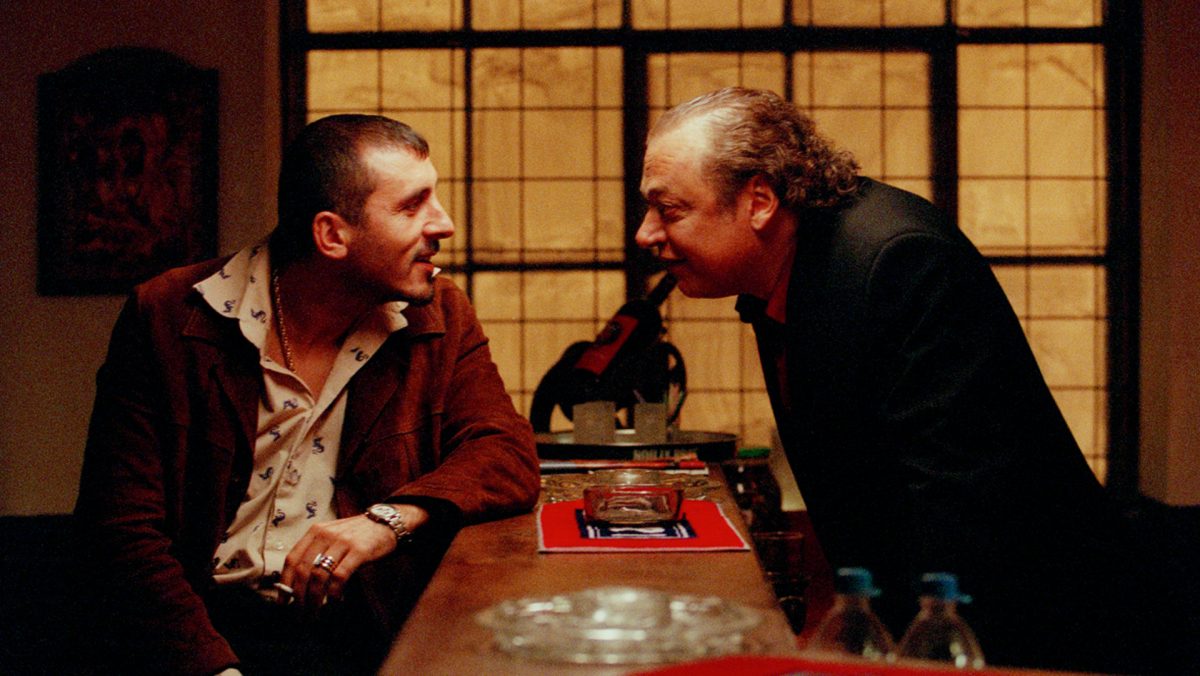
The relapse does not happen in a dramatic collapse. It happens in a restaurant, in passing, offered casually by Kurt the Cunt. Kurt is a reminder of an earlier stage of the criminal ecosystem, someone smaller, messier, and still familiar. The heroin feels like comfort, not escape. Milo smokes it not because he wants pleasure, but because he wants silence.
The pressure of the missing pills, the looming Albanians, the failed dinner, and his daughter’s indifference all converge. Sobriety asks him to feel all of it at once. He cannot. The relapse is not framed as weakness. It is framed as inevitability. Milo has built a life that does not allow clarity.
How Do the Albanians Reduce Milo to a Servant?
When Luan forces Milo into a partnership, the power shift becomes explicit. Milo’s kitchen, once his domain, is repurposed as a marketplace for human misery. Rexho and the Polish pimp treat Milo like staff, ordering food, mocking him, and ignoring his discomfort. Milo tries to distance himself morally. He insists he is not involved and looks away. But his space enables the transaction, and his silence allows it to continue. Being made to serve food while a young girl is sold strips Milo of the authority he clings to.
The prank with the stimulant is small but cruel. It reinforces his position. He is no longer feared enough to be respected. When the girl shares that it is her birthday too, the parallel with Milena is unbearable. Milo’s gesture of giving her cake is the last trace of the father he wants to be. It is also meaningless within the machinery he helps sustain.
Why Does Milo Suddenly Turn Violent?
Milo’s violence is not strategic. It is emotional. When the girl tries to escape and is punished with boiling water, something fractures inside him. This is not business. It is sadism, and Milo sees himself reflected in it. Killing the pimp with a hammer is raw and unceremonious. It is not about justice. It is about reclaiming a sense of agency through force. Waiting for Rexho to return and killing him, too, seals the choice. Milo eliminates the men who made him feel small, not because it fixes anything, but because it stops the humiliation. This is the old language Milo still speaks fluently. Violence is the one skill age has not dulled.
Pusher III (2005) Movie Ending Explained:
What Does Radovan Represent for Milo?
Radovan is the life Milo did not choose. He left crime and built something stable, repetitive, and dull. His kebab shop is clean, functional, and alive. Asking Radovan for help is an admission of failure disguised as nostalgia. Radovan agrees not out of loyalty to crime, but loyalty to Milo as a man he once knew. The torture of Muhammed is efficient and cold.
When Muhammed reveals the ecstasy pills were fake, the revelation lands like a cosmic joke. All this collapse was triggered by nothing. Stashing Muhammed in the freezer is both practical and symbolic. He is preserved, suspended, unfinished. A reminder that threats do not disappear just because they are contained. Butchering the corpses together feels ritualistic. Two aging men are cleaning up the mess of a life that no longer offers alternatives.
The final scenes of “Pusher III” (2005) strip away all spectacle. Milo returns home. Milena barely notices his absence. Her world continues uninterrupted. There is no reconciliation, no reckoning. Standing alone by the empty swimming pool, Milo smokes in silence. The pool mirrors him. A space built for leisure, now hollow and unused.
The empire still exists, but it is drained of meaning. “Pusher III” does not end with redemption or punishment. It ends with a continuation. Milo survives the day, but survival feels like its own sentence. The trilogy closes not with a bang, but with a man still standing in a world that has quietly moved past him. Power, Refn suggests, does not disappear. It just becomes harder to carry.
Pusher III (2005) Movie Themes Analysed:
The Loneliness of Power and the Violence of Maintenance
“Pusher III” is less concerned with crime than with what it costs to keep crime functioning when belief has eroded. Nicolas Winding Refn closes his trilogy by examining power not as something to be gained or inherited, but as something that must be constantly maintained even after it has stopped making sense. The film unfolds over a single day, yet it carries the weight of a lifetime. At its core, “Pusher III” is about aging, relevance, and the quiet horror of realizing that the identity you built no longer fits the world you occupy.
Read: Pusher II (2004) Movie Ending Explained & Themes Analyzed: What Tonny’s Final Choice Really Means?
One of the film’s central themes is the decay of authority. Milo is still feared, still capable of violence, and still surrounded by men who obey him, but respect has thinned into routine. His authority exists by momentum rather than belief. The Albanians treat him not as an equal but as a negotiable asset. Little Muhammed openly challenges him. Even his own henchmen, laid low by his cooking, expose the fragility of his control. Power here is no longer earned or challenged directly. It is slowly hollowed out by indifference and generational change. Milo is not overthrown. He is bypassed.
Closely tied to this is the theme of aging within a system that does not allow retirement. The criminal world Refn depicts offers no graceful exit. Milo attends Narcotics Anonymous meetings not because he believes in transformation, but because he is exhausted. Sobriety becomes symbolic of a desire to stop performing, to step out of the constant vigilance that power demands. Yet the structure of his life makes recovery impossible. His relapse is not framed as moral failure but as structural inevitability. The world he has built cannot accommodate clarity, rest, or introspection. Aging, in this context, is not wisdom but vulnerability.
The film also explores fatherhood as performance rather than connection. Milo wants to be a good father, but his understanding of care is transactional. He cooks, negotiates, provides, and shields. Milena, however, remains emotionally distant and materially demanding. Their relationship mirrors Milo’s criminal dealings: haggling, obligation, and silent disappointment. The birthday dinner becomes a desperate attempt to stage normalcy, to prove that he can still produce something nourishing rather than destructive. Its failure reinforces a painful truth: Milo’s role as a provider has replaced his capacity for intimacy.
Another dominant theme is moral fatigue. Milo’s disgust at the Albanian prostitution deal suggests that he still recognizes ethical boundaries, but his actions reveal how porous those boundaries have become. He hosts the meeting, serves food, and looks away. His eventual violent outburst is not an awakening but an overload. When the girl is burned, Milo does not suddenly discover morality. He reaches the limit of what he can emotionally tolerate. Violence becomes a release valve, not a corrective force. Refn portrays morality not as a stable compass, but as something worn down by prolonged exposure to cruelty.
Violence as maintenance rather than ambition is another central theme. In “Pusher III,” violence is no longer used to climb the hierarchy. It is used to patch holes, silence reminders, and restore temporary equilibrium. Milo kills not to expand his empire but to keep it from collapsing entirely. Even the final cleanup with Radovan feels less like criminal activity and more like janitorial labor. Crime is depicted as work that never ends, only accumulates.
Finally, the film is haunted by emptiness. The empty swimming pool in the final scene is not a symbolic subtlety. It is a blunt truth and reflects a life built for abundance that no longer contains meaning. Milo survives, but survival is stripped of triumph. There is no catharsis, no lesson learned, no future imagined. The day ends, and the machine continues. “Pusher III” is not about redemption or downfall. It is about endurance in the absence of belief. Refn suggests that the most brutal aspect of power is not how it corrupts, but how it traps. Milo is not punished for his life choices. He is forced to keep living inside them.