A film, a poem by Rilke, a crowded painting, and a question. anything but a review of Melina Matsoukas’s debut film, first written two years ago and revisited with newer answers.
“You’re willing to risk getting caught, so we can dance?”
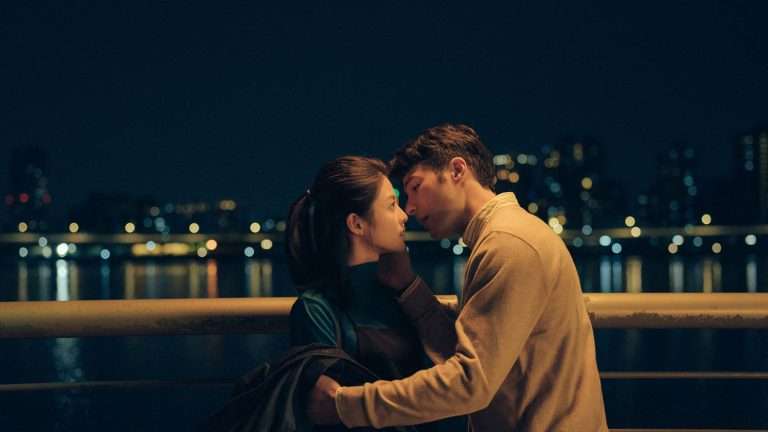
Queen and Slim’s clunky and strained first date is cautiously, and sometimes irreverently, transforming into something of a grand love story. They are on the run across state lines in the USA. They want to flee to Cuba. An uncle greets them: if it ain’t the black “Bonnie and Clyde.”
The date begins in a diner in Cleveland, Ohio, a state we are reminded is one of 31 that enforce the death penalty. In fact, Queen, who is a lawyer, only goes on that date that night because she has failed to save her client from execution, and doesn’t want to be alone with her failure. They make their way to the South, ‘a reverse journey on the route of the underground railroad’, says Melina Matsoukas, the director of the film. Daughter of a communist mother born in Cuba, she says she is a daughter of the revolution. In her debut film, she wants to honour her roots in the country, which has resisted the brute force of America for so long.
Since it came out in 2019, the film has been strangely neglected. I had never heard of it before seeing it mentioned on a Twitter thread as an exception to an overall decline in chemistry in the movies: actors look more and more like cookie-cutter perfect bodies, part of an endless and boring reproduction of the same personless person, lacking human desire. Meanwhile, the production and consumption of romance movies seems to have become somewhat of a ‘second screen’ phenomenon.
On the other hand, if Letterboxd reviews are anything to go by, I suspect some of the neglect might also be coming from many viewers finding the film not ideologically radical enough. For many people, the film plays it too safe and doesn’t have a clear point of view.
When I saw it, I cried and kept thinking about it. It was the summer of 2024. There was a lot to think about. I hated liking a film and then finding out that people thought it was not radical enough. Had my window of ideological expectations narrowed too much? Perhaps yes, at least when it comes to popular culture, being surrounded as I am by the toothless, corrupt, morally empty commercial film industry of my own country. But something about “Queen and Slim” felt powerful in the possibilities it presented, and possibilities deserve an attempt at understanding and breaking down what it may really be. So here’s mine.
Before this film, besides many great music videos, Melina Matsoukas had also given us Beyoncé’s “Formation.” Beyoncé’s net worth is anywhere between 1 billion USD and 5.4 billion USD. I have my qualms about her. I also hate that one of the best voices of our generation, and one of the most powerful women of our times, is incessantly singing songs about how she keeps her husband from cheating on her by being so sexy and rich (a black Bill Gates in the making), and I hate that these songs are produced so damn well. I am often, even if dancing, a reluctant, fuming listener of Beyoncé.
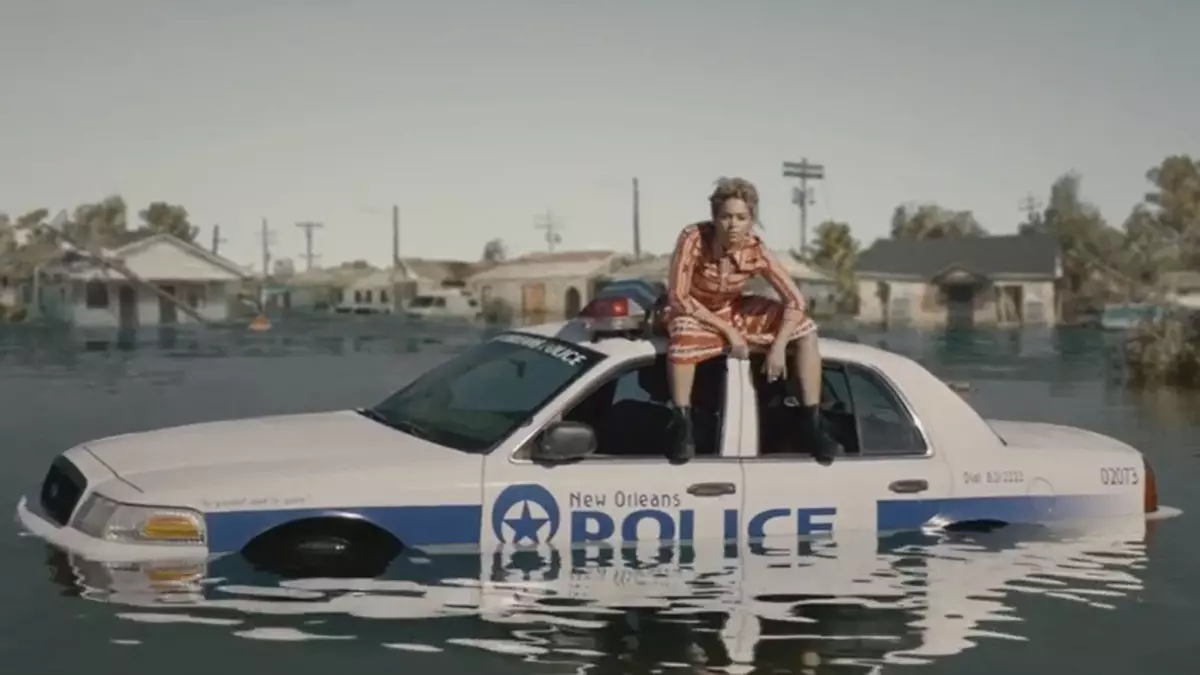
But when she is sitting on top of a New Orleans police car half-submerged in water, I can’t deny this visual moment its heaviness. Melina Matsoukas has a remarkable appreciation for beauty and knows how to construct a striking kind of visual poetry. Looking at that image, I feel as though it holds a meaning which, if one were to explain in words, would only reduce it to something lesser.
There is a similar beauty in “Queen and Slim.” The film is punctuated by snapshots that create an atmosphere of silent meaning, heavy like the spaces between the lines of a poem. There is much to be said and written and analysed about poetry, but isn’t there a meaning in the construction of a poem, a good poem, that even the best explanation would not be able to entirely isolate?
Related Read: 25 Impactful And Uplifting Movies About Black People
For as long as I can remember, I have been hungry for meaning everywhere. In the summer of 2024, my hunger was becoming desperate. I’d read a poem by Rilke, from the collection, Love Poems to God–
I live my life in widening circles
that reach out across the world.
I may not complete this last one
but I will give myself to it.
I circle around God, around the primordial tower.
I’ve been circling for thousands of years
and I still don’t know: am I a falcon,
a storm, or a great song?
I’d also found a second-hand copy of Breughel’s paintings at a friend’s apartment, an artist I had only known until then from Auden’s “Musee Des Beaux Arts,” a poem we studied in high school. I flipped through the book, trying to look for the painting I had read about. Suddenly, I was overwhelmed by its density. People spilled out of every page. The paintings were of immense crowdedness, as if you could see everyone in every corner of a town in a single moment. I remembered, then, what that poem had been about. In most of the paintings, something important was supposed to be happening, but I couldn’t find the event. Instead, skeletons caught my eye.
Being so struck by Rilke’s poems, I became very aware of how I had never been able to believe wholeheartedly in God. Was there something lacking in me? There was a time when I was afraid of Him (perhaps he is a mindreader, I’d thought, and I had all kinds of thoughts that He shouldn’t know of). There was a time when I was intensely lonely and had considered exploring all the different Gods there are, to find one who would help me make the most new friends. The point being, if you don’t believe in God, you do need a good substitute.
Like many people, I had often used poetry for similar purposes–selfish attempts at taking someone’s words and trying to explain away the ambiguities of my life. Just something to move a puzzle piece around–a few more words for why today is another day, and I am another person, and there are all these strangers, and there is all this world. I didn’t know what to do with this hunger for explanation. I would nod and nod and nod. I wanted things to make more sense.
I listened to hours of an old professor’s podcasts. I craved the elusive moment in a classroom when you find an invisible piece of a puzzle, and something falls into place. It’s a brief moment, like the ending of a poem, then it passes before you can hold it. In the summer of 2024, I was beginning to feel like I would never know what my mind was supposed to do with the world, and that perhaps, there was no substitute good enough.
One of the snapshots in “Queen and Slim” is the one that makes the poster. It is a striking photograph taken of the two of them– Queen has cut the long hair she wore when the story began, Slim has shaved off his, and they are now wearing borrowed clothes. A black female and a black male–the description ringing across the news and police radios–leaning against a blue car; he in a velvet two-piece set, she in a tiger print dress and white snake print boots. This is an important moment because earlier, during their date, Slim had said that he didn’t have many pictures of himself. He doesn’t need them. He knows what he looks like. But “pictures aren’t just about vanity, it’s a proof of your existence”, Queen says. He says his family knows he exists, and that’s enough for him.
Unlike Queen, Slim loves his family. In fact, wanting to speak to his father one last time before he flees the country becomes one of the ways in which the police find out where they are, and Queen’s estranged uncle is the one helping them. They are running because Slim has shot a policeman.
As they drive through the “ravishing wides of backroad America” (the film is now on MUBI), the small talk of a first date unravels into deep and tender explanations about themselves and each other. What begins as a desperate bid for survival gives rise to a meditation on their history, people, country, families, traumas, love, and its meaning in the face of injustice and power.
And that’s perhaps where my hunger for explanation collided with the ambiguities and silences of “Queen and Slim.” In the summer of 2024, there was a particular answer I thought the film was pointing me towards. Now, two years later, the answer has become something else. But the question remains the same:
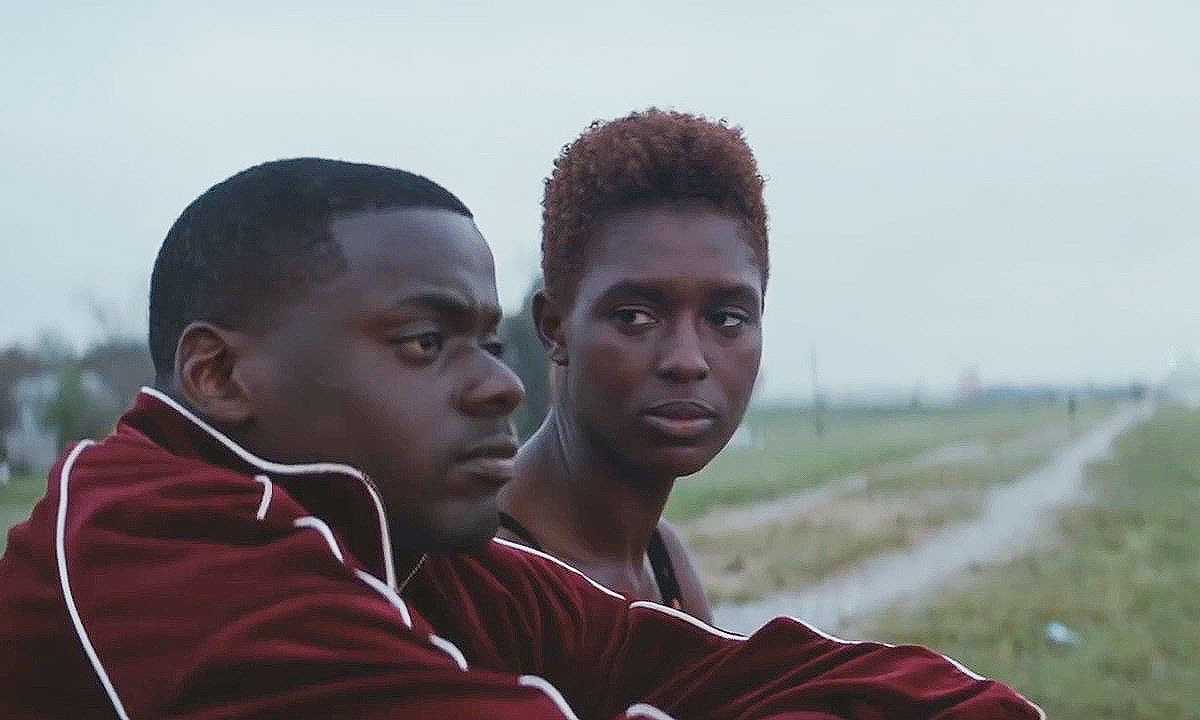
As they are making their way to the border, encountering so many people, the various legacies of the racist state, surviving and adapting, sparking protests, forging solidarities, even as the entire State machinery is after them, you can’t help but think– this is a movie, right? Surely, this story can’t end in the inevitable. Surely, it must go beyond the obvious probability. After everything they have been through, they must survive.
In the end, inches away from their final escape, both of them are killed. Queen is shot first. Slim is killed after holding her body in his arms, shot by hundreds of bullets. Watching this, I was struck by that question– what was the point of all of it?
Often, at night, I am sleepless, looking for explanations. My mind buzzes in my ears. Stings me. It doesn’t know what it is supposed to do in a world where people are killed like flies. The plague is in my house, in the streets of my neighbourhood, in the city where I live, in countries I might never see, in videos on my phone. I feel rotten. Like an insect that survives through a nuclear attack. I feel suffocated by the crowdedness of the painting. I wake up every day and try to take a few more steps towards being someone important so that I can say or do something that matters to people, that changes the world in some way.
But there is a lot you need to do to survive in a failing world. I feel foolish dreaming. Countless people drop dead around me– scorched in the heat, starved of water, or just in cold blood. I have a shame festering inside me. When will I ever draw the line? When will I stop wanting to live in this world? There is the fear of being hurt, then the fear of prison, then the fear of death, and protecting against each fear, a ceding of justice to contribute to, every day, in your own little way–so programmed, it is almost unconscious. It doesn’t even feel like giving up something you ever had.
Even in these ruins, we claw at each other, trying to be the most righteous or the most balanced, have the most calculated opinion, the most sensible argument. We argue about who should survive in our packs, whose anger is justified. Who did it in self-defence? Who deserves our protection, our humanity? Who is allowed to resist? As if a scuffle between an armed cop and a black man could go either way with equal consequence. As if a nation needs to raze a people to the ground to protect itself from their resistance.
In the summer of 2024, in India, there were celebrations over showing fascists their place (they were not as popular as they imagined themselves to be). The next day, there was already someone who had gone one step too far– slapped an MP in her anger. There was a scramble to call it right or wrong. I tried to think of some argument to make, to ask someone to listen to me, but I found that I had nothing much to say. On my tongue was only a rot that had been settling there for years.
Sometimes, I am a boring writer. I am yet to get tired of those cliches– the breath was knocked out of his lungs, there was a knot in her stomach. Watching “Queen and Slim,” I began to think about those moments of anger, when a bid for justice becomes more powerful than the fear of not surviving the aftermath. I thought of how, as a child, I would shake and cry like an animal when I felt slighted, how quickly I would think of setting my world on fire and running away forever. I remember looking under my desk in school, holding a plastic ruler in my hands, and snapping it in half. I don’t remember why. I just remember my face burning.
Secretly, by myself, when there are no consequences, I still feel that kind of anger sometimes. But this is not a rage I own up to. It’s not cute and fashionable, like the angry women we swore to be as teenagers. It is not articulate or argumentative, and it does not make tongue-in-cheek satire. Actually, it is something more desperate. When you are hurt, there is a brief moment when you don’t want to survive, and you don’t want someone to agree with you as much as you want to hurt back.
For many years, I had been trying to hone myself. To be the most sensible girl in the classroom. To make my arguments sharper, to think harder, to become more correct in what I think. But in those days, I realised that I feel more human when the breath is kicked out of my lungs, when my stomach is knotted. I feel more human when I’m at a loss, more susceptible to rage. In those days, my heart would sink and rise in fear every time I’d lie down.
Also Read: 10 Movies That Celebrate Love in Every Form
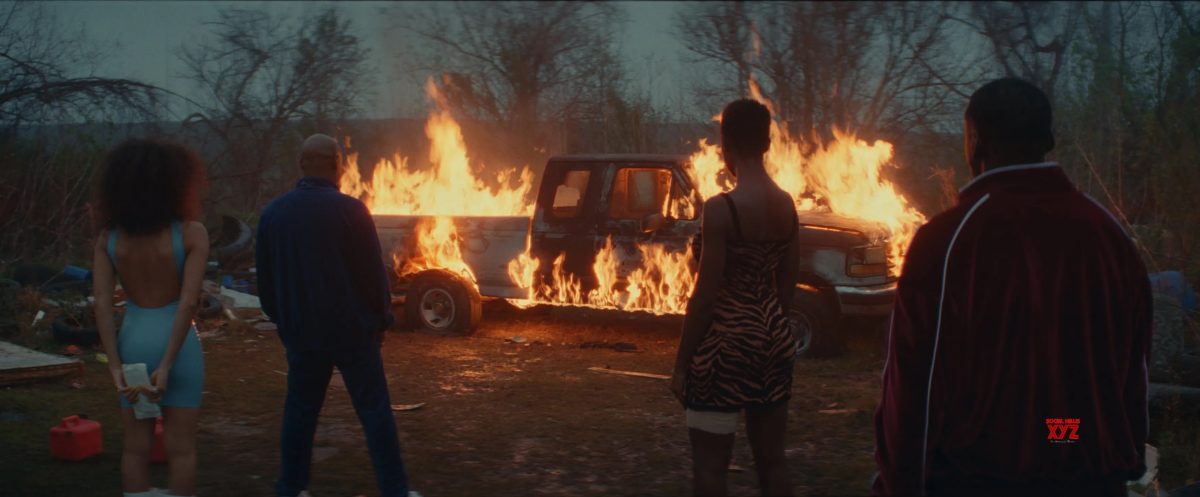
I worried about how little space we have for anger in the midst of our plague–how much we try to control who we will include in our windows of righteousness and ideological possibility. Isn’t there something beyond surviving in the face of this rot? Someplace where that hurt, and anger are more important? Something beyond the fear of prison, beyond the fear of death, beyond the fear of whatever people will say about you, something beyond this world that has gone to shit anyway?
In the summer of 2024, I also saw a young boy looking straight at the camera and speaking with a steady voice. His family had been martyred by Israel, but he had survived. He promised to the camera that this is not the last time we will see him. That there will be another video of him one day, with his foot on Netanyahu’s neck. I wasn’t able to shake him off. I wondered what else could save us except this anger, what else could remind us that we are human. I wondered what it would be like to see every anger of every person in this city painted in one painting, forced to exist in the same moment.
When you look at the painting all at once, at the greatness of injustice, things begin to lose meaning. At the time, I began to lament my lack of faith. I was losing hope, and I had no good substitute for it. I began to wonder if I had been wrong all along. What else was there to seek meaning in, beyond the logic and consequences of the current world? Where is the possibility, I thought, and what could it even be? Wouldn’t God tell those who had faith? Is that the answer to the question of “Queen and Slim”?
Almost two years later, I remember the film differently. And when I read the director’s interviews, I think I am closer to its meaning now. Thinking about “Queen and Slim” now, I realise that I have always been just as hungry for love as I have been for meaning. I remember a scene where Queen and Slim are telling each other what they want in love.
Queen says she wants someone to show her who she is– someone to show her the parts of herself she doesn’t understand. Someone to give her some kind of meaning. Slim says he wants someone to love him no matter what, and that the person he loves is going to be his legacy. What does he mean by that? “I ain’t gonna bend the world”, he says, but as long as the person who loves him thinks fondly of him, he’s going to be happy with himself.
And yet, he does. They both do. Bend the world, I mean. It is out of faith, not in a God, but in something else that continues endlessly outside of oneself. Something to find meaning in beyond the despair of everyday. Atheists who think ‘religion is the opium of the masses’ are indicting the masses without understanding the human need for purpose, especially in an unequal, unjust world.
It is easiest to believe in something outside of yourself when that something is named or codified, when it is close to the reality of our world order, or something they’ve made us believe is within reach– the legacies to be left behind in our corporations, in our countries, in elections or wars won, in markets dominated, in borders enforced. I have been watching video after video of teenagers, even children, with entirely empty, jaded eyes, abusing, mocking, and threatening Palestinians– they believe in the legacy they are part of. It’s the easiest, most profitable thing in the world.
It is harder, though, to believe in the ambiguities of love, to leave behind yourself a legacy of the possibility of a different world, even if it is not clear if it will work, or if you will survive, or whether you will make it out of here. It is harder to have faith in the possibility of a justice that seems so unlikely, feels so far away from the realm of current reality, and yet, perhaps, that faith might be the only proof of your existence.
As I cling to life, disciplined so easily, afraid of so many things, comfortable with such lack, I remember Rilke’s poem. I wonder if I am a falcon, circling around something that is long dead, or a storm, destroying things in my wake, circling around something arbitrary that will remain safe at the cost of everything around it; or a great song– something to be dancing to, in spite of the risk of getting caught.
P.S. If you watch Queen and Slim, let me know what you thought of their chemistry.


![Lookback on Zanussi: Camouflage [1977]](https://www.highonfilms.com/wp-content/uploads/2018/03/Camouflage_Zanussi_HOF-768x463.jpg)