The truth is, everyone is going to hurt you. You just got to find the ones worth suffering for.
– Bob Marley
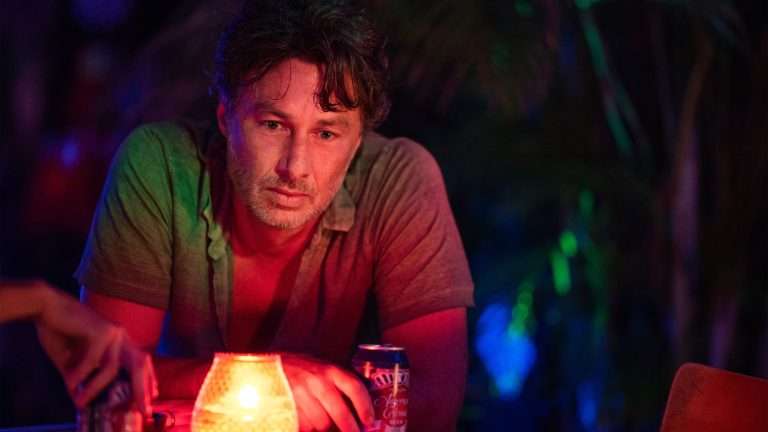
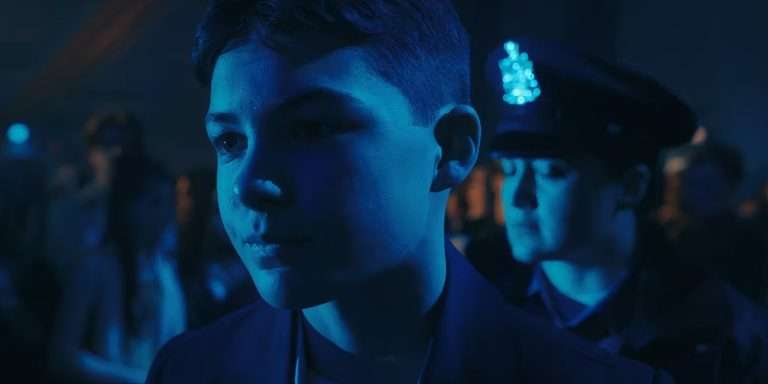
Ambrish Verma’s “Sapne vs Everyone” is a direct reflection of this philosophy. It awakens the dreamer in you, provides you with the courage to stand against society, but at the same time shows you the dark side of reality. It whispers to you to dream, but also tells you not to put a condition on it to be true. The stories of the two protagonists unfold in parallel. Prashant and Jimmy are both fighting their own battles, but the roads they choose to walk on are completely different. The brilliance of Ambrish’s writing is that he never judges any of his characters; instead, he creates a paradox of choices and shows us how the circumstances drive our decisions before we even realize it.
When Prashant finally earned his place as a leading man in the play and was waiting for his mother to arrive, he was determined to deliver the best performance of his life. Instead, he receives the news of his mother’s final departure. It was his biggest dream to have his mother as an audience while he was performing. Nevertheless, he stood up to perform that day and broke down in front of the entire auditorium. The entire sequence takes place in the first twenty minutes of episode one of season 2. This makes you understand that what you are going to witness is not just a simple coming-of-age drama, but a testament to how unfair life can be.
“Sapne” urges you to face your vulnerabilities. It forces you to confront life when all you want is to be ignorant. Ambrish treated Prashant and Jimmy as two sides of reality. They are the products of their environment. From the surface, Jimmy looks cool, smart, and fearless, but if you dig deep, you will realise he operates from a place that is immensely insecure. Behind his every action, there was a child who was constantly bullied, a brother filled with guilt, and a son who witnessed his father’s humiliation and could do nothing.
Ambrish creates an elusive world. On one hand, it shows us how brutally the real world functions, and on the other, it inspires us to keep pushing the limits. The concept of Dreamers vs. God is the outcome of this vision. There is a character in the series who barely has five minutes of screen time. However, he has the biggest impact on the entire plotline.
After finalizing him as the lead, he has a narration sitting with the director, but can’t reach the location due to extreme rain. The director replaces him for this reason, and since then, whenever it rains, he comes out and fights with the rain by punching in the air. But in the last episode, when Prashant meets him, he just smiles and says, Tera kaisa chal raha hai? Maine to hara diya. (What about you? I have beaten him). It gives us hope and shows that he has overcome his fate, and if you hammer away, you can do it too.
The show also talks about the fragility of relationships and human behaviour. It forges a war between morality and immorality. Toni, the youngest son of Kukreja, who wants to resolve the hostility between Jimmy and his father, ends up being the nastiest character in the series. Kukreja spat on his male ego; as a result, he did something unthinkable for Kukreja himself. The father-son dynamic is the driving force of the entire plot; however, the two families have a completely different equation on this matter. Kukreja urges his son to take revenge on Jimmy, while Jimmy’s father wants him to avoid the vicious clashes and live a normal life.
This ideological difference triggers questions in the viewer’s mind. What should you do when injustice comes at you? Do you accept it as life’s fate, or do you gather the courage to fight back? Prashant faces the same situation while signing for his film. The film is being made from a story that was plagiarised from his friend’s work. Instead of signing the film, Prashant rejects the offer. He sacrifices his future to live up to his values. He also chooses to fight back, but in the right way.
The issue of class differences is constantly present in the subtext. Behind the conflicts, there is a deep-rooted sense of discrimination that provokes all the devastating actions from the characters. Ambrish writes the dialogues in the form of rhymes, which are powerful and extremely hard-hitting. Akaash Mukherjee composed the music for the series, and it is brilliant and totally justifies the core theme of the story. The performances are the main highlights of the series. Paramvir Cheema produced a performance for the ages. It is so nuanced that you can feel the same emotions in different forms, whether it is pain, heartbreak, or unaltered grief.
Vijayant Kohli is breathtaking as Kukreja. The character is completely black, unapologetically menacing, and selfish. However, Vijayant was still able to showcase his small moment of vulnerability while confronting his son. It shows his unparalleled range as an actor. His relationship with Jimmy is the direct reflection of Kamsa and Krishna.
Abhishek Chauhan also delivered a stellar performance as Toni. But Ambrish Verma is the heart of the story. The way he performed while directing the series is a testament to an artist’s unwavering love for his craft. The editing is what makes the show more engaging, particularly the way it shifts from one timeline to another makes the audience hooked to the screen. The transition scenes were masterfully crafted. Despite being a drama series, it is still able to create shock value for the audience.
There are three stages to a war. The first season was a strategic war, where Prashant and Jimmy fought without fully knowing the consequences of their actions. The second season became an operational war, where both men acted with little regard for the outcomes. The third season will unfold as a tactical war, moving beyond virtue and vice, where the final outcome will ultimately be decided. Returning to Bob Marley’s words, will this war prove worth the suffering for either of them? We will have to wait and see.