There’s a kind of survival story where the island, the hunger, the isolation—none of these are the real threat. They matter. But they’re only pressure. What becomes dangerous is what that pressure brings out in people. That’s the territory “Send Help,” directed by Sam Raimi, seems drawn to. On the surface, it plays like a plane-crash thriller: two people stranded far from civilization.
Underneath, it turns toward humiliation, resentment, class hierarchy, and the strange freedom some people discover once society falls away. The film opens in offices, in meetings, in quiet power games. It closes with blood, reinvention, and applause. Somewhere in that shift, Linda Liddle sheds the role everyone assigned to her and becomes something far harder to pin down. The island doesn’t create her. It strips away what kept her contained.
Spoilers Ahead
Send Help (2026) Plot Summary & Movie Synopsis:
Why is Linda So Angry Before the Crash?
Linda is introduced as a capable but socially awkward corporate strategist who has spent years waiting for recognition. She expects a promotion after years of loyalty, competence, and patience. Instead, Bradley Preston gives the job to Donovan, a recent hire whose real qualifications seem to be personal familiarity and charm. That betrayal matters because it confirms something Linda has likely felt for years: merit does not protect you in systems built on image and favoritism.
Bradley’s criticism of her being abrasive and lacking charisma is especially cruel because it turns personality into a punishment. Linda is useful when she works quietly, but unacceptable when power is involved. So before the island ever appears, Linda is already surviving something. She is surviving disrespect. That emotional groundwork is important because later violence does not come from nowhere. It grows from wounds the story establishes early.
How Does the Plane Crash Change the Power Balance?
Bradley appears impressed when Linda confronts him. On the surface, inviting her to Bangkok feels like a second chance. Maybe he sees potential and wants to include her. But the film suggests something uglier. Powerful people often reward honesty only when it remains under their control. Bradley may admire Linda’s boldness, but he still sees her as someone to manage, not respect.
The trip becomes another stage where she is tolerated rather than valued. Donovan humiliates her by playing her Survivor audition tape, turning her competence into a joke. That tape becomes symbolic. Everyone laughs at her practical skills in civilization. Soon, those exact skills become the only thing keeping anyone alive.
When the aircraft begins failing, corporate titles instantly lose meaning. The CEO’s status cannot stop decompression. Charm cannot fix physics. Friendship networks cannot save anyone. In one brutal moment, the social order collapses. Donovan, trying to strangle Linda for her seat, reveals how thin professionalism really was. Under pressure, entitlement becomes naked selfishness.
Linda stabbing him with a fork is ugly but instinctive. She is no longer playing by office rules because office rules are gone. After the crash, only Linda and Bradley remain. But now the person with practical knowledge matters more than the person with inherited authority. The island becomes a harsh meritocracy.
Why Doesn’t Linda Signal the Passing Boat?
Linda rescues Bradley and keeps him alive, yet he still treats her like an assistant. Even injured and dependent, he clings to hierarchy. So Linda abandons him for two days. It sounds cruel, and it is. But psychologically, it is also a revolt. She is forcing Bradley to experience helplessness the way she experienced professional invisibility. When she returns and finds him near collapse, something changes. Bradley begins accepting her authority because reality has defeated his ego. Linda now controls food, water, shelter, and knowledge. In survival terms, she becomes the system.
This is one of the film’s most revealing moments. Linda sees rescue. She could leave. Instead, she stays silent. That choice tells us the island is no longer just imprisonment. It has become the first place where Linda feels competent, necessary, and powerful. In ordinary life, she was mocked and sidelined. Here, she matters completely. Some people fear isolation. Linda fears returning to irrelevance. That is why this scene feels unsettling. It shows she is not merely adapting to survival. She is beginning to prefer it.
Why Does Bradley Try to Poison Linda?
While drinking homemade fruit wine, Linda admits she once had an abusive husband and allowed him to drive drunk, leading to his death. Whether she tells the full truth is less important than what the confession reveals. Linda has lived with trauma, rage, and morally compromised choices long before the crash. She is not someone who suddenly becomes dark on the island. She is someone whose past already contains unresolved violence and suppressed resentment. The island simply removes consequences, witnesses, and social restraint. It also helps explain why control means so much to her.
Someone once dominated her life. Now she refuses to be powerless again. Bradley briefly appears to soften, but his sympathy is tactical. He poisons Linda’s meal and attempts escape. This is consistent with his character. Even after relying on Linda, he still sees her as an obstacle rather than an equal. He wants freedom without gratitude. He cannot accept a world where she outranks him. The failed poisoning matters because it destroys any illusion that the two might build genuine trust. From this point forward, they are no longer reluctant allies. They are rivals trapped together.
Why Does Linda Kill Zuri and the Boat Captain?
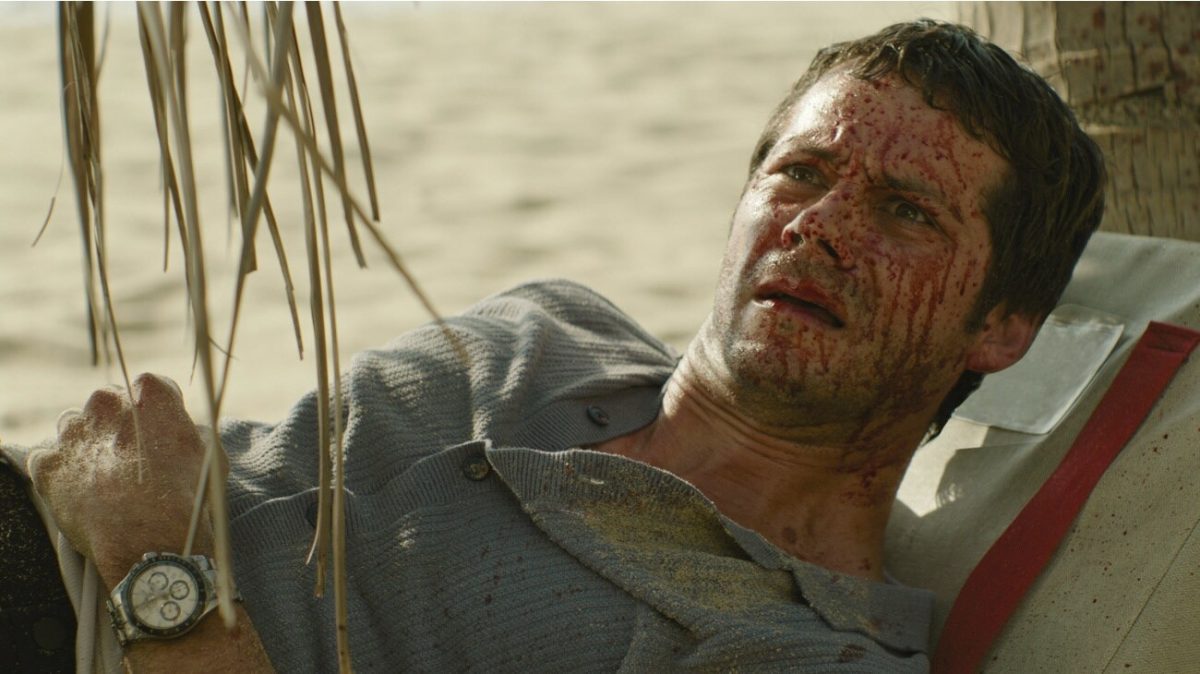
Linda survives and rescues Bradley from drowning, then retaliates by paralyzing him with a toxin and pretending to castrate him. This is not practical survival behavior. It is psychological domination. She wants Bradley to feel terror, dependence, and bodily vulnerability. In other words, she wants him to experience what she has carried through abuse, humiliation, and dismissal. The scene is disturbing because Linda is no longer just defending herself. She is enjoying the reversal. Victims do not automatically become villains, but pain can mutate into cruelty when power arrives unchecked.
When Bradley’s fiancée Zuri arrives after rescue efforts have ended, she represents civilization returning. She brings love, escape, witnesses, and an outside reality in which Linda is no longer central. Linda cannot tolerate that. Leading Zuri and the captain toward the unstable cliff is both murder and desperation.
She is trying to preserve the world she created, where she is needed and in command. This is where any ambiguity largely disappears. Linda is no longer reacting. She is choosing destruction to maintain control. Yet the film smartly lets her return shaken and withdrawn. Even she cannot fully absorb what she has become.
What Does the Beach House Reveal?
When Bradley discovers Zuri’s remains, he finally sees the full truth. Linda insists the deaths were accidental, but he no longer believes her. His attack is driven by grief, horror, and self-preservation. He now understands that rescue from Linda may be more dangerous than the island itself. During the fight, he gouges out her eye, and she stabs him.
Both emerge physically damaged, which mirrors their moral collapse. Neither person is innocent anymore. They are two damaged egos fighting over narrative, power, and survival. Bradley escapes and finds a luxurious beach house on the far side of the island. Linda had known about it the entire time.
This revelation changes everything. It means Linda deliberately maintained scarcity. She let Bradley believe they were trapped in inescapable hardship while hiding comfort, safety, and alternatives. The house symbolizes concealed truth. Linda did not just survive circumstances; she curated them. She wanted an environment where Bradley depended on her and where she could rewrite herself through dominance. The island was never simply a prison. It was her kingdom.
Send Help (2026) Movie Ending Explained:
Why Does Linda Kill Bradley in the Ending?
Linda confronts Bradley with a shotgun. He begs for his life, claims love, and says he wants to stay. But Bradley hides a weapon and grabs the gun when he gets the chance. Linda anticipated this and left it unloaded. That final trick matters. She understands him completely by now. She knows he will choose manipulation first, violence second, and sincerity never.
Then she kills him with a golf club. A golf club is a sharp symbolic choice. It is an object associated with wealth, leisure, status, and elite culture. Linda uses it to destroy the man who embodied inherited privilege. It is personal revenge disguised as survival. A year later, Linda has been rescued and transformed into a celebrity. She is wealthy, adored, promoting a film adaptation and a best-selling memoir. Publicly, she is the inspiring sole survivor. Privately, we know she built that identity on lies, manipulation, and murder.
This final act is deeply cynical. Society ignored Linda when she was competent and honest. It celebrates her once she becomes marketable, glamorous, and mythologized. The world that failed her now rewards the false version of her. Linda says, “No help is coming, so you’d better start saving yourself.” It works as motivational branding, but it is also the film’s darkest joke. There was help. Boats came. Zuri came. Chances came. Linda repeatedly destroyed help because help threatened the identity she preferred. So the line is both true and a lie. Sometimes, no help is coming. But sometimes people reject help because pain has become part of who they are.
The ending of “Send Help” is ironic. Linda gets everything she once wanted: status, admiration, attention, and authority. Yet she achieves it only after losing whatever moral center she had left. She wins externally and collapses internally. The film suggests survival is not always noble. Sometimes, surviving means discovering what you are willing to become when no one is watching. In Linda’s case, the most dangerous island was never the one in the Gulf of Thailand. It was the life she had been building inside herself for years.