Herwin Novianto’s “Shutter” (2025) is an adaptation of the eponymous 2004 Thai film that lands as entirely desultory and frequently pointless. It’s a stale regurgitation of the same tropes, tendencies, and impulses, down to the narrative beats, without any desire for reinvention or a bold, inspired reshuffling.
There’s derivation, and then there is pure recycling without an eye to extend the framework or bring something bristling with fresh appeal. The makers rehash the classic and freely bypass an appetite for widening the horizons of the narrative or add cinematic tweaks that can reinterpret or recontextualise a familiar saga in perspective-shifting manners.
The burden falls mostly on performances to infuse life, terror, and vitality. The actors are serviceable, even impressive and broodingly persuasive in certain sections, but they are flogging a dead horse that simply won’t budge. The lassitude elemental in the adaptation is impossible to twist towards anywhere invigoratingly new or thrillingly daring.
We get a beat-by-beat, shot-by-shot reiteration that’s compounded by abysmal, clumsy editing. There’s jarring, awkward cutting that sucks the energy and tension out of the film when it should have been biting and fraught. The violence seems inserted for manipulative shock value alone.
Shutter (2025) Plot Summary & Movie Synopsis:
A horror remake needs a pulse that’s able to chart new boundaries and demand greater fervour in a clutch of fresh possibilities. It should be emboldened by gripping writing that’s able to tack on metaphors anew, dig through our obsession with the said classic, and plumb abrasive new depths of apprehension and doom.
It should make us cower and sink into sheer terror. What we get instead is a foolish, overly faithful recreation of an iconic text, defanged of ulterior angles or blistering edges. This is a forgettable enterprise, where characters feign shock, but the only consistent emotion is pure boredom. Any intriguing surprise is whipped out, supplanted entirely by tedious, grating supplication to the previous iteration. Servicing the classic seems the only brief here, and it shows in every frame, triggering predictability and asinine plot machinations.
The actors struggle to pull the film through without appearing jaded and disinterested. The weight of legacy is huge, but the makers could have seized on mischief, bending, snapping a renowned film in splintering directions. The playfulness is juiced out, and what we are offered is mere replication and no experimentation at all. The familiarity gains precedence over every other emotion. There’s no expiation of something provocative or restlessly feral, but a mere, listless doling out of expected visions.
In this, it’s tiringly conventional and staidly geared to only what’s prevailed, not bothering to delve into anything worthwhile that’s audacious and smarting. The shock and agonised anticipation are done away with something more in allegiance to an older film. The bristles are gone, replaced with mundane, dispassionate reassertion of prior sights and sounds sans any boundary-breaking thrusting forth.
What secrets does the ghost hold?
The Indonesian horror circles a photographer and the ghosts that refuse to go away. While returning home from an invitation, Darwin and Pia run into a woman on the road. Pia seeks to check on her, but Darwin insists they extricate themselves from the scene immediately, hence removing any probability of culpability. If they stay, they would only be insinuated and dragged through mud. There wouldn’t be any retrieval, but a complete shoving of the couple into a bigger mess. Hence, Darwin suggests they must immediately get away and protect themselves from the brunt of accusations.
But the fallout is immediate and intense. They start seeing the ghost of the dead woman lurking. There’s no getting away from their crime, but something about the woman’s past also lingers. Pia and Darwin stagger to uncover more truths about the dead woman. They revert to the spot, and a shopkeeper tells them no death has been reported. The shock makes sense. Could it have entirely been a figment of imagination? The lines between concoction and reality, fabrication and inviolable truth, threaten to erase. In the photos Darwin takes of a charity event at a college, the ghost pops up.
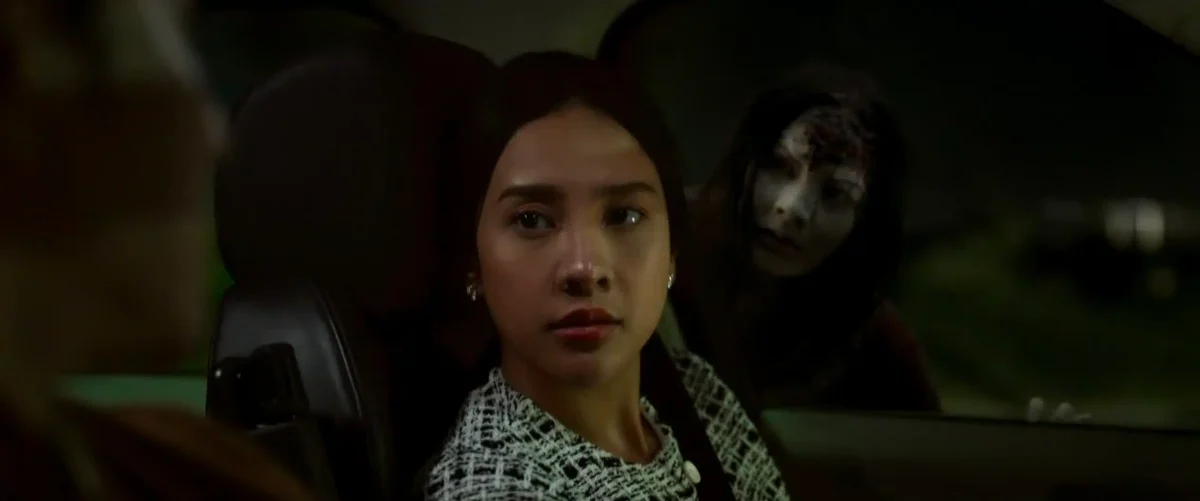
Suddenly, Darwin’s friends die, one by one. One person hangs himself, another gets bumped off in an accident. One person jumps off a balcony. The string of deaths seems unstoppable and inexplicable, yet the couple realises the ghost has a hand in them. When Pia goes asking around on campus, she draws an important thread.
The woman was Lilies Saryani, with whom Darwin had been in a relationship. However, he fell out of love, and she kept doggedly pursuing him. Later, she fell ill and died. Darwin wonders if he should apologise to her ghost, whether that’s lay her soul to rest. Reaching her home, the couple discovers a skeleton with a wig. Lilies’ mother couldn’t accept her death and hung on in denial. On their insistence, Lilies is given a proper burial.
Darwin comes clean on his fatal misconduct, his regrets, guilt, and mistakes. He hopes his apology will help the ghost move on and not seek further revenge. He hopes the bloody trail will halt, and everyone can resume their lives in normalcy without a looming spectre demanding punishment. But there’s so much she has suffered, letting go isn’t as easy as he fathoms.
Does the burial make the ghost vanish?
However, the solution through the burial doesn’t deliver. The matter isn’t so neatly resolved. There are deep scars and tension to reckon with, dire horrors that must be witnessed and endured furthermore. The burial doesn’t make the madness stop. Lilies’ spirit takes possession of Darwin. While trying to escape her clutches, he falls from a height to the ground. This is what transpires when one is so deluded into thinking their sins won’t catch up with them. Darwin has a lot to answer for. He has done gruesome things that call for proper redressal.
Shutter (2025) Movie Ending Explained:
Is Darwin freed of the spirit?
In the latter stretches, Lilies’ reason for haunting and vengeful return is unravelled. It’s brutal and horrific and unspeakable. Pia is shaken to find out why Lilies goes after Darwin and his friends. Darwin started drifting away when she was really invested in him. The fact that he gained possession of her made her seem less appealing and interesting. She could thus be tossed away as inconsequential and striking no fancy whatsoever. He walked away, cruel and cold and remote. But she kept tailing him. One day, his friends got hold of her and raped her. They even accosted him to gather visual evidence.
This was their tactic to keep her at a distance from Darwin. Battered, Lilies sought justice and accountability with the college authorities, but they sided with the rapists. Lilies was even expelled, her reputation sullied, and lost everything, and spiralled dangerously. She was stowed away in an asylum. Finally, she leapt off a building to her death.
This is why the ghost kept stalking Darwin and drove his friends to death. This is the punishment she wrought without apology. She knows the men deserve what’s been lashed at them. She will pause at nothing to mete out justice, prolonging Darwin’s suffering in the most inhuman, barbaric manner imaginable. He knows he has only brought it on himself. If he had staved off, he wouldn’t have to encounter such a fate.
Even after falling from the height, Darwin survives, but Pia now confronts him. He requests the spirit to let him go, but she refuses. Ultimately, he’s turned into a mental asylum. He continues to suffer, buried under the weight of the spirit that won’t let go. His life is doomed just as he’d done. Is there any end to this grim road? The film indicates none, insisting he brought it on himself, that he must atone for his terrible crimes.