The marketing of movies has always been a high-stakes endeavor, with large budgets, but in the last decade, it has undergone one of the most dramatic transformations in Hollywood history. For much of the twentieth century and into the early 2000s, studios relied on a familiar formula. They bought expensive television spots during prime time. They plastered billboards across Los Angeles and New York near their own studios for executives to see.
And of course, they rolled out glossy trailers in theaters months in advance. Awareness was built through repetition and scale. If audiences saw the same thirty-second commercials enough times, they would eventually show up on opening weekend. All of these advertising formats are expensive.
That formula no longer guarantees success. In fact, Hollywood has been forced to make a significant shift in the way films are marketed, and studios that have not embraced this evolving marketing mix are not seeing the same box office success as those that have adapted. The films that post the strongest opening weekends now often generate conversation long before ticket sales begin. Platforms like TikTok, Instagram, YouTube, and X have become key battlegrounds where marketing teams focus on engagement metrics such as shares, comments, and user-created content, interactive content, highlighting their role in modern success.
Industry trade publications have clearly documented this shift. According to reports in Variety and The Hollywood Reporter, studios now devote a significant portion of their marketing budgets to digital campaigns, influencer partnerships, and platform-specific activations. The Motion Picture Association has also noted in its annual theme reports that audience discovery patterns increasingly begin online rather than through traditional broadcast channels.
The numbers behind recent openings tell the story. In 2023, “Barbie” opened to 162 million dollars domestically, a figure that stunned even seasoned analysts. While Warner Bros supported the film with television advertising and outdoor media, trade coverage in Variety and Deadline emphasized the massive social footprint that preceded its release. The pink aesthetic became a meme. Fans created outfits, parody posters, and countdown videos. The marketing campaign invited participation rather than simply delivering information. By the time opening weekend arrived, the film felt less like a release and more like a cultural event.
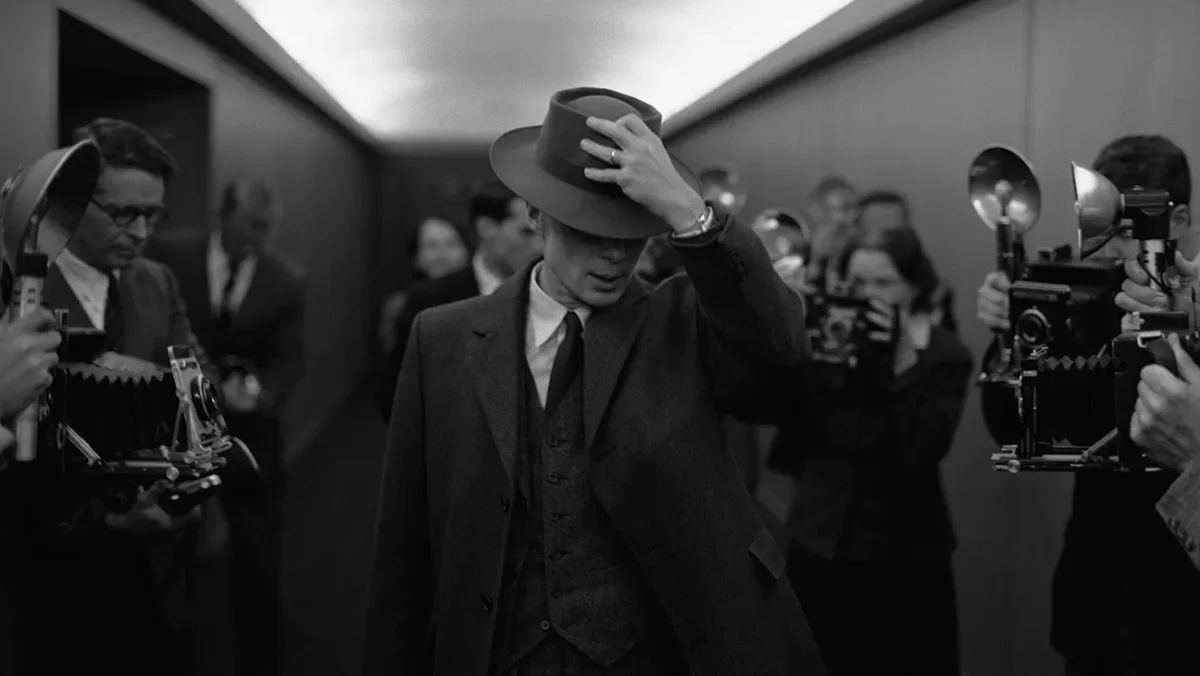
The same pattern emerged with “Oppenheimer,” which opened to 82 million dollars domestically despite being a three-hour historical drama. Universal leaned into online discussions, behind-the-scenes interviews, and filmmaker-focused featurettes that circulated widely on YouTube and film forums. The viral Barbenheimer phenomenon, fueled entirely by online audiences, amplified both films beyond what traditional advertising could have engineered on its own. Deadline reported that the organic social media chatter significantly boosted awareness for both releases.
Contrast this with the earlier era of blockbuster marketing. In the 1990s and early 2000s, studios often spent tens of millions on national television buys during major sporting events and network programming. A thirty-second spot during a championship game could cost millions, but the reach was unmatched. Outdoor advertising reinforced the message. Giant billboards above Sunset Boulevard or Times Square were considered essential signals that a film was important.
Television remains part of the strategy. However, Adweek reports that studios are increasingly reallocating spending to digital channels, where targeting is more precise, and results can be measured instantly. A television commercial tells you how many households were exposed. Then the advertisement disappears.
Social Media has changed how studios advertise, with lower budgets and better results. Once posted to a social media challenge, the post remains there until it is taken down. The cost is minimal compared to Television advertising, from conception to payment to posting a post. Then the stats are in real time and more accurate. A TikTok campaign tells you how many users watched to completion, how many shared the content, and how sentiment is trending hour by hour. The advertisement remains online until the poster removes it.
Horror films offer a clear example of how this shift drives strong openings. When Paramount released “Smile,” its marketing team staged eerie public stunts at baseball games and posted clips that spread rapidly online. Videos of smiling actors in the background of live broadcasts were shared millions of times across platforms. The Hollywood Reporter credited the campaign with building viral intrigue that helped the film open above expectations, grossing over 22 million domestically.
Another example came with “M3GAN.” Universal capitalized on the film’s unsettling dance sequence by seeding clips across TikTok weeks before release. Users recreated the choreography, added their own edits, and turned the character into a meme. By the opening weekend, awareness among younger audiences was extraordinarily high. Variety noted that social engagement metrics outperformed those of many comparable horror releases, and the film opened to more than 30 million in North America.
This participatory marketing approach marks a major shift from controlling every message to creating moments audiences can remix and amplify. Unlike billboards or TV ads, TikTok clips inspire countless iterations, empowering viewers to become part of the campaign. Realizing that Gen Z gathers much of its information and news from social media, studios have to change. The rise of influencers has also altered the landscape.
In the past, critics and entertainment reporters were the primary tastemakers. Today, digital creators often hold equal or greater sway over certain demographics. Studios invite influencers to set visits, early screenings, and premiere events with the understanding that their followers trust their reactions. According to Adweek, influencer-driven campaigns often generate higher engagement rates than traditional display ads, particularly among Gen Z viewers.
Today, advertising and social media no longer live on billboards or television screens. They exist in the palm of your hand, delivered instantly through the cellphone you carry everywhere. You can view social media advertising at your convenience, anywhere, any time. The pandemic accelerated many of these trends, showing how early online community building can create a sense of belonging and anticipation for audiences eager for opening night.
Social Media allows marketers to perform functions that were never previously available to them. Today, social listening tools enable marketers to track mentions and sentiment in real time, allowing quick adjustments to messaging if a trailer underperforms or causes confusion. This responsiveness, impossible in traditional media, helps studios optimize campaigns based on pre-release social media insights.
Billboards still rise above highways. Television commercials still air during major events. But they are no longer the sole drivers of awareness. Instead, they function as amplifiers within a larger digital ecosystem. A viewer might see a television spot and then immediately search for the trailer online, watch cast interviews on YouTube, and share a post on Instagram. The journey from awareness to purchase now unfolds across multiple screens.
Industry executives often describe the goal as creating a moment that feels unavoidable online. When audiences perceive that everyone is talking about a film, they want to be part of the conversation. Opening weekend becomes a shared cultural experience rather than a solitary choice. Variety has repeatedly noted that films with strong social buzz tend to front-load their grosses with impressive debuts.
Looking ahead, the evolution is unlikely to slow. Emerging platforms will demand new strategies. Interactive experiences such as augmented reality filters and fan-driven challenges are already part of the mix. The core lesson remains consistent. Marketing is no longer about broadcasting a message from on high. It is about sparking participation, nurturing community, and sustaining conversation.
In a business where opening weekend can determine a film’s fate, the stakes are enormous. The movies that break through today are rarely those that rely solely on television commercials and towering billboards. They are the ones that live on phones, in group chats, and across feeds weeks before release. The screen that matters most may not be the one in the theater lobby, but the one in the audience’s hand.
As trade coverage continues to show, the transformation of film marketing reflects a broader cultural shift. Audiences expect interaction. They expect immediacy. And they expect to have a voice. Studios that understand this reality are the ones most likely to see their films open big when the lights finally go down.