At first glance, “Spider-Man: Into the Spider-Verse” (2018) appears to be a kinetic superhero origin story wrapped in comic-book colors and multiversal spectacle. But beneath the animation and action, the film is quietly about inadequacy, grief, and the fear of never being “enough.” It is not concerned with proving that anyone can wear the mask. It is more interested in asking when someone is ready to wear it, and what must break inside them before that happens. This is not a story about becoming powerful. It is about learning how to stand up after loss.
Spoilers Ahead
Spider-Man: Into the Spider-Verse (2018) Plot Summary & Movie Synopsis:
Why Does Miles Morales Feel Like He Is Failing Even Before Becoming Spider-Man?
Miles Morales begins the film already under pressure. His parents have different expectations for him. His mother wants him to express himself. His father, Jefferson Davis, wants discipline, clarity, and obedience. Jefferson believes Spider-Man is reckless, a vigilante who creates more chaos than order. Miles, stuck between these expectations, feels constantly misaligned with his own life.
When Miles paints graffiti with his uncle Aaron, it is not rebellion. It is a relief. Art is the only place where Miles feels ownership over himself. The radioactive spider bite does not arrive as destiny. It arrives as an interruption. Miles does not want responsibility. He barely understands himself. The powers feel invasive, confusing, and embarrassing. He sticks to walls by accident. He cannot control his strength. His body changes faster than his mind can keep up. Before he ever becomes Spider-Man, Miles already believes he is disappointing everyone.
Why Does Kingpin Open the Multiverse and What Is He Really Trying to Fix?
Wilson Fisk, known as Kingpin, is not driven by power or domination. He is driven by grief. His wife, Vanessa, and son Richard died because they fled from him during a fight with Spider-Man. Fisk does not accept responsibility for their deaths. Instead, he blames Spider-Man and the universe itself for taking them away.
The collider is Fisk’s refusal to grieve. Fisk believes that somewhere in the multiverse, his family still exists, untouched by tragedy. He is not trying to save the world. He is trying to replace it. The machine is unstable because it is built on denial. It fractures reality because Fisk refuses to live with reality as it is. This is why the collider keeps destroying dimensions. It is not malfunctioning. It is behaving exactly like grief that refuses acceptance.
Why Does the Death of the Original Spider-Man Matter So Much to Miles?
When Miles witnesses Spider-Man die, it is not just the loss of a hero. It is the loss of certainty. Spider-Man represented mastery, confidence, and moral clarity. He knew what he was doing. Miles does not. Spider-Man gives Miles the USB drive and tells him that he must stop the collider. But Miles is not ready. He runs, hides, and watches as the city mourns someone who felt permanent and irreplaceable. The suit feels too big, and the role feels impossible. This death is not meant to inspire Miles immediately. It is meant to crush him. The film refuses to grant Miles instant motivation. Instead, it lets him sit with the fear that the world expects him to replace something he does not understand.
Who Is Peter B. Parker and Why Is He the Worst Possible Mentor?
Peter B. Parker is a Spider-Man who has already lived the dream and watched it collapse. He is divorced, exhausted, and emotionally stalled. Peter has saved the city countless times, but his personal life is a series of unresolved failures. He does not arrive as a guide, but as a warning. Peter sees himself in Miles, and that terrifies him.
Teaching Miles means reliving his own mistakes. Worse, it means believing that someone else might do this job better than he did. Peter initially treats Miles like a liability. He ties him up, excludes him, and plans to leave without him. This is not cruelty. It is fear. Peter believes Spider-Manhood is a burden that destroys lives. He does not want to pass that curse forward.
Why Is Miles Rejected by the Other Spider-People?
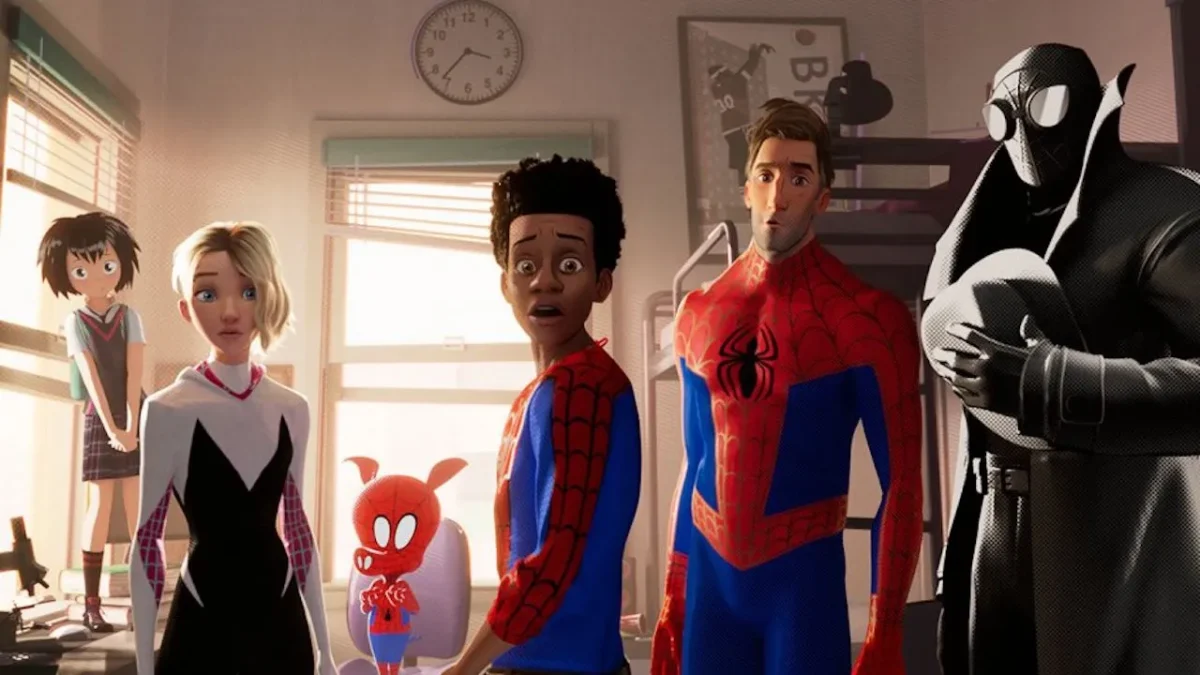
Gwen Stacy, Spider-Man Noir, Peni Parker, and Spider-Ham all share one truth: they lost someone important. They became Spider-People through trauma. When they tell Miles he is not ready, they are not protecting the mission. They are protecting him from the pain they already know too well. Miles has not suffered the way they have. At least, not yet. He cannot control his powers. He panics and hesitates. From their perspective, letting him fight would be irresponsible. What they fail to see is that readiness is not about skill. It is about necessity. Miles has not yet been forced to choose who he is.
The revelation that Aaron is the Prowler shatters Miles’s last emotional refuge. Aaron was the one adult who never asked Miles to be more than he was. When Aaron refuses to kill Miles and is executed by Kingpin for that mercy, the film draws a clear line. Kingpin kills anyone who disrupts his denial. Aaron dies because he chooses love over obedience.
Miles’s grief is immediate and raw. He holds his uncle as life leaves him. This is the moment Miles understands the cost of masks. Jefferson arrives and sees Spider-Man standing over his brother’s body. He does not know the truth and only sees another loss. Miles loses his uncle, his father’s trust, and his sense of safety in one moment.
Why Does Peter Choose to Leave Miles Behind?
Peter restrains Miles because he believes sacrifice is the core of being Spider-Man. Someone must stay behind. Someone must suffer. And Peter believes that someone should be him. This is Peter’s flaw. He thinks heroism means choosing pain alone. Peter does not believe Miles can survive it. He believes sparing Miles from trauma is kindness. But kindness without trust is still control.
Jefferson speaks to Miles through a closed door. He does not know Miles is Spider-Man. Jefferson does not apologize perfectly. He does not suddenly understand his son. But he admits failure and fear. And he tells Miles that he believes in him anyway. This is the first time Miles hears unconditional faith without expectation. No demands. Just belief. That belief unlocks Miles’s control. Not because it gives him confidence, but because it gives him permission to fail and still stand back up.
Spider-Man: Into the Spider-Verse (2018) Movie Ending Explained:
How Is Kingpin Defeated and What Does He Learn?
Miles’s leap is not about bravery. It is about acceptance. Miles does not leap, knowing he will succeed. He leaps, knowing that failure is part of the job. He designs his own suit. Not a copy. Not a legacy costume. Something personal. Something earned. This is the moment he becomes Spider-Man. Not because he wins. But because he chooses to act despite fear.
Kingpin is physically stronger than Miles. He nearly kills him. But Kingpin cannot see beyond his loss. He cannot hear his son’s fear echoing through alternate realities. He cannot stop the machine because stopping it would mean accepting the truth. Miles defeats Kingpin not through strength, but timing and resolve. He destroys the collider and ends the illusion.
Kingpin survives, but his fantasy does not. “Into the Spider-Verse” rejects destiny. It rejects perfection and the idea that heroes are born ready. Miles does not become Spider-Man because he is special. He becomes Spider-Man because he chooses responsibility after loss. Because he learns that fear never disappears. It only stops being an excuse. Anyone can wear the mask. But you earn it the moment you stand back up.
Spider-Man: Into the Spider-Verse (2018) Movie Themes Analyzed:
Becoming Yourself in a World Full of Expectations
“Spider-Man: Into the Spider-Verse” is not fundamentally about superheroes or alternate realities. It is about identity under pressure. The film uses the multiverse not to complicate its story, but to simplify a single emotional truth: everyone feels like they are failing at being who they are supposed to be. Miles Morales does not become Spider-Man by mastering powers or defeating villains. He becomes Spider-Man by learning how to live with fear, loss, and uncertainty without letting them define his limits.
At its core, the film is about the gap between expectation and readiness. Miles begins the story already fractured. His parents want him to succeed in a system that does not feel built for him. His father represents authority, rules, and skepticism toward Spider-Man. His uncle represents freedom, creativity, and emotional safety. Miles is caught between structure and expression, between being seen and being understood. The spider bite does not resolve this tension. It intensifies it. Power does not clarify identity.
This is where the film quietly subverts the traditional origin story. Miles does not feel chosen. He feels invaded. His powers manifest as glitches, accidents, and embarrassment. He sticks when he wants to run. He vanishes when he wants to be seen. The animation mirrors this instability. Miles is visually out of sync with his own world, reinforcing the idea that identity arrives before readiness.
The multiverse exists to show that this feeling is universal. Every Spider-Person Miles meets is a reflection of a different emotional failure. Peter B. Parker is who Miles could become if responsibility turns into regret. Gwen Stacy is shaped by survivor’s guilt, frozen by the fear of repeating loss. Spider-Man Noir, Peni Parker, and Spider-Ham each carry trauma disguised as humor or stoicism. None of them is perfect. None of them feels complete. The mask does not make them whole. It gives them something to hide behind.
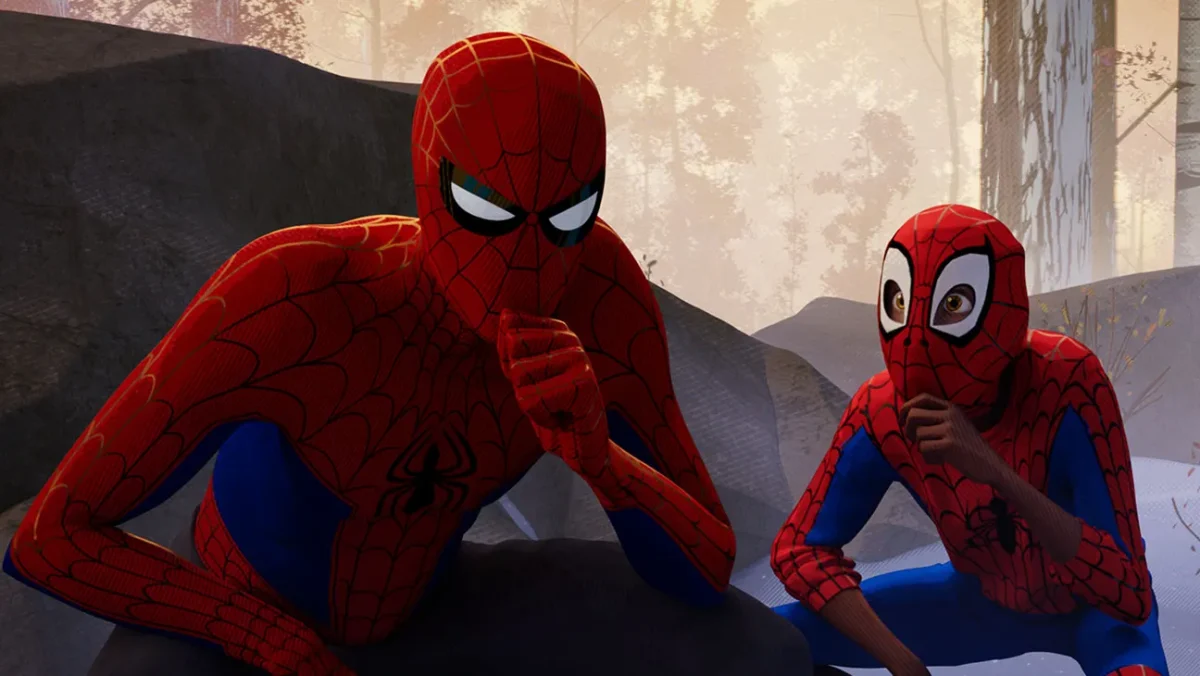
The phrase “anyone can wear the mask” is often misunderstood as empowerment alone. In the film, it is also a warning. Wearing the mask means inheriting pain. It means accepting that doing the right thing will not save everyone you love. The Spider-People hesitate to involve Miles not because he is incapable, but because they want to spare him from this truth. Their resistance is rooted in care, not doubt.
The central villain, Kingpin, embodies the film’s darkest theme: the refusal to accept loss. He does not want justice or power. He wants erasure and a version of reality where grief never happened. The collider is not a weapon. It is a denial given machinery. Every universe it destroys is collateral damage in Kingpin’s attempt to undo pain instead of facing it.
This places Miles at a moral crossroads. He cannot save his uncle, cannot fix his father’s grief, and cannot restore the original Spider-Man. What he can do is choose honesty over illusion. This is where the film’s emotional thesis crystallizes. Growth does not come from avoiding trauma. It comes from surviving it without surrendering empathy.
Jefferson Davis’s speech outside Miles’s door is the film’s quiet emotional climax. It does not offer solutions or remove fear. It offers belief without conditions. This moment reframes heroism as permission rather than expectation. Miles does not become Spider-Man because he is suddenly confident. He becomes Spider-Man because he understands that fear is not disqualifying.
The leap of faith is the film’s defining metaphor. It is not a moment of certainty. It is an act taken without guarantees. Miles jumps, knowing he might fail. That willingness, not his powers, is what completes his transformation. The backward fall through the city visually reinforces the idea that progress does not always look like ascent. Sometimes it looks like surrendering control.
Ultimately, “Into the Spider-Verse” argues that identity is not discovered. It is chosen repeatedly, often painfully. Being Spider-Man is not about destiny, talent, or perfection. It is about showing up after loss and deciding that the world is still worth protecting, even when it has taken something from you. The film does not promise that things get easier. It promises that you get stronger by choosing to act anyway. And in that choice, Miles Morales does not just become Spider-Man. He becomes himself.