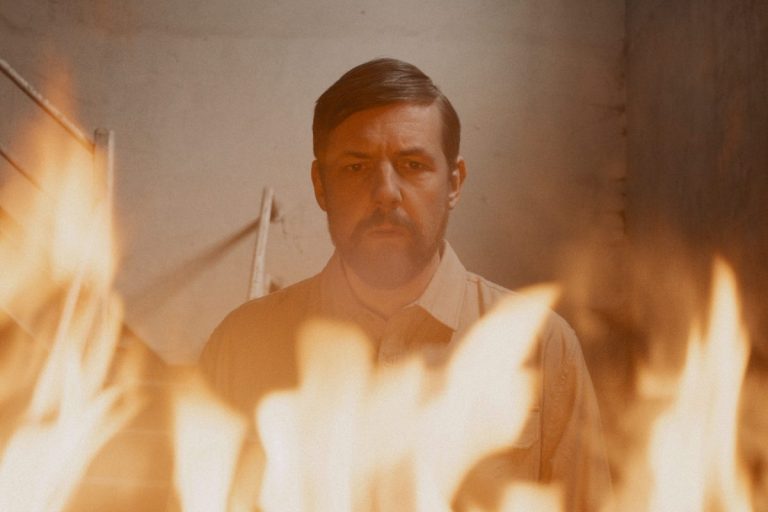
Krzysztof Kieślowski’s “Three Colours Trilogy,” comprising “Three Colours: Blue,” “Three Colours: White,” and “Three Colours: Red,” draws from the ideals of liberty, equality, and fraternity, but never approaches them as rigid political concepts. The trilogy moves through the fragile emotional realities that exist beneath these abstractions, allowing each idea to emerge through deeply personal experiences rather than direct philosophical argument.
“Three Colours: White,” the second film in the trilogy, situates itself within the idea of equality, yet it approaches this notion through imbalance, humiliation, and the shifting dynamics of power within intimacy. Co-written with Krzysztof Piesiewicz and led by the restrained yet quietly expressive performance of Zbigniew Zamachowski as Karol Karol, the film unfolds between Paris and Poland with a tone that constantly oscillates between irony, melancholy, and emotional unease.
What distinguishes “White” is the way it begins from a position of dispossession. Karol loses his marriage and financial stability, along with his sense of dignity, leaving him stranded within a world where he appears powerless and diminished. His response gradually turns into a pursuit of restoration, where equality defies the sense of mutual understanding and becomes tied to revenge, control, and the desire to reverse humiliation. Yet, the film continually complicates this pursuit by revealing how emotional attachment survives even within cruelty, and how love itself can become entangled with resentment, dependency, and performance.
In this sense, “White” becomes less about achieving equality in any moral or social sense and more about examining the unstable ways people attempt to reclaim balance after emotional injury. The film observes how power shifts between individuals, how humiliation reshapes desire, and how attempts to regain control often reproduce the very emptiness they seek to overcome.
Three Colours: White (1994) Plot Summary & Movie Synopsis:
Before Equality turns into Revenge
The opening movement of “Three Colours: White” unfolds through a condition of displacement that is immediately visible yet emotionally difficult to measure. The film begins inside a Paris courtroom where Karol Karol, a Polish immigrant and hairdresser, is in the middle of divorce proceedings with his French wife Dominique. Although the atmosphere is formal and detached, beneath it lies a deep imbalance that the film quietly establishes from the beginning. Karol does not fully understand the language surrounding him. His attempts to speak are interrupted or dismissed. The legal process itself appears to move past him rather than with him.
What emerges almost immediately is a sense of humiliation that exceeds the divorce itself. The separation is social and economic, stripping him of stability, intimacy, and dignity at once. Once the proceedings conclude, Karol finds himself abruptly cut off from the life he had attempted to build in Paris. Dominique refuses reconciliation, and the apartment, salon, and comforts associated with their marriage are no longer accessible to him.
The film situates him within a state of increasing vulnerability. He wanders through the city carrying luggage he cannot properly hold onto, sleeping in the metro, moving through public spaces as someone who no longer belongs anywhere securely. Kieślowski presents these moments with restraint, often allowing irony and discomfort to coexist within the same scene. Karol’s suffering is visible, yet the film avoids turning it into overt melodrama. Instead, it observes the gradual erosion of his self-worth through ordinary humiliations and practical struggles.
A crucial shift occurs when Karol encounters Mikołaj, another Polish man living in Paris, who offers him a possibility of return. Their interaction introduces the first indication that Karol’s condition may not remain static. Unable to leave through conventional means due to financial ruin and bureaucratic complications, Karol agrees to be smuggled back to Poland inside a suitcase.
The sequence is presented with a strange mixture of absurdity and desperation. During the journey, he is robbed and abandoned, arriving in Warsaw with almost nothing left. Yet the return simultaneously marks the beginning of a different movement within the narrative. What initially appeared as complete defeat gradually becomes the condition from which he begins to reconstruct himself.
From here, the film traces Karol’s actions with careful precision. Back in Poland, he reconnects with familiar spaces and begins participating in small financial dealings that slowly expand into larger business opportunities during the unstable economic climate of post-communist Poland. The film observes how quickly his circumstances change once he regains access to systems he understands and can navigate.
Money, influence, and control gradually replaced the helplessness that defined the Paris sequences. At the same time, Dominique continues to occupy his thoughts. Their relationship does not disappear with distance. Instead, memory and resentment begin to merge, shaping his decisions in increasingly calculated ways.
As Karol acquires wealth and stability, the film introduces another tension beneath this apparent restoration. His pursuit of equality with Dominique no longer concerns emotional reciprocity alone. It becomes tied to the desire to reverse humiliation itself, to create a situation in which power shifts decisively in his favour. The careful routines through which he rebuilds his life, therefore, carry an undercurrent of performance and emotional concealment. Even when he appears successful, traces of injury remain visible beneath his actions.
How does Karol rebuild himself after being reduced to nothing?
After the divorce proceedings in Paris, Karol’s life begins to collapse with a quiet but devastating completeness. Dominique’s rejection does not remain confined to the emotional space of their marriage. It extends into every aspect of his existence. He loses access to their salon business, their apartment, and eventually even the ability to function securely within the city itself. Paris, which once represented possibility and intimacy, gradually transforms into a space where Karol exists almost invisibly.
He wanders through metro stations carrying suitcases, sleeping in public spaces, playing his comb in exchange for loose coins, and attempting repeatedly to reconnect with Dominique despite her refusal to let him return. Kieślowski presents these sequences with restraint, avoiding overt melodrama while allowing humiliation to accumulate through ordinary gestures and situations. Karol is destroyed through a gradual erosion of dignity, stability, and belonging.
It is within this condition of near-total displacement that Mikołaj enters the narrative. Another Polish man living in Paris, Mikołaj, recognises Karol’s vulnerability almost immediately, through shared nationality and mutual understanding. Their conversations unfold with a calmness that contrasts sharply with Karol’s earlier desperation. Eventually, Mikołaj offers him a way back to Poland.
Yet even this return is shaped by indignity. Because Karol lacks the money and legal means to travel conventionally, he is smuggled inside a large suitcase. The sequence carries the film’s characteristic mixture of absurdity and melancholy. There is dark humour in the image itself, but beneath it lies something deeply revealing: Karol, who once shared a domestic and professional life in Paris, has now been reduced literally to luggage, transported as an object rather than recognised as a person.
The journey becomes physically brutal when thieves steal the suitcase during transit, beat him, and abandon him near a dump outside Warsaw. When Karol finally crawls out, bruised and exhausted, the image feels simultaneously tragic and transformative. The degradation reaches its extreme point here, but the return to Poland also marks the beginning of a structural shift within the film. Up until this moment, Karol has largely been acted upon by circumstances.
In Paris, he remained trapped within systems he could neither navigate nor control. Poland, however, immediately offers familiarity even within ruin. The language, social atmosphere, and unstable economic environment are spaces he instinctively understands. Though materially impoverished, he no longer appears psychologically alienated in the same way. From here, the film gradually traces the reconstruction of Karol’s identity through practical, calculated movements.
He reconnects with his brother and resumes work in the salon, but these routines soon expand into increasingly ambitious financial ventures shaped by the rapidly shifting economy of post-communist Poland. Karol begins engaging in land deals, speculative exchanges, and business arrangements that reward opportunism and adaptability. Kieślowski presents this transformation with remarkable subtlety. Wealth does not arrive through sudden cinematic triumphs. Instead, it accumulates through observation, and Karol’s growing understanding of how power circulates around him.
At the same time, Dominique continues to exist at the emotional centre of his life despite the geographical distance between them. Her absence becomes integrated into the very structure of his ambition. The money, stability, and influence he acquires gradually reveal another underlying purpose: the desire to reverse the humiliation he experienced in Paris. What initially appears to be survival slowly transforms into strategy. Karol’s success becomes inseparable from emotional injury, as though every financial gain functions partly as compensation for the helplessness he once endured.
As his position improves, the film introduces a quiet tension beneath this apparent restoration. Karol becomes more composed, controlled, and deliberate in his actions, yet his emotional life remains fixed around a relationship that has already collapsed. The humiliation continues to shape him even as he outwardly escapes it. What emerges here is a study of how reinvention itself can remain haunted by the conditions that first made it necessary. Karol rebuilds himself materially and socially, but the emotional wound beneath that reconstruction remains unresolved, quietly directing the course of everything that follows.
What the opening ultimately establishes is a condition in which equality emerges as a response to wounded pride and emotional asymmetry. Karol’s journey outwardly moves from dispossession toward control, yet the film continually suggests that this transformation is inseparable from the humiliation that initiated it. The narrative, therefore, begins by grounding us in what happens to him materially and socially, before gradually opening into the more unstable emotional terrain that continues to shape his choices.
Who begins to shape Karol’s new life?
As Karol establishes himself again within Poland, the film gradually introduces figures who begin to shape the trajectory of his reconstructed life. These relationships emerge less through emotional intimacy and more through circumstance, collaboration, and shared understanding. Among the most significant presences is Mikołaj, whose earlier intervention made Karol’s return possible in the first place.
Their relationship develops through a quiet familiarity grounded in mutual recognition rather than sentimentality. Mikołaj himself exists within a condition of emotional exhaustion, and his conversations with Karol often carry an undercurrent of loneliness that mirrors, in a different form, Karol’s own displacement.
One of the film’s most crucial movements unfolds through the strange agreement Mikołaj proposes: he asks Karol to kill him. The request is presented without melodramatic emphasis, emerging instead through calm conversation that slowly reveals the depth of Mikołaj’s despair. Karol accepts the arrangement and stages the encounter in a deserted location, yet when the moment arrives, he fires beside him rather than at him. The act functions as an intervention. By confronting Mikołaj with the experience of death without allowing it to occur, Karol alters the emotional direction of their relationship. What follows is not an overt transformation, but a subtle return of vitality within Mikołaj’s presence.
At the same time, Dominique continues to remain active within Karol’s imagination despite her physical absence. Their connection persists through memory, fantasy, and occasional communication, allowing her presence to shape his decisions even from afar. The film carefully situates this persistence within Karol’s growing material success, suggesting that emotional attachment continues to structure his life regardless of outward change.
These figures do not radically alter Karol’s personality in immediate or visible ways. Instead, they occupy different emotional and psychological positions within his evolving world. Mikołaj introduces companionship grounded in shared alienation, while Dominique remains tied to longing, humiliation, and desire. Through these relationships, the film expands beyond Karol’s individual struggle and begins to showcase how lives continue to influence one another even when intimacy becomes fractured or unstable.
How does Karol transform humiliation into a carefully staged revenge?
As Karol gradually establishes financial stability and social influence in Poland, the emotional direction of the film begins to reveal itself with greater clarity. His success initially appears practical, almost survival-oriented, shaped by the need to rebuild a life that had collapsed completely in Paris. Yet as the narrative progresses, it becomes increasingly evident that his reconstruction is not emotionally neutral.
The humiliation he experienced during the divorce continues to remain active beneath every decision he makes. Dominique’s rejection, particularly the way it exposed his inadequacy publicly and stripped him of dignity, becomes something he cannot simply move beyond through distance or success alone. Instead, his growing wealth and confidence begin functioning as tools through which he can eventually reverse the imbalance that once defined their relationship.
The film traces this transformation with remarkable patience. Karol does not suddenly become vengeful through a dramatic declaration or visible emotional outburst. Rather, revenge slowly emerges through organisation, calculation, and emotional concealment. Once he acquires financial power, he begins constructing an entirely new identity around control.
Unlike the helpless man wandering through Parisian metro stations earlier in the film, Karol now understands systems, manipulates situations, and anticipates outcomes with increasing precision. Yet Dominique remains the hidden centre around which all this control revolves. Even from Poland, he continues contacting her, maintaining an emotional thread that keeps their relationship active despite its formal collapse.
When Dominique eventually visits Poland, the emotional dynamic between them becomes immediately more unstable and layered. Karol no longer approaches her with desperation or pleading vulnerability. Instead, he creates an atmosphere where desire, uncertainty, and emotional distance coexist simultaneously.
Their physical reunion is crucial because it appears, for a brief moment, to restore intimacy between them. The tenderness of these scenes complicates the narrative of revenge entirely. Karol does not behave as someone who has stopped loving Dominique. In fact, the intimacy they share shows that his emotional attachment remains profoundly intact. Yet this closeness exists within a larger plan already unfolding beneath the surface.
The most elaborate part of this plan emerges through Karol’s decision to fake his own death. Using his newly acquired wealth and connections, he arranges false documentation, constructs a second identity, and stages circumstances that will make it appear as though he has been murdered. Dominique, who has recently re-entered his life emotionally and physically, becomes implicated in the crime almost automatically through the evidence Karol carefully leaves behind.
The sequence unfolds with the strange tonal balance characteristic of Kieślowski’s cinema, where absurdity and cruelty exist side by side without cancelling one another out. On one level, the plan is meticulously strategic. On another, it feels emotionally irrational, driven less by justice than by wounded pride transformed into performance.
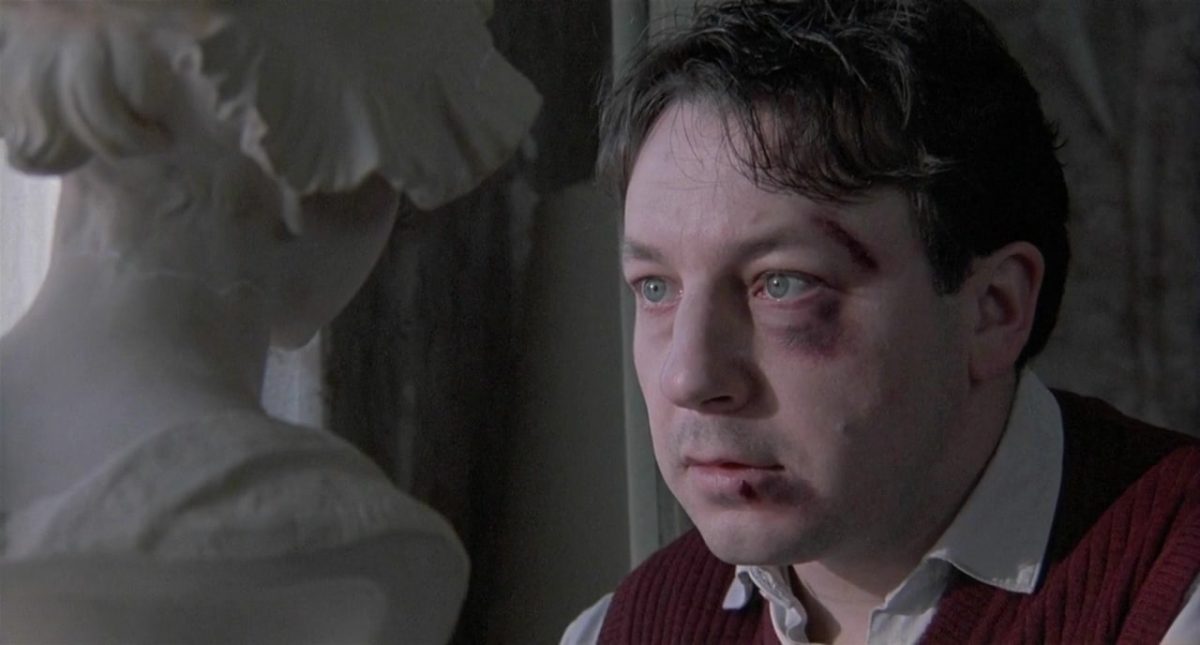
Earlier in the film, he occupied a condition of helplessness while Dominique possessed control over the relationship, the legal system, and even the terms through which intimacy was defined. Now those positions reverse completely. Dominique is arrested, imprisoned, and emotionally devastated, while Karol watches from a hidden distance with complete control over the situation. Equality, therefore, becomes inseparable from replication. Karol recreates for Dominique the same vulnerability and powerlessness he once experienced himself.
The prison sequence near the end becomes crucial precisely because it destabilises the emotional certainty behind Karol’s actions. Watching Dominique cry inside the prison cell, communicating with him silently through gestures and expressions, Karol appears emotionally overwhelmed rather than victorious. The woman he has punished remains the woman he still loves. This contradiction becomes impossible to resolve. His revenge succeeds materially and strategically, but emotionally, it leaves him trapped within the same attachment that motivated the revenge in the first place.
What the film ultimately reveals through this movement is that Karol’s pursuit of equality is deeply distorted by humiliation itself. Equality ceases to mean mutuality or emotional balance. Instead, it becomes tied to reversal, to making the other person feel the same pain, dependency, and instability that one has experienced oneself.
But because Karol’s actions emerge from love as much as resentment, the revenge cannot produce closure. The emotional bond survives the punishment, making his victory feel incomplete and strangely tragic. Kieślowski therefore transforms revenge into something psychologically circular: Karol gains control over Dominique externally, yet internally he remains just as emotionally bound to her as before.
Three Colours: White (1994) Movie Ending Explained:
What exactly happens in the final moments?
The final stretch of “Three Colours: White” unfolds through the completion of Karol’s elaborate plan, but the film presents this completion in a way that gradually destabilises the certainty and control he appeared to possess earlier. By this point in the narrative, Karol has successfully rebuilt himself materially and socially after the humiliation he experienced in Paris. He has accumulated wealth, established influence within Poland’s rapidly changing economy, and carefully constructed the false identity that allows him to stage his own death.
What initially seemed like a movement toward recovery has now fully revealed itself as a strategy designed to reverse the emotional imbalance between himself and Dominique. The final sequence begins after Karol’s fake death has been publicly accepted as real. Through the legal evidence and circumstances he arranged earlier, Dominique becomes implicated in his supposed murder and is subsequently arrested.
The mechanics of the plan are presented with remarkable clarity. Karol has orchestrated the situation so completely that Dominique, who once held emotional and practical power over him during the Paris sequences, now occupies the very condition of helplessness and confinement that he himself once experienced. The reversal is structurally complete. Earlier in the film, Karol wandered through Paris without money, security, or belonging. Now Dominique exists within a prison space while Karol observes events from a position of invisibility and control.
The film immediately begins complicating this apparent triumph. The final prison visitation scene becomes the emotional centre of the ending. Karol watches Dominique from outside the prison building and later sees her through the glass partition during visitation. Their communication is conducted almost entirely through gestures and facial expressions rather than spoken dialogue. Dominique begins signalling to him silently, indicating that she still loves him and wishes to marry him again once she is released. These gestures are simple and restrained, yet they completely alter the emotional atmosphere of the sequence.
What becomes striking at this moment is Karol’s reaction. Throughout the latter half of the film, his actions have been shaped by calculation, emotional concealment, and strategic control. Here, however, that composure begins to fracture visibly. As he watches Dominique cry and communicate through the prison glass, Karol himself becomes emotional.
The revenge that had appeared so methodically planned suddenly reveals its instability. Dominique’s suffering does not produce satisfaction in the straightforward sense he may have imagined. Instead, the scene exposes the persistence of his attachment to her. The woman he has punished remains inseparable from the woman he continues to love.
The ending, therefore, shifts away from the logic of revenge toward something far more emotionally unresolved. On the surface, Karol has achieved equality through reversal. Dominique now experiences vulnerability, dependence, and emotional devastation just as he once did. Yet the film demonstrates that this reversal cannot produce emotional closure because the relationship itself remains active beneath the punishment. Love, humiliation, resentment, longing, and dependency continue to exist simultaneously within both characters.
Kieślowski reinforces this ambiguity through the visual structure of the ending itself. The prison glass separating Karol and Dominique becomes deeply significant because it simultaneously connects and divides them. They can see one another clearly, communicate emotionally, and remain intensely attached, yet they are physically separated by the consequences of Karol’s actions. The image encapsulates the emotional condition that the film has gradually constructed throughout its narrative. Equality has become a condition where both individuals are equally trapped within their attachment to one another.
What is happening here, in direct terms, is the completion of Karol’s revenge and the revelation of its emotional incompleteness. Dominique is imprisoned because of the false murder Karol staged, Karol remains free and materially successful, and yet neither appears emotionally liberated from the relationship that destroyed them. The film closes through suspension. Karol watches Dominique from a distance, emotionally overwhelmed, while Dominique gestures toward a future that may never fully escape the damage already done.
The ending, therefore, operates through a dual movement: externally, Karol succeeds in reversing the power dynamic between them, but internally, the emotional structure of their relationship remains unresolved and painfully intact. The film closes on this contradiction, allowing the final image to hold together both control and vulnerability, revenge and love, punishment and longing, without reducing any one of them into a final answer.
Three Colours: White (1994) Themes Analysed:
Equality as reversal rather than balance
At the heart of “Three Colours: White” is the idea of equality, but the film approaches it through imbalance, humiliation, and emotional asymmetry rather than fairness in any conventional sense. Karol’s life at the beginning of the film is defined by inequality on multiple levels. In Paris, he lacks linguistic fluency, financial stability, legal security, and emotional control within his marriage to Dominique. The divorce proceedings make this imbalance painfully visible by exposing his sexual inadequacy publicly, turning intimacy itself into a site of humiliation. From that point onward, equality ceases to mean mutual understanding for Karol. Instead, it becomes tied to reversal.
As he rebuilds his life in Poland, his pursuit of success gradually transforms into an attempt to recreate the same helplessness he once experienced, but this time for Dominique. Wealth, influence, and strategy become tools through which he can redistribute emotional power. The fake death scheme ultimately functions as the clearest expression of this distorted idea of equality.
Karol constructs a situation where Dominique becomes vulnerable, imprisoned, and emotionally devastated in the same way he once was. But the film complicates this reversal by refusing to frame it as a victory. Even after achieving control, Karol remains emotionally dependent on Dominique, revealing that equality built through revenge cannot fully resolve attachment. The film, therefore, transforms equality into something unstable, where emotional symmetry is pursued through replication of pain rather than genuine balance.
Humiliation as a force that reorganises identity
Humiliation in the film is treated as a condition that fundamentally reshapes how Karol sees himself and moves through the world. After the divorce, his degradation unfolds through ordinary and material experiences. He loses his business, his home, and eventually even the ability to exist securely within Parisian society. The film repeatedly places him in public spaces, metro stations, streets, and crowded areas where he becomes almost invisible despite being surrounded by people. His humiliation is therefore social as much as emotional.
One of the most striking manifestations of this occurs during his return to Poland inside the suitcase. The sequence carries dark humour, but beneath the absurdity lies a powerful visual reduction of identity. Karol, once a husband and business owner, is literally transported as luggage, stripped of agency and recognition. Even after returning to Poland, the memory of humiliation continues to shape his behaviour. His later success never appears emotionally detached from those earlier experiences. Instead, his growing control, wealth, and composure function almost like compensatory structures built around an unresolved wound.
What the film reveals gradually is that humiliation remains persistent beneath Karol’s reconstruction, influencing his ambitions, emotional decisions, and need for control. The revenge plot itself emerges directly from this unresolved condition. In this sense, humiliation becomes productive and destructive simultaneously. It motivates Karol’s reinvention while also trapping him within the emotional logic of the injury he is trying to escape.
Love that survives cruelty and manipulation
One of the film’s most unsettling ideas is the way love continues to exist even within relationships shaped by humiliation, manipulation, and revenge. Karol’s attachment to Dominique never fully disappears despite the emotional devastation she causes him at the beginning of the film. Even during his reconstruction in Poland, Dominique remains psychologically present within almost every major decision he makes. His success continually circles back toward her.
This becomes especially visible when Dominique visits Poland. Their reunion contains moments of genuine tenderness and intimacy that complicate the revenge narrative entirely. Karol’s actions are clearly strategic by this stage, yet the emotional connection between them remains unmistakably real. The film refuses to separate love from resentment neatly. Instead, both emotions coexist simultaneously, shaping one another in unstable ways.
The ending intensifies this contradiction further. After Dominique is imprisoned because of Karol’s fake death scheme, the prison visitation scene reveals that emotional attachment has survived everything that has happened between them. Dominique silently signals that she still loves him and wants to marry him again, while Karol watches her with visible emotion rather than triumph. The sequence destabilises the logic of revenge because punishment fails to eliminate longing.
What emerges here is a portrait of intimacy where affection and cruelty become deeply entangled. The film does not romanticise this condition, nor does it condemn it through moral clarity. Instead, it observes how emotional dependence can persist even after betrayal and humiliation, allowing love itself to appear fractured, contradictory, and inseparable from pain.
Reinvention in a changing world
“Three Colors: White” also situates Karol’s personal transformation within the broader economic and social instability of post-communist Poland. His rise from poverty to wealth unfolds during a period where systems are rapidly shifting, allowing opportunism, speculation, and adaptability to become new forms of power. Karol succeeds because he understands how to move within these unstable structures quickly and strategically.
Yet the film presents reinvention with ambiguity rather than celebration. Karol’s growing wealth and influence outwardly suggest success, but emotionally, he remains tied to the humiliation that initiated his transformation. The external reconstruction of his life never fully produces internal freedom. His new identity is built upon emotional residue rather than escape from it.
This tension becomes central to the film’s broader understanding of change itself. Reinvention does not erase the past. It reorganises it into new forms. Karol becomes materially powerful, socially confident, and strategically intelligent, yet the vulnerable man abandoned in Paris continues to exist beneath that reconstruction. The film, therefore, treats personal transformation as a continuation shaped by liberation from previous pain.






![Hugo [2011] Review: As Endearing As It Is Frustrating](https://www.highonfilms.com/wp-content/uploads/2020/02/hugo-cover-768x432.jpg)