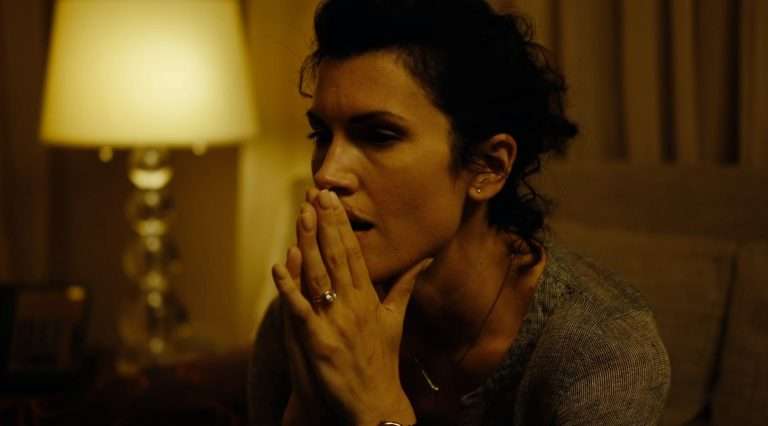
She loved soft toys when she was there. Her mother still buys soft toys on her birthday. Her parents still cut cakes and remember her in an unfathomable silence. Ching (Sheena Chan) killed herself after being raped. Her absence has left her parents as two souls who have become very uncomfortably numb. Ching’s father (Anthony Wong Chau-Sang) describes his daughter’s death as an “unprecedented pain,” which caused him much grief and suffering. To cope with Ching’s absence, his father has immersed himself in the teachings of Jesus, and now he has become a pastor. His wife (Louisa So) has failed to overcome her pain and is still overwhelmed by the tragedy.
Ching’s father, the pastor, coincidentally chances upon Chan (George Au) – the boy who is responsible for Ching’s death – when he is found homeless on the street. Reluctantly, the pastor decides – perhaps momentarily tortured by his religious teachings – to provide him refuge inside the church premises, where a room was vacant. Lam Sen and Antonio Tam Sin-Yeung’s 2024 film “Valley of the Shadow of Death” smoothly jumps back and forth in a simplistic, hyperbolic manner to explore poignancy, repentance, and the inadequacies of religious teachings that couldn’t equip a man with substantial wisdom to transcend his grief and erase the instinct of vendetta from his soul.
The film forays into portraying two parties, affected by suffering, either trying to cope with something or repenting and paying a heavy price for earlier offensive sins. It deals with a very Gen Z problem that has its roots in contemporary digital malfeasance. A staged coquetry leads to the circulation of an obscene photograph of Chan, which drives him wild to take revenge by committing a rape, and the total act culminates in Ching’s suicide.
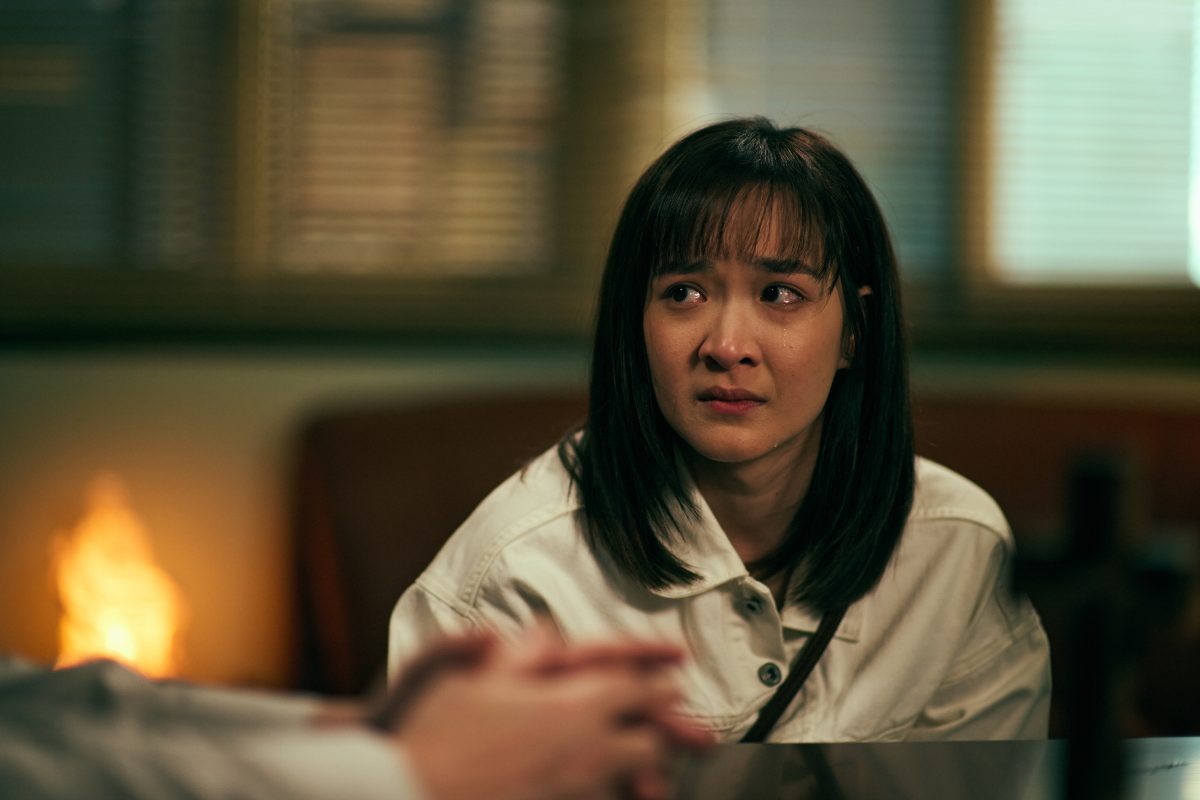
With conversations, sometimes between Chan and the pastor, at times between the pastor and his wife, the narrative softly shifts from present to past and peeks into the epicentre of the traumatic event. While focusing upon the crime, the camera zooms back very steadily and evokes a hollow space filled with faint, excruciating cries, coming, as if, from a distance. The entire construction could make you regard it as a typical Ozu-esque scene formation.
The film consistently jumps back, on particularly relevant occasions, to churn up past events – sometimes in the form of nostalgia, at times enveloped in nightmare – but it doesn’t provoke us or meet the anticipated discomfort that it should have caused.
For Chan’s part, the anachronistic representations partially succeed because the momentary animosity that Chan felt for Ching when, all of a sudden, the girl’s coquetry was demystified to him and left him bewildered, works well to justify Chan’s later repentance, encountered through the electrifying construction of a nightmare. But in the case of the girl’s mother, Ching’s memories seem merely nostalgic, enveloped in a bitter longing that fails to rationalize her rage.
However, I could accept Sen and Sin-Yeung’s claim if they argue that their aim was not to unsettle the audience or portray the girl’s experience as harrowing simply to justify the pastor’s later generosity, his wife’s fury, or Chan’s repentance. Instead, their intention may have been to interrogate—and expose—the loopholes in these characters’ psychological responses, the very coping mechanisms they each construct to survive a crisis, however self-chosen or purgatorial those efforts may be.
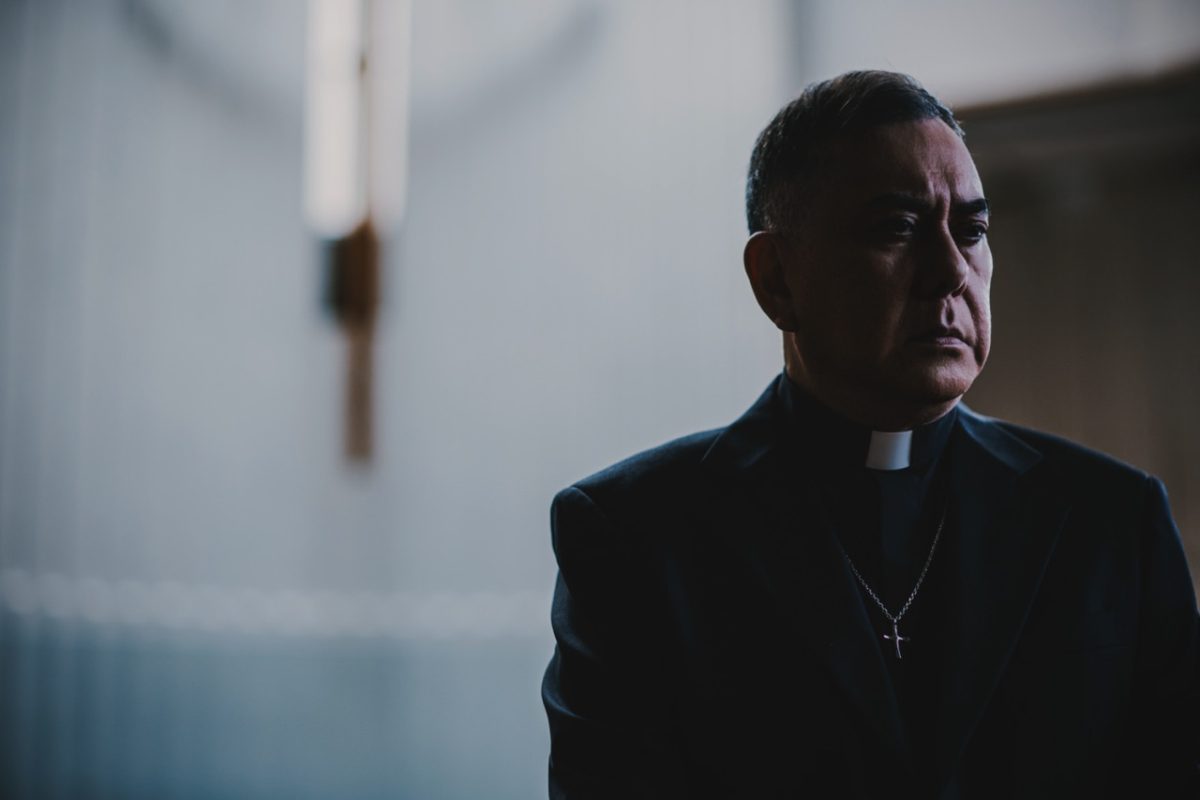
This intention is well established in a sequence, divided into two scenes, where Ching’s mother spots Chan in the same church to which her husband is affiliated, and in the next scene, inside a car, where the pastor tries in vain to console her. In that scene, the pastor’s generosity is sharply questioned by his wife, who once believed fervently but has since lost all faith in a higher power.
His theologically grounded declarations—“I am a pastor. I must bear the cross of Jesus. I must forgive our enemies. Humans aren’t qualified to forgive sinners. Only God is … We must give him another chance”—are abruptly and forcefully dismantled when she responds, “Who’ll give me a chance? For three years, my heart has hurt every day. Every time I think of my daughter, it’s like stabbing a knife into my own heart.”
This crossfire of words or duel of dialogues sets the stage for a climax that we don’t see coming. Ching’s mother’s every word perhaps makes the pastor rethink everything, as if the words pierce through his religious veil. Although Chan pays a heavy price—carrying a wooden cross in an act of atonement under the pastor’s supervision, captured in a beautifully assembled montage—his penance ultimately fails to move the pastor. In the moments leading to the denouement, the pastor abandons the very sacred teachings he preaches and takes revenge by forcing Chan’s head underwater, casting aside the moral authority he once invoked.
In that scene, Sen and Sin-Yeung evocatively intersperse Ching’s images that almost work like a cataclysm, but the anti-climax occurs when the girl’s mother comes to save Chan. The maker’s intentions were clear. They did not set out to craft a thriller meant to crawl under our skin, but rather to explore religion as a possible coping mechanism for personal crisis. Yet the film is held back—partly by its over-dramatic turns and partly by its less deft, less subtle handling of the anachronistic sequences—from becoming the stronger work it might have been.