Sherlock Holmes, from his very origin, has been one of the most popular detectives in the literary world. Sir Arthur Conan Doyle shaped him with traits that make him both relatable and distinct. He is flawed, at times cruel, even a kind of harmless sociopath—qualities that make him impactful rather than ideal, iconic yet distant from ordinary life, charismatic and, at moments, unsettling. This is the detective Doyle envisioned: a man with a pronounced superiority complex, fully aware of it; profoundly lonely, yet unwilling to acknowledge it, as if such admission would be an act of weakness; and quietly compassionate, without ever expressing it openly.
But all of these belong to literature. Or do they? Many adaptations of Sherlock Holmes have appeared as telefilms, web series, and movies. Most of them fail to present Holmes the way Sir Doyle imagined him for readers. Yet, a few succeed in capturing the detective’s strange charm by shaping their own versions of Sherlock in a way that reflects Doyle’s mind.
The first season of Young Sherlock takes a direction quite different from Arthur Conan Doyle’s stories, focusing on Holmes’s early life—his isolation, relationships, and formative conflicts—long before the man he becomes. Unlike his two major films on Holmes, “Sherlock Holmes” (2009) and “Sherlock Holmes: A Game of Shadows” (2011), Ritchie establishes a very jubilant, curious, and non-sociopathic Holmes (Hero Fiennes Tiffe).
He is aware of his familial status, the demons that haunt him, and is driven towards making friends and allies to exhibit his deduction skill, as well as nurture whatever the brilliant minds can offer to him through their companionship. In his two films on Holmes, Ritchie showed that he understands how Sir Doyle wished the character to be seen. Robert Downey Jr. appears both playful and sensitive, yet deeply devoted to his work. His performance brings back the Sherlock Holmes we first came to know through the books.
So, after this series dropped on the streaming platform, everyone was excited for what Ritchie could offer through a perspective that takes inspiration from Sir Doyle, but goes beyond to find the youth of all his major characters. Anthony Horowitz tried to recreate Sherlock in his books, but failed miserably. Ritchie, on the other hand, does not recreate the detective. Rather, he brings up a young Holmes and his companions by imagining his adulthood and characteristics. At the beginning of the show, none of the characters seem to truly belong to Sir Arthur Conan Doyle’s world.
But as the story unfolds, we realise that all Guy Ritchie wants is for viewers to understand not only where these characters come from in Doyle’s books, but also how they became who they are. The director’s motive is not to show us the younger version of Sherlock, Mycroft Holmes (Max Iron), or James Moriarty (Donal Finn). Rather, he wants to familiarize us with the behaviours they usually project in the books or any other kind of adaptation, in a modern or classic way.
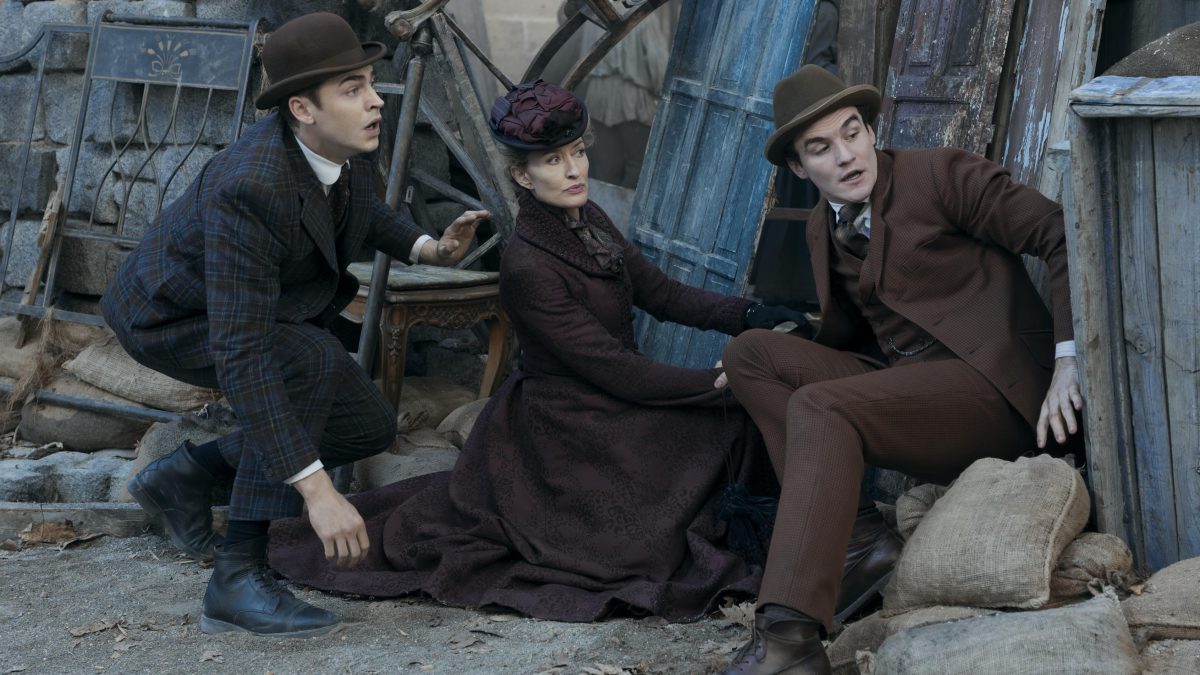
Though the show holds the audience’s attention and carries the visual and linguistic flavour of Sherlock’s world, Ritchie misses a few crucial beats in the first four episodes of the series. While building the foundation of the characters and the atmosphere of mystery around the story, which Ritchie addresses throughout the eight episodes, he unconsciously misses to distribute his attention towards balancing deduction with the basic elements of suspense.
The suspense usually trickles down the plot because of the sharp cuts, which keep happening, and hence, turns into a chronological build-up of instances. We do not find them in his films, where the extended shots actually allow the audience to take time with every character. In this series, however, the cuts have been done in places where the mystery actually starts fleshing out, and for this reason, the deduction of Sherlock weakens, which subsequently creates an imbalance in the story’s progression.
The main trait that should be visible in a Sherlock Holmes adaptation is the use of wider frames since every character responds to another, verbally or non-verbally. Ritchie has been economical in the usage of wide frames in both his films and this show, whereas if we watch the Mark Gatiss and Steven Moffat-directed adaptation of a modern Holmes in the British web series “Sherlock,” we get wider frames even when the camera magnifies the protagonist’s face.
This does not distance the audience from the plot, and no matter which iconic character is in the frame, the plot is always more important than its characters. This web series creates a sense of distance by reserving wider frames for moments of extreme turmoil or grief, or when the focus shifts to the character’s surroundings in isolation—allowing the set design to reflect emotions pushed beyond their limits.
Also Check: Young Sherlock Release Schedule, Cast, Episodes, and How to Watch the Guy Ritchie Series
Another letdown happens with the screenplay. The presence of British wit and humour undoubtedly lifts the series, but its constant usage also feels unnecessary, especially when set against the trauma and the range of crimes that Ritchie seeks to portray. Although the humour is mostly related to behaviour, it often feels bland because the screenplay slows down, which does not complement the unfolding of the mysteries. The minimal representation of character arc, especially of the accomplices of the primary foe, creates a setting that does not lead to serious thought, even though what unfolds before us is something unique in Sherlock’s world.
What stands out in the show is the way Hero Fiennes Tiffin portrays Sherlock, bringing a distinct approach shaped by Lee Strasberg’s method of acting—setting his performance apart from others who have played the role. Tiffin goes over-the-top to show the jubilance of a young lad and then composes himself to portray his deduction skills with a curious mind.
On the other hand, Donald Finn, as James Moriarty, uses Strasberg’s method of acting to keep his projection of personality inwards throughout the show. He places the right punch and wit at the right time, and sometimes his dialogues often supersede Sherlock’s deduction, which strengthens his character. Ritchie’s approach to Moriarty works because he aims to bait the enemy rather than present him to the audience.
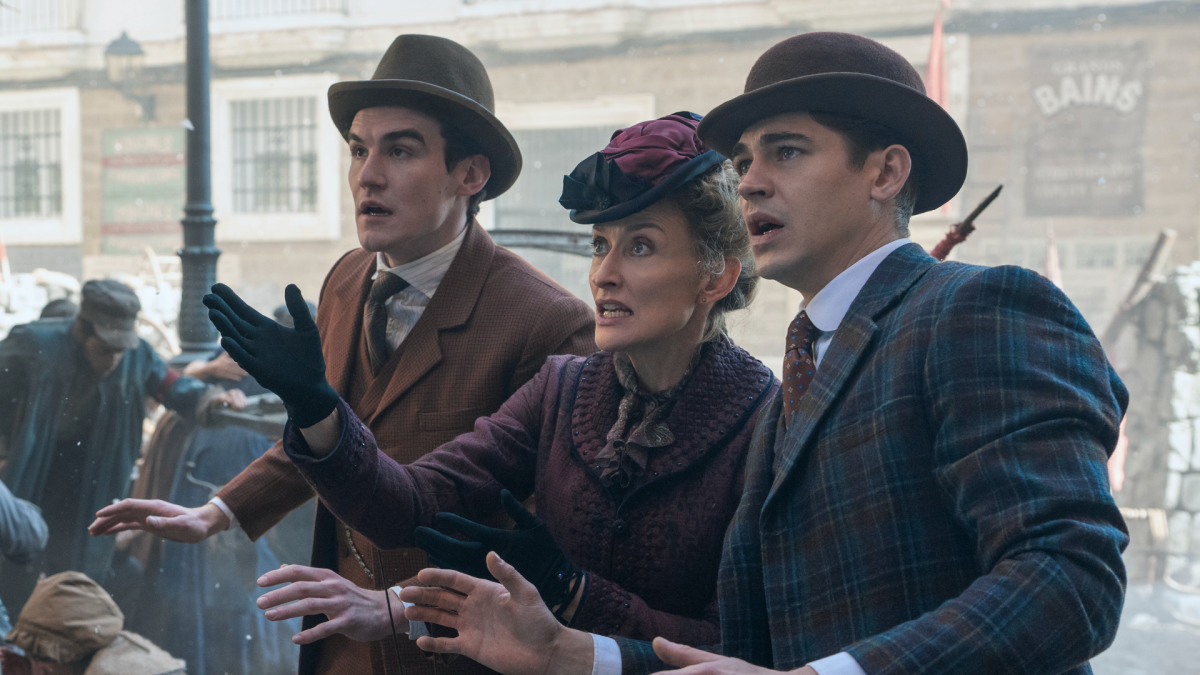
Sir Arthur Conan Doyle called Moriarty “The Napoleon of Crime” to keep the character above his detective, Sherlock Holmes. Ritchie, in this show, does the same but through a deep friendship between the two characters. The director leaves us with a very important thought that Moriarty and Sherlock become archenemies because they know each other too well and share similar perceptions.
But Ritchie drops these elements of tension between them slowly and gives enough screentime for their friendship to grow. A sudden infliction of a man’s death or killing becomes the trigger point for both Sherlock and Moriarty, urging them to choose one between two different sides of human psychology. It is a clever way to induce idealism and pragmatism, conformism and non-conformism, desire and greed, with just a single trigger. It works well for the show because, until this point, we are shown the outer lives of both characters. But the moment a decision must be made, Ritchie navigates the viewers into their inner worlds.
Other than Mycroft Holmes, Sherlock Holmes’s elder brother, Sir Doyle hardly discusses anything about the family of his primary character. From Agatha Christie to Jo Nesbo, most crime writers, with a primary investigator in their books, avoid discussing the lives of their protagonists to avoid distraction and the culture of stretching a story. Ritchie, after his two successful films on Holmes, in this series, decides to explore not only the youth of Holmes and Moriarty but also discusses the reasons behind their sociopathic behaviour through their personal relationships.
He also familiarizes us with Holmes’ familial dysfunction and his attachment towards his mother, which, in the later episodes, makes him appear more mature, irrespective of his outpouring emotions. Moriarty, on the other hand, becomes more secretive and starts enjoying chaos. Ritchie takes his time to build the origins of both the primary protagonists with a modern style of filmmaking. Like every Guy Ritchie film, this too beautifies chaos by assembling them in no particular order, which makes the scenes tense but also keeps them interesting for viewers to enjoy the necessary chaos.
Ritchie also explores the class, political, and administrative issues of the United Kingdom in this web series. Through various scenes and the plot, in general, the director shows how the British, the company, and several of its intellectuals exploited communities and manufactured war materials to take hold of nations and their resources.
“Young Sherlock” is not just a show about what the detective does through his skills. It is also a study on the human mind and how it works when triggered or influenced by something or someone. The show’s social commentary is anti-capitalist, echoing similar themes found in the adult Sherlock across various stories and their adaptations in theatre and film.