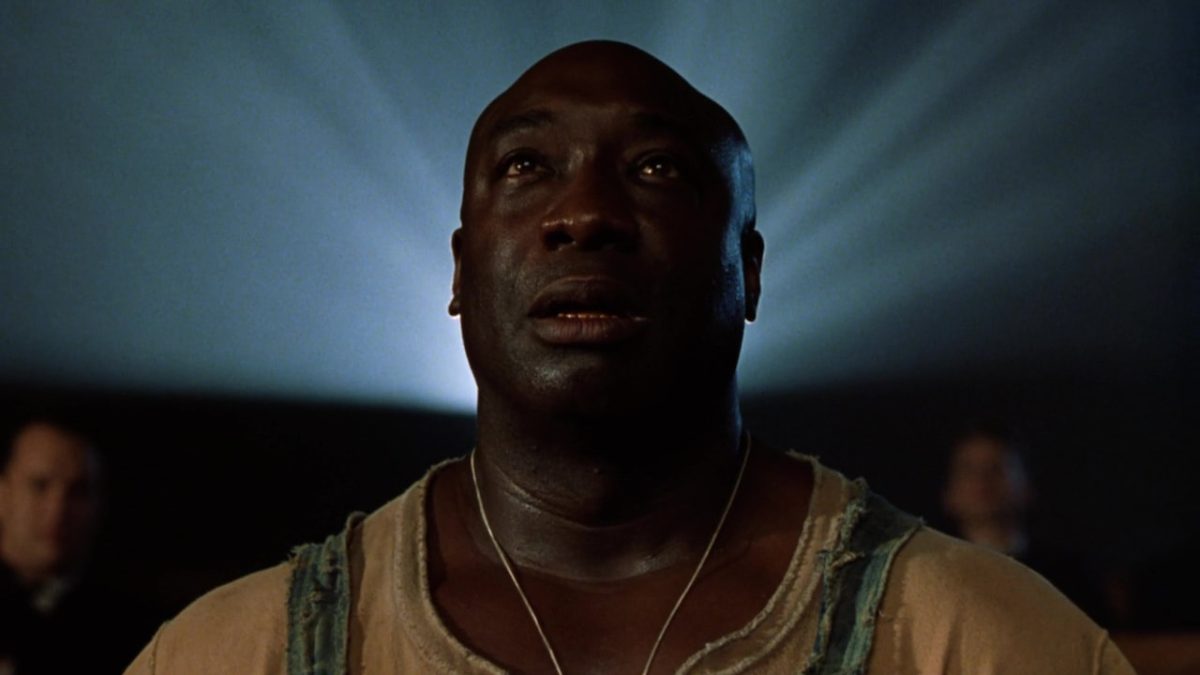
Based on the eponymous novel by Stephen King and directed by Frank Darabont, “The Green Mile” remains one of those rare films that continues to deepen every time you revisit it. At first glance, it unfolds as a supernatural drama where John Coffey, played with heartbreaking tenderness by Michael Clarke Duncan, possesses the power to heal, but is himself on death row waiting to be executed.
Beneath that surface lies a film driven almost entirely by raw human emotion. It also holds an unflinching mirror to the racism of the Depression era of 1935, revealing how the system failed the vulnerable and allowed hatred to grow unchecked. All of these forces converge in an ending so devastating that it stays with you long after the credits fade. SPOILERS AHEAD.
The Green Mile (1999) Plot Summary & Movie Synopsis:
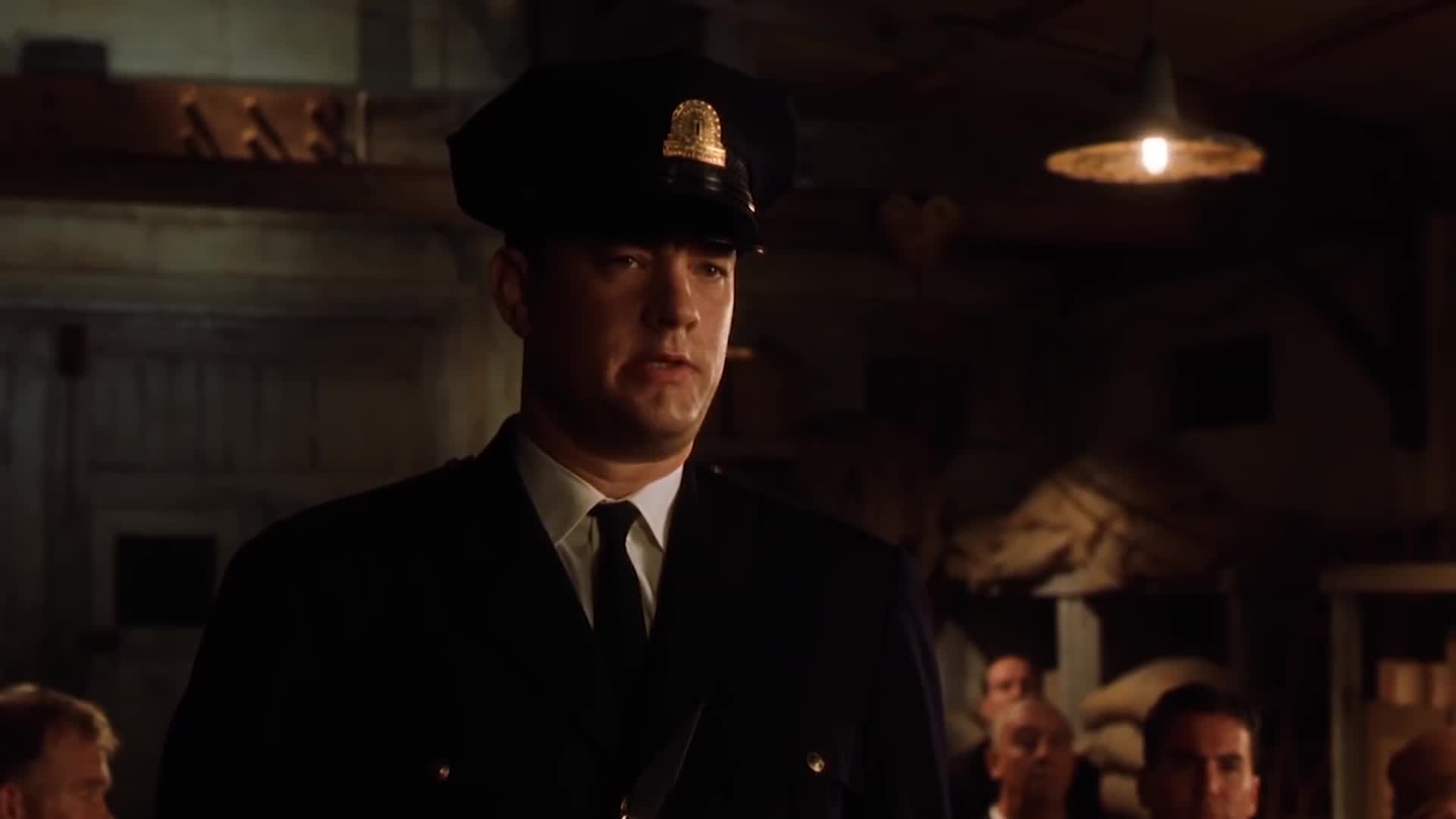
“The Green Mile” begins with scenes from an old-age home. Here we see old Paul Edgecomb (Dabbs Greer) living with other mates while he goes for a walk outside occasionally. One day, when Paul sees a song “Cheek to Cheek” from the movie “Top Hat,” he bursts into tears. Consequently, he talks to Elaine (Eve Brent) about what sparked that memory. From hereon, we are taken to the era of 1935 when young Paul (Tom Hanks) used to work as a prison guard in the death row facility. It was normally called The Last Mile, but they called it “The Green Mile.”
What is The Green Mile? Who is John Coffey?
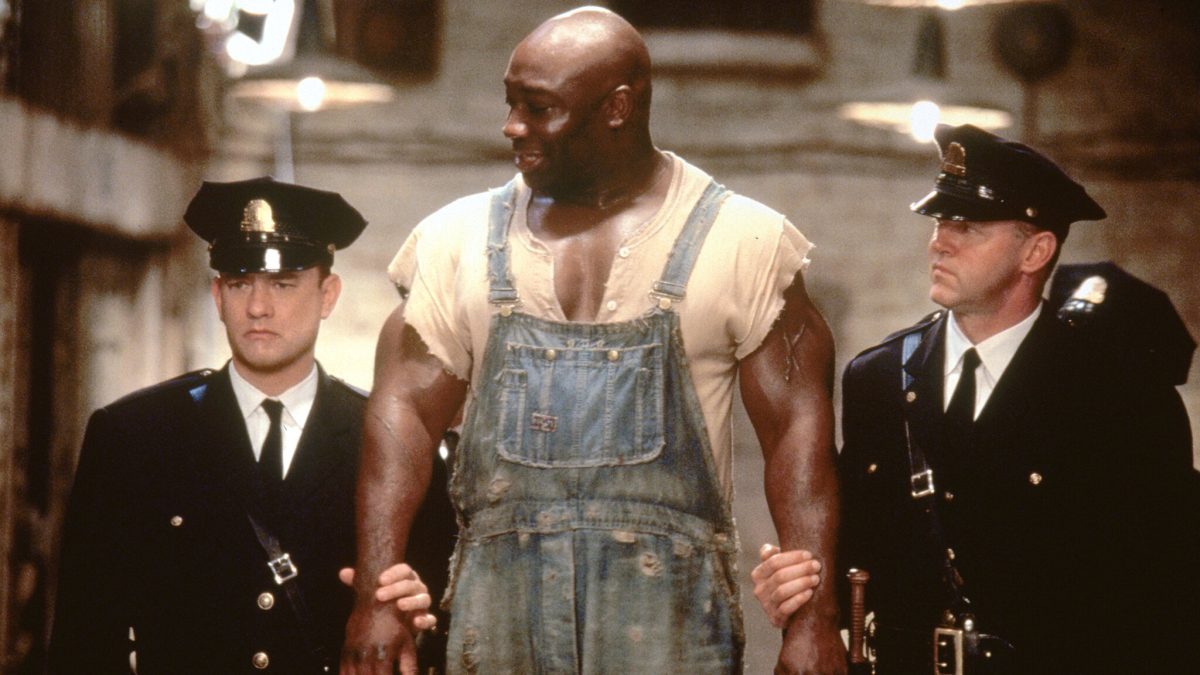
“The Green Mile” is introduced as a place where routine and monotony mask the silent weight of life and death. Paul, who leads the block, handles every prisoner with a sense of professionalism grounded in empathy. His team includes experienced guards like Brutal (David Morse) as well as the newly arriving Percy Wetmore (Doug Hutchison), whose cruelty and entitlement constantly disrupt the fragile order of the place. Into this environment comes John Coffey, accused of murdering two little girls. Contrary to his humongous size, Coffey is a vulnerable person who is afraid of the dark and surprisingly highly empathetic.
Paul’s first encounters with Coffey immediately challenge everything he expects from a man condemned for such a crime. He soon discovers that Coffey possesses extraordinary healing powers when Coffey cures his agonizing bladder infection. After that, Coffey saves an almost-dead mouse and quietly transforms the lives of everyone around him. With each act, the guards’ perception of him shifts, forcing them to question their assumptions about guilt, innocence, and the very justice system they serve.
Meanwhile, the film develops the world around them with striking clarity. The arrival of another prisoner, Wild Bill Wharton (Sam Rockwell), reveals just how chaotic and unpredictable the Mile can become. Wharton’s behavior throws the entire block into turmoil, contrasting sharply with Coffey’s calm presence. At the same time, Percy’s recklessness grows more dangerous, creating tension that builds steadily throughout the narrative.
These parallel conflicts deepen the story, showing how cruelty, power, and responsibility collide inside the confines of the prison. As Paul investigates this matter, he makes a heartbreaking discovery that leads to the devastating end of the movie. The film steadily prepares the audience for that emotional blow, binding together themes of compassion, injustice, and the cost of doing what is right.
The Green Mile (1999) Movie Ending Explained:
How Does John Coffey Heal People? Why couldn’t he Save Himself?
In “The Green Mile,” ever since the arrival of John Coffey, Paul is startled to see him behave so opposite to the heinous crime he has supposedly committed. Instead of the brutality expected from a man accused of murdering two little girls, Coffey appears gentle, frightened, and almost childlike. The turning point for Paul comes when Coffey cures his agonizing bladder infection. In that moment, Paul realizes that there is far more to this man than meets the eye. Now, what begins as confusion slowly turns into a profound moral conflict as Paul witnesses Coffey’s healing power again and again.
After healing Paul, Coffey saves the mouse, Mr. Jingles, a creature Percy tries to kill out of pure spite. Coffey brings the nearly lifeless mouse back, as if transferring a piece of his own life force into it. Eventually, Coffey performs his most extraordinary act by healing Melinda Moores, the wife of Warden Hal Moores, pulling the brain tumor out of her body through a supernatural yet deeply emotional process.
Each act makes it clearer that Coffey’s power is not merely a miracle. Instead, it is the physical expression of his unwavering empathy. In an era defined by the Depression and racism, where cruelty overshadows compassion and hatred thrives in everyday life, Coffey stands as an anomaly. He cares for people without hesitation, feels their suffering deeply, and expresses emotions without a trace of malice. His ability to heal is simply the outward manifestation of someone who carries more love than the world knows what to do with.
This understanding reframes his connection to the two murdered girls. His first line when he enters the Mile, “I couldn’t help it. I tried to take it back, but it was too late,” reveals guilt, but not for killing them. It reflects his devastation at failing to save them. Coffey, a Black man living in the 1930s American South, has undoubtedly faced injustice throughout his entire life. But when he witnesses Wild Bill Wharton assaulting and murdering the two innocent girls, something inside him breaks. The overwhelming grief drains him of the will to live, turning him into an empty vessel who carries the pain of a world that refuses to be kind.
However, even in this broken state, Coffey still loves. He still chooses to help, to heal, to bring light into spaces filled with cruelty. That is why he continues to use his power, a power implied to be a gift from God, even when he is emotionally exhausted. But the system fails him entirely. His accusations are never investigated, his innocence is never considered, and he is left to face execution with the world believing he murdered the girls. The tragedy deepens because Coffey does not fight it. He tells Paul, “He kills them with their love,” a line that underlines both his guilt for failing to save the girls and his despair at a world where love is punished and cruelty triumphs.
Coffey is tired- tired of injustice, tired of pain, tired of witnessing suffering he can do nothing about. Whether he could save himself is left ambiguous, but it ultimately does not matter. In his eyes, leaving the world is a release from endless cruelty. In accepting his fate quietly, Coffey simply chooses peace in a world that never gave him any.
Why Does Percy Kill ‘Wild Bill’ Wharton?
After Coffey comes back from healing Melinda, he doesn’t throw away the bad energy from his mouth. The guards initially believe this is because Coffey doesn’t want to sit in the electric chair and die. Maybe by swallowing the curse, he can avoid the suffering that awaits him. But in a shocking turn of events, Coffey grabs Percy and transfers the corrupted energy directly into him. After this, Percy goes numb, descends into a trance-like state, walks straight into Wild Bill’s cell, and shoots him dead without hesitation.
Paul is stunned, but Coffey holds his hand and shows him the truth that it was Wharton who assaulted and killed the two little girls. The revelation hits Paul with devastating clarity, but it is already far too late. Coffey’s act is deliberate. he knows exactly what he is doing and why he is doing it.
Coffey chooses Percy because he recognizes the darkness within him. Percy is an outright sadistic person. From the day he steps onto the Mile, he operates with cruelty as his main language. His treatment of Eduard Delacroix makes this painfully evident. Percy refuses to wet the sponge during the execution, knowing fully well that it will cause Delacroix to burn slowly and suffer unimaginably. He watches it happen without remorse. For Percy, inflicting pain is the only place where he feels powerful in a life where he is otherwise insignificant and mocked. Coffey sees all of this. He sees a man who enjoys suffering, who chooses violence, who has no empathy and no capacity for guilt.
Also Related: The 10 Best Stephen King Villains
Transferring the curse to Percy, Coffey ensures that two “bad men,” in his words, are punished. Wild Bill Wharton, the true murderer, gets an abrupt death, arguably easier than he deserves. Percy, however, receives a far harsher sentence. He becomes trapped inside his own mind, unable to function, forced to carry the weight of the darkness he has inflicted on others. It is poetic justice delivered through supernatural means.
Coffey does not act out of vengeance. Instead, he acts out of a belief in moral balance. He cannot bring the girls back. He cannot escape his own fate. But he can stop two men who brought nothing but cruelty into the world. In that moment, Coffey becomes both a healer and a judge. And Percy killing Wild Bill is Coffey’s final attempt to restore some cracked form of justice in a world that failed him at every turn.
What is the Meaning of Mouse in The Green Mile?
One of the most creatively interesting decisions that “The Green Mile” takes is having Mr. Jingles, a mouse, as one of its primary emotional anchors. On paper, the idea sounds almost absurd. A tiny mouse suddenly appears in a death row block and begins to take center stage. However, in the context of the film, it works so beautifully that it becomes impossible to imagine the story without it. More than an animal, Mr. Jingles becomes a symbol that elevates the emotional weight of the entire narrative.
“The Green Mile” is set during the Depression, a time when despair was normal and human kindness was rare. People were too exhausted by survival to offer love or warmth, and death seemed to follow everyone like a shadow. In such an era, watching a simple mouse go about its life with curiosity and innocence becomes an unexpectedly enriching experience for the guards. In a world where nothing grows, this small creature becomes the only sign of life that thrives freely inside a place built for executions.
It is also deeply poetic that inside a corridor where death is the routine, a fragile life becomes something beautiful to protect. The mouse’s presence quietly transforms the men. It brings out gentleness in them, softens them, and reminds them that compassion still has space even in the bleakest environment. For Delacroix, who adopts the mouse in his cell, Mr. Jingles becomes a source of joy, purpose, and connection, something no prison could take away from him. The friendship between Del and the mouse becomes a tiny rebellion against everything cruel around them.
Alongside John Coffey, Mr. Jingles stands as another symbol of empathy on the Mile. Both represent purity in a place contaminated by hatred, neglect, and suffering. So when Percy crushes the mouse, the act attempts to kill the only shred of beauty the Mile has left. Coffey saving Mr. Jingles is his way of restoring that beauty, transferring a part of his supernatural energy into it, and giving it a second life. The mouse becomes living proof that Coffey’s goodness does not disappear with him.
That is why, even 64 years later, Mr. Jingles is still alive and thriving with Paul. He becomes the last ray of hope Paul clings to, a reminder that Coffey’s compassion outlived the darkness that destroyed him. For the viewers too, the mouse becomes a quiet, lingering symbol of survival. It is gentle, unassuming, but carries the emotional weight of everything Coffey stood for. Moreover, it is the embodiment of innocence in a cruel world, a witness to injustice, and the small piece of Coffey’s miracle that refuses to die. It stands for the idea that even when everything else fades, a fragment of goodness can still endure.
What Will Happen to Paul? Will he die?
After Coffey’s execution, the film returns to the present, where an older Paul is living quietly in an old-age home. When he confides in his friend Elaine that he is 108 years old, he lays his soul bare. His long life is not the result of good fortune or medical miracles. It began the moment Coffey held Paul’s hand during the execution, releasing a part of his supernatural essence into him. Coffey “infected” Paul with life. The same thing happened with Mr. Jingles, who was clutched tightly by Coffey during Del’s execution. Both of them were touched by something otherworldly, something no one else on the Mile ever received.
But this gift is also a curse. Paul has outlived everyone he ever loved: his wife, his friends, his colleagues, the men he once walked the Mile with. Every decade, he stays while someone else leaves. Every person he forms a connection with eventually dies, while he continues existing. The question naturally forms: Will Paul die? Or has Coffey condemned him to live forever?
The film never gives a definite answer, and that ambiguity is intentional. Paul himself believes he will die eventually. For him, this prolonged life is a slow, lonely endurance and not immortality. He describes it as a punishment, a consequence of witnessing innocent men die, of failing to save Coffey, of carrying the guilt of a world where justice failed too many times. During the Depression era, countless prisoners might have been innocent, yet Paul watched them walk to their deaths. Now, he remains alive to carry those memories long after everyone else has faded.
When Elaine dies, Paul once again finds himself standing alone, forced to endure another loss. The pattern continues: life stretches endlessly forward, while the people around him disappear one by one. Coffey’s “gift” becomes a lingering echo of sorrow. Paul calls it a curse because it forces him to watch the world move on without him. However, despite the despair, there is a sliver of hope, Mr. Jingles. The mouse, still alive after all these decades, becomes Paul’s last connection to the past and the only reminder that Coffey’s compassion survives in some small form. Their shared longevity binds them together. As long as Mr. Jingles lives, Paul feels he is not entirely alone.
So it all comes down to what will happen to Paul? The film hints at two possibilities but confirms neither. He may die like every other human being, simply at a much slower pace. Or he may continue living for reasons even he cannot fully understand. Whether his life ends or not remains unresolved. But the emotional truth is clear: Paul carries Coffey’s miracle, and with it, the burden of memory. And until his final breath, or whatever his final state may be, he clings to the last piece of the Mile that still survives, which is the tiny mouse who witnessed everything with him.
The Green Mile (1999) Movie Theme Analyzed:
The Cost of Compassion in a Cruel World
One of the strongest themes in “The Green Mile” is how compassion becomes both a miracle and a burden. John Coffey embodies pure empathy in an era where people have stopped caring for each other. He heals because he feels, and he suffers because he absorbs the pain of others. His ability is not treated as a blessing but a threat by a world that does not know what to do with goodness.
Every act of healing drains him, and every injustice he witnesses hollows him further. Paul, too, becomes a victim of this theme when Coffey “infects” him with life. And now, what looks like a gift turns into a long, lonely punishment, forcing him to carry the weight of memory long after everyone else is gone. Compassion in this story is powerful, but it is never easy. It demands sacrifice from everyone who holds it.
Justice, Injustice, and the Failures of the System
Another central theme is the brutal failure of the justice system. Set against the backdrop of the Depression era, the film shows clearly how prejudice, bureaucracy, and unchecked power destroy innocent lives. John Coffey is condemned without a proper investigation simply because he is a Black man found with two dead white children. Percy thrives not because of competence but because of political connections, making him untouchable even as he inflicts suffering on helpless prisoners. Wild Bill, the real killer, hides behind chaos and manipulation.
The guards, especially Paul, are forced to watch the system they serve make the wrong decision over and over. In the end, Paul realizes that justice on the Mile is often an illusion. His unnaturally long life becomes a form of retribution. However, not for what he did, but for what he could not undo. The film suggests that justice is not always delivered by the courts; sometimes it comes through the power of goodness, even in a supernatural form, but in the worst-case scenario, it doesn’t come at all.