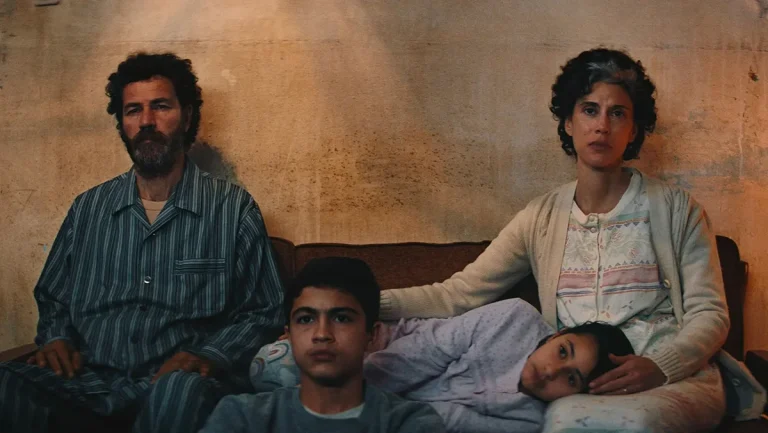
Laurel Parmet’s directorial debut, “The Starling Girl,” is truly outstanding. The film premiered at the Sundance Film Festival, and its remarkable execution earned it a well-deserved nomination for the Grand Jury Prize. Laurel Parmet conducted multiple research projects about the Christian fundamentalist community in Oklahoma before developing the plot, aiming to understand the real situations faced by women in these communities. As a final result, she was able to develop a strong coming-of-age script fabricated around a fictional girl named ‘Jemima’ and was able to portray her clash between spirituality and sexuality.
Have you ever heard the term ‘Devadasi’ in Indian culture? If you had, you would have probably questioned the moral conflict faced by those poor women who dedicate their entire lives to the service of their gods. Now, imagine experiencing a similar fate within a Christian community at the age of 17, being expected to devote your whole self to a cause not of your choosing.
Jemima Starling is a late teen living under the extreme devotion of her parents in Kentucky. She silently questions her fate already decided by her parents, a path chosen without regard for her own desires. Amid all these, her world gets upended when she encounters Owen, a 28-year-old pastor newly returned to Kentucky after a missionary journey in Puerto Rico with his wife.
When girls hit a certain age, an irresistible longing awakens within them. A desire to be captivated, to be noticed, and to feel the commanding warmth of a hand exploring every curve of their awakening flesh. Similarly, Jem begins to feel a confusing pull towards Owen despite the awkward distance between their ages. The inner tug of war within Jem, which was between surrendering to what her community called God’s will and choosing her own path, finally reached its breaking point.
And when she dared to follow her desire, she still believed that the god had traced all the lines in her life, even if it was unholy and sinful. Age gap romances often risk unsettling an audience. But trust me, in this film every intimate moment unfurls with such quiet inevitability that it feels less like a provocation and more like something the story was always destined to reach. Lewis Pullman’s portrayal of Owen Taylor deepens that pull. His gentle magnetism stirs feelings she believed she had outgrown or never dared to name.
Alongside the main narrative, the director introduces a subplot centered on Jem’s father, subtly shaping Jem’s inner conflict and leading it toward a more resonant conclusion. Jimmi Simpson, well known for his role as William in the famous show “Westworld,” plays Paul Starling, Jem’s father. Decades may have passed, but Paul still struggles same way as Jem, questioning the sacrifices he made for God and fearing to follow his passions because it makes him feel selfish and impure.
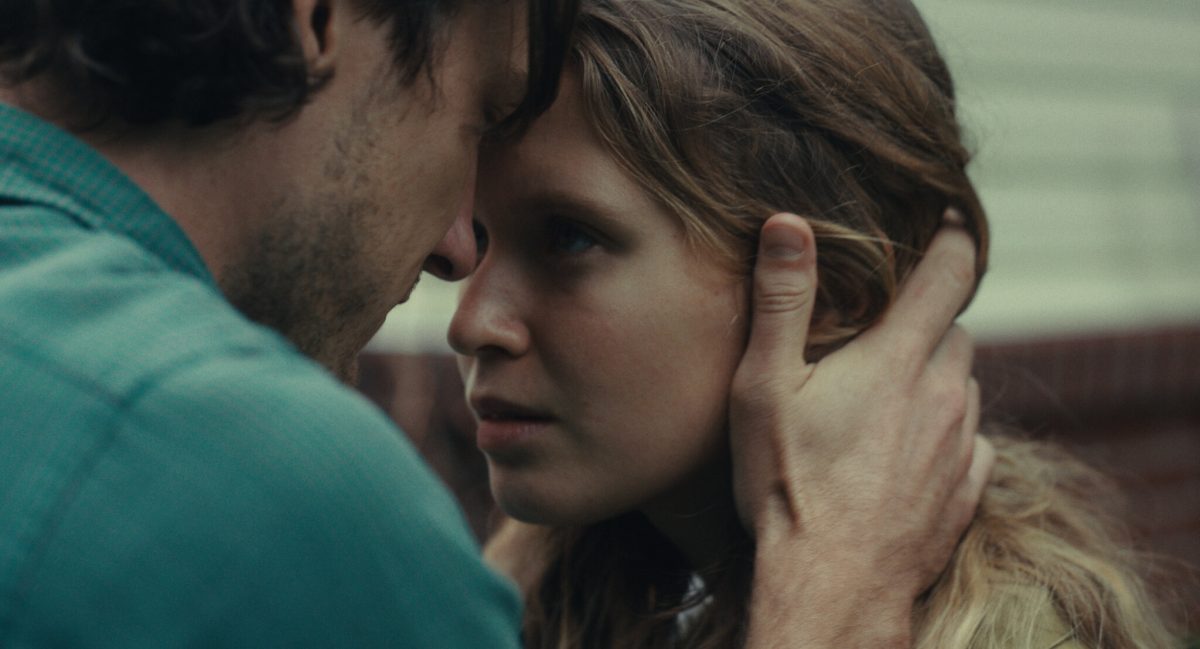
Amid all these, Jem’s sharp eyes keenly observe the hard time her father was having because of his fear of accepting himself and being judged by this Christian fundamentalist community. She shows much more affection toward her dad than her mother. Not overtly, but in a way that defies easy explanation, her father nudges her toward the life she truly wants, not the one imposed by society or warped by her darker inclinations.
“The Starling Girl” was actually shot in Kentucky in 2017. The cinematography favours an unobtrusive naturalism, relying on soft, observational framing rather than visual flourish. This measured approach gives the narrative room to breathe, enabling emotional nuances to register without strain. Ultimately, the film’s visual design succeeds in drawing the viewer toward the characters’ emotional states through steadiness rather than stylistic ambition.
On the other hand, there are no significant shortcomings in the acting department. Every actor has fully understood their roles, and the script guides them to perform exactly what is required. Since it shows an emotional conflict of a late teen caught between an illicit relationship and the religious indoctrination she grew up with, we can say without a doubt that the story is quite complicated. Viewers should approach the film with an open mind, as there are moments when Jem’s actions may challenge your sympathy, even prompting you to see her as a sinner.
By the time the film reaches its 117-minute mark, the narrative resolves with a coherence owed partly to its carefully managed subplots and committed supporting cast. While the conclusion offers few surprises, Laurel’s direction maintains a steady hand, shaping a resolution that remains consistent with the film’s established emotional logic. The choice to foreground authenticity, likely influenced by her conversations with women in Oklahoma, gives the ending a grounded sincerity, even if it lacks dramatic tension.
For viewers drawn to coming-of-age dramas with a provocative undercurrent, “The Starling Girl” stands as a compelling choice. The film lingers long after its final frame, offering a clear-eyed look at the tension between personal identity and imposed expectation. Its honesty and restraint give it a lasting resonance, inviting reflection on autonomy, choice, and the complexities of self-definition.


![Chauthi Koot [2016] : The Fear in the Dog!](https://www.highonfilms.com/wp-content/uploads/2016/08/Chauthi3.jpg)

![Shoebox [2021]: ‘DIFF’ Review – Empty gestures mangle this ode to a single screen and a changing city](https://www.highonfilms.com/wp-content/uploads/2021/11/Shoebox-1-highonfilms-768x386.jpg)