
Tobias Lindholm’s “A Hijacking” (Original title: “Kapringen,” 2012) is not a pirate or hijack thriller in the conventional sense. There are guns, hostages, and ransom demands, but the film is less interested in violence than in distance. Distance between those who suffer and those who decide. The distance between money and human life, and the distance between survival and dignity.
The hijacking itself happens quickly. What follows is slow, procedural, and emotionally suffocating. The film splits its focus between the Danish cargo ship Rozen, drifting under pirate control, and a corporate office in Denmark where negotiations stretch on for months. Both spaces are prisons. One is defined by weapons. The other is spreadsheets, phone calls, and moral compromises.
Spoilers Ahead
A Hijacking (2012) Plot Summary & Movie Synopsis:
Why is Mikkel Hartmann So Desperate to Get Home?
Mikkel Hartmann is introduced as an ordinary man with ordinary fears. He is a cook, not a hero or a soldier. His anxiety is domestic. He misses his wife, Maria. He misses his child. His life is not shaped by ambition or power, but by responsibility. That ordinariness matters. Hartmann represents the human cost of global trade. He works far from home so others can profit, and the film makes sure we understand that his emotional world is small and fragile.
When Jan Sørensen asks him to take a letter home to his family, it reinforces Hartmann’s role as a bridge between two worlds: the ship and Denmark, labor and home. When pirates board the ship, Hartmann’s fear is immediate and visible. He is not brave in a cinematic sense. He trembles and obeys. Subsequently, he survives by making himself useful, cooking meals at gunpoint, and clinging to routine as a way to stay sane.
What Kind of Man Is Lars Vestergaard in the Corporate Office?
Lars Vestergaard operates in a world of polite pressure and quiet panic. He is a middle manager, caught between executives above him and consequences below him. When the hijacking happens, he becomes the messenger, the man who carries bad news upward. Vestergaard is not cruel, but he is cautious. He worries about costs, optics, and procedure.
His discomfort reflects how corporations absorb tragedy without fully feeling it. He understands the seriousness of the situation, but he does not yet understand its weight. His role becomes more uncomfortable as negotiations drag on. He watches Ludvigsen deteriorate while the board grows impatient. Vestergaard is constantly balancing loyalty with self-preservation, and his suggestion to fake a personal contribution later reveals how normalized deception has become inside this process.
Why Does CEO Peter Ludvigsen Insist on Handling Negotiations Himself?
Peter Ludvigsen believes control equals responsibility. When the hijacking occurs, he does not delegate it away. He takes it personally, but not emotionally. His instinct is managerial. He believes that experience, authority, and firmness will produce results. Hiring Connor Julian is supposed to help, but Ludvigsen resists Julian’s methods. He distrusts intermediaries.
He wants direct contact, direct pressure, and measurable progress. This insistence is not just about ego. It is about maintaining the company’s power position. Ludvigsen’s flaw is that he treats negotiation as a business transaction long after it becomes a humanitarian crisis. His low-ball offers are strategic on paper, but devastating in practice. Each delay extends the hostages’ suffering, even if no one is physically harmed yet.
Who is Omar, and Why is He So Central to the Power Dynamic?
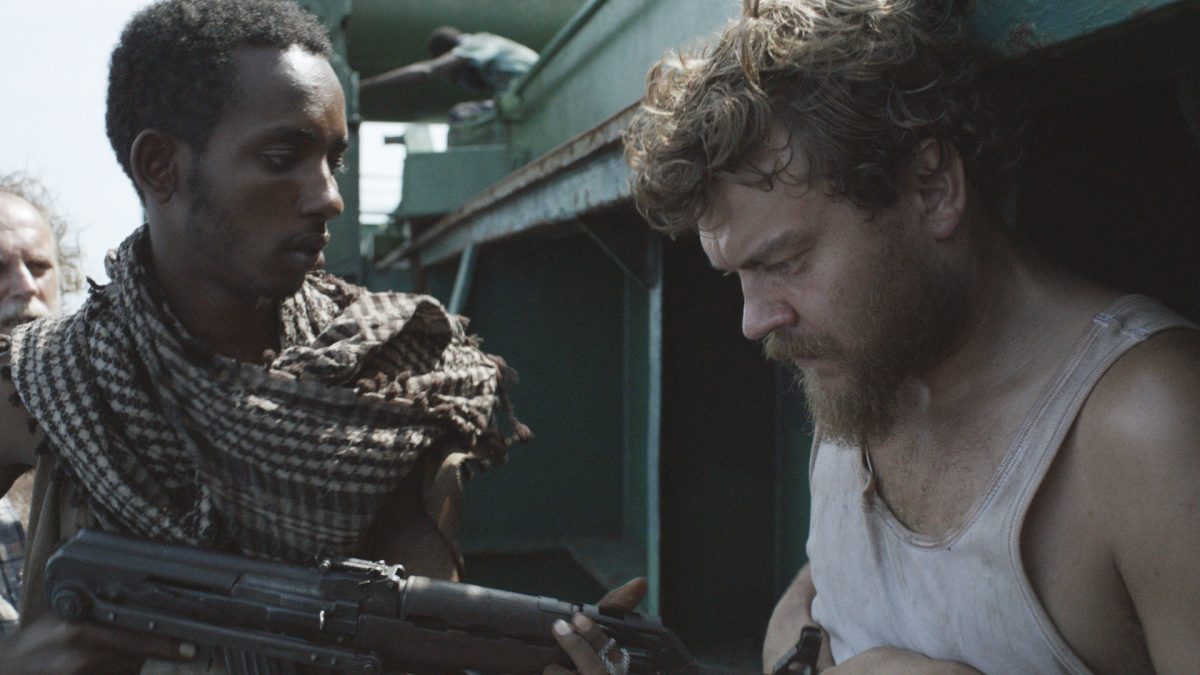
Omar introduces himself as a translator, someone caught between pirates and hostages. Whether that is true or partially fabricated hardly matters. What matters is that he controls communication. Omar understands leverage better than anyone in the film. He knows that fear travels faster through voices than through guns. He uses Hartmann as a conduit, forcing him to call Denmark and convey the pirates’ demands while carrying the terror himself.
Unlike the pirates who humiliate or threaten, Omar is articulate and calculating. He reacts with disbelief to Ludvigsen’s low offers, not because he is greedy, but because he knows how these negotiations end. He understands that unrealistic numbers prolong captivity and invite violence. Omar’s anger is not theatrical. It is exhausted. He repeatedly warns that people will die if this continues. When he says it, it does not sound like a threat. It sounds like inevitability.
Why Does Ludvigsen Refuse to Negotiate Through Hartmann?
Ludvigsen’s refusal to negotiate through Hartmann is framed as professionalism, but it functions as emotional distance. Speaking directly to a hostage would collapse the abstraction. It would turn numbers into faces. By hanging up, Ludvigsen protects himself from moral contamination. He insists on protocols and official channels because they allow him to believe he is acting rationally, not cruelly. Every refusal pushes Hartmann deeper into isolation, forcing him to bear responsibility without authority. This choice reveals the film’s central tension. Power resides far from pain. Decisions are made in clean rooms by people who can sleep at night.
How Do Small Moments of Humanity Survive on the Ship?
Despite constant fear, the hostages and pirates share moments that feel almost surreal. Catching a fish becomes a celebration. Singing sea shanties briefly dissolves the hierarchy between captor and captive. Hartmann’s daughter’s birthday becomes a shared ritual. These moments do not redeem the pirates, nor do they erase the violence. Instead, they underline the cruelty of the situation.
Humanity surfaces not because the system allows it, but because people cling to it instinctively. Hartmann’s phone call to Maria is especially devastating. It is tender, restrained, and brutally short. When Omar demands that Maria pressure Ludvigsen, the personal is weaponized. Love becomes leverage.
What Happens When Ludvigsen Loses His Temper?
When Ludvigsen finally raises his offer slightly and lashes out emotionally, it is too late. Omar hears the disrespect in the number. The pirates hear weakness masked as authority. The gunshot that follows is not shown. It is heard. That sound shatters the illusion that time is neutral. Ludvigsen is left staring at a phone, unsure if his stubbornness has killed a man.
This moment marks the psychological collapse of Ludvigsen’s rational framework. For the first time, he confronts the possibility that restraint can be as lethal as aggression. From the board’s perspective, the problem is not moral failure, but inefficiency. The negotiations are taking too long. The silence is bad for business. Their threat to replace Ludvigsen is not about saving lives faster. It is about controlling outcomes. This pressure reveals how institutions value resolution over responsibility. Someone must close the deal, not carry the guilt. Ludvigsen becomes expendable the moment his suffering stops being useful.
A Hijacking (2012) Movie Ending Explained:
What has the Captivity done to Hartmann?
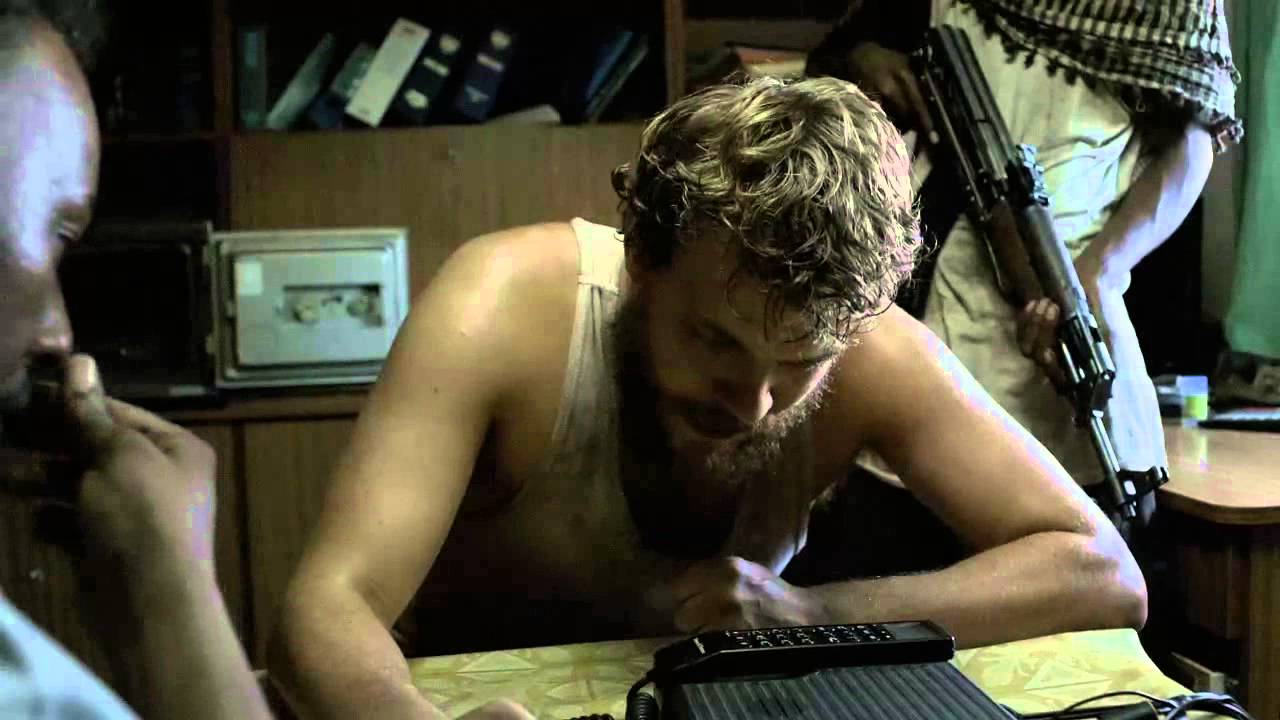
By the time proof-of-life is requested, Hartmann is barely recognizable. He is alive, but hollowed out. Psychological abuse has replaced physical violence. Humiliation, uncertainty, and dependency have eroded his sense of self. Hartmann survives by shrinking. He follows orders and avoids attention. His emotions flatten because feeling too much would destroy him.
Survival requires numbness. When Ludvigsen offers $2.8 million and pretends to add more, Omar accepts not because the number is fair, but because the process has reached exhaustion. Everyone is worn down. The pirates want closure. Omar wants the suffering to stop. The deal is not a victory. It is a surrender disguised as an agreement.
Why is the Captain’s Death So Shocking?
The exchange should be the end. The money arrives, and the pirates prepare to leave. Hartmann puts his wedding ring back on, reclaiming his identity after months of erasure. The ring’s theft is small, petty, and deeply symbolic. When the captain intervenes, he reasserts authority one final time. It costs him his life. The captain’s death exposes the fragility of order.
After months of restraint, violence erupts not during negotiations, but after resolution. Control disappears the moment everyone believes it is safe. Omar’s reaction is immediate and furious. He strikes the pirate, not out of justice, but out of despair. Even he understands that this death should never have happened.
How Does Ludvigsen Carry the Final Responsibility?
Ludvigsen’s phone call to the captain’s wife is quiet and unbearable. No justification can survive this moment. His voice carries the weight of every decision he made from a distance. This is where the film places accountability. Not on the pirates alone or on the ocean. But on systems that treat human endurance as a negotiable asset. Hartmann’s reunion with his family is not cathartic.
There are no tears, no speeches, no relief. Trauma has taught him to disconnect. He survived, but something essential was taken from him. Safety does not return just because danger is gone. Home feels unreal after living so long in fear. “A Hijacking” refuses spectacle. It offers no heroes, no villains that absorb all the blame. Instead, it exposes how suffering is distributed unevenly across global systems.
The men with guns create fear. The men with phones prolong it. Everyone claims necessity. The film’s most unsettling truth is simple. Violence does not always come from brutality. Sometimes it comes from patience, professionalism, and the decision to wait just a little longer. In the end, the ship moves on. The company survives. Lives are changed forever. And no one can honestly say they didn’t know the cost.


![Victim [2022] ‘Venice’ Review – A Mother’s Unexpected Encounter with Politics of Polarization](https://www.highonfilms.com/wp-content/uploads/2022/09/Victim-2022-768x432.jpg)

![Take the Night [2022] Review: A trite culmination of heist thrills & family dysfunctionality](https://www.highonfilms.com/wp-content/uploads/2022/08/Take-the-Night-Movie-Review-2-768x432.jpg)
