
The early 1940s saw the rise of Bebop — or bop — characterized by a frenetic, experimental tempo and complex chord progressions. 22-year-old Charlie Parker, who was a part of Jay McShann’s band at the time, played the saxophone with a never-before-seen gusto, where every melody was an improv. This is the definition of being a musical virtuoso, as Parker was consciously trying to break away from established genre conventions and construct a revolutionary sonic identity that would break free from swing music.
By 1943, Parker had found a kindred soul in Dizzy Gillespie, and together, they would sow the seeds for what we know as bebop. Over the years, this musical style evolved: Cool jazz and West Coast jazz assumed prominence in the late 1940s and early 1950s, while the period after that saw the rise of Hard Bop, a kind of heavier sound that drew from blues and gospel music.
This barebones overview of bebop’s origins, however, does not highlight the complex sociocultural factors that shaped these distinct sounds and how Detroit became the heart of all things jazz. Daniel Loewenthal’s “The Best Of The Best – Jazz From Detroit” dissects these integral aspects, utilizing a standard documentary style to spell out Detroit’s rich, robust musical heritage.
Loewenthal and co. aren’t interested in honing in on a single artist or movement, as the documentary examines Detroit as the lifeblood for Black artists through the decades. We start with the Great Migration and the subsequent automation boom in Detroit, prompting the influx of Black working-class communities to neighborhoods that would be known as Black Bottom and Paradise Valley.
Any kind of artistic movement cannot exist in a vacuum. The basic tenets of a musical sound are often shaped by sociocultural traditions that precede it, as new, experimental sounds are birthed in retaliation to something relatively mainstream. The growth of Black Bottom was directly tied to the kind of music that was played in jazz bars and nightclubs in the area, forming a symbiotic cultural tapestry that radically defined blues, Big Band, and jazz.
The demolition of the Black Bottom and Paradise Valley neighborhoods in the early 1960s was a pivotal turning point, with the documentary diving headfirst into the devastating repercussions of systemic racism that often dons the guise of urban development and renewal.
Also Check: 10 Contemporary Indian Documentaries on Real Life People
But artistic heritage cannot be erased or blotted out forever, and the only way to keep such important history alive is to reacquaint ourselves with it while remembering the roots of jazz in Detroit. The dramatic fall of Detroit as an industrial powerhouse could not dim artistic passion — contemporary musicians, music experts, and historians weigh in on the legendary figures that paved the way, including pianist Barry Harris, who mentored budding artists while preserving bebop music.
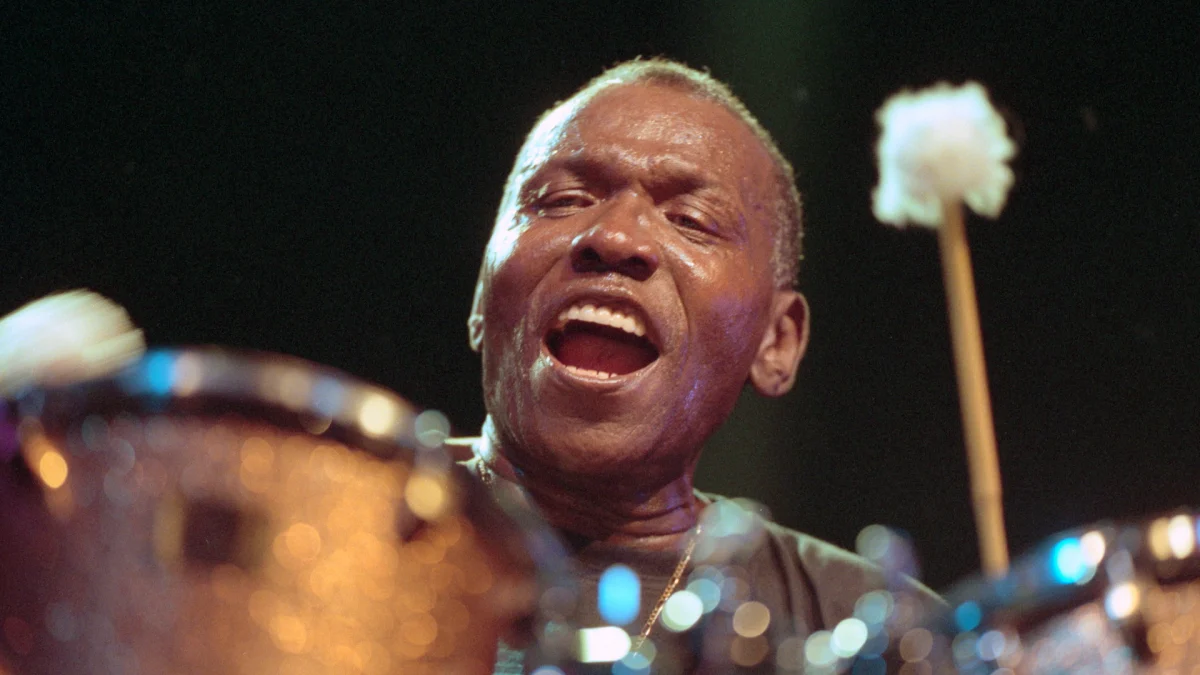
Loewenthal weaves in interviews with archival footage and live performances to create a dizzying network of historical truth and moving anecdotes, which come together to create a beautiful portrait of world-class musicians and the legacies they’ve left behind. Bebop emerges as an eventual focal point, as it runs counter to the carefree accessibility of Jazz and demands a certain level of virtuosic talent that cannot be mimicked or faked.
A successful musical performance in Detroit often is the hallmark of a genuine, promising sonic identity, as the city has a way of filtering out anyone trying to glide through without musical soul or heart. In certain ways, Detroit cannot be hookwinked.
What makes “The Best Of The Best – Jazz From Detroit” so compelling is its willingness to spell out the basics for anyone who doesn’t know a great deal about jazz or is completely unaware of its historical origins. It also doesn’t gloss over the political ugliness that Black Bottom had to bear the brunt of, as this would only be the beginning of targeted racial violence that continued well into the ‘60s (including the raid of an after-hours club in Detroit, with 33 Black people dead).
These hellish corners of history are acknowledged before we move on to the tentatively hopeful present and future, where pioneers like Marcus Belgrave have done their utmost to preserve musical tradition by training budding artists for four decades.
The history of jazz is intricately linked to the history of Black communities in Detroit, and the documentary does a wonderful job of explaining how and why. To hear from and about the likes of Barry Harris, Charles McPherson, Sheila Jordan, Regina Carter, and Christian McBride (among others) is a gift in itself, as their astounding expertise is a testament to jazz’s worldwide impact as a symbol for freedom, individuality, and radical empathy. Jazz continues to speak through the living, breathing circuitry of Detroit, and will continue to do so, as long as impassioned artists are willing to preserve it.





![Sagara Sangamam [1983] Review – Of art, life and death](https://www.highonfilms.com/wp-content/uploads/2018/05/download.png)
