While it’s certainly been prioritized in light of current events, “Palestine 36” feels like the type of old-fashioned epic that the industry frequently made during the years before New Hollywood came into fashion. It’s a rousing, sweeping story of a civilization and its occupants that paints in broad strokes, identifying key moments in history as they relate to the narrative of a collective struggle.
This classical approach was purposeful, given the reality that the people of Palestine never earned this type of all-consuming cinematic portrayal of their heritage. Although it may have come decades later, “Palestine 36” is as much an alternative to 1960’s “Exodus” as it is a work of activism meant to remind the world of the historical struggles faced by the Palestinian people.
The dominance that the Israel-Palestine conflict has had within the last several years has made discourse surrounding any films that dare tackle the material inherently controversial. This year, the up-and-coming distributor released three films that discuss the history of genocide in one way or another, including “The Voice of Hind Rajab” and “All That’s Left Of You.”
The former is a taut, yet manipulative blend of docudrama and staged recreations that sacrifices its form as a means of expressing frustration. The latter is a more subtle, methodical exploration of the lasting impacts of trauma and bigotry, which is certain to age far better (even if it feels less inflammatory). Compared to these experimental works, “Palestine 36” is the type of film that could be played in a classroom for educational purposes, but there’s nothing wrong with a history lesson when it is this well-made.
Must Check Out: Yes Repeat No (2025): A Conceptual, Meta Investigation That Frustratingly Tries to Address the Israeli-Palestinian Conflict
“Palestine 36” examines the Arab Revolt that began in 1936, in which rebel factions and volunteer citizens of Mandatory Palestine began a revolt against British Colonial Rule, which enforced Zionism through an uptick in Jewish immigration and endowments to Jewish landowners. To stage a recreation of such a landmark moment through the eyes of a single protagonist wouldn’t do the film’s subject justice, and thus writer/director Annemarie Jacir assembles a vast ensemble of characters who represent different social classes and professions.
The initial perspective character is Yousef (Karim Daoud Anaya), a young working man whose travels between his family’s farm and the city of Jerusalem, where he serves as a driver for the journalist Amir (Dhafer L’Abidine) and his wife Khuloud (Yasmine Al Massri), who use their position to print scathing critiques of Britain’s practices. This is an effective way to open the narrative, as it instills a sense in a young protagonist that he has the potential to make great change while being exposed to a larger culture.
Only history can be blamed for the narrative uneasiness that comes within the next few segments, which collects fragments of different characters’ struggles as notices are repealed and the media constructs narratives that demonize the efforts to free Palestine. The frustration is felt like a crushing blow, as Jacir does a great job at showing how a voiceless people have their culture’s value smeared by outsider journalists and political commentators who don’t have any interest in hearing their perspective.
However, the sporadic approach to characterization does leave some of the performers with little to do. Yousef’s romance with his widowed neighbor, Rabab (Yafa Bakri), may have theoretically added some hope to this burdened narrative, but there’s not enough time to take advantage of the pair’s excellent chemistry. One of the film’s standout performances is from the great Hiam Abbass as Rabab’s mother, but outside of a few inspirational moments in which the “Succession” actress speaks with clarity about the film’s intentions, her talents feel otherwise unutilized.
The scattershot approach does suggest that the material may have been better suited as a miniseries, as contemporary television productions have the same grandiosity and scale as films. While it would obviously be challenging to find funding for Palestinian artists, the achievements of outstanding limited event programs like “The Underground Railroad” or “Death by Lightning” show how complex history can be woven into a chaptered approach.
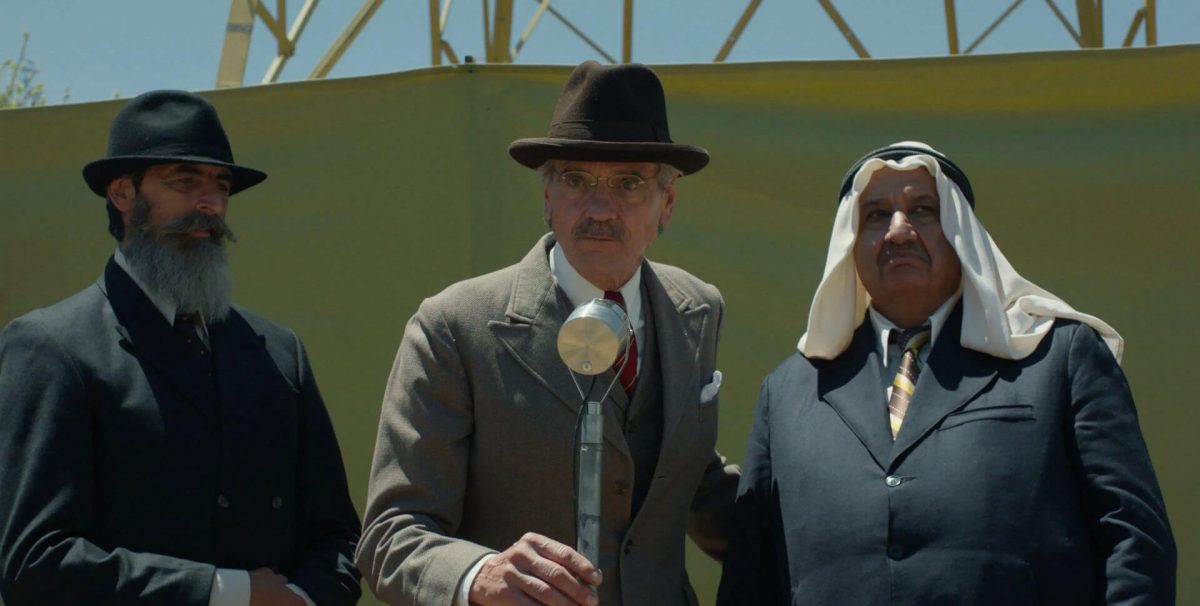
Nonetheless, the only reason that the unevenness of “Palestine 36” is frustrating is because of how compelling a tapestry Jacir has woven within her terrific cast. Jeremy Irons, one of the most recognizable faces in the ensemble, is strong as a manipulative British governor who feigns neutrality as a means of masking his cowardice.
Saleh Bakri, who was also great in “All That’s Left Of You,” gives the film’s most powerful performance as a freedom fighter who sows unity within the population. That nuance does not extend to the ruthless British officer played by Robert Aramayo, whose performance leans into a mustache-twirling sense of villainy that is incongruous with the otherwise grounded authenticity.
Also Read: All That’s Left Of You (2025) Movie Review: A Palestinian Family Epic on Loss and Resilience
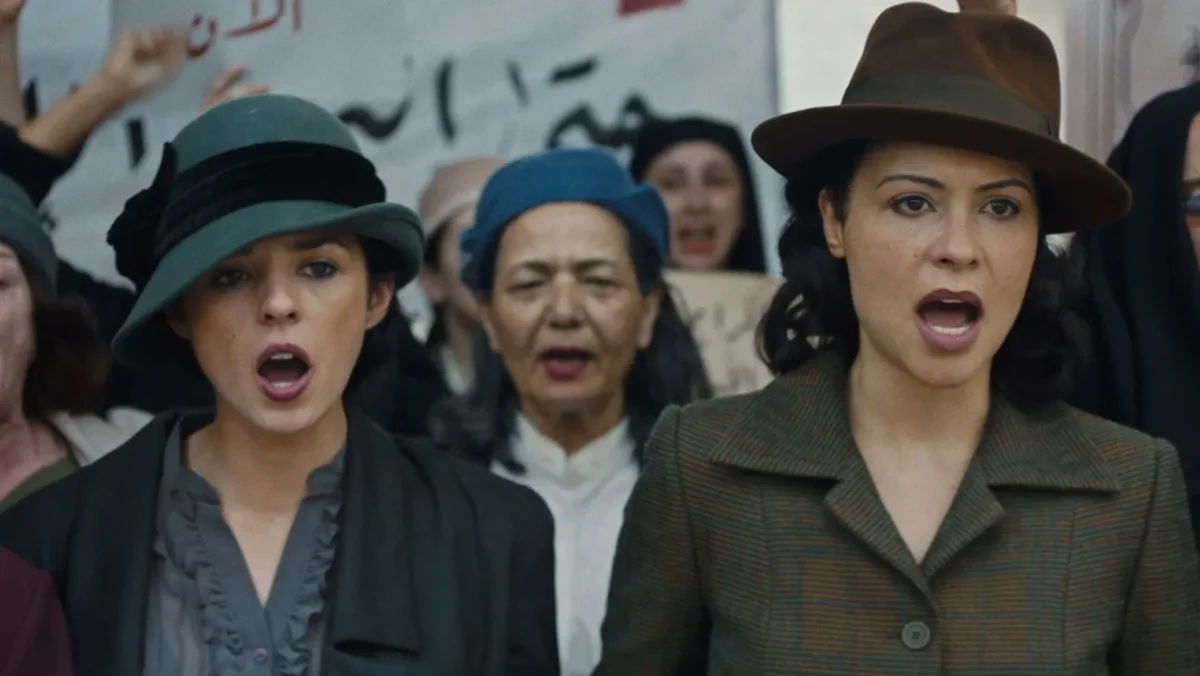
There are several instances in which “Palestine 36” offers multidimensional insights into the way that British imperialism impacted different factions. Economic stratification means that those with little to begin with faced even more harm when their jobs were stolen, even if those with more inherent privilege are still forced to endure indignities.
There’s also a hint of what lengths Khuloud needed to go to have her voice heard (as she wrote under a male pseudonym), but the deeper implications of cultural sexism aren’t further explored. It may have been a conscious choice for Jacir to avoid featuring any prominent Jewish characters, but the brief background roles are written so broadly that it comes across at best amateurish and at worst inadvertently antisemitic.
Any traditionalism within the style does not extend to the content, as “Palestine 36” is able to show the brutality of war in no uncertain terms, and isn’t afraid to note the lasting implications of the Revolt. A brief moment that explores the birth of what would later become the Gaza Strip is a haunting reminder of what happens when the history being told in “Palestine 36” is forgotten. The accessibility of “Palestine 36” will hopefully give it an opportunity to connect with a broader audience, but that doesn’t mean that it caters to those who share an ignorant “both sides” viewpoint. Rather, “Palestine 36” uncovers a piece of history that has been forgotten and buried, and gives it the engaging depiction that it deserves.





![The Age of Shadows [2016] – A Spy Thriller with Electrifying Setpieces](https://www.highonfilms.com/wp-content/uploads/2017/03/the_age_of_shadows-cover-768x433.jpg)