“Every actor is a character in search of an author, but in ‘Shakespeare in Love,’ the author is a character in search of a soul.” This observation by screenwriter Marc Norman captures the essence of John Madden’s 1998 film, a vibrant and witty exploration of the alchemy of creation.
Much like the intricate tracking shots of “Atonement” or the gilded excess of “The Great Gatsby,” the film seeks to demystify the “genius” by grounding him in the grit and grime of Elizabethan London.
It asserts that William Shakespeare’s masterpieces were not born in a vacuum of divine inspiration, but were forged in the fires of his daily struggles, financial desperation, and the rigid social hierarchies of the 1590s.
The film masterfully weaves a narrative where the mundane becomes the monumental, demonstrating how a playwright’s domestic and economic anxieties are the very ingredients required to satisfy the formidable palate of Queen Elizabeth I. By examining the intersection of debt, desire, and the shifting landscape of Renaissance drama, we see a Will Shakespeare who is less a distant literary statue and more a desperate survivor of his own circumstances.
The film’s critical brilliance begins with its visceral depiction of Shakespeare’s financial and creative paralysis. We are introduced to a Will Shakespeare who is a “money-poor” poet, hounded by Philip Henslowe, a theatre owner facing his own debt-induced execution. This financial situation is not merely a secondary plot point but the central engine for the play’s evolution. In the sixteenth century, the theatre was not an elite sanctuary of high art but a volatile, high-stakes marketplace.
When Henslowe is threatened with a hot iron to his feet by the financier Fennyman, the comedy of the scene underscores a grim reality: Elizabethan art was a business of survival, dictated by creditors as much as by muses. Shakespeare’s “writer’s block” is portrayed as a symptom of this crushing pressure, leading him to a critical encounter with a street preacher who decries the theatre as a “locust-infested pit of sin.”
In a stroke of meta-textual genius, the film shows Shakespeare absorbing this social condemnation, later transmuting the preacher’s rhythmic rhetoric and moral weight into the very dramas that the preacher sought to destroy. The film suggests that the “sin” of the theatre was actually its greatest asset. By existing on the margins of respectability, it was free to cannibalize the raw reality of the streets and turn it into dialogue.
To understand the full depth of Shakespeare’s transformation, one must look at the structural chaos of the Rose Theatre itself. The film presents the playhouse not as a temple, but as a construction site—a place of sawdust, noise, and perpetual uncertainty. This physical environment mirrors the psychological state of the playwright. The constant threat of the plague closing the theatres adds a layer of existential dread to every line of dialogue written.
In this context, the creation of “Romeo and Juliet” is an act of defiance against mortality. Shakespeare’s struggle to find a leading man, only to find Viola in disguise, highlights the “mend-and-make-do” nature of Elizabethan production. It suggests that the most profound artistic breakthroughs often arise from logistical nightmares. The film argues that the “genius” of the play was not in its perfection, but in its ability to be assembled from the broken pieces of a crumbling production schedule and a looming financial collapse.
This communal aspect of creation is a vital, often overlooked component of the film’s argument. Shakespeare is not a lone wolf; he is part of a desperate ecosystem. The transition of the character Fennyman—from a cold-hearted debt collector to a stage-struck actor—serves as a metaphor for the transformative power of the theatre.
As the financier becomes invested in the “poetry,” the film suggests that the economy of the spirit eventually outweighs the economy of the purse. The ensemble of actors, from the stuttering tailor to the vain lead, represents the “body” of the play, while Will provides the “soul.” This collaborative friction proves that a masterpiece is a social byproduct, a collective hallucination sustained by the shared need to keep the bailiffs at bay.
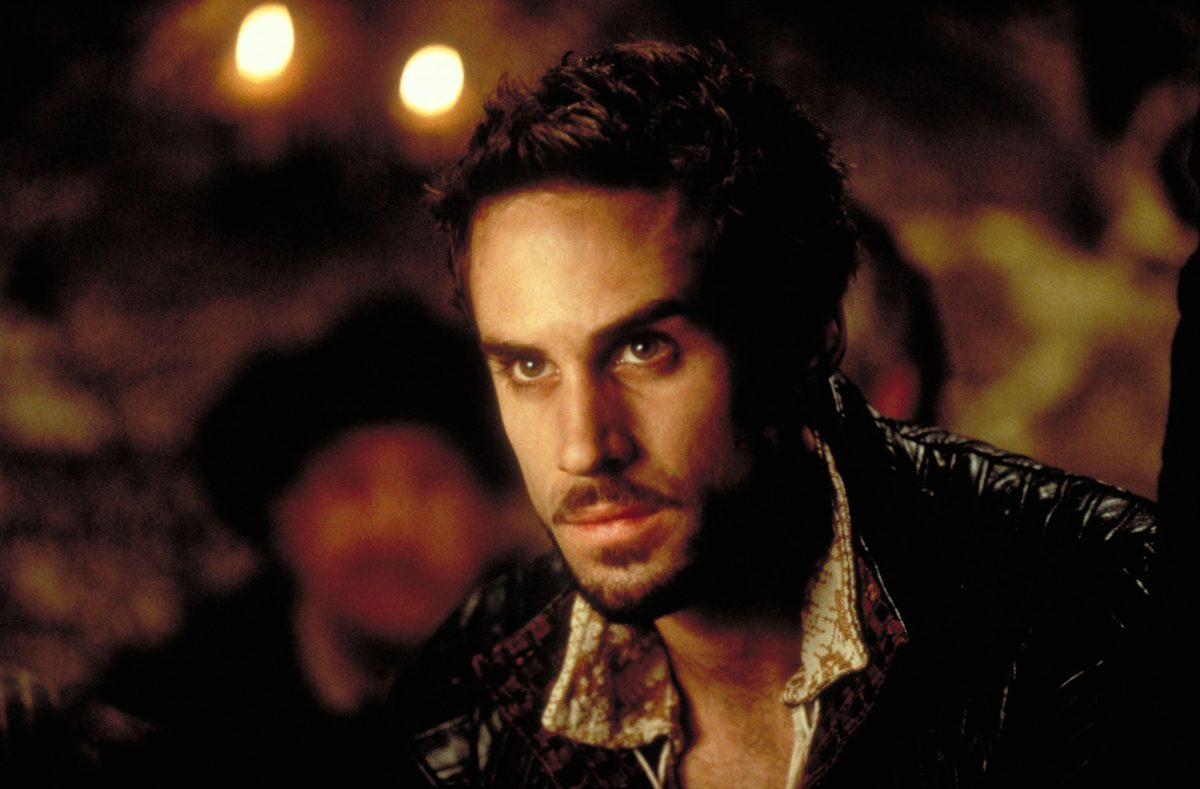
As the narrative unfolds, Shakespeare’s daily encounters act as a rough draft for his greatest work, proving that art is an iterative process of observation. A pivotal moment occurs in a crowded tavern where Will observes the boastful, charismatic Christopher Marlowe.
This encounter reveals Shakespeare’s deep-seated professional jealousy and his need for a “muse” to elevate his work from the vulgar to the sublime. While Marlowe represents the “mighty line”—the established standard of poetic excellence—Will is still fumbling with the lackluster Romeo and Ethel, the Pirate’s Daughter.
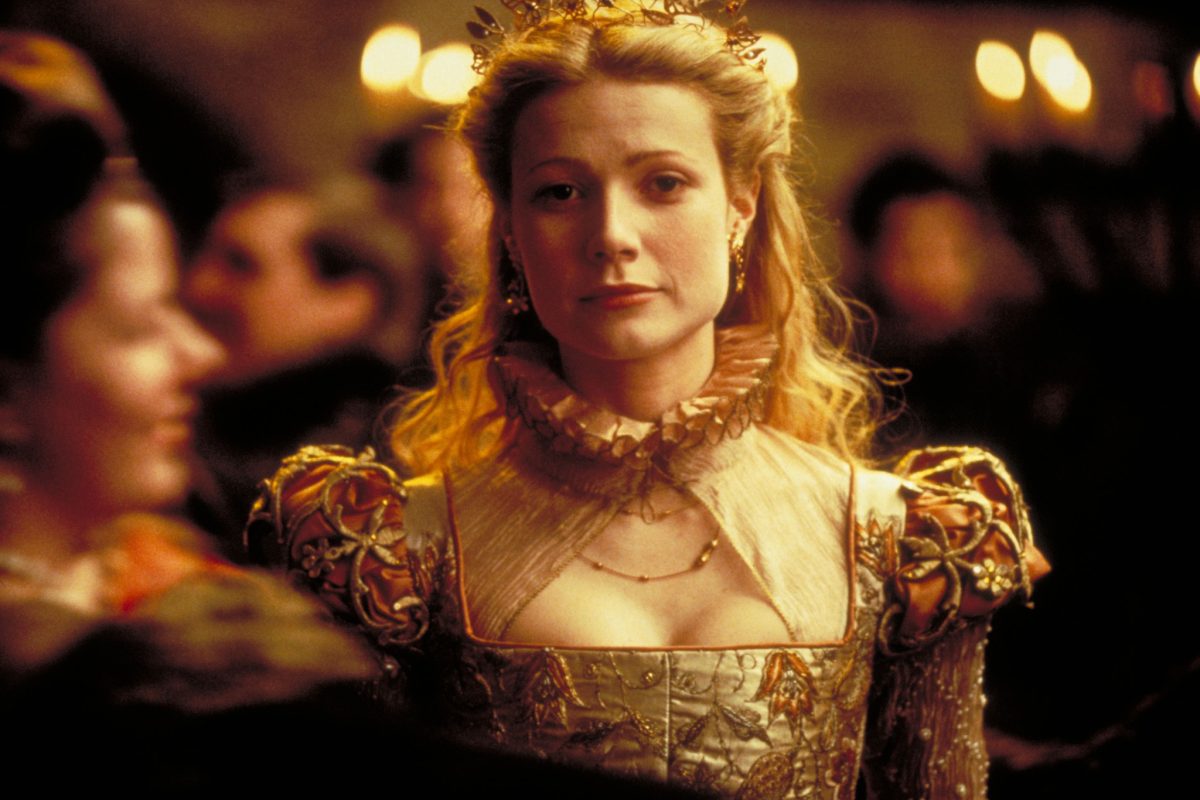
His subsequent meeting with Viola de Lesseps provides the romantic spark, but it is the social situation—the impossibility of their union—that provides the necessary tragedy. Viola is a woman of the merchant class, trapped by the expectations of her station and her betrothal to the cold, landed Lord Wessex.
This provides a crucial insight into the film’s thesis: the “star-crossed” nature of “Romeo and Juliet” was not a poetic invention, but a direct reflection of the rigid class barriers that dictated Elizabethan marriage. In this world, love is a commodity, and marriage is a contract of property.
Furthermore, the film delves into the psychological toll of the “hidden identity” which permeates both the plot of the film and the plays within it. When Will discovers Viola is a woman playing a man playing a woman (Thomas Kent), the script mirrors the “play within a play” complexity that would become his hallmark. This layer of deception is not merely for comedic effect. It serves as a profound commentary on the performative nature of Elizabethan life.
Everyone in the film is wearing a mask: Viola masks her gender to pursue her passion, Wessex masks his bankruptcy with a title, and Will masks his lack of inspiration with borrowed lines from Marlowe. The film suggests that Shakespeare’s understanding of gender and identity was born from this lived experience of social theater. The fluidity of his characters was a direct response to the rigid constraints of his reality, allowing him to create a space on stage where the “truth” could finally be spoken under the safety of a disguise.
This environmental pressure is further illustrated through the domestic and social sphere, most poignantly depicted through the character of the young John Webster. This macabre child, who enjoys “the bit where the heads come off,” serves as more than just a historical Easter egg. He is a chilling foreshadowing of the Jacobean era of drama, which would eventually move away from Elizabethan lyricism toward bloody revenge tragedies. Webster’s presence reminds both the audience and Will that the theatre must satisfy a bloodthirsty public to remain solvent.
This encounter shows how Shakespeare’s environment forced him to perform a delicate balancing act, weighing the “low-brow” gore demanded by the masses against the sophisticated wit required by the Court. His financial desperation leads him to write for the “groundlings,” yet his aspiration for social mobility compels him to aim for the Queen’s approval. The genius of the resulting play lies in this hybridization. It is a work that offers a sword fight for the boy with the rats and a sublime sonnet for the lady in the balcony.
The film also explores the concept of the “authorial ghost,” particularly through the tragic death of Christopher Marlowe. When Will believes he is responsible for Marlowe’s murder, his grief and guilt are instantly channeled into the balcony scene. This moment serves as a critical turning point where the film argues that great art requires the sacrifice of the ego. Shakespeare’s “Atonement” begins here, as he realizes that his rivalry and petty jealousies are insignificant compared to the weight of the stories that must be told.
The transition from the lighthearted “Pirate’s Daughter” to the soul-crushing tragedy of “Romeo and Juliet” is fueled by this brush with real death and real loss. It proves that the play was not written with ink, but with the shadows of those Shakespeare lost along the way, turning a personal haunting into a universal haunting that still resonates in modern theatre.
The culmination of this synthesis is found in the performance of “Romeo and Juliet” before Queen Elizabeth herself. The Queen, portrayed with formidable gravity by Judi Dench, represents the ultimate social and political judge.
She is the “Arbiter of Taste” in a society where a monarch’s whim could shutter a theatre or elevate a poet to immortality. When she enters the playhouse, the atmosphere shifts from raucous entertainment to a high-stakes trial of the soul. She demands to know if a play can truly capture the “very truth and nature of love,” a question that challenges the very validity of the theatrical medium.
Shakespeare’s triumph in this moment is not just in the beauty of his poetry, but in how he has synthesized his entire existence—his heartbreak over Viola, his rivalry with Marlowe, and his fear of Henslowe’s creditors—into a narrative that transcends the stage.
When the Queen recognizes Viola behind the mask of Juliet, she acknowledges that the “truth” of art often requires a transgression of social law. Her silent approval of the play, despite its breaking of the law by allowing a woman to perform, signifies the moment where art finally subverts the crown and the social order that governs it.
In its final movement, the film shows that the “Atonement” of the artist is the work itself. Shakespeare is left alone, his lover exiled to the New World, and his pockets likely to be empty again soon. Yet, he is fundamentally transformed. The ending does not offer a traditional “happily ever after,” but rather a creative resurrection. As Will sits down to write “Twelfth Night,” he is taking the literal shipwreck of his romance and casting it onto the fictional shores of Illyria.
This is the ultimate proof of the film’s argument: that for the artist, no experience is wasted. Pain is merely a draft; loss is merely a premise. “Shakespeare in Love” remains an indispensable cinematic exploration of the creative process because it refuses to romanticize the “lonely writer” as a figure of divine isolation.
Instead, it celebrates the writer as a scavenger—a man who takes the dross of financial ruin, the pain of forbidden love, and the threats of a violent society and transmutes them into something enduring. Through the struggle of the daily, the eternal is born. The film proves that the world’s greatest playwright didn’t just write about life. He survived it, and in doing so, he curated a reality that was finally, and truly, fit for a Queen.