
At first glance, “Melancholia” (2011) appears to be a science-fiction drama about a rogue planet on a collision course with Earth. But the film is not really about astronomy, extinction, or catastrophe. It is about depression, emotional honesty, and the quiet cruelty of pretending everything will be fine. Lars von Trier uses the apocalypse not as spectacle, but as a mirror. The closer the planet comes, the more exposed the characters become. This is a film where the world does not end suddenly. It ends slowly, emotionally, long before impact.
Spoilers Ahead
Melancholia (2011) Plot Summary & Movie Synopsis:
Why Does the Film Open With the World Ending Before the Story Begins?
The opening montage shows Earth’s destruction in slow motion. Horses collapse. Electricity crackles in the sky. The planet Melancholia drifts toward collision. Justine moves calmly through these images, already resigned. This is not foreshadowing meant to create suspense. It removes suspense entirely. The film tells us immediately that the world will end. What matters is not what happens, but how people respond once the outcome is inevitable. The ending is not a twist. It is a destination.
Why Does Justine’s Wedding Fall Apart So Completely?
Justine’s wedding should be joyful. It is lavish, expensive, and carefully planned by her sister Claire. Yet from the moment Justine arrives late, something feels wrong. She cannot perform happiness. Justine drifts away from the celebration, avoids rituals, and struggles to maintain conversation. This is not rebellion. It is emotional paralysis. Justine is clinically depressed. The expectations placed on her, to smile, to feel grateful, to behave normally, only deepen her alienation. Her boss coerces her into working during her wedding.
Her parents openly sabotage the event with bitterness and cruelty. The groom waits patiently, but cannot reach her. Justine’s actions grow increasingly self-destructive. She abandons the reception and has sex with a stranger. She emotionally disappears from her own marriage. When the night ends, the wedding is over, and so is her relationship. The collapse is not caused by one mistake. It is the result of a world that demands joy from someone incapable of feeling it.
Why Does Claire Appear Stable While Justine Falls Apart?
Claire is Justine’s opposite. She is practical, composed, and deeply invested in order. She believes that structure, marriage, wealth, and routine can protect people from chaos. Throughout the wedding, Claire tries to manage Justine, fix situations, and maintain appearances. But Claire’s stability depends on predictability. Justine’s depression terrifies her because it cannot be solved. Claire wants emotional problems to have solutions. Justine offers none. This contrast establishes the film’s emotional axis. One sister is already broken. The other is still pretending the world makes sense.
In the second half, the focus shifts. The wedding is over. Justine is now living with Claire and her husband John, recovering from her emotional collapse. This is when the planet Melancholia enters Earth’s orbit. Ironically, as the cosmic threat grows, Justine improves. She can eat again. She can bathe. Most importantly, she moves with clarity.
Meanwhile, Claire begins to unravel. Science initially promises safety. John confidently explains planetary trajectories and that Melancholia will pass by harmlessly. Claire clings to this reassurance because it supports her belief in logic and control. Justine does not believe him. She is certain the world will end. And she is right.
Why Is Justine So Certain That Earth Will Be Destroyed?
Justine’s certainty does not come from data. It comes from emotional truth. Depression, in the film’s logic, strips away comforting illusions. Justine does not believe in happy endings, cosmic fairness, or human importance. She calmly states that Earth is evil and that no one will miss it. This is not cruelty. It is emotional realism pushed to an extreme. As Melancholia draws closer, the scientists are proven wrong. John, unable to face the collapse of logic, takes his own life. Claire is left alone with terror and responsibility.
Justine, already familiar with despair, becomes the strongest person in the room. Claire’s panic is not just fear of death. It is the fear of meaninglessness. Her life is built on the assumption that tomorrow exists. When that assumption collapses, she loses herself. She searches for escape and wants reassurance. She wants someone to promise survival. Justine offers none of that. Instead, she offers presence.
Melancholia (2011) Movie Ending Explained:
What is the Purpose of the ‘Magic Cave’?
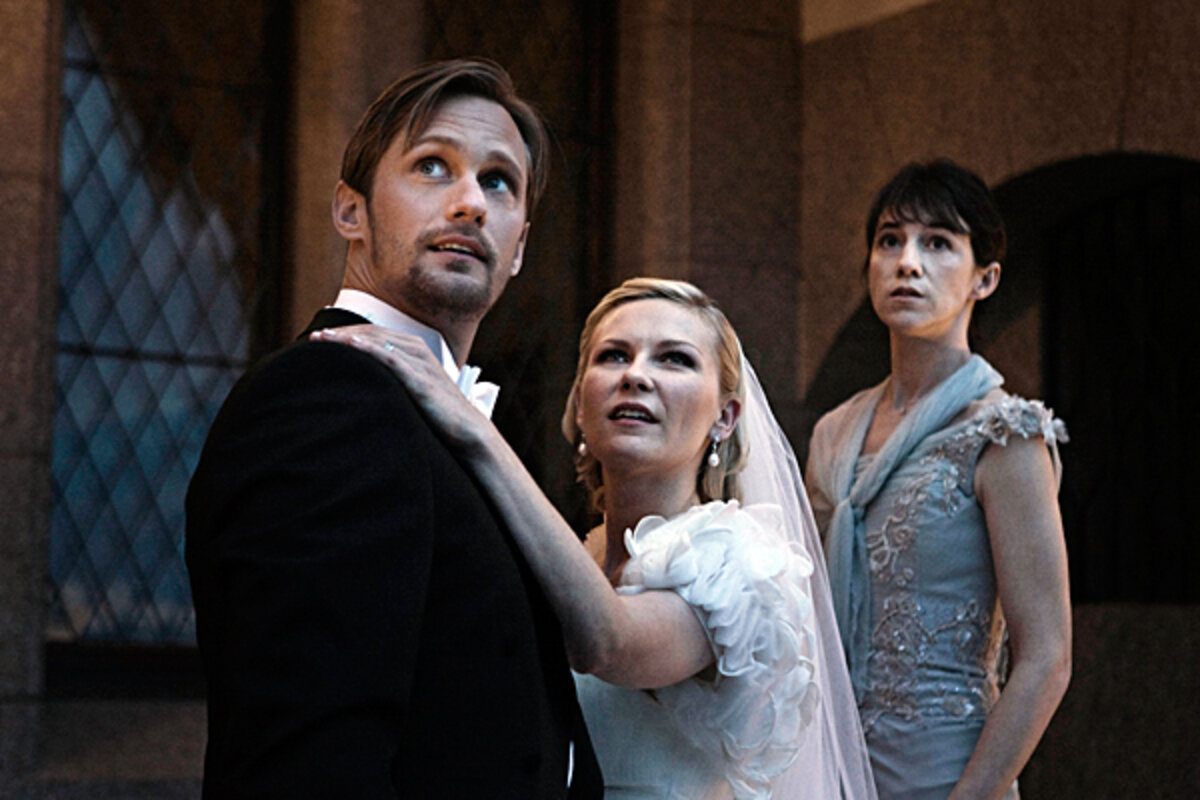
Also Check: ‘Melancholia’ (2011) and the End of Everything: Exploring Depression, Despair, and the Human Condition
As the planet approaches, Justine suggests building a “magic cave” for Leo, Claire’s son. It is made of sticks and will not protect them. Justine knows this. But the act matters. She does not lie to the child and promises safety. She creates a moment of comfort without illusion. The cave is not a hope. It is an emotional shelter.
For the first time, Justine is not failing at life’s expectations. She is meeting reality honestly. The final moments show the three of them holding hands inside the cave as Melancholia fills the sky. There is no escape. No miracle. No music to soften the impact. The collision happens instantly. The silence is deliberate. It denies emotional manipulation. There is no lesson delivered by survival. Only stillness.
The world ends not with chaos, but with acceptance. Melancholia is not about the beauty of destruction. It is about the cruelty of denial. Justine does not overcome depression. The world does not validate her suffering. But when the truth arrives, she is the only one prepared to face it without illusion. Claire’s terror reveals how fragile normalcy is. John’s suicide shows the danger of trusting logic without emotional resilience.
The child’s calm shows how fear is learned, not innate. The film suggests that depression, while devastating, can sometimes align more closely with reality than optimism. Not because despair is right, but because false hope is fragile. The world ends exactly as promised. And in that honesty, Melancholia finds its unsettling peace.
Melancholia (2011) Movie Themes Analysed:
Depression, Nihilism, Control, and Fate
“Melancholia” uses the apocalypse not as spectacle, but as a psychological and philosophical framework. The approaching planet is less a celestial body and more a slow-moving truth, exposing how humans respond when meaning, control, and hope begin to erode. Through Justine and Claire, the film examines four deeply intertwined themes: depression, nihilism, control, and fate, each unfolding with unsettling honesty.
Depression in “Melancholia” is not portrayed as sadness, but as emotional detachment from the future. Justine does not break down because her wedding fails. The wedding fails because she is already broken. Her inability to express happiness, ambition, or gratitude is treated not as a flaw to be fixed, but as a condition that places her out of sync with social expectations.
What makes Justine’s depression central to the film is how it evolves. As “Melancholia” approaches Earth, she becomes calmer, clearer, and more functional. This reversal is crucial. The end of the world does not trigger her despair; it validates it. Depression, here, is framed as a state of brutal awareness. Justine has already accepted the fragility and meaninglessness that others are only beginning to confront.
The film does not romanticize depression, but it does argue that those who live with it may be less shocked when illusions collapse. Justine’s assertion that “the Earth is evil” and that no one will miss it is often misunderstood as cruelty. In reality, it reflects the film’s nihilistic core. “Melancholia” rejects the idea that humanity holds cosmic significance. The planet does not collide with Earth because of moral failure or destiny. It simply happens.
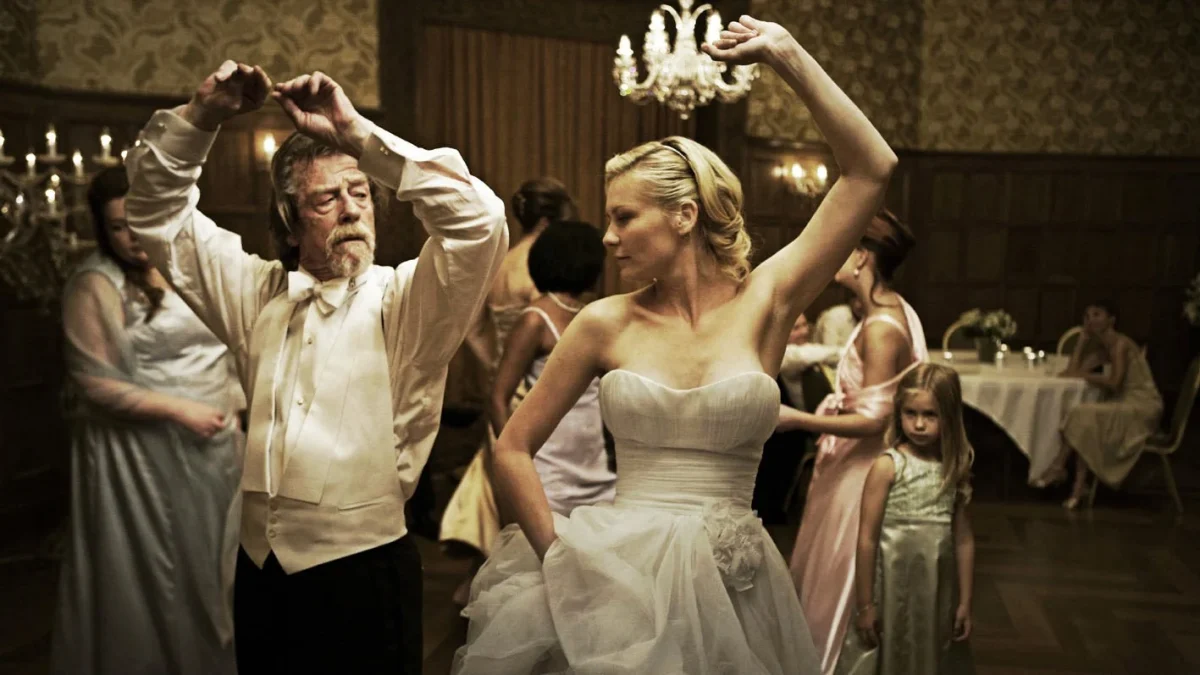
Also Related to Melancholia (2011): All Lars von Trier Films, Ranked
This lack of meaning is terrifying for Claire, but oddly grounding for Justine. Nihilism strips away the false comfort of purpose. There is no lesson promised. No reward for suffering. No grand design. The universe does not care. Yet, the film suggests that acknowledging this indifference may be more honest than inventing meaning where none exists. Claire embodies the human desire for control. She believes in planning, science, routine, and emotional regulation. Her sense of safety depends on predictability. When scientists claim Melancholia will pass by Earth without causing any damage, Claire clings to that explanation because it preserves order.
John, her husband, represents rational control taken to its extreme. When scientific certainty fails, he cannot adapt. His suicide is not just despair; it is the collapse of an identity built entirely on logic. Justine, by contrast, does not seek control. She accepts uncertainty. This is why she grows stronger as others fall apart. The film suggests that control is comforting only as long as it works. When it fails, it leaves nothing behind.
Fate in “Melancholia” is not portrayed as destiny or divine will. It is inevitable without justification. The planet will hit Earth. Nothing can change that. The final act, building the “magic cave,” captures the film’s philosophy of fate. The cave does not deny reality. It does not promise survival. It creates a moment of shared presence in the face of unavoidable destruction. This is fate met without illusion.
The film’s quiet ending reinforces this acceptance. No resistance or redemption. Only stillness. “Melancholia” ultimately argues that hope can be fragile when built on denial. Depression and nihilism, while painful, strip away comforting lies. Control offers safety until it doesn’t. Fate arrives without meaning. The film does not suggest that despair is the answer. It suggests that honesty is. In a universe that offers no guarantees, “Melancholia” finds its truth not in survival, but in clarity, and that clarity is both devastating and strangely peaceful.



![The Woman Who Ran [2020] Review – Hong Sang-soo’s Typically Subtle and Playfully Knotty Drama](https://www.highonfilms.com/wp-content/uploads/2021/01/The-Woman-Who-Ran-2020-768x397.jpg)
![Black Easter [2021] Review – Christploitation time travel film is an absolute cringe-fest](https://www.highonfilms.com/wp-content/uploads/2021/06/Black-Easter-1-highonfilms-768x321.jpg)