The thing about “No Country for Old Men” by the Coen Brothers is that it’s a movie that serves you fate the way a good dive bar will serve you whiskey; uncompromising, neat, and with no ice to take the edge off. And like the best trips we take to those places where the veneer of civilisation wears a little thin, this movie pulls away all our comfortable illusions regarding consequence, control, and the happy little notion that good people get good endings.
The landscape of West Texas in this movie is not just scenery. It’s a character, and maybe the most honest one. Indifferent and vast, beautiful in that particular way that makes you understand why people used to believe in vengeful gods. There is something fundamental here that the Coens understood: the desert does not care about your story. It was here long before, it will be here long after you, and your blood will dry on its stones without comment. That isn’t cynicism, it’s just your average Tuesday in the Borderlands.
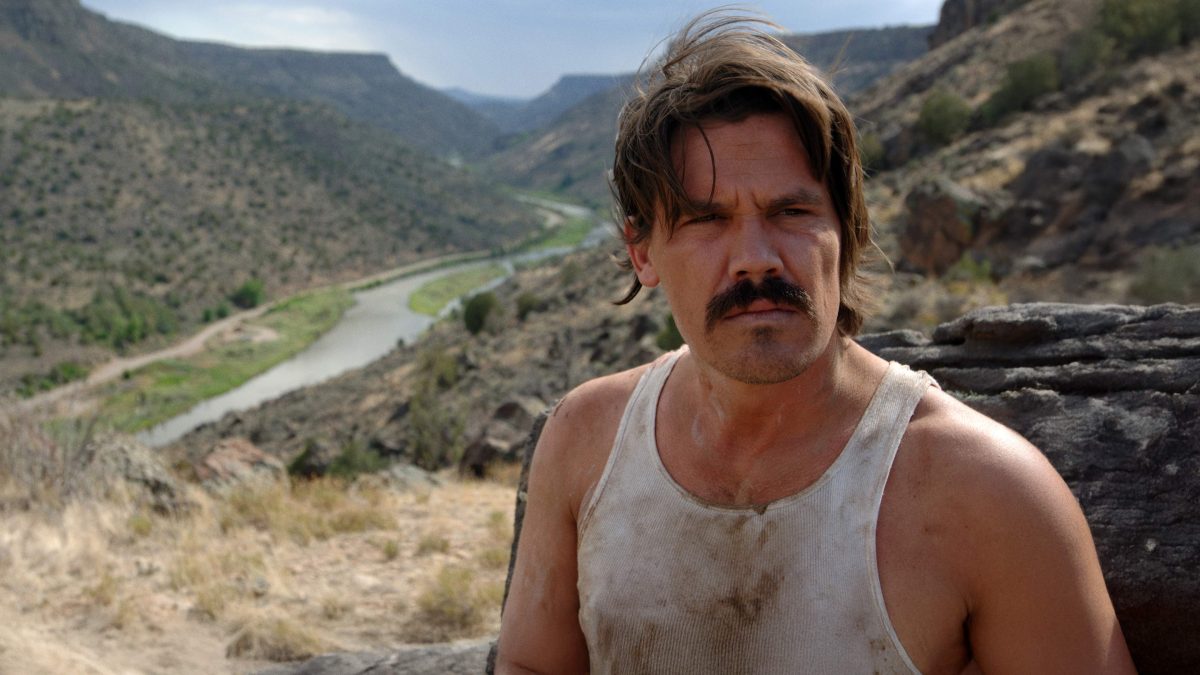
Here enters Llewelyn Moss, our everyman hero with a hunting rifle and what he thinks is good luck. He is played by Josh Brolin with just the right amount of limitation and capability. Sure, he’s competent, but in the same way a good mechanic is competent. He can track deer, fix a truck, and make a sling for a broken arm. What he can’t do, and what none of us can do, is see around the corner fate has already turned.
The money he finds isn’t money, really. It’s a test. The sort the universe administers with no warning, no pencil, and nobody telling you to begin. He finds two million dollars next to a lot of dead bodies and a truck loaded with heroin. In that moment, his fate isn’t decided by what he does; it was decided long before, by forces that really don’t care about our preferences. He takes the money, because of course he does. You and I would, too. Maybe afterwards we would dress it up in moralising, but in that moment, that amount of cold cash and a life of trailer parks and welding jobs behind him, he was always going to take it.
Where it gets interesting, though, is that Moss is not a foolish man. He knows on some level he is stepping into something bigger. Moss is resourceful and careful. He does everything a smart man in that position should do. And it doesn’t matter. Not the slightest bit. Because in this movie, fate doesn’t wear the face of karmic balance or divine justice. No, it wears the face of Anton Chigurh, and it’s marching towards you with all the inevitability of a stopped clock that’s still right twice a day.
Ah, Chigurh. Let’s focus on him a moment. Javier Bardem’s performance is the sort of thing that makes you reconsider your career choices. Not because you want to be that good, but rather you realise how much truth can be contained in utter stillness. That damn haircut itself is an act of violence. It’s a statement that says: I am not interested in your aesthetic opinions. The captive bolt pistol he uses, a tool for cattle killing, is a symbol of just what he represents. Which is efficient and industrial death. Not personal. Hell, not even particularly interested.
But the trick the Coen Brothers pull, the one to keep you up at night, is that Chigurh believes he’s an agent of fate. He offers the coin toss to the owner of the gas station, and in that scene, one of the most frightening in movie history, we see laid bare what his philosophy is. It’s not that he’s making any choices; he is following a principle. One that precedes choice. The coin he offers has travelled twenty-two years to get to that moment. It’s not about the decisions of the station owner, his unkind or kind words, whether he deserves it or not. The coin was always going to end up there, on that counter. Whether he lives or dies was determined long ago by forces neither of them controls.
Also Read: The 15 Best Westerns of the 21st Century
Most movies would give us an out, here. They would suggest that Chigurh is wrong, and his philosophy is just that of a sociopath. Not the Coens. They are too honest, or too cruel for that. Because just look at what happens. Moss does everything right and is smarter than he should be. He evades, plans, and fights. And ends up dead in some fleabag motel while the camera is focused on something else, killed by people who aren’t the main threat over money that was really beside the point. His death is awarded no screen time. If that isn’t the universe commenting on human agency, I don’t know what is.
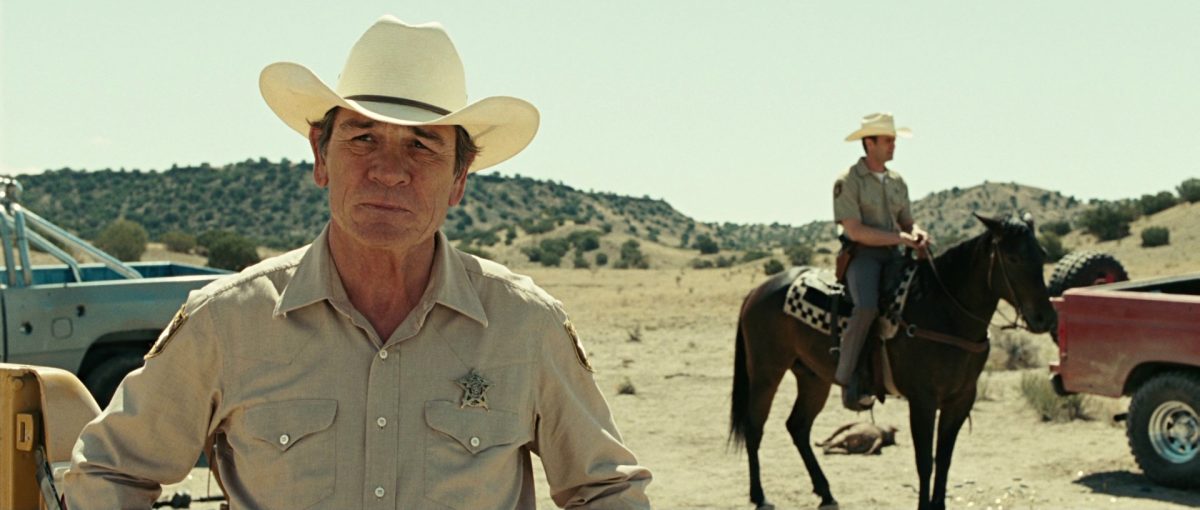
Meanwhile, Sheriff Ed Tom Bell, Tommy Lee Jones as the embodiment of every tired and decent lawman who realizes the world has moved past him, narrates us through the movie with the slow horror of a man seeing all his principles become quaint. Bell represents the old way, order, and that belief which says if you are careful and good and true, things will work out all right, more or less. He’s the best hope Moss has, and yet he’s always exactly one step behind. He arrives at the crime scenes after the bodies have cooled, and he finds Moss when there’s nothing left to find but a young woman’s grief.
Jones plays Bell with a beautiful exhaustion, a weight on him of seeing too much and finally realising that seeing is not affecting. The tone is set in his opening monologue, a story of a teenage killer on death row who said he would kill again quickly if they let him out. It’s said with no passion, as though he were commenting on the weather. Bell can’t reconcile this with what he thinks evil is: something that has rage and intention. Something human. Chigurh isn’t rage. He is a principal with a pulse. Fate made literal. And you can’t arrest fate, or even meaningfully oppose it.
The Coens adapted the novel by Cormac McCarthy with clear reverence for his vision of an indifferent universe. McCarthy writes about the Southwest as a man who’s stared at it long enough to look past the cowboy mythology and see something older, something that was doing just fine before we arrived with our quaint concepts of meaning and justice. It is captured perfectly in the movie. The cinematography from Roger Deakins gives us beauty, yeah, but it’s more like the beauty of a rattlesnake coiled in the sun. Something natural, gorgeous, and totally unconcerned with our survival.
What makes the movie’s treatment of fate so devastating is that it doesn’t show us an actively hostile universe. There would be a small comfort in that; hostility can be fought, you can rage, rage against the dying of the light. But instead, we have a universe that’s neutral. Events happen, and consequences follow. However, not always the ones we expect, and to the people we think deserve them. Chigurh offers a choice to call a coin toss or stay inside your house, but these choices are revealed to be merely cosmetic, just a courtesy extended by fate to keep the illusion of free will.
Think of the car accident at the end. Chigurh, after murdering Carla Jean, Moss’s widow, who refused the coin toss and insisted on agency even in her final moments, gets T-boned by a car that ran a red light. You might consider this justice, or karma finally catching up. But look a little closer. He walks away. Yeah, he’s injured, but he’s walking away while the bystanders look on. If this really is justice, it’s the most half-hearted type possible. What’s most likely is that it’s the movie’s final statement that even fate’s agent is subject to the laws of chance. Even that coin, which is supposed to represent pre-determinism, can be flipped by a random circumstance. The car accident isn’t a punishment; it’s a Tuesday afternoon, desert-style.
The most controversial element of “No Country for Old Men” is probably Carla Jean’s death. It’s not on screen, but we know it happens. She’s an innocent, a person who did absolutely nothing wrong apart from marrying a man who made one bad choice. Her murder feels unjust, as it should. But that’s exactly the point. The universe the Coens and McCarthy give us doesn’t deal in “should”. It just is. Carla Jeans’ death isn’t a tragedy in the classical literature style. It’s not a consequence of hubris or a fall from grace, but a pure and simple elimination. The universe is tidying up any loose ends.
Bell’s dream at the end, where he tells his wife about his father carrying fire in a horn, riding ahead through the dark and cold, is the movie’s only gesture towards hope. And even then, it’s ambiguous. It could be that Bell’s father is waiting for him, keeping warmth in the darkness. Perhaps there’s meaning and order in some world beyond this one. Or? Maybe it’s just a dream, his mind’s way of coping with a reality that’s too harsh to face head-on. The Coens don’t tell us which of these interpretations to choose. They aren’t those kinds of moviemakers.
Must Check Out: 10 Films the HOF-Men Recommend: 5th Edition
What makes “No Country for Old Men” so powerful is that its nihilism is earned. This isn’t a movie that is acting bleak to be profound or for shock value. It’s bleak as it’s honest about particular truths we try to spend our lives avoiding. Bad things will happen to good people, not because of some imbalance in the cosmos that needs correcting, but because good and evil are human constructs, and the cosmos doesn’t speak human. Moss isn’t killed because he did or didn’t deserve it. He was killed because he was in the wrong place and made a choice that set forces in motion that couldn’t be stopped.
The movie asks us what we do with that information. How are you supposed to live in a world where Chigurh exists? Where the coin toss is real, and all your best efforts may amount to nothing? With Bell, his choice is to retire, to take himself out of a game he no longer understands or can affect. This isn’t cowardice, but recognition. It’s not that he’s giving up on the idea that good should triumph. He’s just acknowledging that “should” and “will” are very different, and that the latter really doesn’t care about the former.
Some critics have called the movie nihilistic or pessimistic as though these were insults. But there is something refreshing in the Coens’ refusal to comfort us with any false patterns. Life doesn’t follow the structure of a screenplay, with action and confrontations at the climax and the denouement that ties everything together. Sometimes the hero is killed off-screen. Sometimes the killer survives and limps off to kill another day again, and sometimes, the good man retires to his porch, with his regrets and his wife, and the world keeps spinning. Indifferent to his personal crisis.
The movie’s genius is that it presents this to us without cynicism. The Coens aren’t sneering at us, or the characters. They aren’t saying virtue is meaningless or that effort is pointless. Instead, they’re saying something more subtle and true: that the outcomes we get are not always proportional to the input we provide. Moss tried to survive, and Bell tried to help. Both those efforts were real and worthy. And both failed to achieve their goals. The effort was real. So was the failure. Both these things can be true at once.
In the end, “No Country for Old Men” is about the death of narrative itself. The death of the story we tell ourselves about how the world works, about good vanquishing evil. It’s a movie about that moment when you realise the universe doesn’t follow the logic of a screenplay, and fate isn’t a storyteller with an arc in mind. But rather it’s a blind mechanism, cranking out results with no regard for sense or satisfaction.
Maybe that’s the most hopeful observation we can make. That the best trips, best meals, or best stories are usually the ones that don’t give you what you expect, that make you sit with uncertainty and discomfort. That respect you enough to tell the truth even when the truth isn’t nourishing. The Coen brothers serve up fate like a street vendor in Hanoi serves pho; uncompromising, authentic, and utterly indifferent to your preference for something sweeter.
Take it or leave it. The coin doesn’t care which you choose.