Kevin and Matthew McManus’ “Redux Redux” (2025) has fury and ache at its centre. Designed as a hall of mirrors, repetitions that are both vicious and mournful, a mother’s search for her daughter assumes universe-trotting proportions. The multiverse itself is evoked. The idea of it is arresting, and it needs smarts to cruise through. Thankfully, the film does have some of it, with the filmmakers and the lead actress being in thrilling tandem to create a tale that takes you on a moving, disorienting ride.
Powered by Michaela McManus, the film circles a destination in a tragic, twisted way. Hope for clarity is dangled, yet it seems mostly forsaken. Irene is on the hunt for a universe where her daughter is still alive. From this single idea spurts a rollicking saga that dashes in frantic speed, steamrolling through several realms, all in the faith of finding one where the joy of a mother-daughter reunion is viable.
Redux Redux (2025) Plot Summary & Movie Synopsis:
When the film opens, we see Irene with something on fire. It’s a vivid, dramatic start that immediately stokes interest. It’s a task, though, to sustain intrigue and energy over an entire film. For much of the ride, we stay invested because the performances are so committed. Irene is desperate and determined to go to hell and back if it will bring her daughter Anna back. She also knows the killer, Nelson. In every universe she straddles, she ensures he’s killed, but she also naively looks for her daughter to be somehow alive.
She is hounded by failure, the fate of seeing her daughter dead in every universe she hops across. Can there be redemption for her at all? The film devolves into a stalemate where she keeps getting stuck. It’s a pitiless trench she struggles to extricate herself from. She keeps running up against the fact that her life is falling apart. Can she even pick the shreds and reassemble them into a semblance of dignity?
Grief hollows her out. Irene can no longer function within sane frameworks. At one point, she describes having mad spirals. That’s what consigns her days to the same unending loop. Irene keeps baying for revenge. She wants answers, clarity on how the kidnapping happened. Justice is an illusion, so is the pursuit of getting what she seeks. Can it ever bounce back without a sharp agenda of its own? Can she find the truth without being wholly demolished herself? It is a difficult, damning trial that never stops repeating, no matter how persevering she is in putting an end to the running.
The weight of constant running will inevitably bear a heavy weight. Pulling herself free comes at an inexorable price, one she confronts again and again. What endures is the question if she’s at all willing to face what the bitter, chafing reality is. Her being prepared for the situation is what gives the film its throbbing tension. She has the certitude of doing whatever it takes. But does she know how much it would extract? The toll it exacts?
Why does Irene chase Mia?
You wonder how far Irene can push through. Her soul itself will be exhausted and dry. Even if she does get her daughter back, would she then be left with any vestige of life and love to share? Increasingly, it appears more likely that all that would remain of her is a shell, with nothing holding it up. The film centres this looming eventuality at the back of your mind, pressing itself further and more deeply as it progresses.
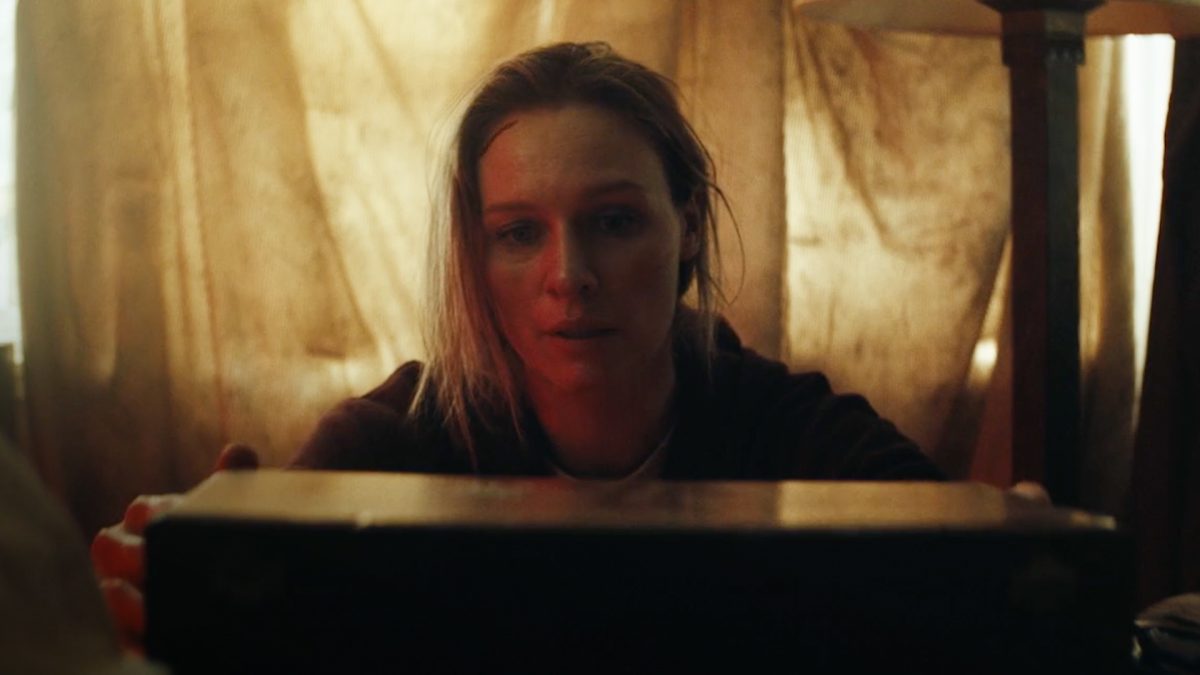
“Redux Redux” traverses a mother’s quest for justice for her daughter. It seems elusive, thwarting her best efforts. The tragedy also circles if the dead will also wake up to the horror of reality. Breaching the gap throws up a discomfiting slew of realisations, each gradation further twisting a morass of unspeakable dimensions. Further complicating matters is the runaway’s gradual discovery of her own reality, as well as Irene’s. They form a bond built on trauma and confused grief. Can they nab the killer?
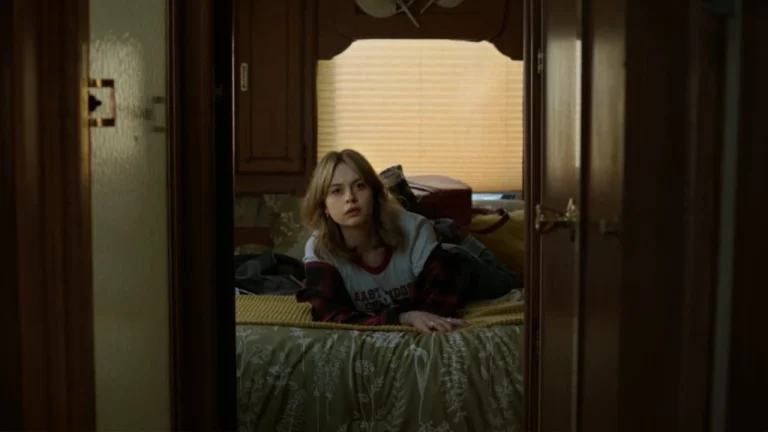
The question haunts the film as it rapidly lurches and hurtles towards the climax. The dispensation of knowledge about Nelson unfurls in gradual succession. Suddenly, the film pivots to add a runaway orphan who’s around the same age as Anna, Mia (Stella Marcus). This girl is reckless and seizes life with abandon, barrelling out into the world fearlessly. She hitches rides on the highway, regardless of the peril it dangles. Her devil-may-care attitude might be one of the reasons she falls into the trap of Nelson.
The way she crosses paths with Irene is when she steals the latter’s gun and scampers off. But Irene, too, doesn’t give up, following breathlessly to recover her lost possession. It sets off a spate of contrivances wherein Irene and Mia hurry to rescue themselves from a situation breaking down. Can either make it out? It paves the way to heartbreaking, shocking realisations as Mia stumbles upon a classified report of her being missing. It slowly starts to fall into place for her.
How does the duo land in danger?
Irene also doesn’t instantly share the full scope of the circumstances, holding off for a later time. Would an ideal situation ever manifest? Is the duo just deluded in thinking they can summon the turnaround? Irene stumbles across a counselling group member, whom she has hooked up with in another universe.
The uncanny twists itself as Irene constantly familiarises and disrupts predictable scenarios, the ins and outs she already knows. Things seem perched on the anvil of collapse. Everything goes south before Irene can reinstate some calm and moderation. It’s a tricky balance knowing when to disclose and keep close and private what could be emotionally wrecking information.
There’s a tussle between the duo as the situation keeps blowing up. Can Mia trust Irene? The film develops their bond with care and attention amidst all the hustle and bustle. To find a solid, lasting emotional core within such heightened circumstances is a demanding concern. Eventually, however, Mia and Irene band together, landing in trouble when Irene reaches a spot for replacing a component of the contraption that’s malfunctioned. She’s told that a complete replacement wouldn’t be possible. Only partial repairs are done.
However, chaos and a scuffle break out over money matters. Mia demonstrates a lot of courage and fighting chops as she manages to pull Irene and herself away. “Redux Redux” keeps reverting to the slipperiness of having your life and love taken away despite the strongest, persistent efforts. Time itself is the enemy, fleecing you into an unceasing series of holding onto flimsy convictions that better eventualities will rise and dredge you out of the crevices.
Redux Redux (2025) Movie Ending Explained:
Does Irene Avenge Her Daughter’s Death?

There’s a confrontation between Irene and Mia once the latter discovers the former had hanged herself in a universe. It’s a grievous situation, the truth of which feels too raw to handle. It’s so unnerving that one can only approach it with some tact and sensitivity. But Irene is well-versed. She has done the rounds too often. She is only interested in her daughter, not the specifics of how she has been felled herself. Nevertheless, she also starts harbouring the belief that, at least in one universe, if she can forge a safe life with the daughter, things will fold into place.
Occasionally, the film does stagger, especially in the latter stretches where Mia and Irene are accosted by the killer, Nelson. His psychology isn’t explained outside the fact of his wandering destruction. The climax circles the three. Nelson gets a grip on Mia, pushing her into a barrel and hurling it into a river. Irene is also attacked but manages to prise herself out, as well as Mia.
The two have been constantly in the jaws of Nelson, but finally outsmarted here in this specific frame. For a moment, it appears Irene has avenged and found some reprieve. There’s ambiguity about whether this ending will endure as Irene’s only reality. Would this peace reverberate into other timeframes? It doesn’t seem so, nevertheless Irene clutches onto this.
Redux Redux (2025) Movie Review:
The film is elevated by the piercing emotion McManus is able to summon. Her grief is so raw and intense that it drives the narrative through shakier turns and more unconvincing beats. A film like this needs a credible emotional realism to power through contrivances in design. The directors are also able to neatly prioritize a slickness of technique, clip the world-building to the sparest. The film zooms in on the melancholy, resignation, and defiance of a mother as its engine.
The guilty and innocent are caught in a fog, which almost seems impenetrable. The narrative spins through a futile cycle of reiterations and dead ends. Irene’s looking for her daughter leads to an impasse of escalating dimensions. Would she let her life be defined by the chase or allow a chance of transcendence?
The question hovers over the entire film, delineating and colouring every decision she makes. McManus grounds the harrowing emotional journey, which is the worst nightmare for a parent. The loss of a child can destroy lives, render everything else in the world untenable. Life becomes pointless. The mother’s attempts at regaining her sane composure propels the film.
Tragedy sweeps through the film’s contours. It’s inescapable when the subject is so grim. But Irene resolves not to be despairing and submissive to her cruel fate. Her determination to flip things around, clench firm justice, and hope is what the film continually reaffirms and underlines. The directors keep up the pace, impeding it from flagging lest there’s any manufactured situation.
It could have helped if the runaway orphan and daughter delineations were done more smoothly. They tend to be diffuse, which is certainly the point here, but the lack of individual personage diminishes the affective equations with the viewer. Later, when the daughter does flash by, surprised at her mother’s peculiar behaviour, it registers mildly. The impact is dulled.
Nevertheless, “Redux Redux” unfolds at such a frantic pace that you don’t mind these minor blips. It keeps you glued to the screen despite a few odd patches and loose ends. Tense atmospherics combine with considerable acrobatics to execute a lean tale of trauma and moving on. It’s a chain of grief and anguish that doesn’t unloosen itself so easily, not until Irene herself has staked her well-being. The film stays by her side, keenly giving space for a fraught monologue. Amidst the extravagant action sequences, there’s a pulsing, bruised fibre of emotion here that remains doggedly authentic.