
The screen slowly fades in, and we are introduced to personal moments from a family’s archive. The visible footage grains and smaller imperfections provide a nostalgic feel that perhaps every 90’s kid can relate to. We, the audience, stand witness to the joy and warmth of holding a baby. The mother gently holds her child as the father smiles and plays along. However, the woman stares at empty space for a while, lost in her thoughts… unaware of her surroundings. It seems as if her sad eyes are searching for something, and then she snaps back, and the child becomes her entire world again.
What does a woman feel as she experiences motherhood for the first time? Does the societal role of a wife and a mother is what alone constitute her identity? What is the story and journey of our elders…our mothers… our grandmothers who devote their entire lives to keep us fed, warm, and safe? Who are they, actually?
Prasuna Dongol, the baby we see in the introductory sequence of “Before You Were My Mother,” seeks to reflect on these deep questions. After ten long years, she travels to her maternal grandmother’s home in Manipur. Prasuna has used the medium of film to better understand the stories of women in her life. Her cinematic endeavour charts the journey and story of her mother, Haobam Ibemhal Devi Dongol, as she left her home in India’s Manipur to neighbouring Nepal after her marriage.
Prasuan attempts to understand and chronicle the obstacles her mother faced in a new place, in a new land, as she struggled to understand the strangers around her. “Before You Were My Mother” stands as a strong testament to the power of feminist cinema. Through a series of intimate on-camera interviews and candid conversations captured by the lens, the audience feels as if they are a part of Prasuna’s family itself.
Memories are explored as our director discusses childhood incidents with her mother on camera. In one such incident, which scarred a young Prasuna, she recounts how a livid Ibemhal scolded the young child as she came home late from a friend’s place, even as Ibemhal spewed patriarchal notions around unwanted pregnancies.
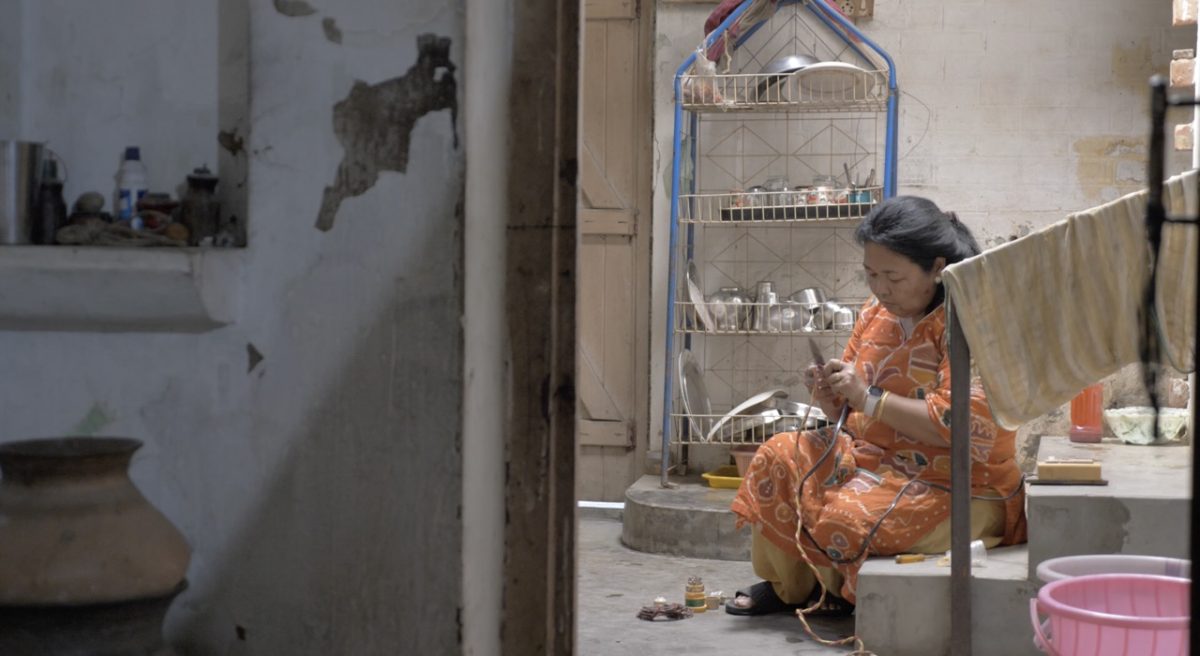
This is the power of Prasuna’s work. “Before You Were My Mother” is not afraid to question the part played by women in a world dominated by men and refuses to flinch while it takes a deep look at the ingrained misogyny and patriarchy. Her grandmother, Pishaksana Devi, admits that crimes against women, conservative neighbourhoods, and a judgmental society made her keep track of her daughters’ period cycles. The truths and admissions in this documentary will make you reflect on your own family.
Difference in perspectives, clashes between tradition and modernity, fights between different generations, the impact of politics on women, and the brutal war often waged on their bodies…from what starts as a documentary on the nature of families, it takes an unexpected yet much-earned turn to politics as well. Prasuna’s visual masterpiece is a lesson in the art of subtlety, even as it edges along the contours of politics but simply refuses to get overwhelmed by it. That’s always a sign of a mature artistic endeavour.
Through powerful sequences, newsreels, and impactful editing that bolsters the story, the audience follows the 2004 Manipur protest against the Indian army, which came as a turning point for its society. The brutal torture, rape, and murder of an activist, Thangjam Manorama, allegedly carried out by the Assam Rifles, saw women stripping down in front of the army headquarters in an act of defiance. Subsequently, enraged and inspired women would join militia groups in droves as well to reclaim both their land and honour.
Both Prasuna’s mother and grandmother in the documentary ponder on how cordon operations became a harassment tool for the armymen and how women suffered in masses because of the action. The visual piece also captures how the movement for a democratic Nepal in 2006 personally impacted her family. Through archival footage, the audience sees the protest unfold and hit the streets as a younger Ibemhal crosses a road with her kids, with the flames and slogans of the movement reaching her neighbourhood.
This is where one of the many strengths of “Before You Were My Mother” also lies. What could have been a rather contemporary documentation of a family is also backed by a treasure trove of videos and photographs chronicling its journey all through the decades. Many of them were shot by Prasuna’s father himself. It is this archival material that also lends a strong characterisation to our subjects, as we even see a young Prasuna and a future filmmaker capturing her sister through the lens.
The documentary is also a strong reflection on how isolation and nuclear families impact the old people in our homes. In one of the many emotional moments the documentary has to offer, Prasuna’s grandmother admits how heartbroken she was on being informed of an earlier cancelled trip by the Dongol family. “I did not eat that day, nor did I shower,” she says as the footage interjects with a young Prasuna leaving her grandmother’s home for the first time. Tears roll down their cheeks as they say their final goodbyes, and the fast pace of life once again takes over.
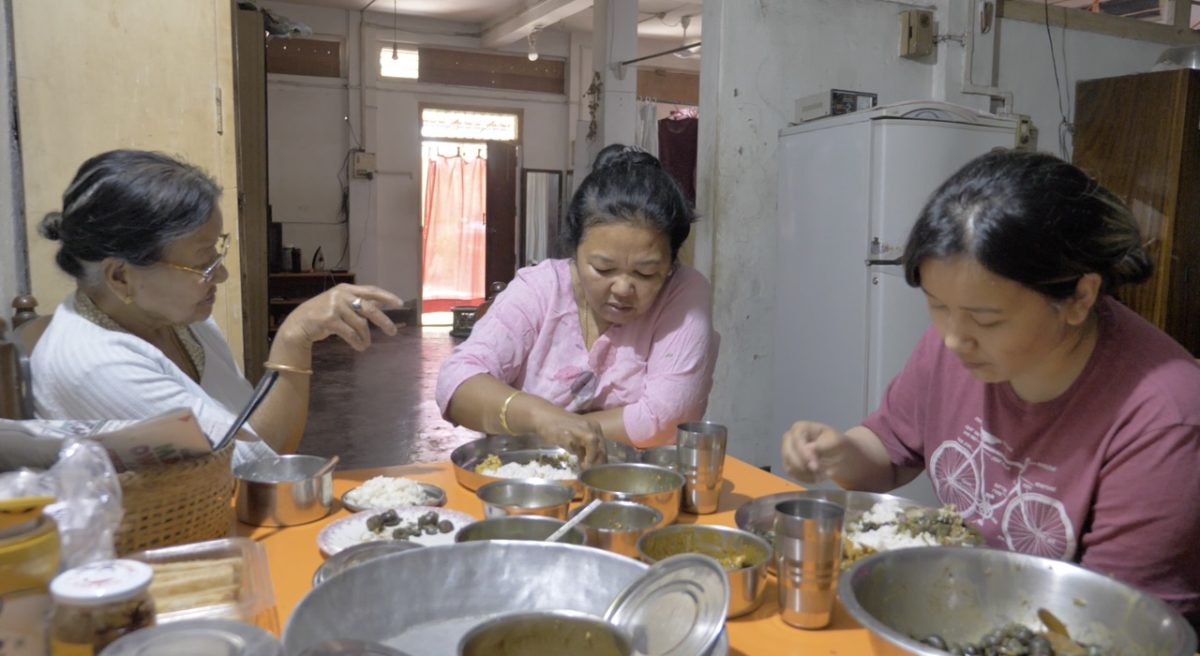
Soon, Prasuna would also leave her home in Nepal for further studies and bear the separation once faced by her mother and grandmother. On her return, her family soon emigrates to the United States, and we see an emotional Prasuna grappling with the limited time she often gets with her mother and family.
However, the audience will also find the visual piece to be quite funny at times. Prasuna’s grandmother is definitely one of the characters to seek out in the documentary. Her humour and sharp observations will definitely leave the audience in stitches. It is indeed a very interesting watch to see ‘aboksi’ as Prasuna calls her grandmother, interact in the film.
Since Prasuna was born and brought up in Nepal, the two often communicate through actions and a few words, yet their strong love and bond for each other are very evident. Aboksi also acts as a rich repository for the experiences of women of her generation and even the politics of her age.
Her interviews also reflect her experiences under conservative traditions and norms, which often judge women simply for their life choices. Her reminiscing on all the women in her locality who were forced to elope due to unwanted pregnancies and the subsequent shame and social boycott they and their families faced is a heartbreaking testament to how difficult it is to be a woman in this world.
The documentary is also helped by the selection of frame composition and angles employed in the film. The astute choice of keeping the camera still and employing wide angles helps the audience immerse themselves in Prasuna’s world. The audience never gets distracted by overcompensating camerawork, but rather just enough to make the audience feel like a fly on the wall. You are bound to cry as ‘aboksi’ remarks on a departing Prasuna that only if she knew the language, their farewell would be full of spoken words and blessings.
Departures and farewells feel painfully immediate for those of us who have crossed into new lands and slowly misplaced our native tongues, struggling to speak to elders who are themselves slipping away.
“Before You Were My Mother” understands this ache instinctively. It is a self-contained, deeply emotional cinematic work that remains firmly rooted in its cultural soil, balancing the political and the personal with rare restraint. The film stands among the more honest portrayals of women on screen, attentive to the quiet forces that shape their lives—strength carried without spectacle, patience forged through endurance, and a resilience that exists long before it is ever named.


![So Long, My Son (Di Jiu Tian Chan) [2019] Review – An Intricately Plotted and Deeply Emotional Domestic Drama](https://www.highonfilms.com/wp-content/uploads/2020/04/So-Long-My-Son-2019-768x390.jpg)

![Ken Russell Craziness: Savage Messiah [1972]](https://www.highonfilms.com/wp-content/uploads/2019/12/savage-768x576.jpg)
![Mixtape [2021] Netflix Review: An Endearing Family Drama Despite Its Familiar Beats](https://www.highonfilms.com/wp-content/uploads/2021/12/Mixtape_01_28_10_10r-768x425.jpg)