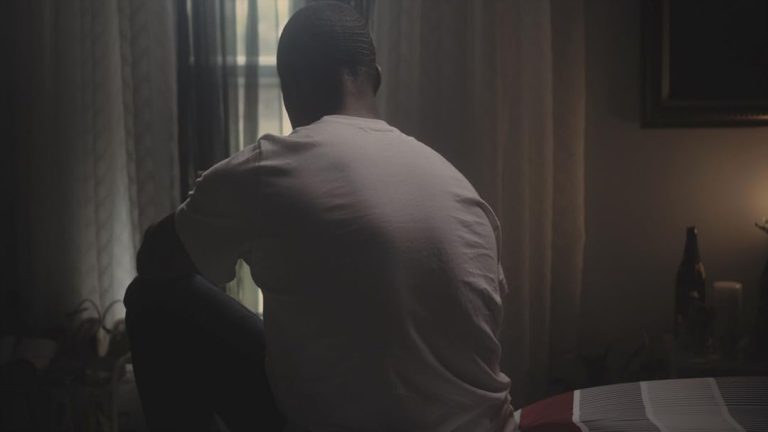
Paul Andrew Williams’s “Dragonfly” (2025) is the kind of social realist film that marries the finest traits of Mike Leigh and Ken Loach’s works. It’s a penetrating tale about two women at different stages of their lives that offers a sharp critique of social inequalities, which deprive certain parts of the population of their right to self-determination.
One of these women is widowed, living alone instead of moving in with her middle-aged son’s family. The second one is her younger neighbour, who is just as lonesome as she is. After realizing their mutual emotional concerns, they become friends and soon enter a platonic relationship, which starts testing the limits of their kindness and patience. That’s how the film slowly turns into a psychoanalytical tale about the limits of codependency.
Williams, who also wrote the script, places it in a suburban neighbourhood, where loneliness seems like an inescapable part of one’s life. It can’t be masked by the comfort of anonymity that cities often provide. Instead, it stays with you anywhere you move and makes you register its presence, where every stare from a stranger can feel like an invitation to dig deep into your abyss.
The neighbour (in Williams’ script) tries to conceal that feeling under a prickly stoicism, while the older woman doesn’t make any effort to hide it. Their anxious avoidant attachment makes this a slow-burning drama about two people depending on each other so deeply that this dependence becomes overbearing.
While exploring their tense dynamic, the film sheds light on lesser-discussed aspects of emotionality in professional caregiving services. It also brings together Andrea Riseborough and Brenda Blethyn, two of the sharpest but rather underappreciated English actors, who take it to another level. Think of Riseborough’s performance in “To Leslie” and Blethyn’s performance in “Secrets and Lies.”
You’ll find a similar kind of intensity and detail in their carefully restrained act that doesn’t need to shout to leave a mark. That’s why it doesn’t seem like a stretch to call the film a creeping horror tale that relies on a sense of foreboding to make you probe into its bleakness, subtly tricking you to seek catharsis, only to wreck you when you least expect it.
Spoilers Ahead
Dragonfly (2025) Plot Summary & Movie Synopsis:
What happens in ‘Dragonfly’?
Williams’ film begins with a quote from James Thurber’s 1950 novel, “The 13 Clocks”: Time is for dragonflies and angels. The former live too little and the latter live too long. The metaphor seems indicative of the tragedies of its two central characters. Dragonfly seems to be Colleen (Andrea Riseborough), while Angel seems to be her older neighbour, Elsie (Brenda Blethyn). It doesn’t merely imply the literal length of Colleen’s time on earth. It’s also about ‘how’ she lives it. She spends most of her time at home with her pet dog, window-shopping online, while having next to no social life. Her solitude doesn’t seem like self-contentment but a sign of depression.
Elsie, on the other hand, is at the dawn of her life. She is expected to willingly accept the inevitable aspects of her age. Her son, John (Jason Watkins), wants her to live with him and his family, but she refuses that offer, considering it almost an affront. She values her independence and doesn’t wish to appear as a burden on anyone. It makes her a fiercely solitary person who finds her time with caregivers a bit dehumanising.
It doesn’t seem like a fault of these professionals, who work around the clock, trying to maintain their position in this delicate profession. Yet, it bothers her to be treated almost like a child, getting fed and cleaned up within specific windows, as these caregivers try to stick to their strict schedules, doing their work to escape its dreadful monotony.
Elsie and Colleen can’t escape monotony either, but the root of their monotony is quite different. The caregivers get barely any time for themselves, while the two women are always by themselves, unless they must be with another human being. In their case, time doesn’t feel like a luxury, but a burden. It makes them prone to the cycles of overthinking, keeping them often in touch with their darkest thoughts. Colleen tries to break that cycle by getting involved in Elsie’s life.
How does Elsie enter Colleen’s life?
Colleen notices a care assistant leaving Elsie’s house and asks how she can put up with being happy all the time for her clients. The woman doesn’t reply. She just steps into her car to drive to her next appointment, one of her six more that day. As she leaves, Colleen seems almost offended by her professional nonchalance.
How can some people be so comfortable with being who they are expected to be? She probably wonders, but doesn’t let it show on her face. Her stoicism seems like a shield to safeguard her from crippling anxieties from taking over her life. She maintains that emotional distance until the day the care assistant walks out of Elsie’s home.
The next day, she knocks on Elsie’s door to ask if she wants anything from the convenience store. She buys it and returns home to hand it over. In that situation, someone might have taken advantage of an old person, but Colleen doesn’t seem motivated by trickery. Instead, she genuinely seeks company without letting it be obvious. She stands by the door as Elsie looks for money to pay for her favor. Instead of asking Elsie to pay the exact amount, she gives a rough estimate, seeing it as a noble first step toward a long friendship. A few hours later, her pet, Saber, crosses over the fence to nibble on the plants in Elsie’s garden.
Elsie doesn’t intervene. Instead, she stays next to her window and simply observes Colleen taking care of the situation herself. That makes it all the more evident how badly they crave a presence like each other’s. Elsie keeps asking John to visit him more often, only to be left high and dry. So, she likely sees Colleen as a friend and a daughter. She also seems naturally genial, which makes her not want to hurt or upset Colleen. Unlike her, Colleen seems indecipherable, quietly yearning to feel needed by someone. Elsie yearns not be a burden or inconvenience. Those desires place them in each other’s lives like missing pieces.
How do Elsie and Colleen affect each other?
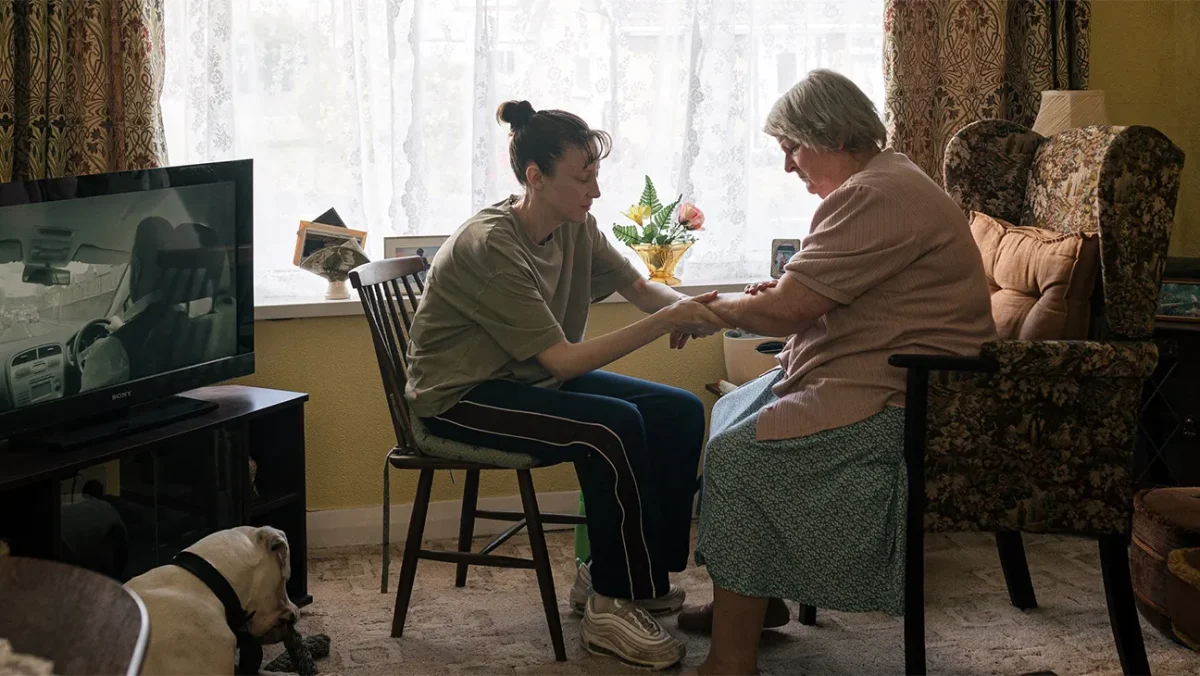
Colleen eventually becomes an integral part of Elsie’s life, gaining Elsie’s trust through everyday acts of solidarity. Despite all her attempts to hide her emotions, Elsie sees through her. She realizes that Colleen is lonely and her presence offers Colleen comfort, even if Colleen pretends not to care for it. John warns Elsie of potential repercussions, but she doesn’t feel betrayed in trusting Colleen with her well-being.
As it happens, Colleen fights a lonelier battle of financial precarity as the bank charges her overdraft fees. She doesn’t have a job to pay for it, and while relying on social benefits (at least saying so), she doesn’t have the means to sustain it. To some, she may seem like a leech, but that seems far from the truth.
She seems stuck in a rut, and her choices seem rooted in a past trauma that she doesn’t acknowledge, let alone discuss. That’s likely why she appreciates being made to feel needed. She stays in Elsie’s life as a constant caregiver without pay, which makes her seem noble in Elsie’s eyes, but risky in John’s. John fears Colleen’s ulterior motives despite seeing Elsie comfortable around her.
Maybe the same comfort scares him. If the relationship were transactional, it would have made her presence make sense, but in the absence of pay, she seems like a threat to him. What if her emotional attachment is only a ploy for something greedy or ominous? Why else would someone be there for someone else like that?
After meeting Colleen in person, he grows increasingly suspicious of her motives. That’s why he impulsively calls the police to get her dog put down, claiming it to be the wrong breed, and worrying it would harm Elsie otherwise. Not sure what he imagines would happen after this incident. Does he think this would hurt Colleen so much that she wouldn’t want to be around his mother?
Maybe he imagines it would also make his mother lose interest in that friendship. He might see Colleen as a threat to his position in Elsie’s life. Maybe he just doesn’t want his mother to trust strangers so easily. No matter why, he acts impulsively, which snowballs into a tragedy rather than being a remedy.
Dragonfly (2025) Movie Ending Explained:
How does John’s interference affect Colleen and Elsie’s friendship?
After John’s call, the police show up at Colleen’s house to take away her pet. She fights with all her might to rescue him, even going on to bite an officer, only to be arrested. Elsie hears Colleen’s screams and spends the whole day worrying about what happened to her. At night, Colleen returns with horrible news. The cops have put down Saber, her only emotional support besides Elsie.
Elsie realizes that John is behind that arrest, and Colleen assumes the same (or maybe overhears the mother-son conversation). Burdened by that guilt, Elsie tries to make amends, but Coleen doesn’t respond to any of her calls. After processing her pain alone, she shows up at Elsie’s house at midnight, uninvited.
Technically, she breaks into the house, which may usually put her behind bars. Yet, Elsie decides not to press charges, even if Colleen gave her a genuine scare. Her boundless compassion leads her to her tragic fate, as her neighbour seeks revenge against her son while absolving herself from the guilt of doing so.
A few hours before it happens, John leaves his home to check up on Elsie, but before they can meet, Colleen seeks her revenge. Elsie realizes that, due to a police call that reveals John’s tragic fate, just after Colleen arrives in her kitchen with blood, dirt, and bruises all over her body. In those moments, Colleen is implied to be John’s murderer. With John and Colleen both gone, Elsie is left in the position she often dreaded to be in. She ends up in an old-age care centre, burdened with her traumatic memories.
What leads Colleen to take that final, shocking step?
Colleen’s decision to take John’s life seems rooted in her feeling betrayed by his appearance. He seemed kind and patient with her and Saber, which made his backstabbing all the more treacherous. Of course, to him, it seemed like an urgent matter of concern, but Colleen wasn’t in a state where she could rationalize his behaviour and show him grace. She was deeply hurt, and she decided to convey that pain by hurting him. Eventually, at Elsie’s house, she said that John didn’t even apologize to her, emphasizing how much Saber’s presence meant to her. Somewhere deep down, she also realizes that John was trying to keep her and Elsie apart.
In the end, she harms herself as a way to alleviate the burden of answering to Elsie. She seems like the only person who made Colleen feel valued. That’s why her intense act of self-harm also seems rooted in her fear of being confronted by her only friend. It’s a painful moment, bluntly expressed, which contrasts with the almost slice-of-life dramatic tone of the rest of the length.
The film doesn’t just leave us there. Instead, the final moments prompt us to think about Elsie’s future in the care home. She looks jaded, almost as if she is processing the incident even days or weeks later. Unlike Colleen, who lived tragically little, Elsie is almost doomed to live too long.

Final Words:
Dragonfly’s premise seems destined to take it to the lane of sentimental British dramas that seem closer to theater than to cinema. Writer-director Williams doesn’t lead on that path. Instead, he builds tension by often restraining any form of expression. Characters don’t say exactly what they mean or feel. That’s why, for them, every interaction becomes a way to decode each other’s actions, closeness, or indifference. That ambiguity becomes the catalyst in keeping us hooked to their psychological play.
The question remains less about ‘whether’ their friendship would lead to something bad, and more about ‘when.’ Even when the film soothes you into its comforting pace, it makes it feel like a silence before the storm. Williams maintains subtlety in his duration, making it all work without shoving its thematic undercurrent down our throats.
In the end, the film is about everything mentioned in the introduction: caregiving, codependency, and concealed desires. Riseborough’s perfectly pitched, unpredictable performance makes it function as a ticking bomb, as her character remains in denial even after reaching her breaking point.
Colleen also portrays a gendered aspect of loneliness that often gets sidelined by discussions about men’s loneliness. In a world that constantly surveils women, catering to the male gaze, she remains defiantly unfazed, masking her fears as a means of self-preservation. She remains stone-faced throughout this ordeal, yet Riseborough conveys a lot even through those blank stares. Blethyn presents a perfect counter to her outward unemotionality through Elsie’s unconditional, radical kindness. She makes us realize the nuances of her struggle to feel valued while not being a hindrance to anyone else.
Their work is central to keeping the film’s naturalistic, slow-paced tone immersive. Yet, despite their flawless acting, the film awkwardly transitions into the narrative shifts in its second half, as it introduces a grittier version of their reality. The awkwardness comes largely because the psychological shifts feel abrupt and contrived.
Instead of introducing that twist as a sudden attack on their sanity and our senses (as it does), it could have eased into that transition by giving more insight into their gradual stages of anguish, also developing it enough on a directorial front by slowly leading to that gut-wrenching climax instead of leaving us like a driver who hits and runs. Ultimately, it ends up being an impeccably acted and largely engaging psychological drama with an undercooked final act.




![A Gaza Weekend [2022] ‘TIFF’ review: A Massively Entertaining Tale of a Couple Helplessly Searching for Safety](https://www.highonfilms.com/wp-content/uploads/2022/09/Gaza-Weekend-2022-768x384.jpg)