Artistic censorship is at the forefront of İlker Çatak’s bristling new film, “Yellow Letters” (Original title: Gelbe Briefe, 2026), which won the Golden Bear at this year’s Berlin Film Festival. Given how the festival opened with Wim Wenders’ controversial insistence on filmmakers to stay out of politics, it’s ironic and predictable that the jury went on to give out the top prize to such an abrasively, fearlessly political drama where there’s no hedging, deflecting, or dialling down on rebellion in the face of authoritarian cornering. Moving between Ankara and Istanbul, the film kicks off with a couple, a playwright, Aziz (Tansu Biçer), and an actress, Derya (Özgü Namal), attracting the disfavour of the ruling establishment.
Aziz believes he’s saving the world with theatre, whereas Derya has no such idealistic notion. Trouble erupts when she refuses to share the same frame with politicians at her play’s premiere. Aziz also urges his dramaturgy students to surge forth in anti-government protests. Being intimately versed in dissent is essential to the artistic journey. Art happens in no bubble but in dialogue and tussle with the world’s brutal mechanisms and vicious inequities. The fallout has Aziz being fired, his courses cancelled, and Derya removed from her theatre productions. There are searches conducted at their apartment, but Derya doesn’t hold back.
Neither does Aziz, who reiterates he knows the difference between criticism and insults when his social media posts are singled out for maligning the president. Slanderous cases are doctored and slammed against him. The pressure escalates to the point that the couple is compelled to relocate to Istanbul, where the family stays with Aziz’s mother.
She’s endlessly supportive, but Derya is determined to land on her feet even as Aziz grows complacent. The film mines arresting tension from the constant back-and-forth the couple goes between positions of resistance. Then there’s their teenage daughter, Ezgi (Leyla Smyrna Cabas), who drifts out. The burden of the choice whether to sell out on ethics or persist despite everything falls heavily on the marriage, the family, foisting ruptures and chasms.
Each person in the trio exhibits their own markedly different response to the beleaguering. Derya is tossed the proposal of deleting her dissident social media posts for smoothing a way to future acting offers. The couple, earlier involved with the State theatre back in Ankara, now team with old friends on fiercely subversive, independent productions, with far less money and patronage. How long can this pursuit be viable? Till what point can familiar comforts be forsaken before one seals the dreaded pact of absolving the soul of conscience itself?
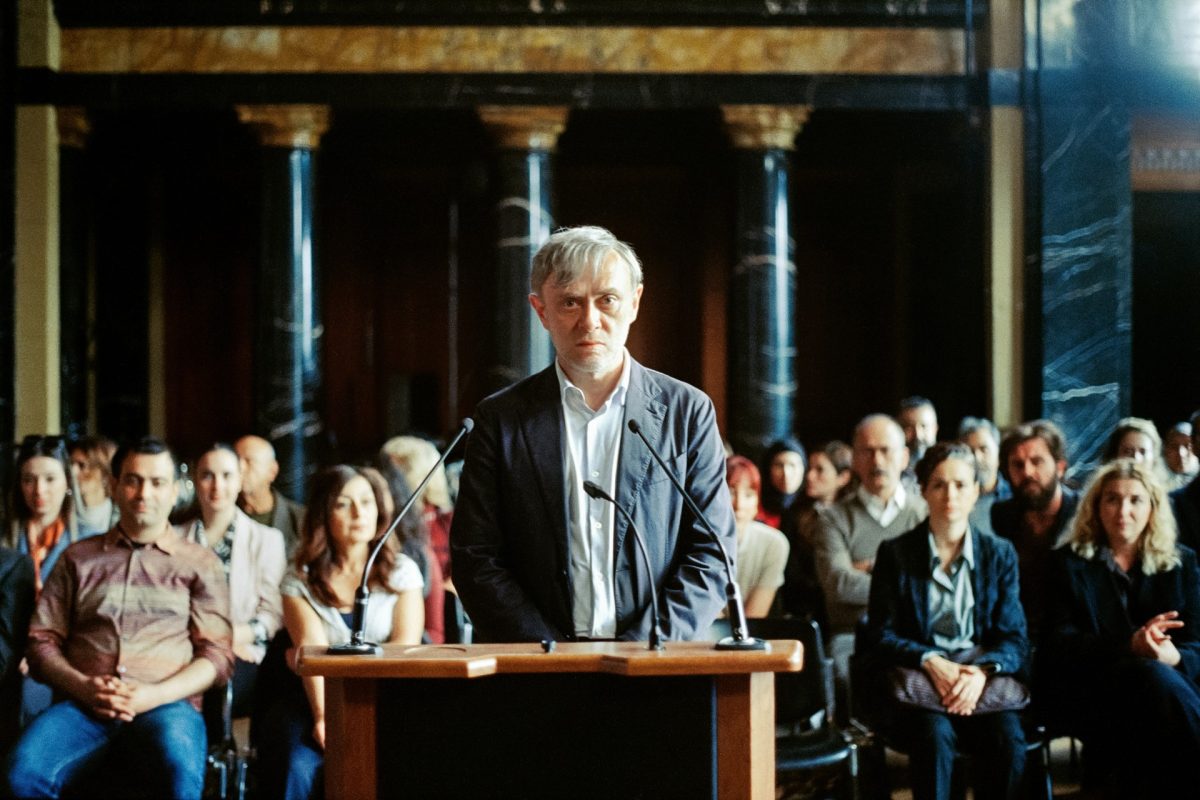
“Yellow Letters” traces what sticking by your ideals to its very tether looks like, until compromises have to be made and ideals give way to exigencies of survival. Çatak observes the couple as in a pressure cooker situation, where the sheer weight imposed on their ideals stunts them in very different directions. He gives his actors full-bodied roles, which Özgü Namal and Tansu Biçer attack with genuine relish and unsparing moral conviction. This resolve stems from an ability to handle ambiguity and dilemma in all its unflattering shades.
Namal is especially sensational, commanding in every scene. In many ways, Derya challenges her husband to live up to the defiance couched in his writings, which he seems to be straying from. He’s more willing to settle into placidity, eyeing a way out of the storm, whereas she heads straight into it to reinstate the values she believes in without apology. The price the couple pays for their art is inevitable and immense. It takes on a domino effect, rippling from job losses to the eventual lure of sanding over ethics if they are to desire employment ever again.
“Yellow Letters” chronicles the couple’s fray and transformation under the political stranglehold. Each displays change and churn, the cost of staying rooted and emphatically sincere. There’s a struggle to preserve the soul in the crosshairs of an immediate, cutting crisis. It’s demanding and exhausting to keep up in the long run.
That they have a daughter whose future they must ensure turns the predicament even more fraught and prone to bowing out of unequivocal dissident fury. Çatak shows how the best and hardiest critics can be besieged so severely that they lose the membrane of independent, radical thought. It’s not so much about dilution of their resistance as it is their recalibrating their means of hitting out with agency and rigour.
Çatak establishes fault lines between the couple and the extended family that’s more conservative and sees no harm in public schools, where ideology takes precedence in instruction. Not all swings in the film are as successful as the finely textured moral dilemma haunting its heart. Sections interspersed in the couple’s politically caustic theatre production appear indulgent and heavy-handed, a rehashing of thematic anxieties already prevalent.
“Yellow Letters” also risks going in desultory circles over Ezgi’s youthful rebellion without lending her a firm perspective. Nevertheless, Namal and Biçer turn in such impassioned, seething, and wrenching performances that the film endures as brilliantly knotty and feverishly alive to repression and its aftermath.